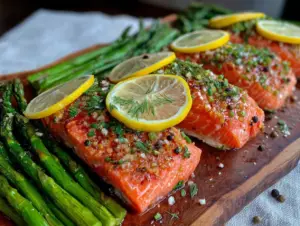
The smell of cedar smoke curling through the air is something I didn’t expect to fall for so hard. It all started on a busy summer evening when I was supposed to just toss some salmon on the grill and call it a night. But somehow, a friend showed up with a cedar plank, insisting I try it. Honestly, I was skeptical—wasn’t it just a gimmick? But as the fish cooked, that subtle woody aroma mingled with the sticky-sweet maple-dijon glaze, and suddenly the whole backyard felt like a little escape. The salmon came off the grill perfectly tender, with a crisp edge where the glaze caramelized. That night, this Flavorful Cedar Plank Salmon with Maple-Dijon Glaze went from “just another fish dinner” to a recipe I found myself craving again and again. It’s not just the taste—it’s the experience of that smoky, slightly sweet flavor that sticks with you, and the way the salmon practically melts in your mouth. I’m still amazed how such a simple idea turned into a new favorite that feels both fancy and effortless.
Why You’ll Love This Recipe
If you’ve ever thought grilling salmon was tricky, this recipe will change your mind fast. The cedar plank acts like a gentle shield, keeping the salmon moist while adding this amazing smoky flavor that’s hard to beat. I’ve tested this recipe multiple times, tweaking the maple-dijon glaze until it hits that perfect balance of sweet and tangy without overpowering the fish.
- Quick & Easy: Ready in about 30 minutes, making it perfect for busy weeknights or impressing guests without stress.
- Simple Ingredients: No need to hunt down fancy spices—most of these are pantry staples you probably already have.
- Perfect for Outdoor Grilling: Whether it’s a backyard BBQ or a casual cookout, this salmon works beautifully on a cedar plank.
- Crowd-Pleaser: Friends and family always ask for the recipe after tasting it, and kids surprisingly love it too.
- Unbelievably Delicious: The glaze caramelizes just right, creating a glossy, flavorful crust that contrasts with the tender fish inside.
What sets this recipe apart? It’s the glaze—combining real maple syrup with Dijon mustard for a tangy sweetness that feels special but isn’t complicated. Plus, the cedar plank method is a gentle way to grill salmon without drying it out. Honestly, once you’ve tried this, it might become your go-to for salmon nights. It’s comfort food with a bit of flair, and you can serve it alongside simple sides or dress it up for a special occasion. It’s the kind of dish that makes you pause for a moment and savor every bite.
What Ingredients You Will Need
This recipe uses straightforward, wholesome ingredients that come together to create bold flavor and a satisfying texture without fuss. Most of these are pantry staples or easy to find in grocery stores, making the recipe approachable for any home cook.
- Salmon Fillets, skin-on, about 6 to 8 ounces (170 to 225 g) each (look for fresh or thawed wild-caught if possible)
- Cedar Plank, untreated and soaked in water for at least 1 hour (adds smoky flavor and prevents burning)
- Maple Syrup, pure grade A (for natural sweetness and a rich caramelization)
- Dijon Mustard, smooth (provides tangy depth)
- Garlic, minced (fresh is best for punchy aroma)
- Fresh Lemon Juice, about 1 tablespoon (brightens the glaze)
- Olive Oil, extra virgin (keeps the fish moist and adds richness)
- Salt & Black Pepper, to taste (essential seasoning)
- Fresh Dill, chopped, optional for garnish (adds a fresh herbal note)
If you’re looking for substitutions, use coconut aminos instead of maple syrup for a lower sugar option, or swap lemon juice with lime for a slightly different tang. For a gluten-free version, confirm your mustard brand is gluten-free. I personally like ordering my cedar planks from a trusted brand that offers sustainably sourced wood, which makes a difference in flavor and safety. You can use frozen salmon fillets too—just make sure to thaw them fully before cooking to avoid uneven grilling.
Equipment Needed
- Grill (gas or charcoal works well; charcoal adds extra smoky flavor)
- Cedar Planks (usually sold in packs at grocery or specialty stores; soak well to prevent burning)
- Brush for applying the glaze (silicone brushes are easy to clean and effective)
- Mixing Bowl for preparing the glaze
- Tongs or spatula for handling the plank and salmon
- Measuring Spoons and Measuring Cups for accuracy
If you don’t have a grill, you can use a grill pan on the stove, but you’ll miss out on the smoky cedar plank effect. For soaking cedar planks, I keep a large container or baking dish handy—makes it easier to soak multiple planks if needed. Also, if you’re on a budget, some stores sell cedar planks in smaller sizes or thinner cuts, which work fine for a single salmon fillet.
Preparation Method
- Soak the Cedar Plank: Place the cedar plank in a large container filled with cold water. Let it soak for at least 1 hour (or up to 3 hours). This prevents the plank from catching fire on the grill while imparting that signature smoky flavor.
- Prepare the Glaze: In a mixing bowl, whisk together 3 tablespoons (45 ml) of pure maple syrup, 2 tablespoons (30 g) Dijon mustard, 1 teaspoon (5 ml) freshly squeezed lemon juice, and 1 clove of minced garlic. Stir until smooth and well combined.
- Preheat the Grill: Heat your gas or charcoal grill to medium-high heat, aiming for about 375°F to 400°F (190°C to 205°C). You want a steady heat that will cook the salmon gently without burning the plank.
- Prepare the Salmon: Pat the salmon fillets dry with paper towels. Brush both sides lightly with olive oil, then season generously with salt and freshly ground black pepper.
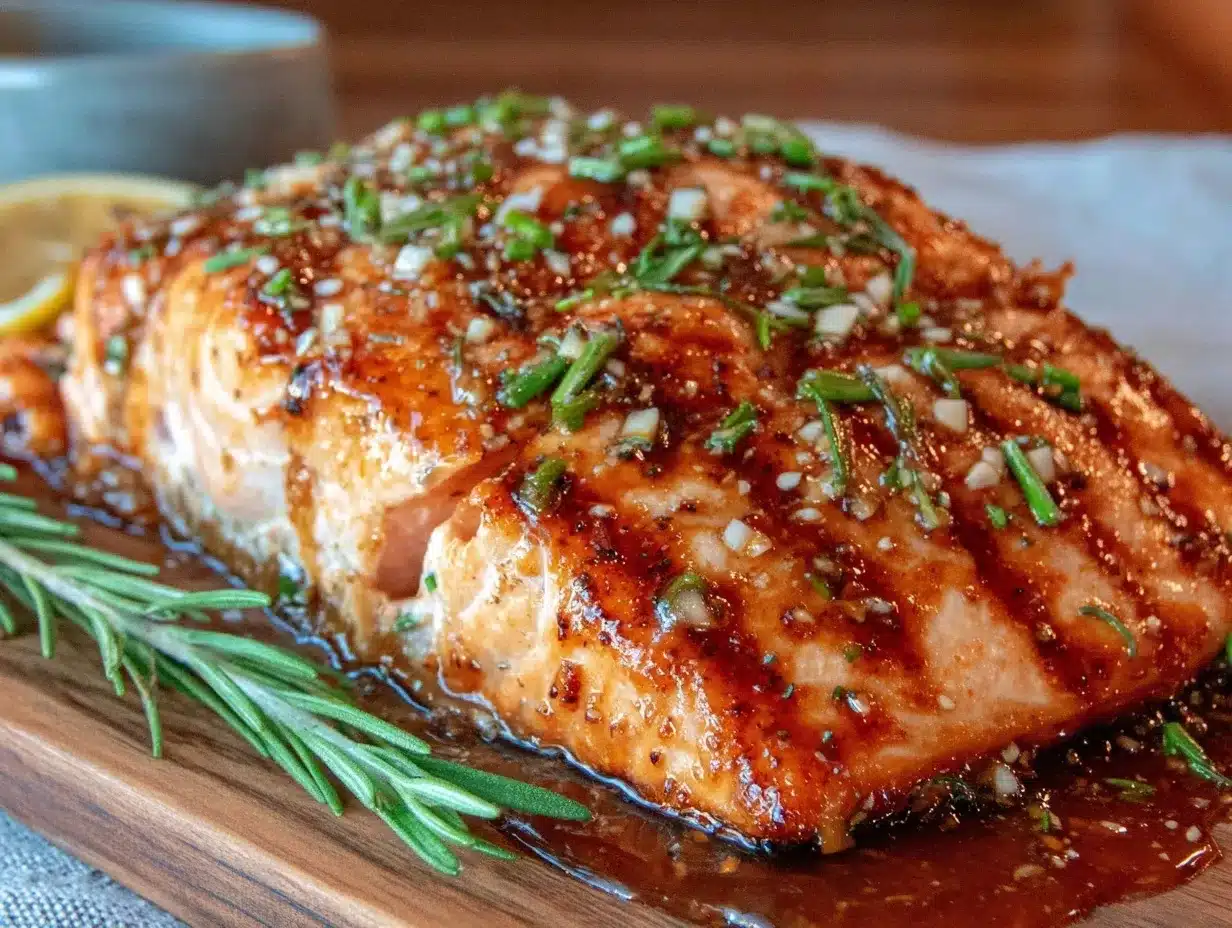
- Place the Salmon on the Plank: Remove the cedar plank from the water and pat dry with a towel. Place the salmon skin-side down on the plank. Brush the maple-dijon glaze over the top of each fillet, coating them evenly.
- Grill the Salmon: Put the cedar plank with salmon directly onto the grill grates. Close the lid and cook for about 15-20 minutes. You’ll notice the edges of the salmon turning opaque and the glaze bubbling and caramelizing. Avoid lifting the lid too often to keep the smoke and heat consistent.
- Check for Doneness: The salmon is done when it flakes easily with a fork and the internal temperature reaches 145°F (63°C). The skin should be crisp but not burnt, and the glaze should be glossy and slightly sticky.
- Serve and Garnish: Carefully remove the plank from the grill with tongs or a spatula—it’ll be hot! Let the salmon rest for a couple of minutes before serving. Sprinkle with freshly chopped dill and an extra squeeze of lemon if you like.
Pro tip: If you find the glaze is caramelizing too quickly, move the plank to a cooler spot on the grill or reduce the heat slightly. You want to avoid burning the sugars in the maple syrup. Also, if you’re prepping for a crowd, you can grill multiple planks at once—just make sure they’re spaced out for even cooking. I often pair this salmon with a fresh grilled corn salad for a complete meal.
Cooking Tips & Techniques
Grilling salmon on a cedar plank might feel fancy, but it’s actually quite forgiving once you know a few tricks. The key is managing heat and moisture to get that tender, flaky texture without drying out the fish.
- Soaking the Plank: Don’t skip soaking the cedar plank. It not only prevents the wood from catching fire but also creates steam that gently cooks the salmon, keeping it moist and flavorful.
- Glaze Balance: The maple-dijon glaze should be thick enough to stick but not so thick it burns quickly. Stirring in a bit of lemon juice helps cut through the sweetness and keeps it bright.
- Don’t Overcook: Salmon cooks fast. Keep an eye on it, and check for flakiness rather than just time. Overcooked salmon can be dry, which nobody wants.
- Use a Thermometer: If you’re unsure, an instant-read thermometer is your best friend. Aim for 145°F (63°C) internal temperature for perfectly cooked salmon.
- Resting Time: Let the salmon rest for a few minutes after grilling. This helps juices redistribute and keeps the fish moist.
I remember the first time I tried this, I rushed the soaking step and the plank started to flame up. Lesson learned! Now, I always soak overnight if I can. Also, don’t be afraid to experiment with the glaze—adding a pinch of smoked paprika or a little cracked black pepper can kick the flavor up a notch. For a quick alternative, I sometimes brush on a pre-made honey glaze, but the maple-dijon combo is where the magic happens.
Variations & Adaptations
This cedar plank salmon recipe is a great foundation to make your own. Here are some ways I’ve tweaked it depending on the occasion or what’s in the pantry:
- Spicy Twist: Add a teaspoon of chili flakes or hot sauce to the maple-dijon glaze for a subtle kick that pairs beautifully with the smoky cedar.
- Herb Infusion: Mix fresh herbs like thyme, rosemary, or tarragon into the glaze or sprinkle over the salmon before grilling for a fragrant touch.
- Gluten-Free Option: This recipe is naturally gluten-free, but double-check your mustard label just in case. You can also swap maple syrup with agave nectar if preferred.
- Oven Method: If you don’t have a grill, you can bake the salmon on a soaked cedar plank in a 375°F (190°C) oven for about 20-25 minutes. The smoky flavor will be subtler but still delicious.
- Different Fish: This technique works well with other firm fish like trout or steelhead. Just adjust cooking times based on thickness.
Once, I tried adding a dash of soy sauce to the glaze for a more umami profile—it was surprisingly good, especially when paired with sesame green beans. For more ideas on glazing and marinades, you might like my marinated grilled chicken breast variations, which offer similar sweet-savory profiles.
Serving & Storage Suggestions
Serving this salmon just off the grill, warm and fragrant, is honestly half the pleasure. I usually serve it skin-side down on a platter garnished with fresh dill and lemon wedges for squeezing. It pairs wonderfully with simple sides like grilled asparagus, a light cucumber salad, or even a creamy pasta dish like the creamy Tuscan chicken pasta for a heartier meal.
If you have leftovers, wrap the salmon tightly in foil or an airtight container and refrigerate for up to 2 days. To reheat, gently warm it in a low oven (around 275°F or 135°C) for 10-15 minutes to avoid drying it out. Microwave reheating usually makes the fish tough, so I’d skip that if possible.
Over time, the flavors in the glaze mellow and deepen, so sometimes I refrigerate the salmon overnight and enjoy it cold or at room temperature the next day. It’s great flaked over salads or tossed in a grain bowl for a quick lunch.
Nutritional Information & Benefits
This cedar plank salmon recipe is not only tasty but packs a nutritional punch. A typical serving of salmon (6 ounces/170 g) provides about 350-400 calories, with roughly 35 grams of protein and healthy omega-3 fatty acids, which are great for heart and brain health. The maple-dijon glaze adds a bit of natural sweetness without excess sugar, and olive oil contributes heart-healthy fats.
Salmon is also rich in vitamins B12 and D, making it a smart choice for overall wellness. This recipe is naturally gluten-free and can be adjusted for lower sugar needs by moderating the maple syrup. Just watch for common allergens like mustard if you’re serving guests with sensitivities.
From a personal wellness perspective, I love how this dish feels indulgent but still supports a balanced diet. It’s the kind of meal you can enjoy guilt-free—comfort food that respects your body.
Conclusion
Flavorful Cedar Plank Salmon with Maple-Dijon Glaze is one of those recipes that surprises you with its simplicity and depth of flavor. Whether you’re grilling for a casual family dinner or a small gathering, it fits the bill for being impressive without the stress. I adore how the smoky notes from the cedar combine with that sticky, tangy glaze—the kind of combination that makes you slow down and savor every bite.
Don’t hesitate to tweak the glaze or sides to suit your taste or occasion. This recipe has stuck with me because it’s approachable, reliable, and just plain delicious. If you try it, I’d love to hear how you make it your own—drop a comment or share your favorite variations. Cooking should be fun, after all, and this salmon makes it easy.
FAQs About Flavorful Cedar Plank Salmon with Maple-Dijon Glaze
How long should I soak the cedar plank before grilling?
Soak the plank in water for at least 1 hour to prevent it from burning and to create steam that gently cooks the salmon. Longer soaking, like 2-3 hours, is even better if you have time.
Can I use frozen salmon fillets for this recipe?
Yes, just make sure to thaw the salmon completely and pat dry before grilling to ensure even cooking and proper glaze adherence.
What if I don’t have a grill—can I make this in the oven?
You can bake the salmon on a soaked cedar plank in a preheated oven at 375°F (190°C) for 20-25 minutes. The smokiness will be milder but still pleasant.
Is this recipe suitable for people with gluten intolerance?
Yes, the recipe is naturally gluten-free, but double-check your Dijon mustard label to confirm it doesn’t contain gluten.
How do I know when the salmon is perfectly cooked?
Look for salmon that flakes easily with a fork and reaches an internal temperature of 145°F (63°C). The glaze should be bubbly and caramelized but not burnt.
Pin This Recipe!
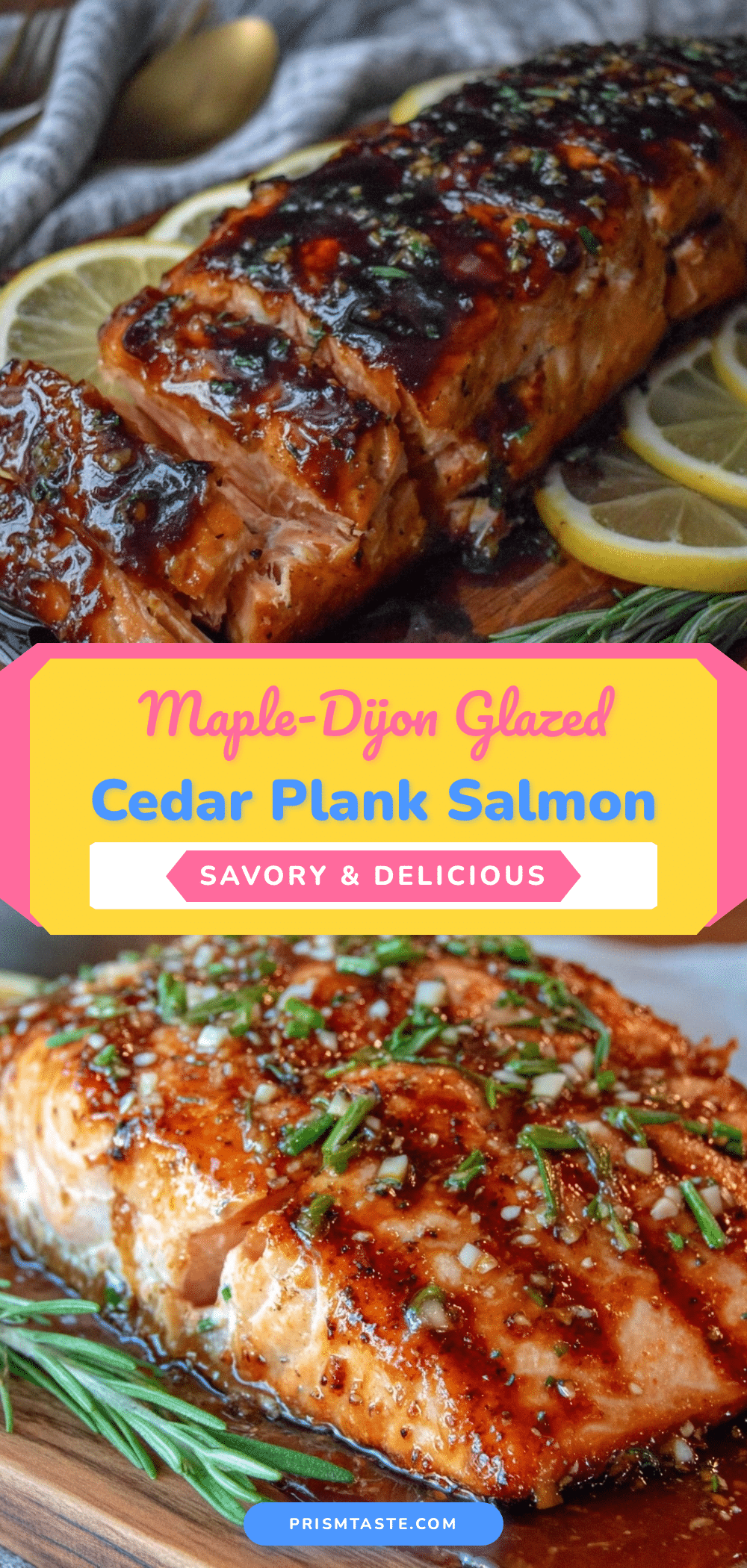
Flavorful Cedar Plank Salmon Recipe with Easy Maple-Dijon Glaze

This cedar plank salmon recipe features a smoky flavor enhanced by a sticky-sweet maple-dijon glaze, resulting in tender, flavorful fish perfect for grilling or baking.
- Prep Time: 10 minutes
- Cook Time: 15-20 minutes
- Total Time: 30 minutes
- Yield: 2 servings 1x
- Category: Main Course
- Cuisine: American
Ingredients
- Salmon fillets, skin-on, about 6 to 8 ounces (170 to 225 g) each
- Cedar plank, untreated and soaked in water for at least 1 hour
- 3 tablespoons pure maple syrup
- 2 tablespoons Dijon mustard
- 1 teaspoon freshly squeezed lemon juice
- 1 clove garlic, minced
- Olive oil, extra virgin
- Salt, to taste
- Black pepper, to taste
- Fresh dill, chopped (optional for garnish)
Instructions
- Soak the cedar plank in cold water for at least 1 hour or up to 3 hours to prevent burning and add smoky flavor.
- In a mixing bowl, whisk together maple syrup, Dijon mustard, lemon juice, and minced garlic until smooth.
- Preheat grill to medium-high heat (375°F to 400°F).
- Pat salmon fillets dry with paper towels. Brush both sides lightly with olive oil and season with salt and black pepper.
- Remove cedar plank from water and pat dry. Place salmon skin-side down on the plank and brush the maple-dijon glaze evenly over the top.
- Place the cedar plank with salmon directly on the grill grates. Close the lid and cook for 15-20 minutes until salmon flakes easily and internal temperature reaches 145°F.
- Carefully remove the plank from the grill. Let salmon rest for a few minutes.
- Garnish with fresh dill and an extra squeeze of lemon if desired before serving.
Notes
Soak cedar plank for at least 1 hour to prevent burning and create steam. Use an instant-read thermometer to check for doneness at 145°F. If glaze caramelizes too quickly, move plank to cooler part of grill or reduce heat. Salmon can be baked on cedar plank at 375°F for 20-25 minutes if no grill is available.
Nutrition
- Serving Size: 1 salmon fillet (6 t
- Calories: 375
- Sugar: 7
- Sodium: 150
- Fat: 22
- Saturated Fat: 3.5
- Carbohydrates: 8
- Protein: 35
Keywords: cedar plank salmon, maple dijon glaze, grilled salmon, easy salmon recipe, smoky salmon, healthy salmon, gluten-free salmon