Standing in front of my pantry at 3:15 PM, staring at a half-empty bag of pretzels and wondering how to get a three-year-old to eat something that wasn’t beige. That was the moment. The afternoon slump had hit hard, my son was already asking for a snack for the fifth time, and I had exactly nothing planned for the preschool snack rotation the next morning. I needed something that looked fun enough to compete with the packaged fruit cups, but actually, you know, had real food in it.
That’s when I spotted the wooden skewers in the back of the drawer and the bag of colorful fruit in the fridge. And honestly? I just started threading things onto sticks. Red first, then orange, then yellow — it was almost automatic, like my hands remembered something my brain hadn’t planned. By the time I finished, I had this perfect little rainbow sitting on a plate. My kid walked in, grabbed one, and actually said “whoa” before taking a bite. That never happens.
These Easy Rainbow Fruit Kabobs for Preschool Snack Time became our go-to pretty much overnight. They’re not fancy. They’re not complicated. But they work — and they make snack time feel like a tiny celebration. I’ve sent them to playdates, packed them in lunchboxes, and used them as a quick activity when the afternoon energy gets wild. There’s something about food on a stick that just hits different for little kids. And honestly, for tired parents too.
So if you’re looking for a snack that’s actually doable on a Tuesday afternoon, this is it. No stress. No special ingredients. Just fruit, sticks, and a little bit of color.
Why You’ll Love This Recipe
I’ve tested these kabobs more times than I can count — with different fruits, different skewers, and different age groups. Here’s why they keep winning:
- Takes 10 Minutes Flat: From fridge to plate in under ten minutes. No cooking, no waiting, no complicated steps.
- Uses Simple Ingredients: You probably already have most of these fruits in your kitchen. No fancy grocery store trips required.
- Perfect for Picky Eaters: The rainbow format makes fruit feel like a treat, not a chore. Kids actually get excited about eating the colors.
- Great for Group Snacking: Whether it’s a classroom party, a playdate, or just a regular afternoon, these kabobs disappear fast.
- Naturally Healthy: No added sugar, no preservatives, no hidden junk. Just real fruit in a fun format.
What makes these different from just handing a kid a bowl of fruit? It’s the presentation. Something about food on a stick makes it feel special — like a snack from a fair or a party. Plus, the rainbow colors create a visual cue that helps little ones try new fruits. I’ve watched kids who “don’t like strawberries” happily eat them off a kabob because they were part of the red section. It’s sneaky, but it works.
This recipe isn’t just about feeding kids — it’s about making snack time fun without making yourself crazy. And honestly, watching a preschooler’s face light up when they see a rainbow on their plate? That’s worth every second.
What Ingredients You Will Need
This recipe uses simple, everyday fruits to create a colorful and healthy snack. The key is choosing fruits that are ripe but still firm enough to stay on the skewer without falling apart. Here’s what you’ll need:
- Red Fruits: Strawberries, hulled and halved if large. Look for bright red, firm berries. (If strawberries aren’t in season, try raspberries or halved watermelon chunks.)
- Orange Fruits: Mandarin orange segments, drained well. Canned mandarins work perfectly here — just pat them dry so they don’t make the kabobs slippery. Fresh clementine segments also work great.
- Yellow Fruits: Pineapple chunks, fresh or canned. If using canned, get the chunks in juice (not syrup) and drain them well. Fresh mango chunks are a fantastic alternative when pineapple isn’t available.
- Green Fruits: Green grapes, seedless. I recommend using seedless green grapes — they’re sweet, sturdy, and the perfect size for little hands. Honeydew melon chunks or sliced kiwi also work well.
- Blue/Purple Fruits: Blueberries, fresh. Look for firm, plump blueberries. Blackberries or purple grapes can substitute if blueberries are out of season.
- Wooden Skewers: Short skewers (about 6-8 inches) work best for little hands. You can find them at any grocery store. If you’re worried about sharp ends, snip them off with kitchen shears or use a pair of scissors to round the tips.
For the best results, I recommend using organic berries when possible — they tend to be sweeter and more flavorful, which means kids are more likely to eat them. But honestly, whatever fruit you have on hand will work. The rainbow format is flexible. If you’re missing one color, just double up on another. No one’s going to complain about extra strawberries.
Pro tip: If you’re making these for a classroom or party, consider using a mix of fresh and canned fruit to save money. Canned pineapple and mandarins are budget-friendly and work just as well as fresh.
Equipment Needed
You don’t need much for this recipe, which is part of the beauty. Here’s what you’ll need:
- Wooden Skewers: Short ones (6-8 inches) are ideal. If you only have long skewers, you can snap them in half — just watch for splinters. I’ve used both and prefer the short ones for little hands.
- Cutting Board: Any cutting board works. I use a plastic one for fruit because it’s easier to clean and doesn’t absorb juices.
- Sharp Knife: A good paring knife makes quick work of hulling strawberries and cutting pineapple. Nothing fancy needed.
- Paper Towels: You’ll want these for patting fruit dry. Wet fruit makes for slippery kabobs.
- Serving Platter: A large white platter makes the colors pop. But honestly, any plate works.
If you don’t have skewers, you can use clean popsicle sticks or even sturdy pretzel sticks for a salty-sweet combo. I’ve done both and they work great. Just make sure whatever you use is safe for little hands and doesn’t have sharp edges.
Preparation Method
Here’s how to make these rainbow kabobs in five simple steps. I’ve included all the little details I’ve learned from making these dozens of times.
- Prep Your Fruit (5 minutes): Wash all fruit thoroughly under cool water. Hull the strawberries by cutting off the green tops and any white part underneath. Cut large strawberries in half lengthwise. If using fresh pineapple, cut it into 1-inch chunks. Drain canned fruit well and pat everything dry with paper towels. (This step is important — wet fruit slides around on the skewer and makes the whole process frustrating.)
- Prepare Your Skewers (1 minute): If using long skewers, snap them in half or use kitchen shears to cut them. For young kids, you can snip off the sharp point on one end to make them safer. I usually do this for preschool-aged children. Give the skewers a quick rinse and dry them off.
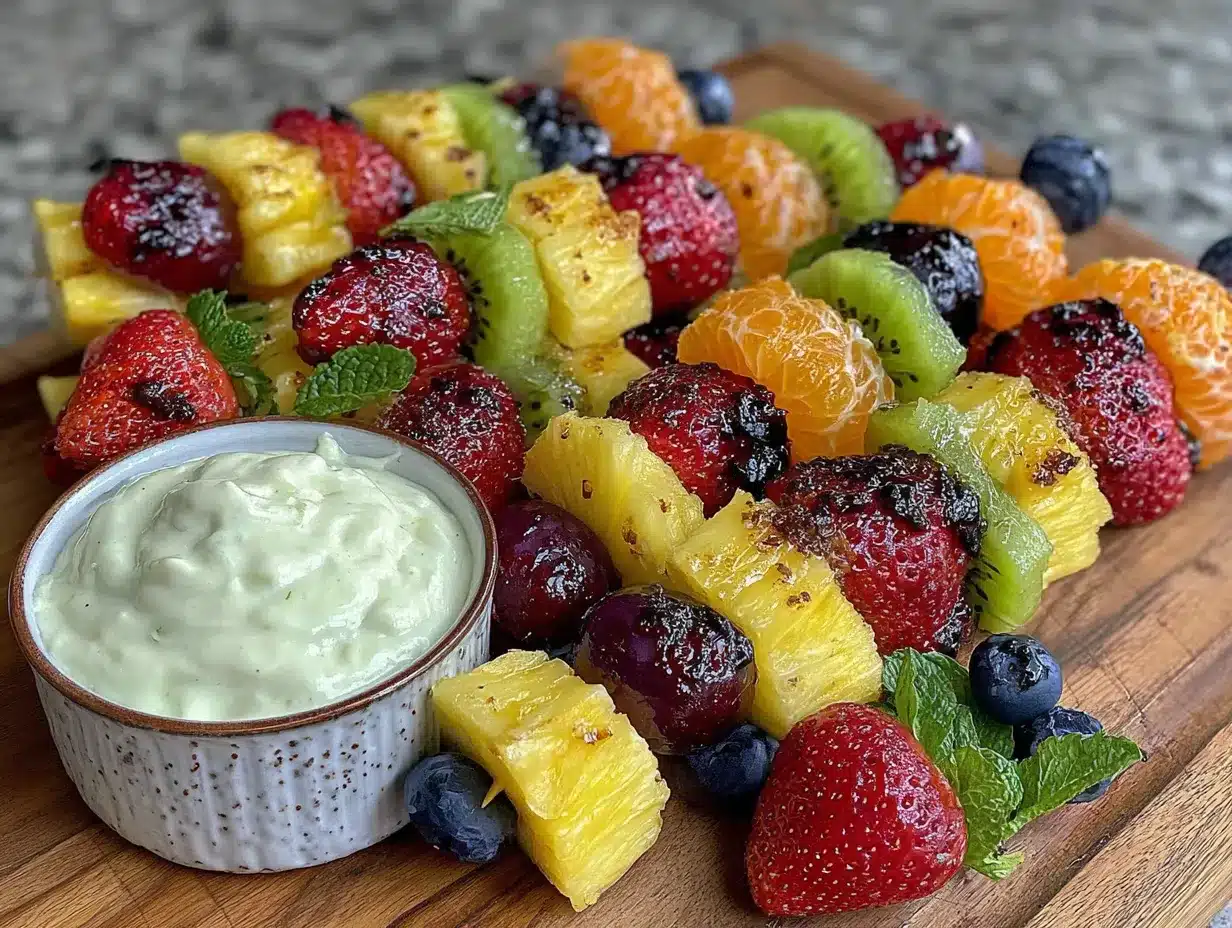
- Assemble the Rainbow (3 minutes): Start with the red fruit — thread a strawberry or raspberry onto the skewer first. Follow with orange (mandarin segment), then yellow (pineapple chunk), then green (grape), and finally blue/purple (blueberry). Push each piece gently but not too tight — you want them snug but not squished. Leave about an inch of space at the bottom of the skewer for little hands to hold.
- Repeat for Each Kabob (3 minutes): Continue making kabobs until you’ve used all your fruit. A good rule of thumb is one kabob per child, plus a few extras for parents and teachers. I usually make about 12 kabobs from one batch of fruit.
- Arrange and Serve (1 minute): Place the finished kabobs on a serving platter in a rainbow pattern — all the red ends pointing the same direction. This makes the rainbow effect really pop. Serve immediately or refrigerate until ready to serve.
A few notes from experience: If your fruit is really ripe, be gentle when threading so it doesn’t fall apart. For very young kids (toddlers), you can serve the fruit pieces on a plate without the skewer — just arrange them in rainbow order. And if you’re making these ahead, keep them covered in the fridge for up to 4 hours. Any longer and the fruit starts to dry out.
Cooking Tips & Techniques
After making these kabobs more times than I can count, I’ve picked up a few tricks that make the process smoother and the results better. Here are my best tips:
Keep Fruit Dry: This is the number one tip. After washing your fruit, lay it out on paper towels and pat it dry. Wet fruit makes the skewers slippery and the whole assembly process becomes a mess. Plus, dry fruit stays fresh longer in the fridge.
Cut Uniform Pieces: Try to cut your fruit into similar-sized pieces. This makes the kabobs look more polished and helps them stay on the skewer better. For strawberries, I cut them in half lengthwise. For pineapple, I aim for 1-inch cubes. Consistency matters more than perfection.
Use the Right Skewer Length: Short skewers (6-8 inches) are perfect for little hands. If you only have long skewers, cut them down. I learned this the hard way after watching a three-year-old try to maneuver a foot-long skewer. It didn’t end well.
Make It a Group Activity: For older kids (ages 4+), assembling the kabobs can be a fun activity. Just pre-cut the fruit and let them thread their own rainbow. It’s a great way to practice fine motor skills and get kids excited about eating fruit. Just supervise closely with the skewers.
Prep Ahead for Parties: If you’re making these for a classroom party or playdate, prep the fruit the night before and store it in separate containers in the fridge. Assemble the kabobs right before serving for the freshest results. I’ve tried making them the night before and the fruit gets a little sad by morning.
One Mistake I Made: The first time I made these, I used really ripe strawberries that were practically falling apart. They looked beautiful going on the skewer but turned into mush by the time we ate them. Now I always use firm fruit — it holds up better and tastes better too.
Variations & Adaptations
This recipe is incredibly flexible. Here are some variations I’ve tried and loved:
- Dairy-Free Yogurt Dip: Serve the kabobs with a side of dairy-free yogurt or coconut cream for dipping. It adds a creamy element that kids love. I’ve used both vanilla and plain coconut yogurt — both work great.
- Seasonal Swaps: In summer, swap in fresh peaches (orange), watermelon (red), or cantaloupe (orange). In fall, try apple chunks (red or green) or pear slices. In winter, use pomegranate seeds (red) or persimmon (orange). The rainbow format works with whatever fruit is in season.
- Frozen Fruit Option: If fresh fruit isn’t available, use frozen fruit that’s been thawed and patted dry. Frozen mango chunks, pineapple, and berries work well. Just make sure they’re fully thawed and drained so they don’t make the kabobs soggy.
- Add a Crunch: For older kids, add a few mini pretzel sticks or cereal pieces between fruit chunks. It adds texture and makes the kabobs more filling. I’ve done this for school lunches and it’s always a hit.
- Mini Kabobs for Toddlers: For very young children (under 2), skip the skewer entirely and serve the fruit pieces in a rainbow pattern on a plate. It’s safer and they still get the visual appeal.
My personal favorite variation? Using a mix of fresh and frozen fruit in the summer. I’ll use fresh strawberries and blueberries, then add frozen mango and pineapple that I’ve thawed. It saves money and still tastes amazing. Plus, the frozen fruit is already cut into perfect chunks.
Serving & Storage Suggestions
These kabobs are best served fresh, but they can be made ahead with a few precautions. Here’s what I’ve learned:
Serving Temperature: Serve the kabobs cold or at room temperature. I prefer them straight from the fridge — the fruit stays crisp and refreshing. If you’re serving them at a party, take them out about 10 minutes before serving so they’re not ice-cold.
Presentation Ideas: Arrange the kabobs on a large white platter in rainbow order. For a classroom party, I like to put them in a tall glass or jar with the fruit ends pointing up — it looks like a bouquet of fruit. You can also lay them flat on a sheet pan lined with parchment paper for easy transport.
What to Serve With Them: These kabobs pair beautifully with a side of yogurt dip, a creamy smoothie bowl, or even a handful of no-bake energy balls for a more filling snack. For a complete preschool snack plate, add some cheese cubes and whole-grain crackers.
Storage Instructions: Store assembled kabobs in an airtight container in the refrigerator for up to 4 hours. Do not freeze them — the fruit will become mushy when thawed. If you need to prep further ahead, store the cut fruit separately in sealed containers and assemble right before serving.
How Flavors Develop: These kabobs are best eaten within a few hours of assembly. The fruit stays fresh and the colors remain vibrant. After about 6 hours, the fruit starts to release juice and the kabobs can get a little messy. Still edible, but not as pretty.
Reheating Note: These are served cold, so no reheating needed. If you’ve stored them in the fridge, just pull them out and serve.
Nutritional Information & Benefits
These rainbow kabobs are packed with vitamins and antioxidants. Here’s a rough breakdown per kabob (based on one kabob with 5 fruit pieces):
- Calories: Approximately 45-60 calories per kabob
- Carbohydrates: 11-14g (mostly natural sugars from fruit)
- Fiber: 2-3g per kabob
- Vitamin C: 25-40% of daily recommended intake (from strawberries, oranges, and pineapple)
- Potassium: 150-200mg per kabob
Health Benefits: Each color in the rainbow represents different antioxidants and nutrients. Red fruits (strawberries) are rich in vitamin C and anthocyanins. Orange fruits (mandarins) provide beta-carotene for eye health. Yellow fruits (pineapple) contain bromelain, which aids digestion. Green fruits (grapes) offer vitamin K and antioxidants. Blue/purple fruits (blueberries) are packed with brain-boosting flavonoids.
Dietary Considerations: This recipe is naturally gluten-free, dairy-free, nut-free, and vegan. It’s also free from added sugar and artificial ingredients. Perfect for classrooms with multiple dietary restrictions.
Potential Allergens: None from the fruit itself, but if you’re serving with a dip or adding any extras, check for common allergens. The skewers themselves are wood, so no food allergen concerns there.
From a wellness perspective, I love that this snack feels indulgent without any of the guilt. My kids get excited about eating fruit, and I don’t have to worry about hidden ingredients or processed sugar. It’s a win-win.
Conclusion
These Easy Rainbow Fruit Kabobs for Preschool Snack Time have become a staple in our house for good reason. They’re quick, healthy, and ridiculously easy to make. But more than that, they make snack time feel special without any extra effort on your part. That’s a pretty rare combination.
I love that this recipe is flexible enough to work with whatever fruit you have on hand. Stuck with only strawberries and blueberries? Make a red-and-blue kabob. Have leftover pineapple and grapes? Go for it. The rainbow is just a suggestion — the real magic is in making fruit feel fun.
I’d love to hear how these turn out for you. What fruits did you use? Did your kids help make them? Drop a comment below and share your rainbow creations. And if you’re looking for more easy, kid-friendly snack ideas, check out our overnight oat lunchbox cups or these deconstructed pizza lunchbox ideas. Happy snacking!
Frequently Asked Questions
Can I make these kabobs the night before?
You can, but I don’t recommend it. The fruit starts to release juice after a few hours, which makes the kabobs slippery and less appealing. If you need to prep ahead, cut the fruit the night before and store it in separate containers in the fridge. Assemble the kabobs in the morning for the freshest results.
What if my child has allergies?
This recipe is naturally free from the top eight allergens — no dairy, eggs, nuts, soy, wheat, fish, shellfish, or peanuts. Just make sure any added dips or extras are also allergen-free. The fruit itself is perfectly safe for most allergy-friendly classrooms.
How do I keep the fruit from turning brown?
For fruits that brown quickly (like apples or pears), toss them in a little lemon juice or pineapple juice before assembling. But honestly, if you stick with the fruits listed in the recipe — strawberries, mandarins, pineapple, grapes, and blueberries — browning isn’t an issue. They all hold their color beautifully.
Can I use frozen fruit for these kabobs?
Yes, but thaw the fruit completely first and pat it dry with paper towels. Frozen fruit releases a lot of water as it thaws, and wet fruit makes for slippery kabobs. I’ve used thawed frozen mango and pineapple successfully — just make sure they’re fully drained before threading.
How many kabobs does this recipe make?
One batch typically makes 10-12 kabobs, depending on the size of your fruit pieces. If you’re making these for a classroom party, I’d plan on one kabob per child plus a few extras. For a family snack, this recipe makes enough for 3-4 kids or 2-3 adults.
Pin This Recipe!
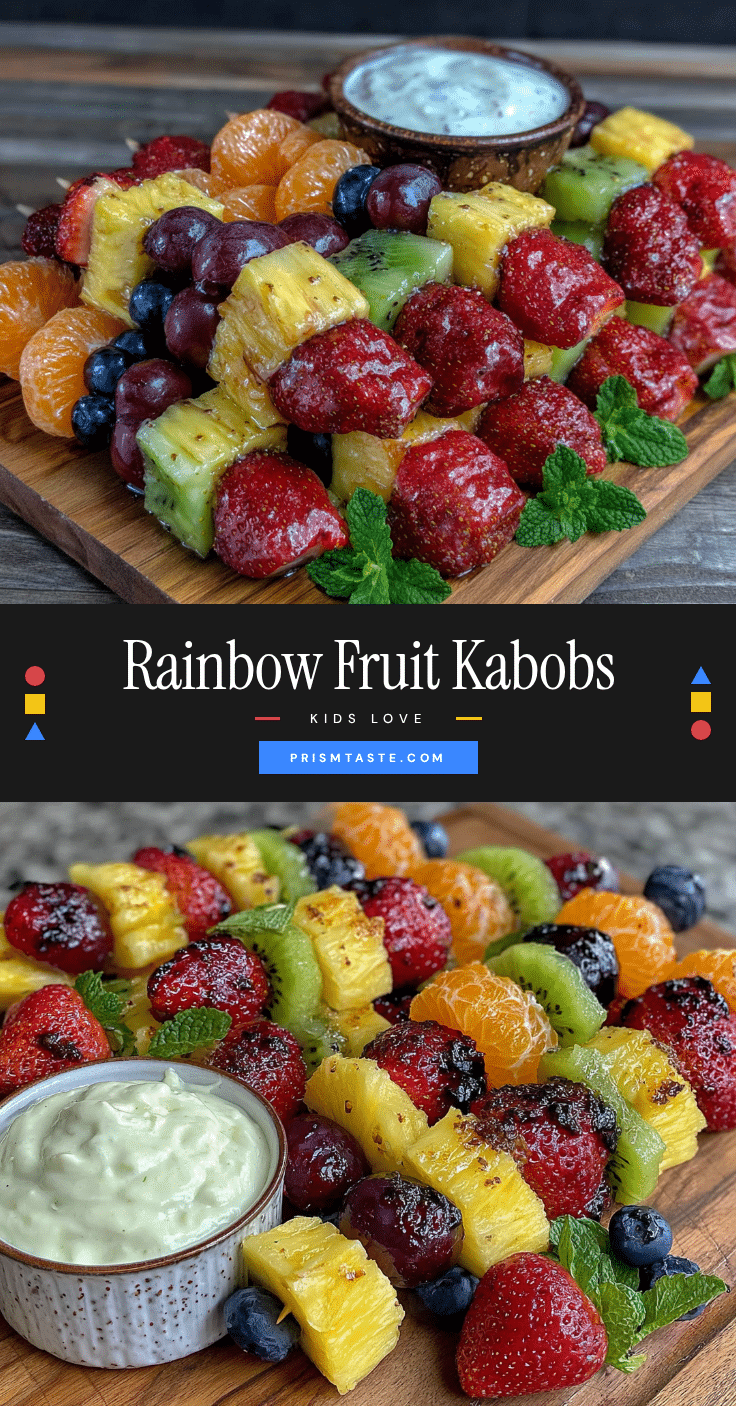
Easy Rainbow Fruit Kabobs Kids Love
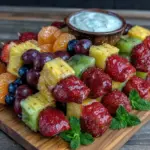
These Easy Rainbow Fruit Kabobs are a quick, healthy, and fun snack that kids adore. Made with simple ingredients and ready in 10 minutes, they turn snack time into a tiny celebration.
- Prep Time: 10 minutes
- Cook Time: 0 minutes
- Total Time: 10 minutes
- Yield: 10-12 kabobs
- Category: Snack
- Cuisine: American
Ingredients
- Red Fruits: Strawberries, hulled and halved if large
- Orange Fruits: Mandarin orange segments, drained well
- Yellow Fruits: Pineapple chunks, fresh or canned
- Green Fruits: Green grapes, seedless
- Blue/Purple Fruits: Blueberries, fresh
- Wooden Skewers: Short skewers (about 6-8 inches)
Instructions
- Prep Your Fruit (5 minutes): Wash all fruit thoroughly under cool water. Hull the strawberries by cutting off the green tops and any white part underneath. Cut large strawberries in half lengthwise. If using fresh pineapple, cut it into 1-inch chunks. Drain canned fruit well and pat everything dry with paper towels.
- Prepare Your Skewers (1 minute): If using long skewers, snap them in half or use kitchen shears to cut them. For young kids, you can snip off the sharp point on one end to make them safer. Give the skewers a quick rinse and dry them off.
- Assemble the Rainbow (3 minutes): Start with the red fruit — thread a strawberry or raspberry onto the skewer first. Follow with orange (mandarin segment), then yellow (pineapple chunk), then green (grape), and finally blue/purple (blueberry). Push each piece gently but not too tight — you want them snug but not squished. Leave about an inch of space at the bottom of the skewer for little hands to hold.
- Repeat for Each Kabob (3 minutes): Continue making kabobs until you’ve used all your fruit. A good rule of thumb is one kabob per child, plus a few extras for parents and teachers. I usually make about 12 kabobs from one batch of fruit.
- Arrange and Serve (1 minute): Place the finished kabobs on a serving platter in a rainbow pattern — all the red ends pointing the same direction. This makes the rainbow effect really pop. Serve immediately or refrigerate until ready to serve.
Notes
Keep fruit dry to prevent slippery kabobs. Cut uniform pieces for a polished look. Use short skewers for little hands. For toddlers, serve fruit pieces on a plate without skewers. Assemble kabobs right before serving for best results. Store assembled kabobs in an airtight container in the refrigerator for up to 4 hours. Do not freeze.
Nutrition
- Serving Size: 1 kabob
- Calories: 4560
- Sugar: 811
- Sodium: 5
- Carbohydrates: 1114
- Fiber: 23
- Protein: 0.51
Keywords: rainbow fruit kabobs, easy fruit kabobs, preschool snack, healthy snack for kids, fruit skewers, no-cook snack, kid-friendly snack