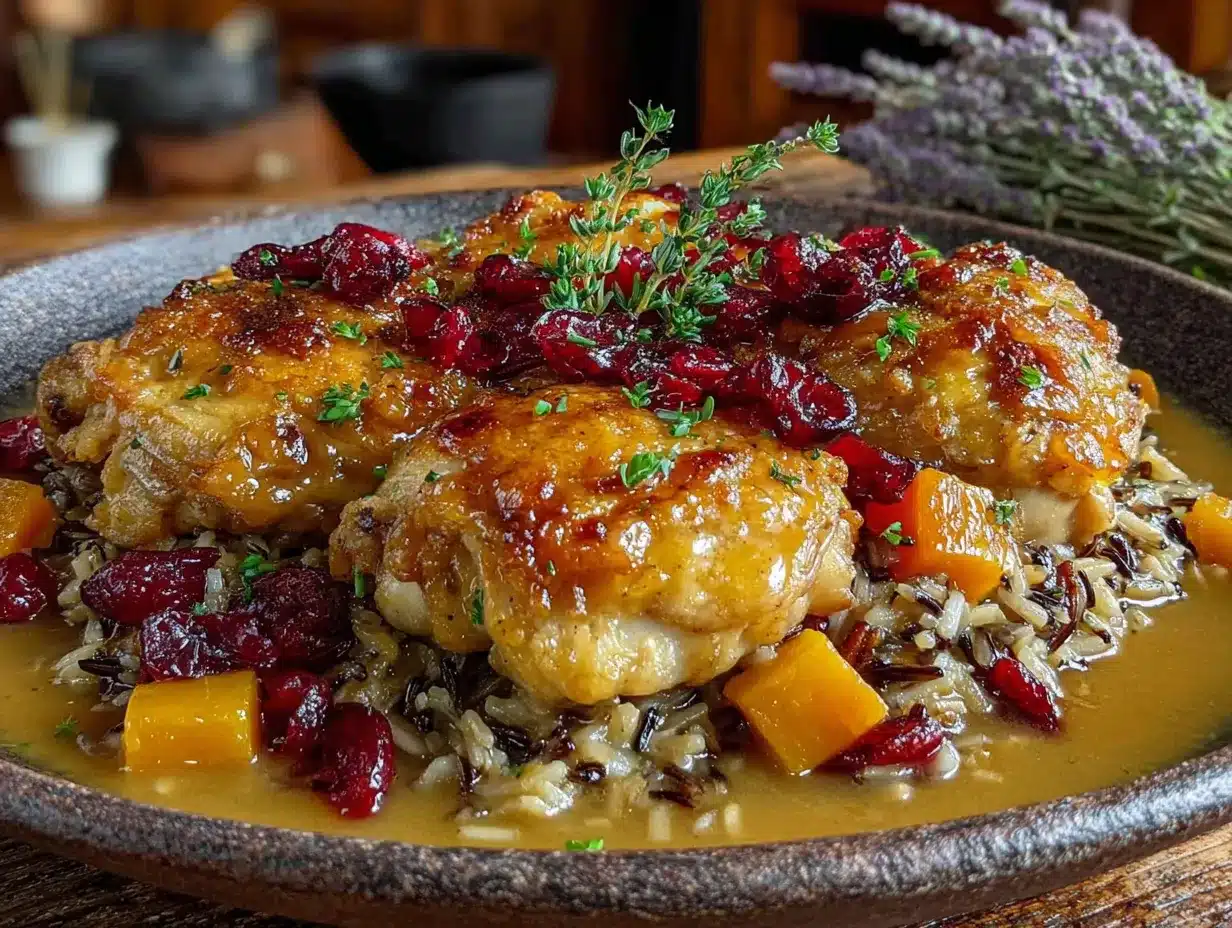
The way the rice catches the last of the light—each grain a tiny, burnished bead, suspended in broth that’s gone from clear to something close to amber—that’s what I was after. Not the chicken, not the herbs, not even the first steam hitting your face when you lift the lid. That visual, that specific, almost-too-pretty-to-eat quality of the broth clinging to everything, is the whole reason this pot happened. Everything else—the sear on the chicken, the softening of the leeks—was just the work you do to get there.
It started on a Tuesday that felt more like a Thursday, if you know what I mean. One of those afternoons where the light goes flat by three and the house gets a particular kind of quiet. I had a package of chicken thighs thawing on the counter and a bag of wild rice I’d bought on a whim weeks ago, and I just wanted something that would fill the kitchen with that low, steady heat-and-herb smell. Not a production. Just a pot doing its job.
So I browned the chicken in the same pot I planned to finish everything in—no extra dishes, that was the deal I made with myself—and let the fond build up on the bottom. That dark, sticky layer is where the flavor lives, honestly. I deglazed with a splash of broth, watching it hiss and release all that browned goodness, and then I stirred in the rice, the leeks, and a handful of thyme. I let it come to a gentle bubble, then turned the heat down to a whisper and walked away. That’s the thing about this cozy one-pot fall chicken and wild rice dinner—it doesn’t need you hovering. It just needs time and trust.
When I finally pulled the lid off, the rice had swelled into those little pearl shapes, the chicken was fork-tender, and the broth had thickened just enough to coat the back of a spoon. I sat down with a bowl, no sides, no fuss, and ate it while the evening turned dark outside the window. It was exactly the kind of meal I needed—the kind that doesn’t ask for anything but your attention. And honestly, that’s a pretty rare thing.
Why You’ll Love This Recipe
I’ve tested this recipe at least five times to get the rice-to-broth ratio exactly right—because nobody wants a soupy mess or a dry, stuck-together clump of grains. This version lands right in that sweet spot where every spoonful feels comforting but not heavy. Here’s why it’s become my go-to for fall weeknights:
- One Pot, Minimal Cleanup: You brown the chicken, sauté the aromatics, and simmer the rice all in the same Dutch oven or heavy-bottomed pot. That means fewer dishes and more time actually enjoying your meal.
- Pantry-Friendly Ingredients: No weird specialty items here. Chicken thighs, wild rice, leeks or onions, garlic, broth, and a few fresh herbs—that’s pretty much the whole list. You probably have most of it already.
- Perfect for Meal Prep: This dish actually gets better after a day in the fridge. The flavors meld together, and the rice absorbs even more of that savory broth. Make it on Sunday and enjoy it all week.
- Naturally Gluten-Free and Dairy-Free: No flour, no cream, no butter—just pure, clean ingredients doing the heavy lifting. It’s the kind of dinner that makes you feel good without even trying.
- Incredibly Satisfying Texture: Wild rice has this wonderful chew that holds up beautifully against tender shredded chicken. Every bite has a little bit of resistance, a little bit of softness—it’s textural perfection.
What makes this recipe different from the dozens of other chicken and rice dishes out there is the technique. I don’t just dump everything in and hope for the best. I sear the chicken first to build that deep, savory base, then cook the rice separately in the same pot so it absorbs all those browned bits. It’s a small extra step that makes a massive difference in flavor. This isn’t just another one-pot meal—it’s the one you’ll come back to again and again.
What Ingredients You Will Need
This recipe relies on simple, wholesome ingredients to deliver that deep, comforting flavor without any fuss. Most of these are pantry staples or easy to find at any grocery store, and I’ve included a few notes on what to look for to get the best results.
- Chicken Thighs (boneless, skinless): I prefer thighs here because they stay juicy and tender even after a long simmer. Breasts can work, but they tend to dry out more easily. Look for thighs that are roughly the same size for even cooking.
- Wild Rice Blend: I use a mix of wild rice and long-grain brown rice—it gives you that beautiful variety of textures and colors. Pure wild rice works too, but it takes longer to cook. My go-to brand is Lundberg Family Farms for consistent quality.
- Leeks: Leeks add a milder, sweeter onion flavor than standard yellow onions. If you can’t find leeks, a large yellow onion works just fine—just give it an extra minute or two to soften.
- Garlic (fresh cloves): Don’t skimp here. Fresh garlic adds that punchy aromatic base that makes the whole pot smell incredible. Pre-minced jarred garlic won’t give you the same depth.
- Chicken Broth (low-sodium): You control the salt level, so use low-sodium broth and adjust seasoning at the end. Homemade broth is amazing if you have it, but a good quality store-bought brand like Swanson or Kitchen Basics works perfectly.
- Fresh Thyme: Thyme and chicken are a classic pairing for a reason. The little leaves soften into the broth and release a subtle, earthy flavor. Dried thyme works in a pinch—use about a teaspoon—but fresh is better here.
- Bay Leaves: Just one or two, added during simmering and removed before serving. They add a subtle layer of complexity that you don’t even notice until it’s missing.
- Olive Oil or Avocado Oil: For searing the chicken and sautéing the leeks. Avocado oil has a higher smoke point, but olive oil works great if you keep the heat moderate.
- Salt and Black Pepper: Simple seasonings that let the other flavors shine. I use kosher salt for its clean taste and easy pinch-ability.
- Optional Garnishes: Fresh parsley, a squeeze of lemon juice, or a sprinkle of red pepper flakes for brightness and heat.
Substitution Tips: For a vegetarian version, swap the chicken for a can of drained chickpeas and use vegetable broth. The cook time will be shorter since you don’t need to cook the protein through. If you’re avoiding grains, cauliflower rice works but you’ll want to add it in the last 10 minutes of cooking so it doesn’t turn to mush.
Equipment Needed
You don’t need a fancy kitchen to pull this off—just a few solid tools that do the job well. Here’s what I use every time:
- Dutch Oven or Heavy-Bottomed Pot: A 5- to 6-quart Dutch oven is ideal. It holds heat evenly and has a tight-fitting lid for that gentle simmer. Le Creuset is lovely, but a Lodge enameled cast iron pot costs a fraction of the price and performs beautifully.
- Sharp Chef’s Knife: For cutting the chicken and prepping the leeks. A dull knife makes everything harder and more dangerous—trust me, I learned that the hard way.
- Cutting Board: Wood or plastic, doesn’t matter. Just make sure it’s big enough to work comfortably.
- Wooden Spoon or Silicone Spatula: For stirring and scraping up those browned bits from the bottom of the pot. Metal utensils can scratch enameled cast iron, so stick with wood or silicone.
- Measuring Cups and Spoons: For the broth and rice. I use a liquid measuring cup for the broth and dry measuring cups for the rice to keep things accurate.
- Tongs: For flipping the chicken thighs without splattering hot oil everywhere. A good pair of tongs is worth its weight in gold.
Budget-Friendly Alternative: If you don’t have a Dutch oven, a large stainless steel pot with a lid works fine. Just keep an eye on the heat—stainless steel can have hot spots, so stir occasionally to prevent sticking.
Preparation Method
Let’s get cooking. This recipe takes about an hour from start to finish, but most of that is hands-off simmering time. Here’s exactly how I make it:
- Prep Your Ingredients (10 minutes): Start by patting the chicken thighs dry with paper towels. This is crucial for a good sear—wet chicken just steams. Season both sides generously with salt and pepper. Trim the dark green tops off the leeks, slice them in half lengthwise, and rinse under cold water to remove any grit (leeks are notorious for hiding dirt). Then slice them into half-moons about 1/4-inch thick. Mince 4 cloves of garlic.
- Sear the Chicken (8-10 minutes): Heat 2 tablespoons of olive oil in your Dutch oven over medium-high heat until it shimmers. Place the chicken thighs in a single layer—don’t crowd the pot, work in batches if needed. Cook without moving them for 4-5 minutes, until the underside is deep golden brown. Flip and cook another 3-4 minutes. Transfer the chicken to a plate. It won’t be cooked through yet—that’s fine.
- Sauté the Aromatics (5 minutes): Reduce the heat to medium. Add another tablespoon of oil if the pot looks dry. Add the sliced leeks and a pinch of salt, and cook, stirring occasionally, until they soften and start to turn translucent—about 4 minutes. Add the minced garlic and cook for 30 seconds until fragrant. That smell? That’s the foundation of your whole dish.
- Deglaze the Pot (1 minute): Pour in about 1/2 cup of the chicken broth and use your wooden spoon to scrape up all those browned bits from the bottom. This is where so much flavor lives—don’t skip this step.
- Add the Rice and Broth (2 minutes): Stir in 1 cup of wild rice blend, coating it in the oil and leek mixture. Pour in the remaining 3 1/2 cups of chicken broth, add 4 sprigs of fresh thyme and 2 bay leaves, and give everything a good stir.
- Return the Chicken (1 minute): Nestle the seared chicken thighs back into the pot, along with any juices that accumulated on the plate. The chicken should be mostly submerged in the liquid.
- Simmer (40-45 minutes): Bring the pot to a gentle boil, then reduce the heat to low, cover with a tight-fitting lid, and let it simmer. Set a timer for 35 minutes. After 35 minutes, check the rice—it should be tender but still have a slight chew. If it’s still too firm, cover and cook another 5-10 minutes. The chicken should be fork-tender and easily shreddable.
- Rest and Serve (5 minutes): Remove the pot from the heat. Take out the thyme sprigs and bay leaves (they’ve done their job). Use two forks to shred the chicken right in the pot, stirring it back into the rice and broth. Let it rest for 5 minutes—the rice will absorb a bit more liquid and the flavors will settle. Taste and adjust salt and pepper as needed.
- Garnish and Enjoy: Ladle into bowls and top with fresh parsley, a squeeze of lemon juice, or a pinch of red pepper flakes if you like a little heat.
Sensory Cue: When it’s done, the broth should look slightly thickened—not watery, not gloppy—and the rice grains will have split open slightly, showing their creamy interiors. The chicken should pull apart with just a fork, no knife needed.
Cooking Tips & Techniques
After making this recipe more times than I can count (including a few spectacular failures), I’ve picked up a few tricks that make the process smoother and the results more consistent. Here’s what I wish someone had told me:
Don’t Skip the Searing. I know it’s tempting to just dump everything in the pot and walk away, but that golden-brown crust on the chicken is pure flavor. It’s not just about appearance—it’s about the Maillard reaction, which creates hundreds of flavor compounds that infuse the entire dish. Take the extra 8 minutes. You won’t regret it.
Watch Your Heat. Once you add the lid and reduce the heat to low, resist the urge to peek every five minutes. Every time you lift that lid, steam escapes, and your cooking time gets thrown off. Trust the process. If you’re worried about sticking, give the pot a gentle shake after 20 minutes—that’s enough to redistribute the liquid without losing heat.
The Rice Matters. Different wild rice blends have different cook times. I learned this the hard way when I used a pure wild rice that took nearly an hour to soften, while the chicken was falling apart at the 40-minute mark. If you’re using a blend, check the package instructions. If it’s just wild rice, you might need to par-cook it for 20 minutes before adding the chicken back in. Live and learn, right?
Salt in Layers. Season the chicken before searing, add a pinch when sautéing the leeks, and taste the broth before serving. Layering the salt throughout the process builds depth without making anything taste overly salty. It’s a small habit that makes a big difference.
Multitasking Strategy: While the chicken sears, prep your leeks and garlic. While the rice simmers, clean up your cutting board and measuring cups. By the time dinner’s ready, your kitchen is practically clean—and that’s a beautiful thing.
Variations & Adaptations
One of the best things about this recipe is how flexible it is. I’ve played around with different ingredients and methods, and here are some variations that worked really well:
1. Mushroom and Herb Version: Swap the chicken for 8 ounces of sliced cremini mushrooms and use vegetable broth. Sauté the mushrooms with the leeks until they release their liquid and start to brown—that umami flavor is incredible. Add a teaspoon of dried rosemary along with the thyme for a more woodsy profile. This version is vegetarian-friendly and just as satisfying.
2. Creamy Risotto-Style: Stir in 1/2 cup of heavy cream or full-fat coconut milk during the last 5 minutes of cooking. It turns the broth into a luscious, almost gravy-like sauce that coats every grain of rice. I did this one rainy Sunday and it felt like a hug in a bowl. Just be careful not to boil it after adding the cream—keep the heat low to prevent curdling.
3. Spicy Cajun Twist: Add 1 teaspoon of smoked paprika, 1/2 teaspoon of cayenne pepper, and a diced bell pepper along with the leeks. Use andouille sausage instead of chicken (slice it into rounds and brown it first). This version has a smoky heat that’s perfect for cold nights when you want something with a kick.
4. Slow Cooker Adaptation: Sear the chicken and sauté the leeks on the stovetop, then transfer everything to a slow cooker. Cook on low for 4-5 hours or on high for 2-3 hours. The rice will be softer and the broth thinner, but the flavor is still fantastic. It’s a great option for busy days when you want dinner ready when you walk in the door.
5. Lighter Summer Version: Swap the wild rice for farro or barley, and add a cup of diced zucchini or yellow squash during the last 15 minutes of cooking. Finish with fresh basil and a squeeze of lemon. It’s less heavy than the fall version but still deeply comforting.
Serving & Storage Suggestions
This dish is a meal in itself, but a few thoughtful accompaniments can turn it into something truly special. Here’s how I like to serve and store it:
Serving Temperature and Presentation: Serve it hot, straight from the pot. Ladle into wide, shallow bowls so the broth has room to spread. Top with a sprinkle of fresh parsley or chives for color, and maybe a few cracks of black pepper. A side of crusty bread is never a bad idea—it’s perfect for sopping up that savory broth. If you want a vegetable side, try a simple watermelon feta mint salad for a bright contrast, or some crispy air fryer corn on the cob with elote seasoning for a smoky, sweet side.
Storage Instructions: Let the dish cool completely before transferring to an airtight container. It will keep in the refrigerator for up to 4 days. The rice will continue to absorb liquid as it sits, so the leftovers will be thicker and more stew-like—which I actually prefer. If it gets too thick for your liking, add a splash of broth or water when reheating.
Freezing: This freezes beautifully for up to 3 months. Portion it into freezer-safe containers or zip-top bags (lay them flat to save space). Thaw overnight in the refrigerator before reheating. I’ve pulled a container out on a busy night and felt like I’d won the meal prep lottery.
Reheating Methods: The best way to reheat is on the stovetop over medium-low heat, stirring occasionally, until warmed through. Add a splash of broth if needed. The microwave works in a pinch—just cover the bowl and heat in 1-minute intervals, stirring between each—but the stovetop gives you better control and more even heating.
Flavor Development: Honestly, this dish is even better the next day. The flavors meld overnight, and the rice absorbs the broth in a way that makes every spoonful more cohesive. If you can plan ahead, make it a day early and reheat for dinner. You’ll thank me later.
Nutritional Information & Benefits
This recipe is packed with protein, fiber, and nutrients that make it as nourishing as it is delicious. Here’s a rough breakdown per serving (based on 6 servings):
- Calories: ~380
- Protein: 28g
- Fat: 12g
- Carbohydrates: 38g
- Fiber: 4g
- Sugar: 3g
- Sodium: 680mg (varies based on broth and added salt)
Health Benefits: Wild rice is a whole grain packed with fiber, B vitamins, and antioxidants. It has more protein than most other grains, which helps keep you full and satisfied. Chicken thighs provide high-quality protein and essential amino acids, plus iron and zinc for immune support. Leeks are a great source of prebiotic fiber that feeds your gut microbiome. This is the kind of meal that fuels your body without feeling like a chore—it’s comfort food that actually does you some good.
Dietary Considerations: This recipe is naturally gluten-free and dairy-free. It’s also nut-free and egg-free, making it safe for most common allergies. If you’re watching your sodium, use low-sodium broth and go easy on the added salt—you can always add more at the table.
Conclusion
This cozy one-pot fall chicken and wild rice dinner is the kind of recipe that earns a permanent spot in your rotation. It’s simple enough for a Tuesday night but special enough to serve to guests. The technique is straightforward, the ingredients are humble, and the result is something that feels like more than the sum of its parts—a bowl of warmth and comfort that makes the whole house smell amazing.
I love that this recipe doesn’t ask for anything fancy. It doesn’t require a trip to a specialty store or an afternoon of complicated prep. It just asks for a little patience and a willingness to let simple ingredients do their thing. And honestly, that’s my favorite kind of cooking—the kind that feels like a quiet act of care, both for yourself and for the people you feed.
If you make this, I’d love to hear how it turns out. Leave a comment below and let me know if you tried any of the variations, or if you came up with your own twist. And if you’re looking for another cozy one-pot meal, check out this creamy slow cooker white chicken chili—it’s perfect for those days when you want dinner to cook itself. Happy cooking, friends!
Frequently Asked Questions
Can I use chicken breasts instead of thighs?
Yes, you can. Chicken breasts will work, but they tend to dry out more easily since they have less fat. To prevent this, remove the breasts from the pot as soon as they reach 165°F internally—about 25-30 minutes into the simmer—and shred them separately, then stir back in just before serving.
How do I prevent the rice from becoming mushy?
The key is not to overcook it. Start checking the rice at the 35-minute mark, and remove the pot from the heat as soon as the rice is tender but still has a slight bite. Also, make sure you’re using a wild rice blend rather than plain white rice, which cooks much faster and can turn to mush.
Can I make this in an Instant Pot?
Absolutely. Sear the chicken and sauté the leeks using the sauté function. Then add the rice, broth, herbs, and chicken, close the lid, and cook on high pressure for 25 minutes. Let the pressure release naturally for 10 minutes before opening. The texture will be slightly different—softer rice, thicker broth—but it’s still delicious.
What can I serve with this dish?
This is a complete meal on its own, but it pairs beautifully with a simple green salad dressed with lemon vinaigrette, or some roasted vegetables like carrots or Brussels sprouts. A slice of crusty bread is also a great addition for soaking up the broth.
How do I make this recipe vegan?
Swap the chicken for a can of drained chickpeas or 8 ounces of sliced mushrooms, and use vegetable broth instead of chicken broth. The cook time will be shorter since you’re not cooking meat—about 30-35 minutes for the rice to become tender. Add a tablespoon of nutritional yeast for a savory, cheesy depth that mimics the umami from the chicken.
Pin This Recipe!
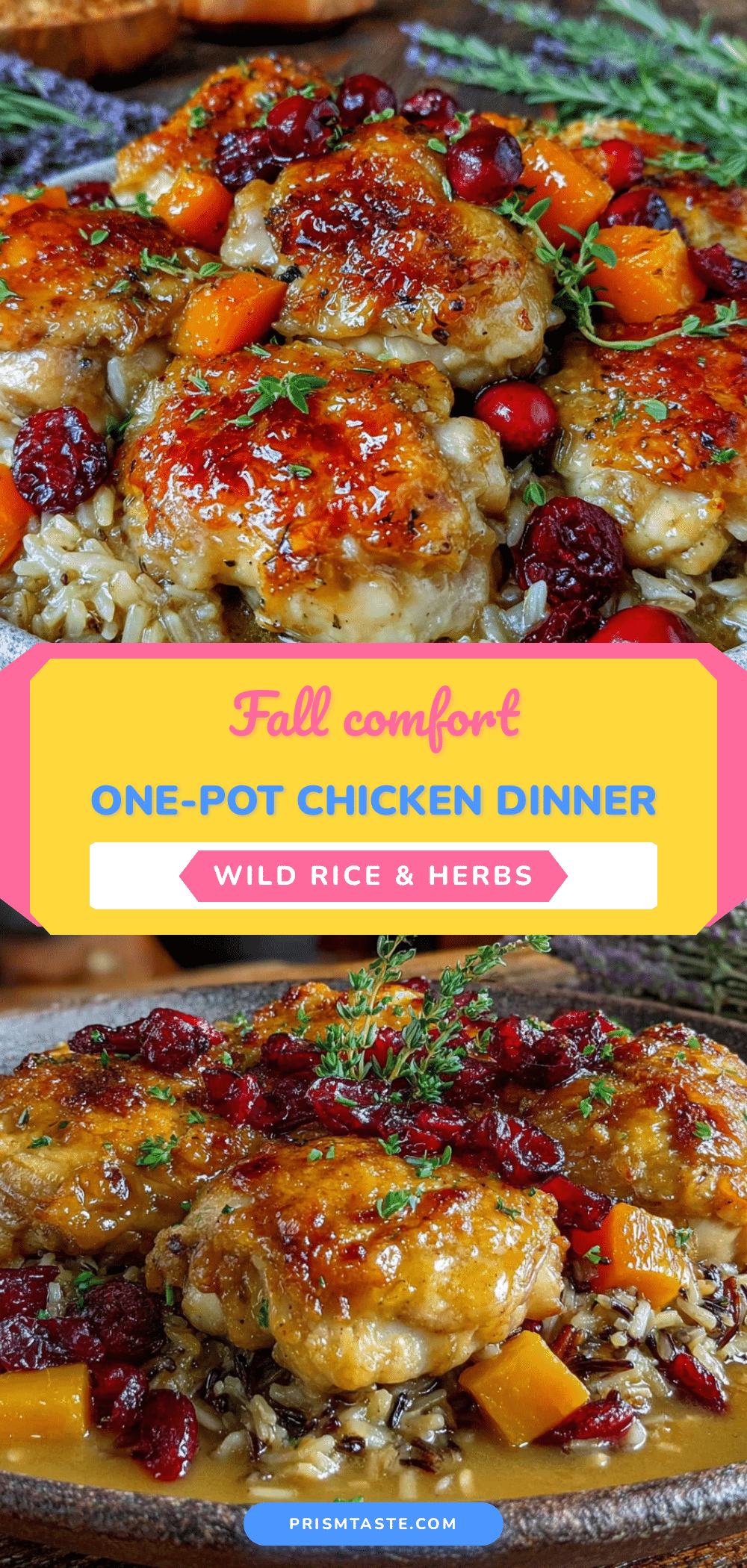
Cozy One-Pot Fall Chicken and Wild Rice Dinner Recipe

A comforting one-pot meal featuring tender chicken thighs, nutty wild rice, and savory broth, all cooked together for a deeply flavorful and satisfying fall dinner with minimal cleanup.
- Prep Time: 15 minutes
- Cook Time: 45 minutes
- Total Time: 1 hour
- Yield: 6 servings 1x
- Category: Main Course
- Cuisine: American
Ingredients
- 1 1/2 pounds boneless, skinless chicken thighs (about 4–6 thighs)
- 1 cup wild rice blend (e.g., Lundberg Family Farms)
- 2 large leeks (or 1 large yellow onion)
- 4 cloves garlic, minced
- 4 cups low-sodium chicken broth, divided
- 4 sprigs fresh thyme (or 1 teaspoon dried thyme)
- 2 bay leaves
- 3 tablespoons olive oil or avocado oil, divided
- Salt and black pepper, to taste
- Optional garnishes: fresh parsley, lemon juice, red pepper flakes
Instructions
- Prep your ingredients: Pat chicken thighs dry with paper towels and season generously with salt and pepper. Trim dark green tops off leeks, slice in half lengthwise, rinse under cold water to remove grit, then slice into 1/4-inch half-moons. Mince garlic.
- Sear the chicken: Heat 2 tablespoons oil in a Dutch oven or heavy-bottomed pot over medium-high heat. Place chicken thighs in a single layer (work in batches if needed) and cook without moving for 4-5 minutes until deep golden brown. Flip and cook another 3-4 minutes. Transfer chicken to a plate (it won’t be fully cooked).
- Sauté aromatics: Reduce heat to medium. Add remaining 1 tablespoon oil if needed. Add leeks and a pinch of salt; cook, stirring occasionally, until softened and translucent, about 4 minutes. Add garlic and cook 30 seconds until fragrant.
- Deglaze the pot: Pour in 1/2 cup chicken broth and use a wooden spoon to scrape up browned bits from the bottom.
- Add rice and broth: Stir in 1 cup wild rice blend. Pour in remaining 3 1/2 cups broth, add thyme sprigs and bay leaves, and stir to combine.
- Return chicken: Nestle seared chicken thighs back into the pot along with any accumulated juices.
- Simmer: Bring to a gentle boil, then reduce heat to low, cover with a tight-fitting lid, and simmer for 40-45 minutes. Check rice at 35 minutes; it should be tender with a slight chew. Chicken should be fork-tender.
- Rest and serve: Remove pot from heat. Discard thyme sprigs and bay leaves. Use two forks to shred chicken directly in the pot, stirring into rice and broth. Let rest 5 minutes. Taste and adjust salt and pepper as needed.
- Garnish and enjoy: Ladle into bowls and top with fresh parsley, a squeeze of lemon juice, or red pepper flakes if desired.
Notes
For best results, don’t skip searing the chicken—it builds deep flavor. Use a wild rice blend for optimal texture; pure wild rice may require longer cooking. Leftovers thicken as rice absorbs broth; add a splash of broth when reheating. This dish tastes even better the next day.
Nutrition
- Serving Size: 1 bowl (about 1 1/2
- Calories: 380
- Sugar: 3
- Sodium: 680
- Fat: 12
- Saturated Fat: 3
- Carbohydrates: 38
- Fiber: 4
- Protein: 28
Keywords: one-pot meal, chicken and wild rice, fall dinner, gluten-free, dairy-free, comfort food, easy weeknight dinner