My husband texted me at 4:15 on a Tuesday. “Boss is coming for dinner. In two hours.” I stared at the pack of bone-in pork chops I’d just pulled from the freezer and the sad, slightly soft apples rolling around in the fruit bowl. The fridge held onions, some thyme that was hanging on for dear life, and half a bottle of apple cider from weekend pancakes. Not exactly a company-is-coming spread. But I’d been reading about braising—that low-and-slow magic that turns cheap cuts into something you’d pay for at a restaurant—and figured I had nothing to lose.
So I seared those pork chops until the kitchen smelled like a diner, let the onions go all jammy and sweet, poured in the cider (okay, maybe a little more than I meant to), and shoved the whole thing in the oven. Forty-five minutes later, the apartment smelled like autumn had exploded inside it. The chops were so tender they practically fell apart when I looked at them. My husband’s boss asked for the recipe before he finished his second helping. I had to admit I’d kind of made it up as I went along.
That’s the thing about these apple cider braised pork chops with caramelized onions—they feel like you fussed, but really, the cider and the oven do all the work. It’s the kind of meal that makes you look like a hero without the stress. I’ve made it a dozen times since that panicked Tuesday, tweaking the cider amount, playing with the herbs, and honestly, it keeps getting better. This one’s a keeper.
Why You’ll Love This Recipe
I’ve tested this recipe more times than I can count, and here’s what keeps me coming back:
- One Pan, Minimal Mess : You sear, you deglaze, you braise—all in the same skillet. Less cleanup means more time to actually enjoy dinner.
- Simple Pantry Ingredients : Pork chops, apples, onions, cider, and a few spices. No fancy trips to a specialty store required.
- Company-Worthy in Under an Hour : From fridge to table in about 60 minutes. Perfect for those “oh no, guests are coming” moments.
- Fork-Tender Every Time : The braising liquid keeps the pork incredibly moist. Dry pork chops? Not a problem here.
- Built-In Sauce : The cider and onions reduce into this gorgeous, silky pan sauce that you’ll want to spoon over everything.
- Seasonal but Not Fussy : Tastes like fall on a plate, but it’s easy enough for a regular Tuesday night.
What makes this version different? It’s the balance. Some recipes drown the pork in cider until it’s bland. Others skip the caramelized onions, which is a crime. Here, we get deep browning on the chops, properly jammy onions, and just enough cider to create a rich, savory-sweet sauce without washing out the pork flavor. The first time I made this, I closed my eyes after that first bite. It’s comfort food that feels a little special—the kind of meal that makes everyone at the table go quiet for a minute.
What Ingredients You Will Need
This recipe relies on simple, whole ingredients to build big flavor. Nothing weird, nothing hard to find. Here’s what you need and why each one matters:
For the Pork Chops
- 4 bone-in pork chops (about 1-inch thick) – Bone-in chops stay juicier during braising. I prefer thick-cut for this recipe—they can handle the longer cook time without drying out. Look for chops with good marbling.
- 1 teaspoon kosher salt – For seasoning. Don’t skimp here; the salt helps the meat hold moisture.
- ½ teaspoon black pepper – Freshly ground is best.
- 2 tablespoons olive oil or avocado oil – For searing. You need an oil with a high smoke point to get that deep golden crust.
For the Caramelized Onions
- 2 large yellow onions, thinly sliced – Yellow onions are my go-to for caramelizing. They’re sweet without being overpowering. (I’ve used sweet Vidalias too—they work great but cook down faster.)
- 2 tablespoons unsalted butter – Adds richness and helps the onions brown beautifully.
- Pinch of salt – Draws out moisture and speeds up caramelization.
For the Braising Liquid
- 1 ½ cups apple cider (unfiltered is best) – This is the star. Unfiltered cider has more apple flavor and a little natural sediment that thickens the sauce. If you can’t find it, regular apple cider works fine—just avoid apple juice, which is too sweet and thin.
- ½ cup low-sodium chicken broth – Balances the sweetness of the cider and adds savory depth. I use Swanson’s low-sodium broth—it’s reliable and not too salty.
- 2 tablespoons apple cider vinegar – Brightens everything up. Don’t skip this; it cuts through the richness like a charm.
- 2 tablespoons Dijon mustard – Adds a subtle tang and helps emulsify the sauce. Whole grain mustard works too if you want little pops of texture.
- 2 sprigs fresh thyme (or ½ teaspoon dried) – Earthy and aromatic. Thyme and apples are a classic combo for a reason.
- 1 bay leaf – Adds a subtle, herby background note.
- 1 cinnamon stick (optional but recommended) – Just a whisper of warmth. It’s not a sweet dessert vibe—it’s a cozy, savory hint that makes the whole dish feel special.
For Finishing
- 1 tablespoon cold butter, cut into small pieces – Stirred in at the end to make the sauce glossy and luxurious.
- Fresh parsley or thyme for garnish – Because we eat with our eyes first.
Ingredient Swap Note: If you’re gluten-free, double-check your Dijon mustard and broth labels. The rest is naturally gluten-free. For a dairy-free version, use olive oil instead of butter and skip the finishing butter—still delicious, just a little less velvety.
Equipment Needed
You don’t need a lot of fancy gear for this one. Here’s what I use:
- Large, heavy-bottomed skillet or Dutch oven (12-inch recommended) – Cast iron is my first choice; it holds heat beautifully and gives you that perfect sear. A stainless steel pan works great too. Just make sure it’s oven-safe since we’re braising in the oven.
- Sharp chef’s knife – For slicing onions. A dull knife will make you cry—literally.
- Cutting board – Preferably something with a groove to catch onion juice.
- Tongs – For flipping the pork chops without piercing them. Piercing = lost juices.
- Wooden spoon or silicone spatula – For scraping up those brown bits (the fond) from the pan.
- Measuring cups and spoons – The cider and broth need to be somewhat accurate, though I’ve eyeballed it in a pinch.
- Oven mitts – The handle of your skillet will be screaming hot.
- Meat thermometer (optional but helpful) – Pork should reach 145°F internally. After years of cooking, I can tell by feel, but a thermometer takes the guesswork out.
Budget-Friendly Tip: You don’t need a fancy Le Creuset. My first few batches were made in a $20 cast iron skillet from a discount store. It worked perfectly. Just make sure whatever pan you use can go from stovetop to oven.
Preparation Method
Let’s get cooking. This whole thing comes together in about an hour, and most of that is hands-off oven time.
- Preheat your oven to 325°F (163°C). Move a rack to the middle position. Give the oven time to come to temperature—a steady, moderate heat is key for braising.
- Pat the pork chops dry with paper towels. This is non-negotiable. Wet meat won’t brown; it’ll steam. Season both sides generously with the salt and pepper. Let them sit at room temperature for 15-20 minutes while you prep the onions. (Cold meat hitting a hot pan seizes up and cooks unevenly.)
- Heat the olive oil in your skillet over medium-high heat. You want the oil shimmering but not smoking. When you flick a drop of water in and it sizzles immediately, you’re ready.
- Sear the pork chops. Place them in the skillet in a single layer—don’t crowd them. If your pan is small, do this in two batches. Cook for 3-4 minutes per side, until deeply golden brown and crusty. Don’t move them around; let that crust form. Transfer the chops to a plate and set aside. (They won’t be cooked through yet—that’s fine.)
- Reduce heat to medium and add the butter. Once it melts, add the sliced onions and a pinch of salt. Stir to coat. Cook for 12-15 minutes, stirring occasionally, until the onions are soft, golden, and starting to caramelize. Don’t rush this step. If they start to stick, add a splash of the cider to deglaze. You’re looking for deep amber color, not just translucent.
- Deglaze the pan. Pour in the apple cider vinegar and scrape up all those brown bits on the bottom of the pan with your wooden spoon. That’s pure flavor. Let it bubble for about 30 seconds.
- Add the braising liquids. Pour in the apple cider and chicken broth. Stir in the Dijon mustard, thyme sprigs, bay leaf, and cinnamon stick (if using). Bring the liquid to a gentle simmer—not a rolling boil, just a lazy bubble.
- Return the pork chops to the skillet. Nestle them into the liquid, spooning some of the onions over the tops. The liquid should come about halfway up the sides of the chops. If it doesn’t, add a splash more broth or cider.
- Transfer the skillet to the preheated oven. Braise, uncovered, for 30-40 minutes. The exact time depends on the thickness of your chops. Start checking at 30 minutes. The pork should be tender and register 145°F on a meat thermometer. The sauce should have reduced and thickened slightly.
- Remove the skillet from the oven. Carefully take out the cinnamon stick, bay leaf, and thyme stems. Transfer the pork chops to a serving platter and tent loosely with foil.
- Finish the sauce. Place the skillet back on the stovetop over medium heat. Let the sauce simmer for 3-5 minutes until it’s reduced to your liking. Taste and adjust seasoning—you might want a pinch more salt or a splash of vinegar if it’s too sweet. Remove from heat and whisk in the cold butter pieces until melted and glossy. This is called mounting the butter, and it’s the secret to a restaurant-quality sauce.
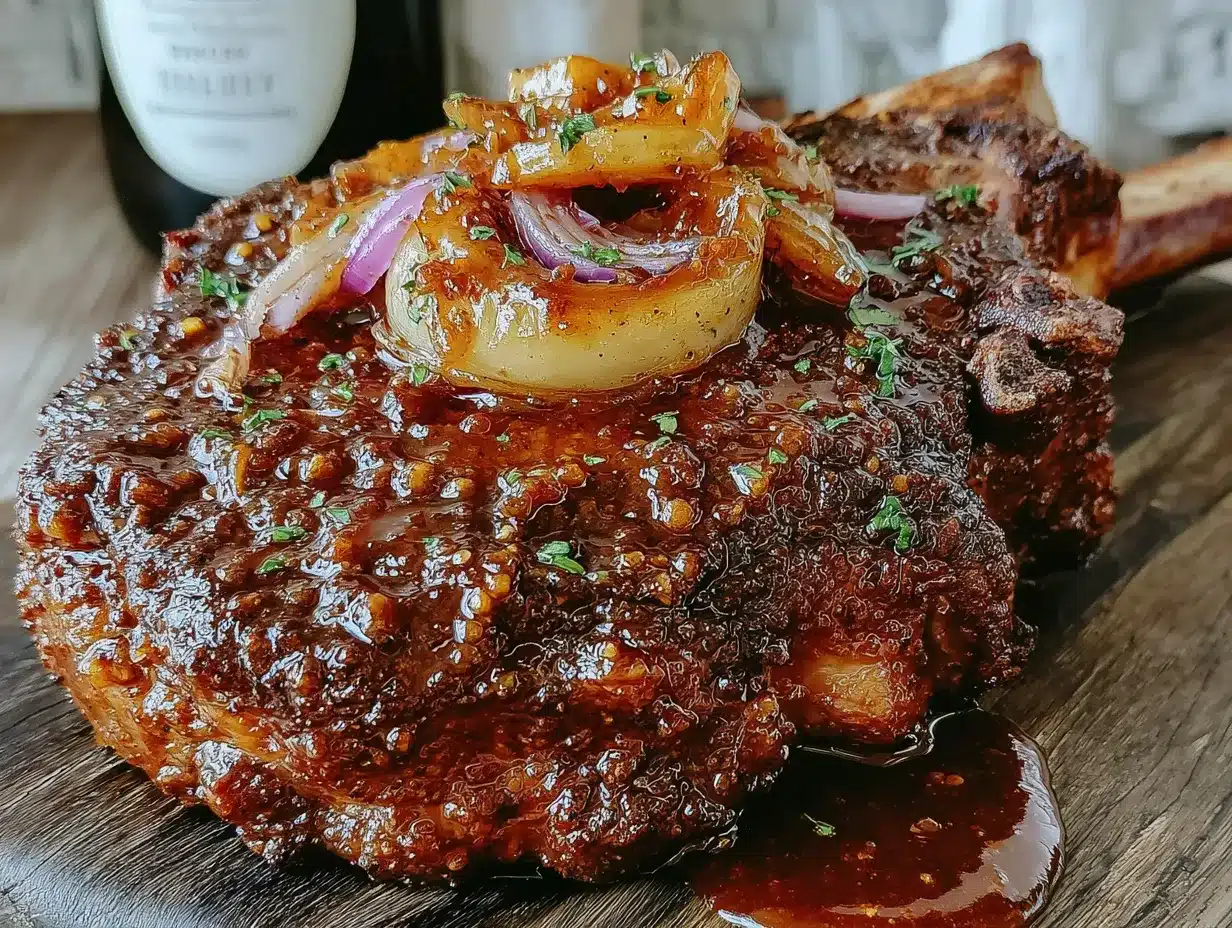
- Spoon the onions and sauce over the pork chops. Garnish with fresh parsley or thyme. Serve immediately.
Sensory Check: At step 5, your onions should smell sweet and rich, like they’re about to become something special. At step 9, when you open the oven, the kitchen should smell like a cozy autumn candle—apples, pork, and herbs all mingling together. The sauce at the end should be thick enough to coat the back of a spoon, not watery.
Cooking Tips & Techniques
After making these chops more times than I can count, here’s what I’ve learned the hard way so you don’t have to:
Don’t skip the sear. I know it’s tempting to rush this part, but that golden-brown crust is flavor gold. It’s the difference between “good” and “I can’t stop eating this.” Pat the chops dry, get the pan hot, and don’t crowd them. If you hear a good sizzle when they hit the pan, you’re doing it right.
Patience with the onions. Caramelizing onions takes time. If you crank the heat to speed it up, they’ll burn before they get sweet. Medium heat, occasional stirring, and a little patience. I usually start the onions, then clean up the kitchen while they do their thing. Multitasking win.
Watch the liquid level. If your skillet is too big for the amount of liquid, the chops might not be submerged enough. If it’s too small, the liquid might boil over. A 12-inch skillet is the sweet spot. And remember, the liquid shouldn’t cover the chops completely—halfway up is perfect.
My biggest failure: The first time I made this, I used cheap, thin pork chops because they were on sale. They cooked in about 15 minutes and came out tough and dry. Thick, bone-in chops are worth the extra few dollars. Trust me on this.
Temperature matters. Pork cooked to 145°F is safe, juicy, and slightly pink in the center (that’s a good thing!). If you don’t have a thermometer, poke the thickest part—it should feel firm but with a little give, like the fleshy part of your palm when you make a relaxed fist.
Make it ahead: This dish actually gets better after a day in the fridge. The flavors meld and deepen. I’ve made it the day before a dinner party and just reheated it gently on the stovetop. Nobody knew.
Variations & Adaptations
One of the best things about this recipe is how flexible it is. Here are some ways I’ve played with it:
Apple-Infused Twist: Add two thinly sliced apples (Honeycrisp or Fuji work great) to the onions during the last 5 minutes of caramelizing. They soften and soak up all that savory goodness. I did this on a whim one Sunday and it’s become my favorite fall version.
Herb Swap: Not a thyme fan? Use rosemary or sage instead. Rosemary is bolder, so use one sprig instead of two. Sage pairs beautifully with apple—try 4-5 fresh leaves, minced.
Dairy-Free Adaptation: Skip the butter in the onions (use olive oil instead) and omit the finishing butter. The sauce won’t be quite as glossy, but it’ll still be delicious. You can also stir in a splash of full-fat coconut milk at the end for richness.
Slow Cooker Method: Sear the chops and caramelize the onions on the stovetop, then transfer everything to a slow cooker. Cook on low for 4-5 hours or high for 2-3 hours. The sauce will be thinner, so thicken it with a cornstarch slurry (1 tablespoon cornstarch + 2 tablespoons cold water) stirred in during the last 30 minutes.
Spicy Kick: Add ½ teaspoon of red pepper flakes along with the thyme. The heat plays off the sweetness of the cider beautifully. My husband loves this version; my kids prefer the original.
Pork Shoulder Alternative: This same braising liquid works wonders with a 2-3 pound pork shoulder. Just sear it whole, then braise for 2-2.5 hours until shreddable. Shred the meat and toss with the reduced sauce—perfect for sandwiches or over rice.
If you’re a fan of cozy, one-pan dinners, you might also enjoy this cozy crockpot beef stew with red wine and root vegetables for another set-it-and-forget-it meal.
Serving & Storage Suggestions
These pork chops are incredibly versatile when it comes to sides. Here’s how I like to serve them:
Temperature: Serve the chops hot, straight from the skillet. Let them rest for 5 minutes under foil before serving so the juices redistribute.
Perfect Pairings: The sauce is begging for something to soak it up. Mashed potatoes are my top choice—they catch every drop of that cider-onion goodness. Buttered egg noodles, creamy polenta, or crusty bread are all excellent options. For a lighter side, roasted Brussels sprouts or a simple green salad with a tangy vinaigrette balances the richness.
Drink Pairing: A dry hard cider is the obvious and perfect match. If you prefer wine, go with an off-dry Riesling or a light Pinot Noir. The acidity cuts through the richness without overwhelming the apple flavor.
Storage: Leftover pork chops keep in an airtight container in the refrigerator for up to 3 days. The flavors actually get better as they sit. To reheat, place the chops and sauce in a covered skillet over low heat for 10-15 minutes, adding a splash of broth or water if the sauce has thickened too much. The microwave works in a pinch, but it tends to dry out the meat.
Freezer-Friendly: This dish freezes beautifully. Cool completely, then transfer to a freezer-safe container. It’ll keep for up to 3 months. Thaw overnight in the fridge and reheat gently on the stovetop. The sauce might separate slightly—just whisk it back together as it warms.
Flavor Development: Honestly, these are even better the next day. The pork soaks up more of that cider-onion flavor, and the sauce thickens into something almost jammy. I sometimes make a double batch just for leftovers.
For a complete autumn-inspired meal, try serving these chops alongside this maple Dijon chicken thighs with roasted apples and Brussels sprouts for a seasonal vegetable side that complements the apple notes.
Nutritional Information & Benefits
Here’s an approximate nutritional breakdown per serving (one pork chop with sauce and onions):
| Nutrient | Amount |
|---|---|
| Calories | 420-480 |
| Protein | 35-40g |
| Fat | 22-28g |
| Carbohydrates | 18-22g |
| Fiber | 2g |
| Sugar | 12-15g (naturally occurring) |
| Sodium | 600-800mg (varies with broth and salt) |
Health Highlights: Pork chops are an excellent source of high-quality protein, B vitamins (especially B12 and B6), and selenium, which supports immune function. The onions provide prebiotic fiber that feeds your gut bacteria, while apple cider contains antioxidants called polyphenols. This is a balanced meal with protein, healthy fats, and carbohydrates from the natural sugars in the cider and onions.
Dietary Considerations: This recipe is naturally gluten-free and nut-free. For a lower-sodium version, use unsalted broth and reduce the added salt. The sugar content comes entirely from the apple cider and onions—no added sugar here. If you’re watching your carb intake, you can reduce the cider to 1 cup and add extra broth, though the sauce will be less sweet.
Personal Note: I love that this meal feels indulgent but is actually pretty balanced. It’s the kind of dinner that fills you up without weighing you down. Perfect for those evenings when you want comfort food that doesn’t leave you regretting it.
Conclusion
These apple cider braised pork chops with caramelized onions are the kind of recipe that makes you look like a kitchen wizard with minimal effort. The pork turns out impossibly tender, the sauce is rich and velvety, and the whole thing comes together in one pan. It’s perfect for a cozy weeknight dinner, a casual dinner party, or any time you want a meal that feels special without the stress.
I love this recipe because it’s forgiving. You can tweak the herbs, swap the cider for beer, or throw in extra apples—it always works. It’s become my go-to for those “I need to impress someone” moments, and it’s never let me down.
I’d love to hear how yours turn out! Did you try a variation? Add extra apples? Serve it with something unexpected? Drop a comment below and let me know. And if you loved it, share this recipe with a friend who needs a new weeknight hero. Happy cooking!
Frequently Asked Questions
Can I use boneless pork chops instead of bone-in?
Yes, but they’ll cook faster and are more likely to dry out. If using boneless chops, reduce the braising time by 10-15 minutes and start checking for doneness early. Thick-cut boneless chops (at least 1 inch thick) work better than thin ones.
What if I don’t have apple cider? Can I use apple juice?
You can, but the results won’t be the same. Apple juice is thinner and much sweeter, so the sauce will be less complex. If you’re in a pinch, use 1 cup apple juice plus ½ cup chicken broth and a squeeze of lemon juice to balance the sweetness.
Can I make this in a slow cooker instead of the oven?
Absolutely. Follow the recipe through step 8 (searing and deglazing), then transfer everything to a slow cooker. Cook on low for 4-5 hours or high for 2-3 hours. The sauce will be thinner, so thicken it on the stovetop with a cornstarch slurry before serving.
My sauce is too thin. How do I fix it?
Remove the pork chops and simmer the sauce on the stovetop over medium heat for 5-10 minutes until it reduces and thickens. You can also whisk in a slurry of 1 teaspoon cornstarch mixed with 1 tablespoon cold water. Let it bubble for a minute to cook out the raw starch taste.
Can I prep this recipe ahead of time?
Yes! You can sear the pork chops and caramelize the onions up to 2 days ahead. Store them separately in the fridge, then assemble and braise when you’re ready. The fully cooked dish also keeps well for up to 3 days in the fridge and actually tastes better the next day.
Looking for more one-pan comfort food? This creamy crockpot marry me chicken with sun-dried tomatoes is another crowd-pleaser that comes together with minimal effort.
Pin This Recipe!

Perfect One-Pan Apple Cider Braised Pork Chops

Tender, fork-tender pork chops braised in apple cider with caramelized onions, all made in one pan. A cozy, company-worthy meal that comes together in under an hour with simple pantry ingredients.
- Prep Time: 20 minutes
- Cook Time: 40 minutes
- Total Time: 60 minutes
- Yield: 4 servings 1x
- Category: Main Course
- Cuisine: American
Ingredients
- 4 bone-in pork chops (about 1-inch thick)
- 1 teaspoon kosher salt
- ½ teaspoon black pepper
- 2 tablespoons olive oil or avocado oil
- 2 large yellow onions, thinly sliced
- 2 tablespoons unsalted butter
- Pinch of salt
- 1 ½ cups apple cider (unfiltered is best)
- ½ cup low-sodium chicken broth
- 2 tablespoons apple cider vinegar
- 2 tablespoons Dijon mustard
- 2 sprigs fresh thyme (or ½ teaspoon dried)
- 1 bay leaf
- 1 cinnamon stick (optional but recommended)
- 1 tablespoon cold butter, cut into small pieces
- Fresh parsley or thyme for garnish
Instructions
- Preheat your oven to 325°F (163°C). Move a rack to the middle position.
- Pat the pork chops dry with paper towels. Season both sides generously with the salt and pepper. Let them sit at room temperature for 15-20 minutes while you prep the onions.
- Heat the olive oil in your skillet over medium-high heat until shimmering.
- Sear the pork chops in a single layer for 3-4 minutes per side, until deeply golden brown. Transfer to a plate and set aside.
- Reduce heat to medium and add the butter. Once melted, add the sliced onions and a pinch of salt. Cook for 12-15 minutes, stirring occasionally, until the onions are soft, golden, and starting to caramelize.
- Deglaze the pan with the apple cider vinegar, scraping up brown bits. Let bubble for about 30 seconds.
- Add the apple cider, chicken broth, Dijon mustard, thyme sprigs, bay leaf, and cinnamon stick (if using). Bring to a gentle simmer.
- Return the pork chops to the skillet, nestling them into the liquid. Spoon some onions over the tops.
- Transfer the skillet to the preheated oven. Braise, uncovered, for 30-40 minutes until pork reaches 145°F and is tender.
- Remove from oven. Discard cinnamon stick, bay leaf, and thyme stems. Transfer pork to a serving platter and tent with foil.
- Place the skillet back on the stovetop over medium heat. Simmer the sauce for 3-5 minutes until reduced. Taste and adjust seasoning. Remove from heat and whisk in cold butter pieces until melted and glossy.
- Spoon the onions and sauce over the pork chops. Garnish with fresh parsley or thyme. Serve immediately.
Notes
For best results, use thick bone-in pork chops. Don’t skip the sear or the caramelizing step. The dish can be made ahead and actually tastes better the next day. For a dairy-free version, use olive oil instead of butter and omit the finishing butter.
Nutrition
- Serving Size: 1 pork chop with sau
- Calories: 450
- Sugar: 13
- Sodium: 700
- Fat: 25
- Saturated Fat: 8
- Carbohydrates: 20
- Fiber: 2
- Protein: 37
Keywords: apple cider pork chops, braised pork chops, one-pan dinner, caramelized onions, fall recipe, comfort food, easy dinner, gluten-free