The neighborhood fall potluck was in six hours and I’d completely forgotten. I’m not kidding—I woke up that morning, scrolled through my phone, and saw the evite staring back at me. Everyone else would be bringing their signature dishes. Karen from three doors down always shows up with a three-layer pumpkin cake she spends two days on. Mike brings his famous braised short ribs that fill the whole street with this ridiculous savory smell. And me? I had half a butternut squash in my fridge, some brown butter I’d made the night before for a different recipe that flopped, and a carton of broth I was pretty sure was still good.
Honestly, I almost texted my neighbor to say I was sick. But I didn’t. I just started chopping. The squash was already peeled from that failed recipe attempt, so that saved me twenty minutes. I melted the brown butter and watched it turn that nutty golden color, and I thought, well, this soup is either going to be amazing or a total disaster. No in-between. I threw everything in the pot, crossed my fingers, and ran to change out of my sweatpants.
The thing is—and maybe you’ve been here—when you have no time and even less confidence, you end up cooking with a kind of reckless freedom. You stop overthinking. You just go. I stirred in a splash of apple cider vinegar at the end because it felt right, and I swear, that little panic move saved the whole thing. The soup turned out creamy without being heavy, rich without being indulgent. It had that deep brown butter flavor that makes you close your eyes, but it left you feeling light, not sluggish.
I showed up late, carrying my pot, and I watched people go back for seconds. Then thirds. Karen asked for the recipe, and I had to laugh—because the only secret ingredient was that I’d forgotten about the potluck until the last minute. That’s the soup I’m sharing with you today. This lightened-up brown butter butternut squash soup is the one that taught me that sometimes the best recipes come from the moments you least expect them.
Why You’ll Love This Recipe
Let me tell you why this soup has become my go-to for fall—and honestly, why it might become yours too. I’ve tested this recipe at least a dozen times, tweaking the ratios, trying different broths, and even burning a batch of brown butter (twice) before I got it right. So trust me when I say this version is the one.
- Quick & Easy: This soup comes together in under 45 minutes, from start to finish. Perfect for those weeknights when you want something cozy but don’t have hours to spend in the kitchen.
- Simple Ingredients: No fancy grocery trips needed. You probably already have most of these ingredients in your pantry—onion, garlic, broth, and a butternut squash if you’re lucky enough to keep one around.
- Perfect for Fall Gatherings: Whether it’s a Thanksgiving starter, a Halloween dinner, or just a rainy Tuesday, this soup fits every fall occasion without feeling fussy.
- Crowd-Pleaser: I’ve served this to picky kids, health-conscious friends, and my uncle who swears he doesn’t like squash. Everyone goes back for more.
- Unbelievably Delicious: The brown butter adds this deep, nutty richness that makes the soup taste indulgent—but without the heavy cream or loads of butter you’d find in traditional versions.
What makes this recipe different from the rest? It’s the balance. Most butternut squash soups lean too heavy on cream or butter, masking the squash’s natural sweetness. Others go too lean and end up tasting like watery vegetable broth. This version uses just enough brown butter to give you that rich flavor, then relies on the squash itself and a clever trick—blending in a bit of Greek yogurt—to create that velvety texture without the extra calories. It’s comfort food reimagined: healthier, faster, but with the same soul-soothing satisfaction. Perfect for impressing guests without stress, or turning a simple fall meal into something memorable.
What Ingredients You Will Need
This recipe uses simple, wholesome ingredients to deliver bold flavor and satisfying texture without the fuss. Most of these are pantry staples or easy to find at any grocery store, especially during fall when squash is in season.
- Butternut squash, peeled and cubed (about 4 cups, or one medium squash) – Look for one that feels heavy for its size and has a matte, tan skin. No shiny spots—that means it was picked too early.
- Unsalted butter (3 tablespoons) – I prefer Kerrygold for its richer flavor, but any good-quality unsalted butter works. The salt content varies in salted butter, so stick with unsalted to control the seasoning.
- Yellow onion, diced (1 medium) – A sweet onion like Vidalia works great here too, but yellow onion gives that classic savory base.
- Garlic cloves, minced (3 cloves) – Fresh garlic is non-negotiable here. Skip the jarred stuff—it won’t give you the same warmth.
- Vegetable broth (4 cups, or use chicken broth if not vegetarian) – I like homemade vegetable broth when I have it, but store-bought low-sodium works great. Just watch the salt level.
- Plain Greek yogurt (¼ cup, plus more for serving) – This is my secret weapon for creaminess without heavy cream. Use full-fat for best texture, or 2% if you’re watching calories.
- Apple cider vinegar (1 tablespoon) – Don’t skip this! It brightens the whole soup and balances the sweetness of the squash.
- Maple syrup (1 teaspoon, optional) – Only add this if your squash isn’t very sweet. Taste your squash first—sometimes they’re sweet enough on their own.
- Salt and black pepper (to taste) – I use fine sea salt and freshly ground black pepper. Start with ½ teaspoon salt and adjust at the end.
- Fresh sage leaves (6-8 leaves, for garnish) – Optional but highly recommended. Frying these in a little brown butter takes the soup to another level.
- Pumpkin seeds (2 tablespoons, for garnish) – Adds a nice crunch and makes it look fancy with zero effort.
Substitution Guidance: For a dairy-free version, use coconut oil instead of butter and coconut cream instead of Greek yogurt. For a nut-free garnish, skip the pumpkin seeds and use crispy chickpeas instead. If you can’t find butternut squash, buttercup or kabocha squash work beautifully—just note they’re a bit sweeter and starchier.
Equipment Needed
You don’t need a lot of fancy equipment for this soup, which is part of why I love it. Here’s what you’ll need:
- Large pot or Dutch oven (5-6 quart) – I use my Le Creuset Dutch oven, but any heavy-bottomed pot works. The heavy bottom helps prevent the brown butter from burning too quickly.
- Immersion blender – This is my preferred method for blending hot soup. No transferring hot liquid to a blender, no mess. I’ve had my Cuisinart immersion blender for years and it’s still going strong.
- Regular blender (if you don’t have an immersion blender) – Just be careful! Blend in batches and never fill the blender more than halfway with hot liquid. Remove the center cap from the lid and cover with a kitchen towel to let steam escape.
- Sharp chef’s knife – Peeling and cubing butternut squash requires a good knife. A dull knife is dangerous here—trust me, I learned that the hard way.
- Vegetable peeler – A Y-shaped peeler makes quick work of the squash skin.
- Measuring cups and spoons – For accuracy, especially with the brown butter. Too much butter and you lose the “lightened-up” aspect.
- Wooden spoon or spatula – For stirring the brown butter as it cooks. A silicone spatula works too, but I like the sturdiness of wood.
Budget-Friendly Tip: If you don’t have an immersion blender, a regular blender works perfectly fine. Just let the soup cool for 10 minutes before blending, and work in small batches. Your blender will thank you.
Preparation Method
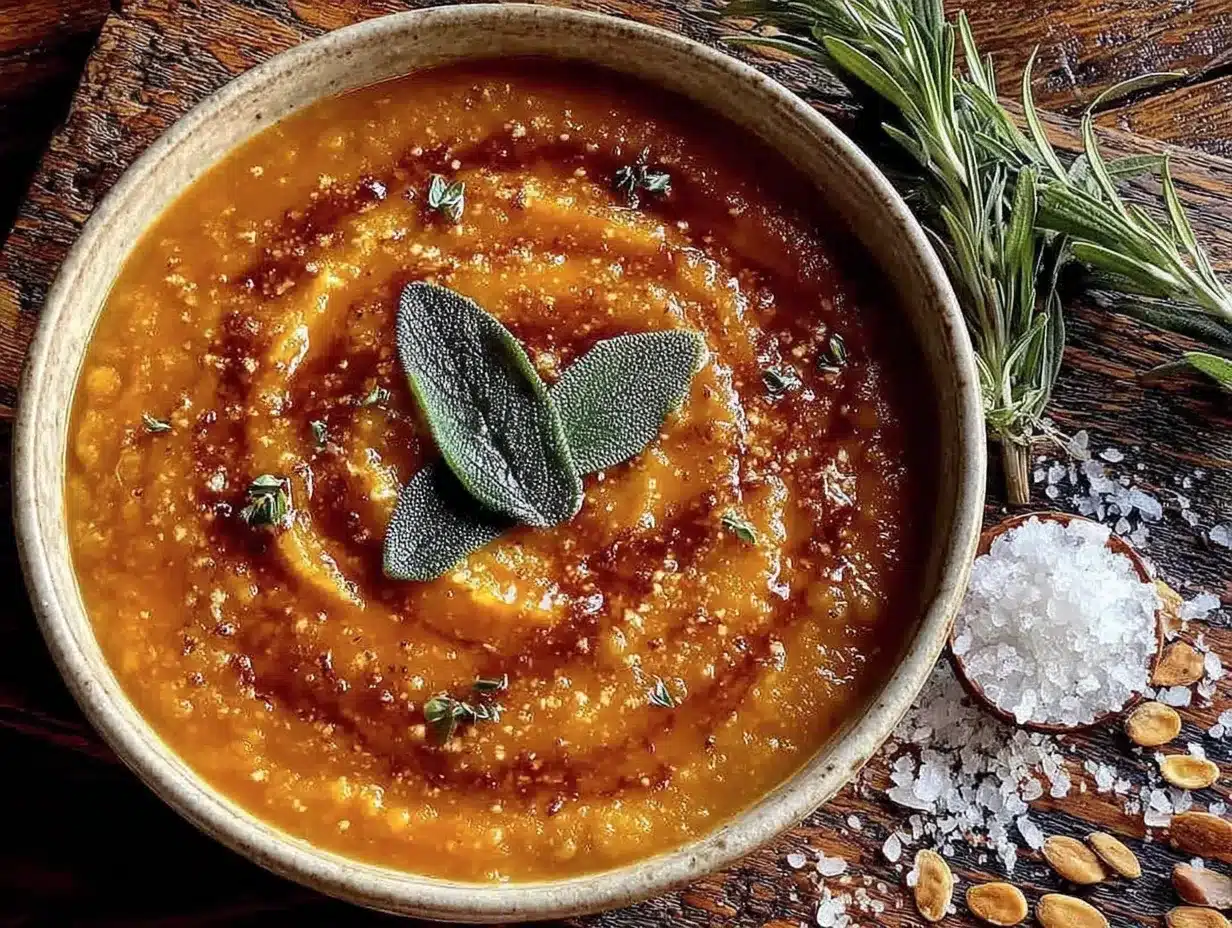
- Prep the squash (10 minutes): Peel the butternut squash using a vegetable peeler. Cut off the top and bottom, then slice it in half lengthwise. Scoop out the seeds with a spoon. Cut the squash into 1-inch cubes. Aim for uniform pieces so they cook evenly. (Pro tip: If you’re short on time, many grocery stores sell pre-cubed butternut squash. Just make sure the pieces are roughly the same size.)
- Brown the butter (5-7 minutes): Place your large pot or Dutch oven over medium heat. Add the 3 tablespoons of unsalted butter. Let it melt completely, then continue cooking. Swirl the pan occasionally. The butter will foam, then bubble, then start to turn golden. Watch closely—it can go from golden to burnt in seconds. When you see brown specks forming at the bottom and the butter smells nutty and toasty, remove it from the heat immediately. Pour it into a small heatproof bowl to stop the cooking process. Don’t skip this step—burnt brown butter tastes bitter and will ruin the soup.
- Sauté the aromatics (5 minutes): Return the pot to medium heat. Add 1 tablespoon of the browned butter back into the pot (save the rest for later). Add the diced onion and cook for 3-4 minutes until translucent and soft. Add the minced garlic and cook for another 30 seconds until fragrant. Don’t let the garlic burn—it will turn bitter.
- Cook the squash (15-20 minutes): Add the cubed butternut squash to the pot. Stir to coat it in the onion and garlic mixture. Cook for 2-3 minutes, stirring occasionally. This helps develop the flavor. Pour in the 4 cups of vegetable broth. Bring to a boil, then reduce to a simmer. Cover and cook for 15-20 minutes, until the squash is fork-tender. You should be able to easily pierce a piece with a fork.
- Blend until smooth (3-5 minutes): Remove the pot from heat. If using an immersion blender, blend directly in the pot until completely smooth. If using a regular blender, let the soup cool for 10 minutes, then blend in batches. (Safety warning: Hot liquid expands when blended. Only fill the blender halfway, remove the center cap from the lid, and cover with a towel.) Blend until silky smooth with no lumps.
- Add the finishing touches (2 minutes): Return the blended soup to the pot (if you used a regular blender). Place over low heat. Stir in the remaining browned butter, the Greek yogurt, and the apple cider vinegar. Mix until fully incorporated. Taste and adjust seasoning with salt and pepper. If the soup tastes flat, add another splash of apple cider vinegar—it brightens everything up. If it’s too thick, add a splash more broth or water until it reaches your desired consistency.
- Prepare the garnish (5 minutes): In a small skillet, melt a teaspoon of butter over medium heat. Add the fresh sage leaves and cook for 30-60 seconds per side until crispy. Remove and drain on a paper towel. (Optional: Toast the pumpkin seeds in the same pan for 1-2 minutes until they start to pop.)
- Serve immediately: Ladle the soup into bowls. Top with a swirl of Greek yogurt, a few crispy sage leaves, and a sprinkle of pumpkin seeds. A drizzle of maple syrup on top adds a nice touch if you have a sweet tooth.
Cooking Tips & Techniques
I’ve made this soup enough times to know exactly where things can go wrong. Here are the lessons I learned the hard way, so you don’t have to.
The brown butter is the star—treat it with respect. The first time I made this, I walked away from the butter to answer a text. Big mistake. Burnt butter smells like regret and tastes even worse. Stay by the stove, swirl the pan constantly, and the moment you see those brown specks form, pull it off the heat. I usually tilt the pan to check the color at the bottom—that’s where you’ll see the specks first. Also, use a light-colored pan if you have one. Dark nonstick pans make it hard to see the color change.
Don’t skip the apple cider vinegar. I know it sounds weird in a squash soup, but trust me on this. The acid cuts through the richness of the brown butter and the sweetness of the squash. Without it, the soup tastes one-dimensional. I’ve tried lemon juice instead, and it works, but apple cider vinegar gives a warmer, more rounded brightness. If you only take one tip from this section, let it be this one.
Blend in stages if using a regular blender. I learned this one the messy way. Hot soup expands when blended, and if you fill the blender too full, it will explode out the top. I’m not exaggerating—I once had butternut squash soup all over my kitchen ceiling. Blend in small batches, let steam escape through the lid opening, and hold a towel over the top. Or just get an immersion blender. Honestly, it’s the best $30 I ever spent.
Season at the end, not the beginning. The broth, the squash, and even the butter all have different salt levels. If you salt too early, you might end up with an overly salty soup. I add a pinch of salt when I sauté the onions, then wait until after blending to adjust the final seasoning. Taste, adjust, taste again. That’s the rhythm.
Variations & Adaptations
One of the best things about this soup is how flexible it is. Here are some variations I’ve tried and loved:
- Vegan Version: Swap the butter for coconut oil or vegan butter. Use full-fat coconut cream instead of Greek yogurt. The coconut adds a subtle sweetness that pairs beautifully with the squash. Just be aware that coconut oil doesn’t brown the same way butter does—it won’t get that nutty flavor, so consider adding a pinch of smoked paprika for depth.
- Spicy Twist: Add ½ teaspoon of red pepper flakes or a chopped jalapeño when you sauté the onions. The heat cuts through the richness and adds a nice kick. I made this version for a friend who loves spicy food, and she said it was the best soup she’d ever had. Just start with less—you can always add more heat, but you can’t take it out.
- Roasted Squash Variation: Instead of simmering the squash in broth, roast it first at 400°F for 25-30 minutes until caramelized. This adds a deeper, almost smoky sweetness. I do this on weekends when I have more time. The soup ends up thicker and more concentrated, so you’ll need to add a bit more broth when blending.
- Apple-Butternut Combo: Swap one cup of the cubed squash for one diced apple (Honeycrisp or Granny Smith work well). Sauté the apple with the onions. It adds a natural sweetness and a subtle fruity note that’s perfect for fall. I tried this on a whim when I had an extra apple lying around, and now it’s my favorite variation.
- Protein-Packed Version: Stir in a cup of cooked white beans (like cannellini or Great Northern) before blending. They add creaminess and protein without changing the flavor much. This turns the soup into a complete meal, perfect for lunch.
Serving & Storage Suggestions
This soup is best served hot, right after blending. The texture is at its silkiest, and the brown butter flavor is most pronounced. I like to serve it in shallow bowls with a generous swirl of Greek yogurt on top, a few crispy sage leaves, and a sprinkle of pumpkin seeds. A drizzle of maple syrup or a crack of black pepper finishes it off nicely.
What to serve alongside: A crusty piece of sourdough bread or a simple green salad with a tangy vinaigrette balances the richness of the soup. I also love serving this with crispy garlic bread for dipping—the crunch contrasts beautifully with the smooth soup. For a heartier meal, pair it with a grilled cheese sandwich or a roasted chicken breast.
Storage: Let the soup cool completely, then transfer to an airtight container. It will keep in the refrigerator for up to 5 days. The flavors actually deepen overnight, so it might taste even better the next day. Just give it a good stir before reheating, as the yogurt can separate slightly.
Freezing: This soup freezes beautifully. Pour it into freezer-safe containers or zip-top bags (lay them flat for easy stacking). It will keep for up to 3 months. Thaw in the refrigerator overnight, then reheat gently on the stovetop. You may need to add a splash of broth or water when reheating, as the soup thickens as it sits.
Reheating: Reheat on the stovetop over medium-low heat, stirring occasionally. Add a splash of broth or water if it’s too thick. You can also microwave individual portions—just cover the bowl and heat in 30-second intervals, stirring between each. Don’t boil the soup, or the yogurt might curdle.
Nutritional Information & Benefits
Here’s the estimated nutritional breakdown for one serving (about 1.5 cups, without garnishes):
| Nutrient | Amount per Serving |
|---|---|
| Calories | 185 |
| Total Fat | 8g |
| Saturated Fat | 5g |
| Cholesterol | 20mg |
| Sodium | 520mg (varies with broth) |
| Total Carbohydrates | 26g |
| Dietary Fiber | 5g |
| Sugars | 8g |
| Protein | 5g |
| Vitamin A | 280% DV |
| Vitamin C | 35% DV |
| Potassium | 650mg |
Butternut squash is packed with vitamin A, which supports eye health and immune function. It’s also a great source of fiber, which keeps you full and aids digestion. The Greek yogurt adds protein and probiotics, while the brown butter—yes, even butter—provides a small amount of vitamin A and healthy fats that help your body absorb the squash’s nutrients. This soup is naturally gluten-free and vegetarian, and with the swaps mentioned above, it can easily be vegan and dairy-free. It’s the kind of meal that feels indulgent but leaves you feeling energized, not weighed down.
Conclusion
This lightened-up brown butter butternut squash soup is proof that you don’t need heavy cream or loads of butter to make something truly satisfying. It’s rich enough to feel like a treat, but light enough that you can have a second bowl without regret. The brown butter adds that nutty, toasty depth that makes you close your eyes with every spoonful, while the Greek yogurt and apple cider vinegar keep it bright and balanced.
I love this recipe because it’s forgiving. You can tweak it, swap things out, and it still turns out delicious. It’s the soup I make when I want to impress guests but don’t have the energy for a complicated dish. It’s the soup I make for myself on a quiet fall evening when I just need something warm and comforting. And honestly? It’s the soup that taught me that sometimes the best things come from moments of panic and a little bit of luck.
I’d love to hear how this turns out for you! Did you try any of the variations? Did you burn your brown butter like I did the first time? (No judgment—it happens to the best of us.) Drop a comment below and let me know. And if you share it on social media, tag me—I love seeing your creations. Until next time, happy cooking!
Frequently Asked Questions
Can I use frozen butternut squash for this soup?
Absolutely! Frozen butternut squash works great and saves you the prep time. Just add it directly to the pot without thawing. You may need to cook it 5-7 minutes longer to get it tender. The soup might be slightly thinner since frozen squash releases more water, but it will still be delicious.
How can I make this soup thicker?
If you prefer a thicker soup, try roasting the squash instead of simmering it—roasting removes excess moisture and concentrates the flavor. You can also stir in a peeled, diced potato when you cook the squash; the potato’s starch will naturally thicken the soup. Alternatively, let the finished soup simmer uncovered for 10-15 minutes to reduce and thicken.
Can I make this soup ahead of time for a party?
Yes, and I actually recommend it! The flavors deepen and meld together overnight. Make the soup a day ahead, let it cool, and store it in the refrigerator. When you’re ready to serve, gently reheat it on the stovetop and add the finishing garnishes just before serving. Your future self will thank you.
Is this soup freezer-friendly?
Yes, it freezes beautifully for up to 3 months. Just let it cool completely, transfer to freezer-safe containers, and leave a little room for expansion. Thaw overnight in the refrigerator and reheat gently. The texture might be slightly different after freezing, so give it a good whisk or blend with an immersion blender after reheating to bring back that silky smoothness.
What can I use instead of Greek yogurt?
If you’re dairy-free or just don’t have Greek yogurt on hand, you can use full-fat coconut cream for a vegan option (it adds a subtle coconut flavor that’s lovely). Sour cream or crème fraîche also work well and give a slightly tangier result. For a lighter option, try blended silken tofu—it adds creaminess without changing the flavor much.
Pin This Recipe!
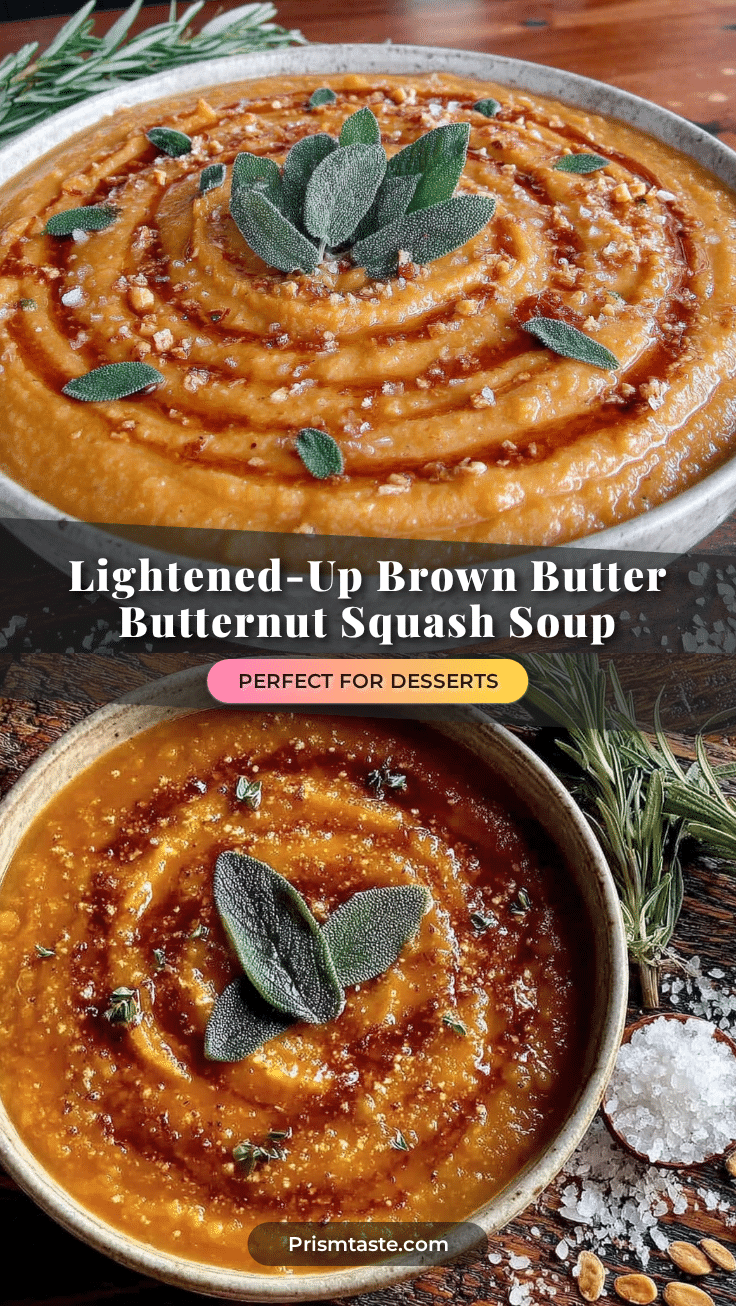
Lightened-Up Brown Butter Butternut Squash Soup

A creamy, rich butternut squash soup made with brown butter and Greek yogurt for a lighter twist. Perfect for fall gatherings or a cozy weeknight meal.
- Prep Time: 15 minutes
- Cook Time: 30 minutes
- Total Time: 45 minutes
- Yield: 4 servings
- Category: Soup
- Cuisine: American
Ingredients
- Butternut squash, peeled and cubed (about 4 cups, or one medium squash)
- Unsalted butter (3 tablespoons)
- Yellow onion, diced (1 medium)
- Garlic cloves, minced (3 cloves)
- Vegetable broth (4 cups, or use chicken broth if not vegetarian)
- Plain Greek yogurt (¼ cup, plus more for serving)
- Apple cider vinegar (1 tablespoon)
- Maple syrup (1 teaspoon, optional)
- Salt and black pepper (to taste)
- Fresh sage leaves (6-8 leaves, for garnish)
- Pumpkin seeds (2 tablespoons, for garnish)
Instructions
- Prep the squash (10 minutes): Peel the butternut squash using a vegetable peeler. Cut off the top and bottom, then slice it in half lengthwise. Scoop out the seeds with a spoon. Cut the squash into 1-inch cubes.
- Brown the butter (5-7 minutes): Place your large pot or Dutch oven over medium heat. Add the 3 tablespoons of unsalted butter. Let it melt completely, then continue cooking. Swirl the pan occasionally. When you see brown specks forming at the bottom and the butter smells nutty and toasty, remove it from the heat immediately. Pour it into a small heatproof bowl to stop the cooking process.
- Sauté the aromatics (5 minutes): Return the pot to medium heat. Add 1 tablespoon of the browned butter back into the pot. Add the diced onion and cook for 3-4 minutes until translucent and soft. Add the minced garlic and cook for another 30 seconds until fragrant.
- Cook the squash (15-20 minutes): Add the cubed butternut squash to the pot. Stir to coat it in the onion and garlic mixture. Cook for 2-3 minutes, stirring occasionally. Pour in the 4 cups of vegetable broth. Bring to a boil, then reduce to a simmer. Cover and cook for 15-20 minutes, until the squash is fork-tender.
- Blend until smooth (3-5 minutes): Remove the pot from heat. If using an immersion blender, blend directly in the pot until completely smooth. If using a regular blender, let the soup cool for 10 minutes, then blend in batches. Blend until silky smooth with no lumps.
- Add the finishing touches (2 minutes): Return the blended soup to the pot (if you used a regular blender). Place over low heat. Stir in the remaining browned butter, the Greek yogurt, and the apple cider vinegar. Mix until fully incorporated. Taste and adjust seasoning with salt and pepper.
- Prepare the garnish (5 minutes): In a small skillet, melt a teaspoon of butter over medium heat. Add the fresh sage leaves and cook for 30-60 seconds per side until crispy. Remove and drain on a paper towel. (Optional: Toast the pumpkin seeds in the same pan for 1-2 minutes until they start to pop.)
- Serve immediately: Ladle the soup into bowls. Top with a swirl of Greek yogurt, a few crispy sage leaves, and a sprinkle of pumpkin seeds.
Notes
The brown butter is the star—treat it with respect. Don’t skip the apple cider vinegar; it brightens the soup. Blend in stages if using a regular blender to avoid splattering. Season at the end, not the beginning.
Nutrition
- Serving Size: 1.5 cups
- Calories: 185
- Sugar: 8
- Sodium: 520
- Fat: 8
- Saturated Fat: 5
- Carbohydrates: 26
- Fiber: 5
- Protein: 5
Keywords: butternut squash soup, brown butter, lightened-up, fall soup, healthy soup, vegetarian soup, gluten-free soup