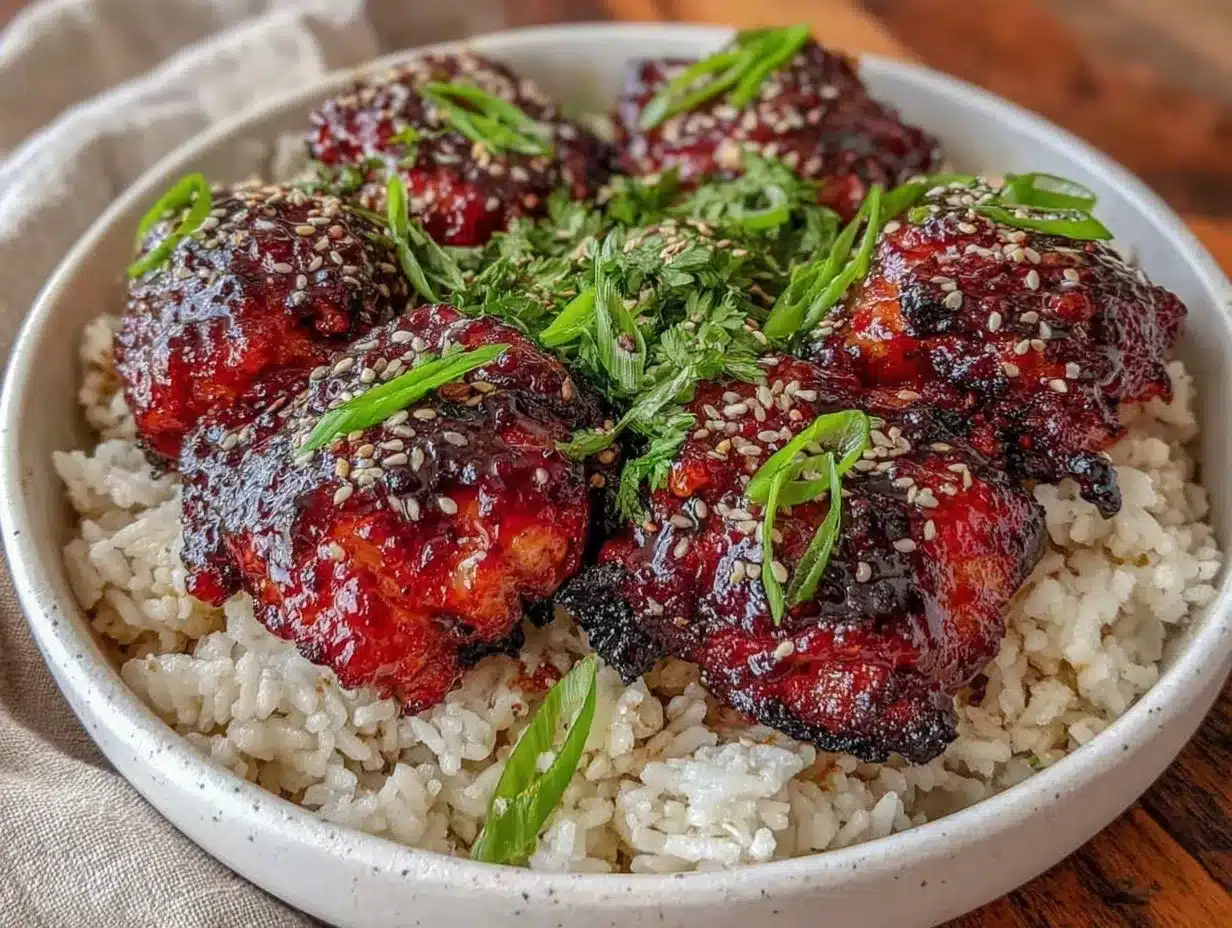
“You’re going to love this one,” my coworker said, sliding a container across the lunch table. I was skeptical—Korean flavors weren’t usually my go-to. But the moment I took a bite of those Flavorful Korean-Inspired Gochujang Chicken Thighs over Sesame Rice, I was hooked. The tangy, spicy-sweet punch of gochujang paired with the nutty warmth of sesame rice was unlike anything I’d made before. It wasn’t just good—it felt like a tiny celebration in my mouth during a hectic workweek.
I remember standing in my kitchen later that evening, trying to replicate that magic. The recipe was surprisingly straightforward, which is a lifesaver when time’s tight and you want something comforting but exciting. What stuck with me was how those tender chicken thighs soaked up the sauce, caramelizing just right, while the sesame rice added a cozy, toasty backdrop. Honestly, it’s become a go-to when I want a quick dinner that doesn’t feel boring.
It’s funny how a simple lunch exchange can turn into a favorite recipe. This dish reminds me that sometimes the best meals come from unexpected places—and that a little heat and sweetness can brighten even the dullest day. So here’s the recipe that earned a permanent spot in my rotation and might just do the same for you.
Why You’ll Love This Recipe
- Quick & Easy: Ready in about 30 minutes, this dish fits perfectly into busy weeknights or when last-minute cravings hit.
- Simple Ingredients: No need for exotic shopping trips; most ingredients are pantry staples or easy to find at any grocery store.
- Perfect for Dinner: Whether it’s a solo meal or sharing with family, this dish brings bold flavors without fuss.
- Crowd-Pleaser: The balance of spicy, sweet, and savory hits the spot for both kids and adults alike.
- Unbelievably Delicious: The gochujang glaze caramelizes beautifully on the chicken thighs, creating a juicy, flavorful bite every time.
What sets this recipe apart is the way it balances the fiery kick of gochujang with just enough sweetness and acidity to keep the flavors bright and layered. The sesame rice isn’t just a side—it’s an essential component, soaking up the sauce and adding a subtle nuttiness that rounds out the meal. I’ve tried versions with plain rice before, but honestly, the toasted sesame seeds and a drizzle of sesame oil bring the whole dish together in a way that feels a little special.
It’s the kind of meal that makes you savor each bite, closing your eyes for a second because it’s just that satisfying. Whether you’re entertaining an unplanned guest or treating yourself after a long day, this recipe feels both approachable and a bit indulgent. And if you like dishes like the easy sheet pan loaded fajita bowl, you’ll appreciate the simplicity and bold flavors here.
What Ingredients You Will Need
This recipe uses straightforward, wholesome ingredients to deliver bold flavor and satisfying texture without the fuss. Most of these are pantry staples or easy to swap if needed.
- Chicken Thighs: Bone-in, skin-on preferred for maximum juiciness and crispiness (about 4 thighs, ~1.5 lbs / 700g)
- Gochujang: Korean chili paste—this is the star, providing the signature spicy-sweet flavor (2 tablespoons)
- Soy Sauce: Adds savory umami (3 tablespoons, low sodium preferred)
- Honey or Brown Sugar: For a subtle sweetness that balances the heat (1 tablespoon)
- Garlic: Minced, about 3 cloves, for aromatic depth
- Ginger: Freshly grated, about 1 teaspoon, to brighten the sauce
- Sesame Oil: Toasted sesame oil for that nutty aroma (1 teaspoon for sauce, plus a drizzle for rice)
- Rice: Short-grain or jasmine rice, 1 cup (uncooked) for the sesame rice base
- Sesame Seeds: Toasted, about 2 teaspoons, to sprinkle on the rice and chicken for crunch and flavor
- Green Onions: Thinly sliced for garnish and fresh bite
- Water or Chicken Broth: 1 ¼ cups for cooking the rice (adds extra flavor if broth)
For substitutions, you can use tamari instead of soy sauce for gluten-free needs, or swap honey with maple syrup if preferred. If you want milder heat, cut the gochujang in half and add a splash of mild chili sauce or paprika to keep the color and complexity.
Brands matter a bit here—I’ve found that Chung Jung One gochujang offers a balanced heat without too much bitterness, and Kikkoman soy sauce gives a nice clean saltiness. For sesame oil, the toasted variety from La Tourangelle lends an irresistible aroma that really lifts the dish.
Equipment Needed
- Large Skillet or Cast Iron Pan: For crisping and cooking chicken thighs evenly; I prefer cast iron for the heat retention and caramelization it delivers.
- Medium Saucepan with Lid: To cook the sesame rice perfectly without sticking or burning.
- Measuring Cups and Spoons: For precise ingredient amounts, especially with sauces.
- Mixing Bowl: To combine marinade ingredients easily.
- Sharp Knife and Cutting Board: For prepping garlic, ginger, and green onions.
If you don’t have a cast iron skillet, a heavy-bottomed non-stick pan works, but you might miss out on that crispy skin texture. For budget-friendly options, basic stainless steel pans get the job done well, just be mindful to use enough oil to prevent sticking. Also, keeping your knife sharp makes the prep faster and safer—trust me on that one!
Preparation Method
- Marinate the Chicken: In a mixing bowl, whisk together 2 tablespoons gochujang, 3 tablespoons soy sauce, 1 tablespoon honey (or brown sugar), 3 cloves minced garlic, 1 teaspoon grated ginger, and 1 teaspoon sesame oil. Add the chicken thighs and coat them well. Let sit for at least 20 minutes, or up to 2 hours in the fridge for deeper flavor.
- Prepare Sesame Rice: Rinse 1 cup of rice under cold water until water runs clear to remove excess starch. In a medium saucepan, combine the rinsed rice with 1¼ cups water or chicken broth. Bring to a boil, then cover and reduce heat to low. Cook for 15 minutes without lifting the lid. Remove from heat, let sit covered for 10 minutes. Fluff with a fork and stir in 1 teaspoon toasted sesame oil and 2 teaspoons toasted sesame seeds.
- Cook Chicken Thighs: Heat a large cast iron skillet over medium-high heat and add a splash of oil. Place chicken thighs skin-side down. Cook for about 7-8 minutes, until skin is golden and crisp (don’t move them too soon!). Flip and cook another 6-7 minutes, until internal temperature hits 165°F (74°C). If sauce has separated, spoon some over the thighs as they cook to deepen the glaze.
- Finish and Garnish: Remove chicken from pan and let rest for a few minutes. Spoon sesame rice onto plates, top with chicken thighs, and drizzle any pan juices over everything. Garnish with sliced green onions and an extra sprinkle of sesame seeds.
Note: If your chicken skin isn’t crisping well, increase heat slightly but watch carefully to avoid burning. Also, resting the chicken after cooking helps retain juices—don’t skip it. This method yields a juicy, tender inside with a satisfying caramelized exterior.
Cooking Tips & Techniques
Getting the chicken skin perfectly crispy can be tricky, but a dry pat with paper towels before marinating helps. Excess moisture will steam the skin instead of crisping it. Also, cooking skin-side down first and resisting the urge to flip too early is key—let it form that golden crust naturally.
When mixing the marinade, balance is everything. Too much honey makes it overly sweet, while too little leaves it flat. I usually tweak it slightly after tasting the marinade solo—gochujang varies by brand, so a quick taste test saves a lot of guesswork later.
Timing is your friend here. While the chicken marinates, get the rice going. That way, you’re not waiting around, and the meal comes together smoothly. Multitasking like this helped me keep dinner on the table without rushing, much like when I’m making the creamy instant pot loaded chicken and rice that’s become a family favorite.
Lastly, don’t forget to toast your sesame seeds! It’s a small step but adds that warm, nutty depth that makes the rice sing. You can do this in a dry pan over medium heat for 2-3 minutes until fragrant—just keep stirring so they don’t burn.
Variations & Adaptations
- Spice Level: For a milder dish, cut the gochujang in half and add a teaspoon of soy sauce to keep saltiness. For extra heat, add a pinch of crushed red pepper or a drizzle of chili oil.
- Protein Swap: Try boneless chicken breasts or thighs if you prefer leaner cuts. Adjust cooking time accordingly to avoid drying out. I’ve also made this with tofu for a vegetarian twist—just press and marinate tofu cubes, then pan-fry until crispy.
- Rice Alternatives: Use brown rice or cauliflower rice for a healthier or low-carb option. For cauliflower rice, toss with sesame oil and seeds after cooking, but skip the soaking step.
- Cooking Method: If you prefer oven-baking, roast marinated thighs at 425°F (220°C) for 25-30 minutes, skin-side up, until caramelized and cooked through. Finish under the broiler for extra crispiness.
- Personal Favorite Variation: I sometimes add thinly sliced bell peppers and onions to the pan halfway through cooking the chicken. It softens in the sauce and adds a touch of sweetness and texture that’s pretty delicious.
Serving & Storage Suggestions
This dish is best served hot, straight from the pan, with a generous scoop of sesame rice underneath. A sprinkle of fresh green onions adds brightness, and a side of steamed or pickled vegetables complements the rich chicken beautifully. I often pair it with quick kimchi or even a crisp cucumber salad for contrast.
Leftovers keep well in an airtight container in the fridge for up to 3 days. Reheat gently in a skillet or microwave, adding a splash of water to keep the rice moist. The flavors actually deepen after sitting overnight, making leftovers even better the next day.
If you want to prep ahead, cook the rice and chicken separately, then combine just before serving. This method keeps the chicken crispy longer. For freezing, store chicken and rice separately in freezer-safe containers; thaw overnight in the fridge before reheating.
Nutritional Information & Benefits
Each serving of these gochujang chicken thighs over sesame rice provides approximately 450-500 calories, with a good balance of protein and carbs. The chicken thighs offer rich protein and healthy fats, especially when cooked with the skin on, while the sesame oil and seeds add heart-healthy monounsaturated fats.
Gochujang is made from fermented chili peppers, which can aid digestion and add beneficial probiotics, though in small amounts. The garlic and ginger bring anti-inflammatory properties and antioxidants, supporting immune health.
This meal is naturally gluten-free when using tamari instead of soy sauce and can easily be adapted for low-carb diets by swapping rice for cauliflower rice. Just be mindful of honey or sugar if you’re watching sugar intake.
Conclusion
These Flavorful Korean-Inspired Gochujang Chicken Thighs over Sesame Rice quickly became a staple for me—not just for the bold taste but for how effortlessly they come together. The way that spicy-sweet sauce clings to perfectly crisp chicken paired with nutty sesame rice makes dinner feel special without hours in the kitchen.
Feel free to tweak the heat level or switch up the sides to suit your cravings—that’s what cooking’s all about. Personally, I love that this recipe is both comforting and exciting, a rare combo that keeps me coming back.
Give it a try and let me know how you like it! And if you enjoy dishes with rich, bold flavors, you might appreciate the creamy one pot BBQ chicken pasta that’s just as quick and satisfying.
Here’s to flavorful meals that make weeknights a little brighter.
FAQs
Can I use boneless chicken thighs for this recipe?
Absolutely! Just reduce the cooking time slightly to prevent drying out. Boneless thighs cook faster, usually around 5-6 minutes per side on medium heat.
What can I substitute for gochujang if I can’t find it?
You can mix a bit of miso paste with chili paste or sriracha to mimic the sweet-umami-spicy flavor, but it won’t be exactly the same. Ordering gochujang online or at Asian markets is worth it for authenticity.
How do I get the chicken skin extra crispy?
Pat the skin dry before marinating and cook skin-side down first without moving it. Using a cast iron skillet helps retain heat for better crisping.
Is this recipe gluten-free?
It can be! Use tamari instead of soy sauce and double-check your gochujang brand for gluten-free labeling.
Can I make the sesame rice ahead of time?
Yes, but it’s best served fresh. If you make it early, reheat gently with a sprinkle of water and a quick stir in sesame oil to refresh the texture.
Pin This Recipe!
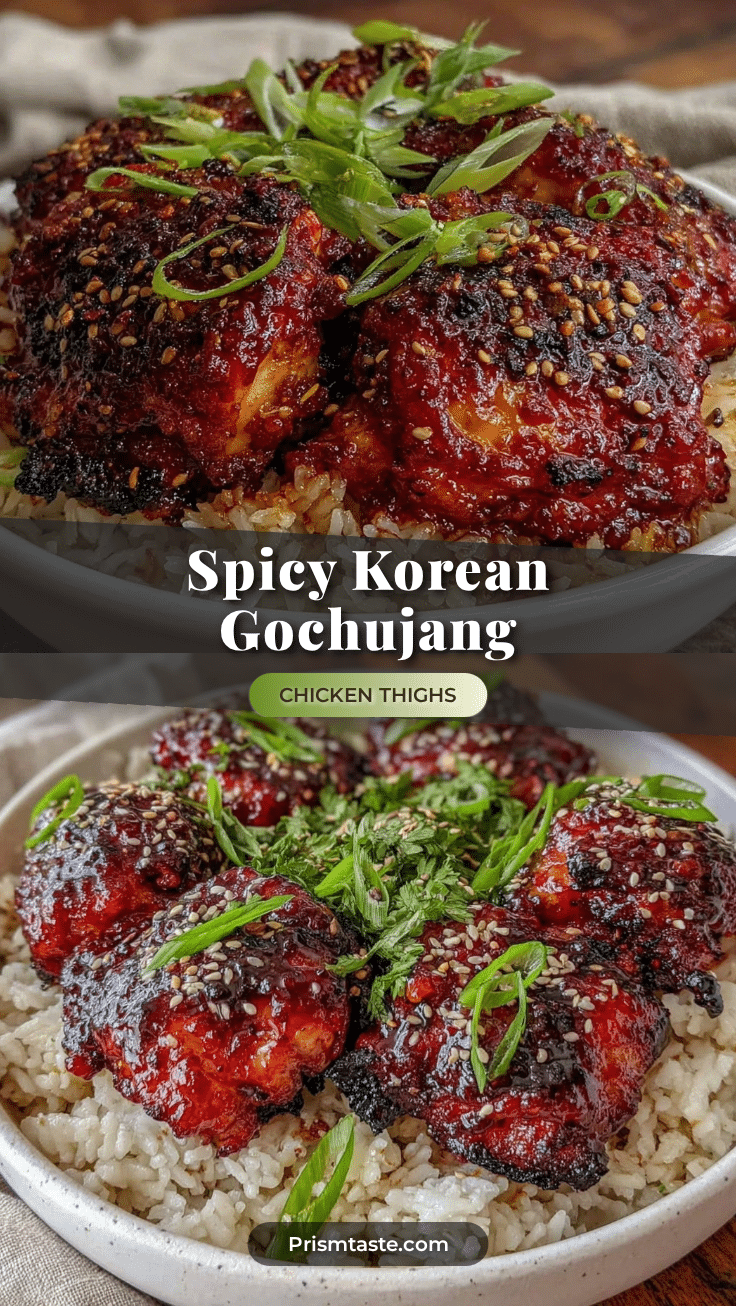
Flavorful Korean Gochujang Chicken Thighs Recipe Easy Sesame Rice Dinner

This recipe features tender chicken thighs marinated in a spicy-sweet gochujang sauce, caramelized to perfection and served over nutty toasted sesame rice. It’s a quick, easy, and flavorful dinner perfect for busy weeknights.
- Prep Time: 10 minutes
- Cook Time: 20 minutes
- Total Time: 30 minutes
- Yield: 4 servings 1x
- Category: Main Course
- Cuisine: Korean
Ingredients
- 4 bone-in, skin-on chicken thighs (~1.5 lbs / 700g)
- 2 tablespoons gochujang (Korean chili paste)
- 3 tablespoons low sodium soy sauce
- 1 tablespoon honey or brown sugar
- 3 cloves garlic, minced
- 1 teaspoon freshly grated ginger
- 1 teaspoon toasted sesame oil (for sauce)
- 1 cup short-grain or jasmine rice (uncooked)
- 2 teaspoons toasted sesame seeds
- 1 teaspoon toasted sesame oil (for rice)
- 1¼ cups water or chicken broth
- Green onions, thinly sliced for garnish
Instructions
- Marinate the Chicken: In a mixing bowl, whisk together 2 tablespoons gochujang, 3 tablespoons soy sauce, 1 tablespoon honey (or brown sugar), 3 cloves minced garlic, 1 teaspoon grated ginger, and 1 teaspoon sesame oil. Add the chicken thighs and coat them well. Let sit for at least 20 minutes, or up to 2 hours in the fridge for deeper flavor.
- Prepare Sesame Rice: Rinse 1 cup of rice under cold water until water runs clear to remove excess starch. In a medium saucepan, combine the rinsed rice with 1¼ cups water or chicken broth. Bring to a boil, then cover and reduce heat to low. Cook for 15 minutes without lifting the lid. Remove from heat, let sit covered for 10 minutes. Fluff with a fork and stir in 1 teaspoon toasted sesame oil and 2 teaspoons toasted sesame seeds.
- Cook Chicken Thighs: Heat a large cast iron skillet over medium-high heat and add a splash of oil. Place chicken thighs skin-side down. Cook for about 7-8 minutes, until skin is golden and crisp. Flip and cook another 6-7 minutes, until internal temperature hits 165°F (74°C). Spoon some marinade sauce over the thighs as they cook to deepen the glaze if sauce has separated.
- Finish and Garnish: Remove chicken from pan and let rest for a few minutes. Spoon sesame rice onto plates, top with chicken thighs, and drizzle any pan juices over everything. Garnish with sliced green onions and an extra sprinkle of sesame seeds.
Notes
Pat chicken skin dry before marinating to ensure crispiness. Do not flip chicken too early to allow skin to caramelize properly. Rest chicken after cooking to retain juices. Toast sesame seeds in a dry pan over medium heat for 2-3 minutes until fragrant. For gluten-free, use tamari instead of soy sauce. For milder heat, reduce gochujang by half.
Nutrition
- Serving Size: 1 chicken thigh with
- Calories: 475
- Sugar: 6
- Sodium: 700
- Fat: 25
- Saturated Fat: 5
- Carbohydrates: 35
- Fiber: 2
- Protein: 35
Keywords: gochujang chicken, Korean chicken thighs, sesame rice, easy dinner, spicy chicken, weeknight meal, Korean recipe