“You’ve got to try this Korean beef bowl—no joke, it’s the answer to my weeknight chaos,” my friend texted me one particularly hectic Thursday evening. I was skeptical at first—Korean flavors sounded a bit intimidating for a quick meal, and honestly, I wasn’t sure if I had the patience to mess with gochujang and all those pickling steps. But curiosity got the better of me, and I decided to give this Flavorful Korean Beef Bowl with Gochujang and Quick-Pickled Cucumber a shot.
What started as a rushed attempt to throw something edible together quickly turned into a cooking obsession that week. I found myself making it multiple times, tweaking the spice level here, adjusting the pickles there, until it landed just right. The tangy snap of the quick-pickled cucumber cut through the rich, spicy beef so perfectly that it became a kind of comfort dish for my frazzled evenings. Honestly, the aroma alone—the sweet, savory sizzle of beef mingling with gochujang’s fiery depth—was enough to calm the kitchen storm.
What surprised me most was how accessible the ingredients were and how fast it came together, even on the busiest nights. This recipe stuck with me because it’s not just tasty; it’s got that balance of bold Korean flavors with an easygoing spirit that fits right into a weeknight rhythm. If you’re looking for something that feels special but won’t bog you down, this might be your new go-to bowl.
Why You’ll Love This Recipe
This Korean beef bowl isn’t just another takeout copycat—it’s a thoughtfully tested recipe that truly shines in flavor and ease. Here’s why it’s earned a permanent spot in my meal rotation:
- Quick & Easy: Ready in about 30 minutes, perfect for busy weeknights when you want something satisfying without the fuss.
- Simple Ingredients: Most of the ingredients are pantry staples or easy to find at any grocery store. No specialty Asian markets required—though a good quality gochujang makes a difference!
- Perfect for Any Occasion: Whether it’s a solo dinner, a casual family meal, or a last-minute dinner party, this bowl fits the bill.
- Crowd-Pleaser: Sweet, spicy, tangy, and savory all at once—kids, adults, and guests tend to ask for seconds (and sometimes thirds!).
- Unbelievably Delicious: The quick-pickled cucumber adds a fresh crunch that cuts through the rich beef, balancing the flavors beautifully.
What makes this recipe stand out is how the gochujang is handled—not just dumped in—but mixed with a few key seasonings for a perfectly balanced sauce that’s flavorful but not overwhelming. Plus, the quick-pickle method for the cucumber is a game changer; it’s fast, bright, and gives the dish that fresh zing without needing hours of wait time. This bowl isn’t just Korean-inspired—it’s Korean-inspired with heart and ease. If you’ve tried other beef bowls but felt something was missing, this one might just fix that.
What Ingredients You Will Need
This recipe uses simple, wholesome ingredients to deliver bold flavor and satisfying textures without the fuss. Most are pantry staples, with a few fresh items to brighten things up.
- For the Beef:
- 1 lb (450g) ground beef (80/20 blend recommended for juiciness)
- 2 tablespoons soy sauce (I prefer Kikkoman for its balanced saltiness)
- 1 tablespoon gochujang (Korean chili paste, the star of the dish)
- 1 tablespoon sesame oil (adds nuttiness and depth)
- 2 teaspoons brown sugar (balances out the heat with subtle sweetness)
- 3 cloves garlic, minced (fresh is best for punch)
- 1 teaspoon grated fresh ginger (optional but recommended for zing)
- 1/2 teaspoon black pepper
- For the Quick-Pickled Cucumber:
- 1 medium cucumber, thinly sliced (English or Kirby cucumber works well)
- 2 tablespoons rice vinegar (adds the tang and brightness)
- 1 teaspoon sugar
- 1/2 teaspoon salt
- Pinch of red pepper flakes (optional for a little heat)
- For Serving:
- Cooked white or brown rice (about 3 cups cooked)
- 2 green onions, sliced thin
- 1 tablespoon toasted sesame seeds
- Optional: kimchi or steamed veggies for added layers
Feel free to swap the ground beef for ground turkey or chicken if you want a leaner option. For gluten-free, substitute tamari or coconut aminos for soy sauce. If you can’t find gochujang, a mix of chili paste and miso works in a pinch, but the authentic flavor won’t be quite the same.
Equipment Needed
- Large non-stick skillet or cast iron pan: For browning the beef evenly and developing flavor.
- Mixing bowls: One for quick-pickling cucumbers, another for mixing sauces.
- Sharp knife and cutting board: For slicing cucumbers and chopping garlic and green onions.
- Measuring spoons and cups: Precision matters, especially with the gochujang and soy sauce balance.
- Rice cooker or pot: To prepare fluffy rice as the base.
If you don’t have a rice cooker, no worries—cooking rice on the stove works just fine. For the skillet, a heavy-bottomed pan helps get the best sear on the meat without sticking. I’ve also used a well-seasoned cast iron skillet that gives a nice crust and adds some smoky notes.
Preparation Method
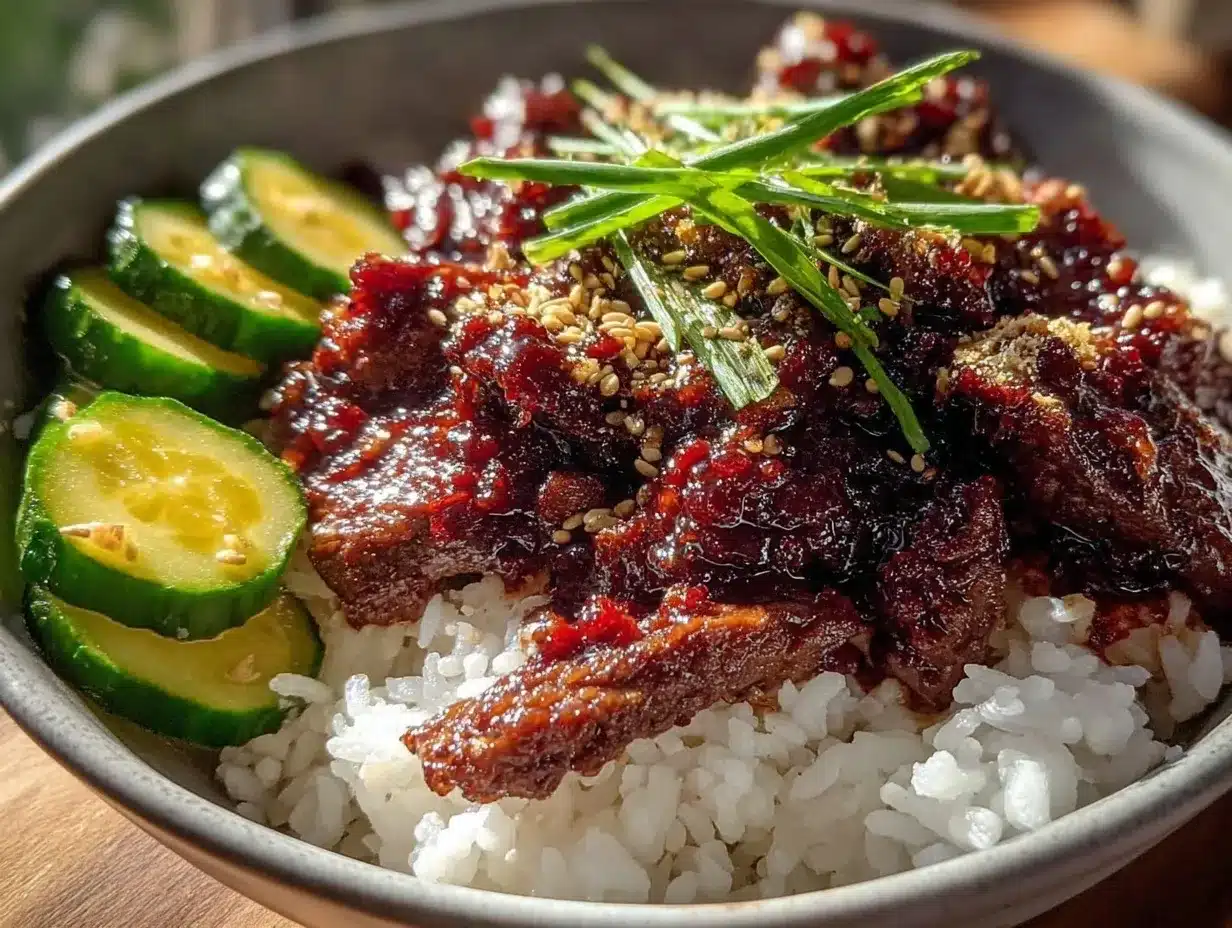
- Prepare the quick-pickled cucumber: In a medium bowl, combine rice vinegar, sugar, salt, and red pepper flakes until sugar dissolves. Add the thinly sliced cucumber and toss to coat. Let it sit at room temperature while you prepare the beef, tossing occasionally. This should take about 15 minutes.
- Cook the rice: Start cooking 1.5 cups (about 300g) of uncooked rice according to package instructions or in your rice cooker, so it’s ready when the beef is done.
- Mix the sauce for beef: In a small bowl, whisk together soy sauce, gochujang, sesame oil, brown sugar, minced garlic, grated ginger, and black pepper until smooth. This mixture will give your beef that savory-spicy-sweet kick.
- Brown the beef: Heat a large skillet over medium-high heat. Add the ground beef, breaking it up with a spatula. Cook until it’s mostly browned and starting to crisp around the edges, about 5-6 minutes.
- Add the sauce: Pour the gochujang mixture over the beef. Stir well to combine, reducing heat to medium. Let it simmer gently for 3-4 minutes, allowing the flavors to meld and the sauce to thicken slightly. You should smell the aroma deepen and see a glossy coating on the beef.
- Assemble the bowls: Spoon the cooked rice into bowls. Top with the flavorful Korean beef, then add a generous handful of the quick-pickled cucumber slices.
- Garnish: Sprinkle with sliced green onions and toasted sesame seeds for that finishing touch of freshness and crunch.
- Serve immediately: This dish is best enjoyed warm, with the contrast of spicy beef and crisp pickles.
Pro tip: If your rice finishes before the beef, keep it covered and warm. Also, don’t overcook the beef after adding the sauce — a few minutes is all it needs to soak up flavor without drying out.
Cooking Tips & Techniques
Getting this Korean beef bowl just right involves a few small but important tricks I’ve learned over multiple trials:
- Don’t skip the quick pickle: That sharp, tangy cucumber crunch cuts through the richness and stops the dish from feeling too heavy.
- Use a good-quality gochujang: It’s the backbone of the flavor. Cheaper brands can be too salty or bland. I’ve found Chung Jung One to be reliable.
- Brown the beef well: Let it sit undisturbed a bit in the pan so it forms a caramelized crust. That little crisp adds texture and deeper flavor.
- Adjust spice levels: Gochujang varies in heat. Start with less if you’re sensitive, then add more or sprinkle chili flakes at the end for extra kick.
- Timing matters: Have your rice cooking and cucumbers pickling while you prep the beef. Multitasking here saves you precious minutes.
Once, I accidentally overcooked the beef and ended up with dry meat—lesson learned: keep it juicy and tender by removing it from heat as soon as the sauce thickens. Also, tossing the cucumbers a couple of times while they pickle helps distribute the flavors evenly.
Variations & Adaptations
This recipe is quite forgiving and versatile, so feel free to make it your own:
- Protein swaps: Use ground turkey, chicken, or even finely chopped mushrooms for a vegetarian twist.
- Grain alternatives: Serve over cauliflower rice or quinoa for gluten-free or lower-carb options.
- Pickle variations: Try quick-pickled radishes, carrots, or even thinly sliced jalapeños for a different crunch and flavor.
- Spice level: Add a drizzle of sriracha or a sprinkle of toasted chili flakes if you like it hotter.
- Extra veggies: Toss in sautéed spinach, steamed broccoli, or shredded carrots to bulk up the bowl and add color.
Personally, I once swapped the quick-pickled cucumber for kimchi and it gave the dish a fermented tang that was equally addictive. You could also make this a sheet pan loaded fajita bowl style by roasting the veggies for a smoky twist.
Serving & Storage Suggestions
This Korean beef bowl is best served fresh and warm, so the rice is fluffy, the beef is juicy, and the pickles have their crisp bite. Presentation-wise, piling the ingredients in a bowl with the beef front and center and pickles scattered on top creates a vibrant, inviting look.
Pair it with light sides like steamed greens, or a simple miso soup to round out the meal. For drinks, a cold green tea or a crisp lager complements the spicy and tangy notes nicely.
Leftovers keep well in the fridge for 2-3 days stored separately if possible (rice and beef in one container, pickles in another). Reheat the beef gently in a skillet or microwave, then add fresh pickles on top to keep their crunch. The flavors actually deepen after a day, so this bowl can taste even better the next day.
Nutritional Information & Benefits
Per serving (approximate, serves 4):
| Calories | 450-500 kcal |
|---|---|
| Protein | 28g |
| Fat | 22g |
| Carbohydrates | 40g |
| Fiber | 3g |
This dish offers a good balance of protein and carbs, with healthy fats from sesame oil and lean ground beef. Gochujang provides capsaicin, which has metabolism-boosting properties, while the quick-pickled cucumber adds hydration and vitamins with minimal calories. Using brown rice bumps up fiber content if you want a more filling meal.
It’s naturally gluten-free if you choose tamari over soy sauce and can be adapted to low-carb by swapping grains. For those mindful of sodium, reduce soy sauce and balance with a little extra sugar or use low-sodium versions.
Conclusion
This Flavorful Korean Beef Bowl with Gochujang and Quick-Pickled Cucumber has earned a solid place in my kitchen because it hits the sweet spot between fuss-free cooking and bold, satisfying flavors. It’s easy to make, uses ingredients you probably already have, and brings a little excitement to the dinner table without complicating your evening.
Feel free to tweak the spice levels or swap out veggies to suit your mood or pantry. I love how adaptable it is—whether solo or feeding a crowd, it just works. If you make it, I’d love to hear how you put your own spin on it, and what sides you pair with it.
Go ahead, give this recipe a try—you might just find your new favorite weeknight dinner. And when you’re looking for more hearty, comforting meals, you might enjoy the creamy one-pot beef stroganoff or the tender instant pot beef stew I’ve shared before. Happy cooking!
FAQs
- Can I make this Korean beef bowl ahead of time? Yes, you can prepare the beef and pickled cucumbers in advance and store them separately. Reheat the beef gently and add fresh pickles just before serving.
- What can I substitute for gochujang if I don’t have it? You can mix a bit of chili paste or sriracha with miso paste for a similar flavor, but the authentic taste won’t be exact.
- Is this recipe gluten-free? It can be if you swap soy sauce for tamari or coconut aminos and ensure your gochujang is gluten-free.
- Can I use other vegetables for the quick pickle? Absolutely! Thinly sliced radishes, carrots, or jalapeños work great.
- How spicy is this recipe? It has a moderate heat level from the gochujang, which you can adjust by adding less or more depending on your preference.
Pin This Recipe!
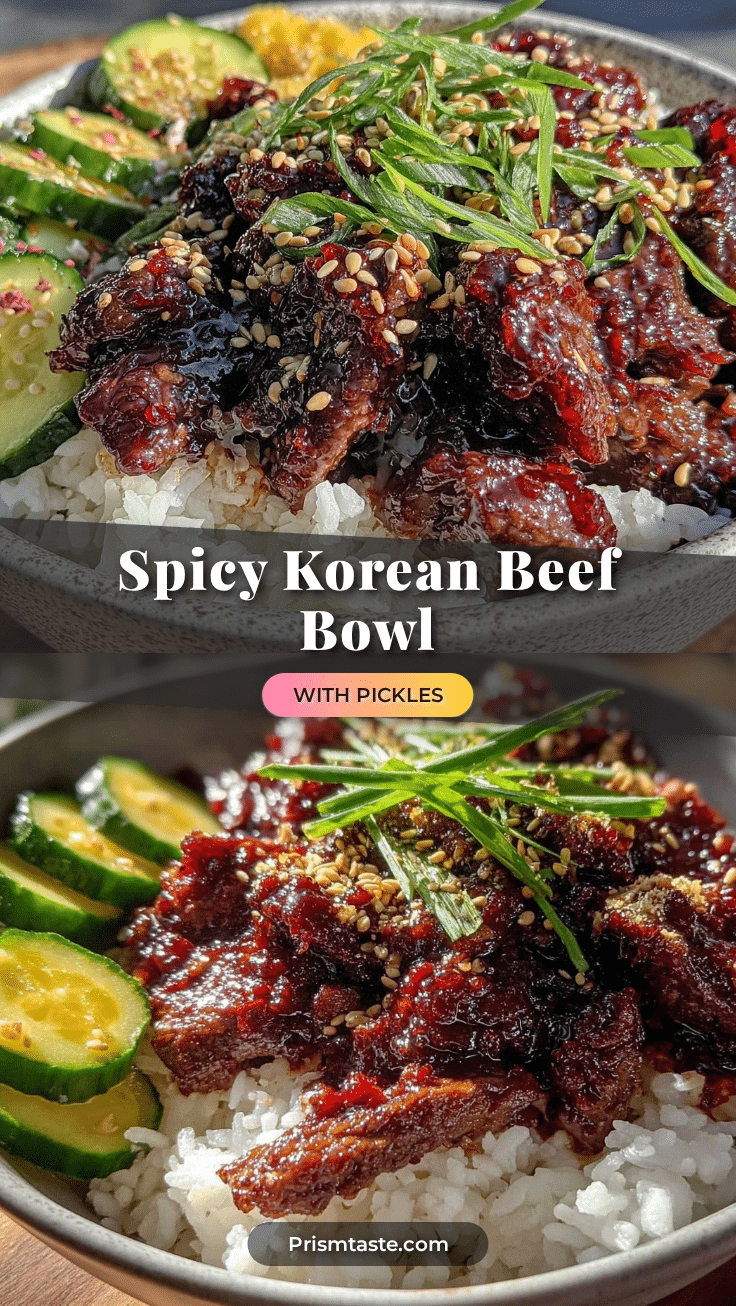
Flavorful Korean Beef Bowl Recipe with Gochujang and Quick-Pickled Cucumber
A quick and easy Korean beef bowl featuring a savory-spicy gochujang sauce and fresh, tangy quick-pickled cucumbers. Perfect for busy weeknights with bold flavors and simple ingredients.
- Prep Time: 15 minutes
- Cook Time: 15 minutes
- Total Time: 30 minutes
- Yield: 4 servings 1x
- Category: Main Course
- Cuisine: Korean
Ingredients
- 1 lb ground beef (80/20 blend recommended for juiciness)
- 2 tablespoons soy sauce
- 1 tablespoon gochujang (Korean chili paste)
- 1 tablespoon sesame oil
- 2 teaspoons brown sugar
- 3 cloves garlic, minced
- 1 teaspoon grated fresh ginger (optional)
- 1/2 teaspoon black pepper
- 1 medium cucumber, thinly sliced
- 2 tablespoons rice vinegar
- 1 teaspoon sugar
- 1/2 teaspoon salt
- Pinch of red pepper flakes (optional)
- Cooked white or brown rice (about 3 cups cooked)
- 2 green onions, sliced thin
- 1 tablespoon toasted sesame seeds
- Optional: kimchi or steamed veggies for added layers
Instructions
- Prepare the quick-pickled cucumber: In a medium bowl, combine rice vinegar, sugar, salt, and red pepper flakes until sugar dissolves. Add the thinly sliced cucumber and toss to coat. Let it sit at room temperature while you prepare the beef, tossing occasionally for about 15 minutes.
- Cook the rice: Start cooking 1.5 cups (about 300g) of uncooked rice according to package instructions or in your rice cooker, so it’s ready when the beef is done.
- Mix the sauce for beef: In a small bowl, whisk together soy sauce, gochujang, sesame oil, brown sugar, minced garlic, grated ginger, and black pepper until smooth.
- Brown the beef: Heat a large skillet over medium-high heat. Add the ground beef, breaking it up with a spatula. Cook until mostly browned and starting to crisp around the edges, about 5-6 minutes.
- Add the sauce: Pour the gochujang mixture over the beef. Stir well to combine, reduce heat to medium, and let it simmer gently for 3-4 minutes until the sauce thickens slightly.
- Assemble the bowls: Spoon the cooked rice into bowls. Top with the Korean beef, then add a generous handful of the quick-pickled cucumber slices.
- Garnish: Sprinkle with sliced green onions and toasted sesame seeds.
- Serve immediately while warm.
Notes
Use good-quality gochujang for best flavor. Do not overcook the beef after adding the sauce to keep it juicy. Toss cucumbers occasionally while pickling for even flavor. Substitute tamari or coconut aminos for soy sauce to make gluten-free. Ground turkey or chicken can be used as leaner protein alternatives.
Nutrition
- Serving Size: 1 bowl (approximatel
- Calories: 475
- Fat: 22
- Carbohydrates: 40
- Fiber: 3
- Protein: 28
Keywords: Korean beef bowl, gochujang, quick-pickled cucumber, weeknight dinner, easy Korean recipe, spicy beef bowl