My neighbor Margot watched me wrestling with a butternut squash one Tuesday evening, my knife stuck halfway through the thing like I was trying to carve a tree stump. She didn’t say anything at first, just leaned against the fence with her gardening gloves on, dirt smudged across her cheek. Then she disappeared into her house and came back holding the prettiest little acorn squash I’d ever seen, dark green with those orange stripes running down the sides. “Try these instead,” she said, handing it over like it was a secret she’d been keeping. “They’re easier to handle, and they cook up fast.”
That was three years ago, and honestly, I haven’t looked back since. Margot grew up on a farm in Ohio where her grandmother made stuffed squash every fall, and she’d adapted the recipe over the years to fit her own busy life. She told me about the wild rice and dried cranberries she liked to use, the way the sweetness of the squash played off the tartness of the fruit. I scribbled notes on a napkin while her dog barked at a squirrel, and somewhere in that messy exchange, this recipe was born. I’ve tweaked it a little since then — added some pecans for crunch, swapped in fresh herbs when I have them — but the heart of it is still hers.
You know that feeling when you want something that tastes like you spent all day in the kitchen, but you’ve only got about forty minutes and zero energy left? That’s exactly where this recipe lives. It’s the kind of weeknight dinner that feels special without making you late for your favorite show. I’ve made it on a Tuesday after a long workday, on a Sunday when I needed meal prep that wouldn’t stress me out, and even on a random Thursday when I just wanted to use up the squash sitting on my counter. It works every single time, and it always makes me think of Margot.
Why You’ll Love This Recipe
Let me tell you why this stuffed acorn squash has become my go-to fall dinner. I’ve tested it about a dozen times to get the timing just right, and I’ve learned a few things along the way that make it practically foolproof.
- Ready in 40 minutes — Yes, really. The squash roasts in the same time it takes to cook the filling, so everything comes together at once. No waiting around.
- Simple ingredients — You probably have most of this in your pantry right now. Wild rice, dried cranberries, a few spices. No fancy grocery runs required.
- Perfect for busy weeknights — This is the kind of meal that looks impressive but takes almost no effort. Your family will think you slaved away, and you can keep that little secret to yourself.
- Crowd-pleaser — I’ve served this to picky eaters and foodie friends alike, and everyone goes back for seconds. The sweetness of the squash with the savory filling hits that perfect spot.
- Unbelievably delicious — The texture combo is what gets me every time. Soft, buttery squash with chewy wild rice and those little bursts of tart cranberry. It’s comfort food that feels a little fancy.
What makes this different from other stuffed squash recipes? For starters, I’ve figured out the trick to getting the squash perfectly tender without overcooking the filling. I also use a blend of warm spices that brings out the natural sweetness of the squash without making it taste like a dessert. And the wild rice? It holds up better than regular rice, giving you that nice chewy texture that doesn’t turn mushy.
This is the recipe you make when you want something cozy and satisfying but you’re short on time and patience. It’s the kind of meal that makes you close your eyes after the first bite and forget about the crazy day you had. Honestly, that’s the best compliment I can give any recipe.
What Ingredients You Will Need
This recipe uses simple, wholesome ingredients that come together to create something really special. Most of these are pantry staples or easy to find at any grocery store, which makes this perfect for those nights when you don’t want to make an extra trip.
For the Squash
- 2 medium acorn squash — Look for ones that feel heavy for their size and have a deep green color with some orange patches. The ones with more orange tend to be sweeter. (I’ve found that smaller squash cook faster and have a better texture.)
- 2 tablespoons olive oil — Use a good quality one here since you’ll taste it on the squash. I prefer California Olive Ranch for its mild flavor.
- 1/2 teaspoon salt — Kosher salt works best because it distributes evenly and doesn’t clump.
- 1/4 teaspoon black pepper — Freshly ground gives you more flavor than pre-ground.
For the Filling
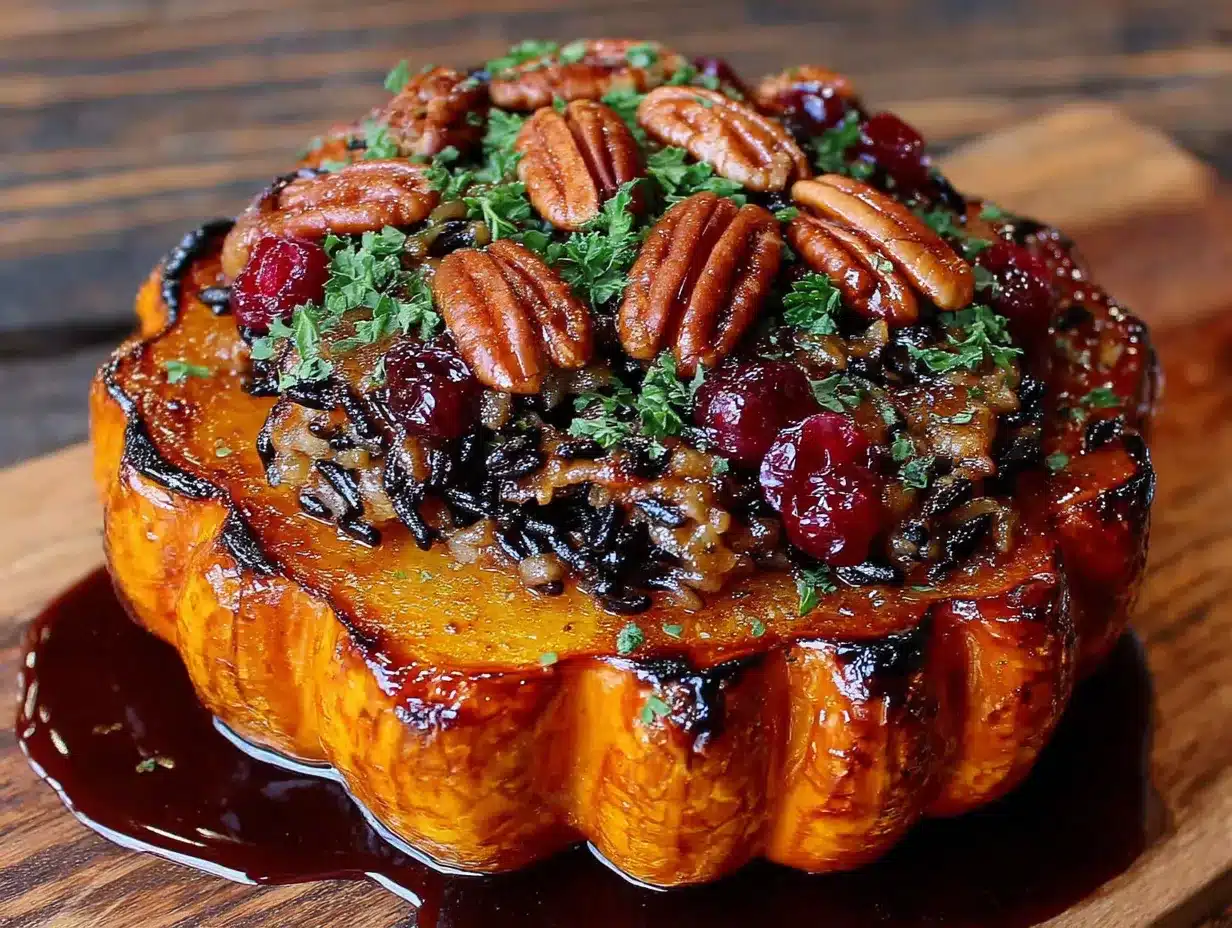
- 1 cup cooked wild rice — This is about 1/3 cup uncooked. I like Lundberg brand because it cooks evenly and has a nice texture. You can cook it ahead of time to save even more minutes on busy nights.
- 1/2 cup dried cranberries — Look for unsweetened or lightly sweetened ones if you can find them. The tartness balances the sweet squash perfectly.
- 1/4 cup chopped pecans — Toast them lightly in a dry pan for extra flavor. Walnuts work great too if that’s what you have.
- 1/4 cup finely diced onion — Yellow or white onion both work. Red onion gives a slightly sharper flavor if you’re into that.
- 2 cloves garlic, minced — Fresh garlic makes a difference here, but I’ve used the jarred stuff in a pinch and it was fine.
- 2 tablespoons butter — Unsalted butter lets you control the salt level. You can use olive oil to keep it dairy-free.
- 1/4 teaspoon dried sage — This is the secret ingredient that gives the filling that cozy, earthy flavor. Fresh sage works too, just use about 1 teaspoon chopped.
- 1/4 teaspoon dried thyme — Adds a subtle herbaceous note that pairs beautifully with the squash.
- 1/4 teaspoon cinnamon — Just a pinch to warm things up without making it taste like a dessert. Trust me on this one.
- Salt and pepper to taste
Optional Garnish
- Fresh parsley or thyme sprigs — Makes it look pretty, but totally optional.
- Drizzle of maple syrup — If you like things a little sweeter, a tiny drizzle over the finished squash is lovely.
- Crumbled feta or goat cheese — Adds a tangy, creamy element that’s absolutely delicious.
Equipment Needed
You don’t need much for this recipe, which is part of why I love it so much on busy nights. Here’s what you’ll want to have on hand:
- Sharp chef’s knife — A good knife makes cutting squash so much safer and easier. I use my Victorinox 8-inch chef’s knife and it glides right through. If your knife is dull, that’s when accidents happen.
- Cutting board — A sturdy one that won’t slide around. Put a damp paper towel underneath to keep it steady.
- Baking sheet — A rimmed baking sheet works best to catch any juices that might drip. I’ve used my Nordic Ware half-sheet pan for years and it’s never let me down.
- Parchment paper or aluminum foil — For easy cleanup. Trust me, you don’t want to scrub roasted squash off your pan.
- Medium skillet — For cooking the filling. A non-stick or cast iron skillet both work great.
- Small saucepan — If you need to cook the wild rice from scratch.
- Mixing bowl — For combining the filling ingredients.
- Measuring spoons and cups — For accuracy, though I’ll be honest, I often eyeball the spices at this point.
- Large spoon or cookie scoop — For scooping the filling into the squash halves.
If you don’t have parchment paper, you can grease the baking sheet with a little oil instead. And if you don’t have a cookie scoop, a regular spoon works just fine. No need to buy anything special for this recipe.
Preparation Method
Alright, let’s get cooking. This comes together faster than you’d think, so read through the steps once before you start. I’ve included little notes along the way to help you avoid the mistakes I made the first few times.
- Preheat your oven to 400°F (200°C). Line a baking sheet with parchment paper or foil for easy cleanup. While the oven heats up, you can prep the squash.
- Cut the acorn squash in half. Place each squash on its side on your cutting board. Using a sharp chef’s knife, carefully cut from stem to tip, splitting it right down the middle. Be careful here — acorn squash can be a little tricky if your knife isn’t sharp. I once had a knife get stuck halfway through and it was not a fun experience. Safety tip: If the squash is rolling around, cut a thin slice off the bottom to create a flat surface.
- Scoop out the seeds and stringy bits. Use a large spoon to scrape out the seeds and the fuzzy stuff in the center. You can save the seeds and roast them later if you like, but I usually just toss them. Rinse the squash halves under cold water and pat them dry with a clean towel.
- Season the squash. Brush the cut sides and the inside cavities with olive oil. Sprinkle with salt and pepper, making sure to get some inside the cavities too. Place the squash halves cut-side down on the prepared baking sheet. This helps them steam a little as they roast, keeping them tender.
- Roast the squash for 25-30 minutes. Pop them in the oven and set a timer. They’re done when you can easily pierce the flesh with a fork. The edges should be golden brown and the flesh should be soft but not mushy. While they roast, you can make the filling.
- Cook the wild rice if you haven’t already. If you’re starting from dry rice, bring 1 cup of water to a boil in a small saucepan, add 1/3 cup wild rice, reduce the heat to low, cover, and simmer for about 35-40 minutes. Drain any excess water and fluff with a fork. Pro tip: Make a big batch of wild rice on the weekend and use it throughout the week. It keeps beautifully in the fridge for up to 5 days.
- Start the filling. In a medium skillet over medium heat, melt the butter. Add the diced onion and cook for about 3-4 minutes until it’s soft and translucent. Don’t rush this step — you want the onion to get sweet, not just hot.
- Add the garlic and spices. Toss in the minced garlic, dried sage, dried thyme, and cinnamon. Stir constantly for about 30 seconds until you can smell the spices. Be careful not to burn the garlic. I learned this the hard way when I walked away to check my phone and came back to a smoky kitchen.
- Combine the filling ingredients. Remove the skillet from heat. Stir in the cooked wild rice, dried cranberries, and chopped pecans. Mix everything together until it’s well combined. Taste it and add salt and pepper as needed. The filling should be savory with a hint of sweetness from the cranberries.
- Fill the squash halves. When the squash is done roasting, carefully flip them over using tongs. They’ll be hot, so watch your fingers. Divide the filling evenly among the four squash halves, mounding it up in the center. Don’t worry if some spills over — that just means more crispy bits to enjoy later.
- Return to the oven for 5-10 minutes. Pop the filled squash back in the oven to warm everything through together. This also helps the flavors meld. If you want a little extra color on top, you can switch the oven to broil for the last minute or two. Just watch it closely so it doesn’t burn.
- Let it rest for a few minutes. When you take the squash out of the oven, let it sit on the baking sheet for about 5 minutes. This helps the filling set and makes the squash easier to handle. Plus, you don’t want to burn your mouth on that first bite.
And that’s it! You’ve got a beautiful, restaurant-worthy dinner that came together in about 40 minutes. I usually serve each person one half-squash as a main dish, or you can cut them in half again for smaller portions if you’re serving sides.
Cooking Tips & Techniques
Over the years, I’ve made this recipe enough times to learn a few tricks that make it even better. Here are the things I wish someone had told me when I first started making stuffed squash.
Microwave the squash for a head start. If you’re really short on time, you can microwave the squash halves for 3-4 minutes before roasting. Just place them cut-side down in a microwave-safe dish with a little water. This softens them up and cuts the roasting time by about 10 minutes. I do this on nights when I’m starving and don’t want to wait.
Don’t skip the cinnamon. I know it sounds weird, but that tiny pinch of cinnamon does something magical to the squash. It brings out the natural sweetness without making it taste like a pie. I’ve had friends ask me what my secret ingredient is, and they’re always surprised when I say cinnamon.
Toast your pecans first. This is one of those little steps that makes a big difference. Just toss the chopped pecans in a dry skillet over medium heat for 2-3 minutes, shaking the pan occasionally. You’ll know they’re done when you can smell them. They get so much more flavor and crunch this way.
Make extra filling on purpose. I always cook a little more wild rice than I need and make extra filling. It keeps in the fridge for days and makes a great lunch on its own, or you can stuff it into bell peppers or mushrooms later in the week. It’s like getting two meals out of one effort.
Watch your squash size. Not all acorn squash are created equal. If yours are on the smaller side, they’ll cook faster. If they’re huge, they might need a few extra minutes. I’ve learned to check them at the 25-minute mark and go from there. You want them tender but still holding their shape.
Don’t overfill the squash. I know it’s tempting to pile on as much filling as possible, but if you overfill them, the filling will just fall off when you try to eat it. Leave a little room at the top, and serve any extra filling on the side.
Variations & Adaptations
One of the things I love about this recipe is how flexible it is. I’ve tried all sorts of variations over the years, and they’ve all been delicious in their own way. Here are some of my favorites:
Make it vegan. Swap the butter for olive oil or vegan butter, and you’re good to go. The filling is naturally plant-based otherwise. I’ve served this to vegan friends and they always ask for the recipe.
Add some protein. If you want to make this a heartier meal, stir in some cooked sausage, ground turkey, or shredded chicken. I’ve used leftover rotisserie chicken before and it was amazing. Just add it in when you combine the filling ingredients.
Switch up the grains. Don’t have wild rice? No problem. Quinoa, farro, or even regular brown rice all work great. Each one gives a slightly different texture, but they all taste wonderful. I’ve even used leftover couscous in a pinch and it was surprisingly good.
Try different nuts. Pecans are my go-to, but walnuts, almonds, or even pine nuts are delicious. If you have a nut allergy, you can leave them out or substitute with pumpkin seeds for a similar crunch.
Seasonal fruit swaps. In the fall, dried cranberries are perfect. But in summer, try dried cherries, chopped dried apricots, or even fresh apple chunks. Each fruit brings its own personality to the dish.
Make it spicy. Add a pinch of red pepper flakes or a dash of cayenne to the filling for a little heat. The sweet and spicy combo is really something special.
Cheese it up. Stir in some crumbled feta, goat cheese, or shredded sharp cheddar right before serving. The creamy, tangy cheese against the sweet squash is absolutely addictive. I do this when I want to feel extra fancy.
Serving & Storage Suggestions
This stuffed acorn squash is beautiful enough to serve to guests, but simple enough for a regular Tuesday night. Here’s how I like to serve it and what to do with leftovers.
Serving temperature: I serve these warm, right out of the oven. The squash should be tender and the filling heated through. Let them rest for about 5 minutes so they’re not scorching hot. A little fresh parsley or thyme on top makes them look even prettier.
What to serve alongside: This dish is pretty complete on its own, but if you want to round out the meal, a simple green salad with a tangy vinaigrette is perfect. The acidity cuts through the richness of the squash. I also love serving it with roasted Brussels sprouts or a side of steamed green beans. For a heartier meal, add some crusty bread to soak up any juices.
Storage instructions: Leftover stuffed squash keeps beautifully in the refrigerator for up to 4 days. Store the squash halves in an airtight container. The filling might get a little softer, but the flavor actually gets better as it sits. I’ve been known to eat the leftovers cold right out of the fridge, and I’m not ashamed to admit it.
Freezing tips: You can freeze the stuffed squash for up to 3 months. Wrap each half tightly in plastic wrap, then place them in a freezer-safe bag. To reheat, thaw in the refrigerator overnight, then warm in a 350°F oven for about 15-20 minutes. The texture won’t be quite as perfect as fresh, but it’s still really good for a quick meal.
Reheating methods: The oven is your best bet for reheating. Pop the squash in a 350°F oven for about 10-15 minutes until warmed through. The microwave works in a pinch, but the squash will be softer and the filling might get a little mushy. If you’re in a hurry, microwave on medium power for 2-3 minutes.
Flavor development: Honestly, this is one of those dishes that tastes even better the next day. The flavors have time to meld together, and the squash gets even sweeter. I sometimes make it the night before on purpose, just so I can have the leftovers for lunch.
Nutritional Information & Benefits
I’m not a nutritionist, but I’ve done some research on the ingredients in this dish, and I feel good about feeding it to my family. Here’s a rough breakdown of what you’re getting in one stuffed squash half.
| Nutrient | Amount per serving (1 squash half) |
|---|---|
| Calories | ~320 |
| Total Fat | 14g |
| Saturated Fat | 4g |
| Carbohydrates | 48g |
| Fiber | 7g |
| Sugar | 14g |
| Protein | 6g |
| Vitamin A | 45% DV |
| Vitamin C | 30% DV |
| Iron | 8% DV |
Health highlights: Acorn squash is packed with vitamin A and vitamin C, both of which support your immune system — especially nice during cold and flu season. The wild rice is a whole grain that provides fiber and B vitamins, and the pecans offer healthy fats and magnesium. The dried cranberries add antioxidants, though they do bring some natural sugar to the party. All in all, this is a pretty well-rounded meal that leaves you feeling satisfied without being heavy.
Dietary considerations: This recipe is naturally gluten-free and can easily be made vegan by swapping the butter for oil. It’s also nut-free if you skip the pecans. If you’re watching your sugar intake, look for unsweetened dried cranberries.
Conclusion
I’ve made this stuffed acorn squash more times than I can count, and it never gets old. Every time I pull those golden squash halves out of the oven, with the filling mounded up and smelling like fall in a pan, I think about Margot leaning over that fence with her dirty gardening gloves. She didn’t just give me a recipe — she gave me a shortcut to a cozy, satisfying dinner that makes even a Tuesday feel a little special.
This is the kind of recipe that proves you don’t need complicated techniques or fancy ingredients to make something wonderful. Just a little squash, some rice, a handful of cranberries, and about forty minutes. It’s weeknight cooking at its best — practical, delicious, and forgiving enough to let you make it your own.
I’d love to hear how yours turns out. Did you add cheese? Swap in a different grain? Forget the cinnamon and discover something new? Drop a comment below and tell me about your version. And if you snap a photo, tag me — I’m always looking for new ideas to try. Happy cooking, friend. You’ve got this.
Frequently Asked Questions
Can I use a different type of squash for this recipe?
Absolutely. Butternut squash works great — just cut it in half lengthwise and scoop out the seeds. You’ll need to adjust the roasting time since butternut is denser. Delicata squash is another good option and it cooks even faster than acorn. Just remember that different squash varieties have different cooking times, so keep an eye on them.
Do I have to cook the wild rice before stuffing the squash?
Yes, the wild rice needs to be fully cooked before you add it to the filling. Raw rice won’t soften enough during the short time the squash is in the oven. I like to cook a big batch on the weekend so I have it ready to go. If you forget, you can use quick-cooking wild rice or substitute with another grain like quinoa that cooks faster.
Can I make this stuffed acorn squash ahead of time?
You bet. You can roast the squash and prepare the filling up to two days ahead. Store them separately in the fridge, then stuff and bake when you’re ready to eat. You might need to add a few extra minutes to the final bake time since everything will be cold from the fridge. I do this all the time for busy weeknights.
What can I use instead of dried cranberries?
Dried cherries are my favorite substitute — they have a similar tart-sweet thing going on. Dried apricots, chopped dates, or even raisins work too. If you want to go fresh, try chopped apple or pear, but add them right before baking so they don’t get too soft. The key is having something sweet and a little tart to balance the savory flavors.
How do I know when the acorn squash is fully cooked?
You’re looking for that perfect tender-but-not-mushy texture. The easiest way to check is to pierce the flesh with a fork. It should slide in easily with just a little resistance. The edges should be golden brown and slightly caramelized. If the fork goes in like butter, it’s done. If it still feels firm, give it another 5 minutes and check again.
Pin This Recipe!
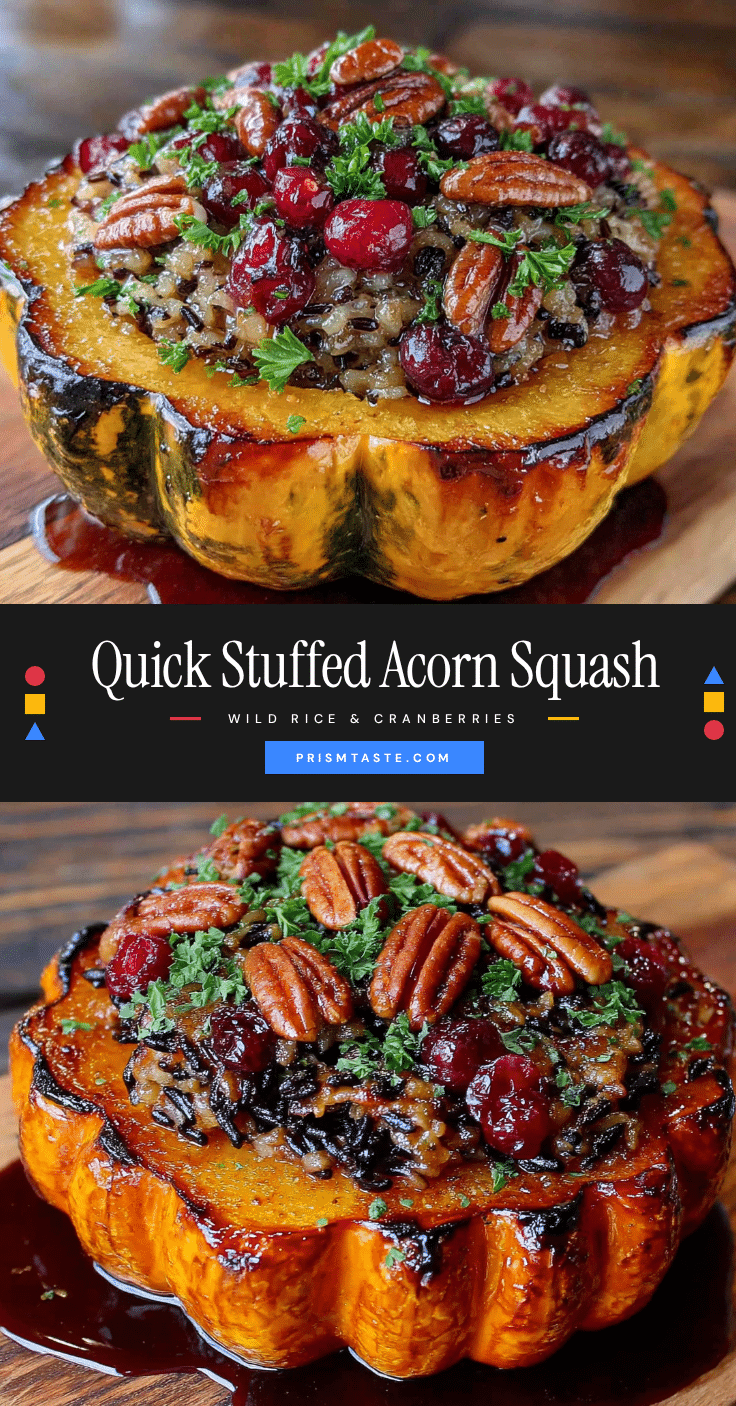
Easy Stuffed Acorn Squash with Wild Rice & Cranberries

A quick and easy weeknight dinner featuring tender acorn squash stuffed with a savory-sweet filling of wild rice, dried cranberries, and pecans. Ready in 40 minutes, this cozy dish feels special without requiring hours in the kitchen.
- Prep Time: 10 minutes
- Cook Time: 30 minutes
- Total Time: 40 minutes
- Yield: 4 servings 1x
- Category: Main Course
- Cuisine: American
Ingredients
- 2 medium acorn squash
- 2 tablespoons olive oil
- 1/2 teaspoon salt
- 1/4 teaspoon black pepper
- 1 cup cooked wild rice (about 1/3 cup uncooked)
- 1/2 cup dried cranberries
- 1/4 cup chopped pecans
- 1/4 cup finely diced onion
- 2 cloves garlic, minced
- 2 tablespoons unsalted butter
- 1/4 teaspoon dried sage
- 1/4 teaspoon dried thyme
- 1/4 teaspoon cinnamon
- Salt and pepper to taste
- Fresh parsley or thyme sprigs (optional garnish)
- Drizzle of maple syrup (optional)
- Crumbled feta or goat cheese (optional)
Instructions
- Preheat your oven to 400°F (200°C). Line a baking sheet with parchment paper or foil.
- Cut the acorn squash in half from stem to tip. Scoop out seeds and stringy bits. Rinse and pat dry.
- Brush cut sides and cavities with olive oil. Sprinkle with salt and pepper. Place cut-side down on the baking sheet.
- Roast squash for 25-30 minutes until fork-tender.
- Meanwhile, cook wild rice if needed: bring 1 cup water to a boil, add 1/3 cup wild rice, reduce heat, cover, and simmer 35-40 minutes. Drain and fluff.
- In a medium skillet over medium heat, melt butter. Add onion and cook 3-4 minutes until soft.
- Add garlic, sage, thyme, and cinnamon. Stir for 30 seconds until fragrant.
- Remove from heat. Stir in cooked wild rice, dried cranberries, and pecans. Season with salt and pepper.
- When squash is done, flip halves over. Divide filling evenly among the four halves.
- Return to oven for 5-10 minutes to warm through. Optionally broil for 1-2 minutes for extra color.
- Let rest 5 minutes before serving. Garnish as desired.
Notes
Microwave squash halves for 3-4 minutes before roasting to reduce time. Don’t skip the cinnamon—it enhances sweetness without making it dessert-like. Toast pecans in a dry skillet for extra flavor. Make extra filling for another meal. Adjust roasting time based on squash size.
Nutrition
- Serving Size: 1 stuffed squash hal
- Calories: 320
- Sugar: 14
- Sodium: 400
- Fat: 14
- Saturated Fat: 4
- Carbohydrates: 48
- Fiber: 7
- Protein: 6
Keywords: stuffed acorn squash, wild rice, cranberries, fall dinner, weeknight meal, vegetarian, gluten-free