My sister showed up at my door on a Tuesday evening with a bottle of white wine and that look—the one that says she’s had a week and needs food, stat. I opened the fridge and found a lone lemon rolling around next to a bunch of asparagus that was starting to look a little sad. A file of salmon sat in the freezer, still half-frozen from my ambitious Sunday meal prep that never happened. So I did what any improviser would do—I grabbed everything, poured myself a glass of her wine, and started throwing things together.
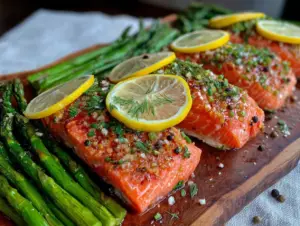
The lemon got sliced thin, the herbs came from the sad little pot on my windowsill that somehow refuses to die, and the asparagus got a quick toss in oil. I seasoned the salmon with just salt, pepper, and a handful of chopped dill and parsley, then laid those lemon slices right on top. Twenty minutes later, we were sitting at my tiny kitchen table with plates that looked like they belonged in a magazine—but tasted way better because they came from desperation and a little bit of luck.
That night, my sister said it was the best salmon she’d ever eaten. I thought she was just being nice, but then I made it again the next week for myself, and honestly? She wasn’t wrong. This easy lemon herb baked salmon with roasted asparagus has become my go-to for those nights when I need dinner to feel special without actually trying that hard. It’s the kind of meal that makes you look like you have your life together when really, you just had a lemon and some leftover herbs.
Why You’ll Love This Recipe
This isn’t just another salmon recipe—it’s the one you’ll actually make on a Tuesday night when you’re tired and hungry and don’t want to think about dinner. I’ve tested this more times than I care to admit, tweaking temperatures and herb ratios until it became the version I now make on autopilot. Here’s why it works:
- Quick & Easy : From fridge to table in under 30 minutes, including prep. Perfect for weeknights when you’re starving and impatient.
- Simple Ingredients : You probably have most of this already—lemon, garlic, olive oil, salt, pepper. The fresh herbs are nice but not non-negotiable.
- Perfect for Impressing : It looks and tastes fancy, but it’s actually one of the easiest things you can make. Great for when you’re cooking for someone you want to impress without breaking a sweat.
- One Sheet Pan : Minimal cleanup, maximum flavor. The salmon and asparagus roast together on the same pan, so you’re not washing a million dishes.
- Crowd-Pleaser : Even people who think they don’t like fish end up asking for seconds. Something about the lemon and herbs just works.
What makes this different from other baked salmon recipes is the technique—laying thin lemon slices directly on the fish creates a gentle steam effect that keeps the salmon incredibly moist while infusing it with bright citrus flavor. The asparagus gets roasted alongside, soaking up all those lovely juices. It’s not complicated, but the result is genuinely restaurant-quality. I’ve made this for dinner parties, for solo Netflix nights, and for that aforementioned sister visit, and it never disappoints.
What Ingredients You Will Need
This recipe relies on a handful of fresh, simple ingredients that work together to create something greater than the sum of their parts. Here’s what you’ll need:
For the Salmon
- 4 salmon fillets (6 oz each, skin-on or skinless—I prefer skin-on for extra moisture and crispy skin if you sear it first, but either works)
- 2 tablespoons olive oil (extra virgin is fine, but a lighter olive oil works well too)
- 2 cloves garlic, minced (or 1 teaspoon garlic powder in a pinch—fresh is better here)
- 1 lemon, thinly sliced into rounds (get a good, juicy one—you’ll use the whole thing)
- 2 tablespoons fresh dill, chopped (or 1 teaspoon dried dill—I won’t tell anyone)
- 2 tablespoons fresh parsley, chopped (or 1 teaspoon dried parsley)
- 1 teaspoon salt (I use kosher salt—it distributes more evenly)
- ½ teaspoon black pepper (freshly cracked if you can)
For the Asparagus
- 1 bunch asparagus (about 1 pound), woody ends trimmed (just snap the ends off where they naturally break)
- 1 tablespoon olive oil
- ½ teaspoon salt
- ¼ teaspoon black pepper
- Optional: ¼ cup grated Parmesan cheese (for sprinkling on the asparagus during the last 5 minutes of baking—it gets all crispy and amazing)
Ingredient Tips & Substitutions
For the salmon, I really recommend buying wild-caught if your budget allows—it has a firmer texture and richer flavor than farmed salmon. But honestly, farmed Atlantic salmon works beautifully here too, especially since the lemon and herbs do a lot of heavy lifting. Look for fillets that are similar in thickness so they cook evenly.
The fresh herbs make a difference, but I’ve made this with just dried dill and it was still delicious. If you’re using dried herbs, reduce the amount by about half since dried herbs are more concentrated. And if you don’t have dill, try thyme or oregano—they’re not traditional but they work surprisingly well.
For the asparagus, thicker spears hold up better to roasting and won’t get mushy. If you only have thin asparagus, reduce the roasting time by a few minutes. And if asparagus isn’t your thing, swap in broccoli florets, green beans, or even zucchini slices—just adjust the cooking time accordingly.
Equipment Needed
You don’t need much for this recipe, which is part of why I love it. Here’s what you’ll need:
- Large rimmed baking sheet (a half-sheet pan is ideal—it gives everything room to roast without steaming)
- Parchment paper or aluminum foil (for easy cleanup—trust me on this one)
- Chef’s knife (for trimming asparagus and slicing lemon)
- Cutting board
- Small bowl (for mixing the herb mixture)
- Measuring spoons
- Fish spatula or regular spatula (for serving—fish is delicate when cooked)
If you don’t have a fish spatula, a thin metal spatula works fine—just be gentle when lifting the salmon off the pan. I’ve also made this on a smaller baking sheet and just crowded things a bit more; it still works, the asparagus just takes a few extra minutes to get tender. And if you’re using foil instead of parchment, give it a quick spray of cooking oil so nothing sticks.
One tip I learned the hard way: make sure your baking sheet is at room temperature before you put the salmon on it. If you pull it straight from a hot oven where you just baked something else, the salmon will start cooking unevenly. Let it cool for a few minutes first.
Preparation Method
Let’s get cooking. This comes together fast, so I like to have everything prepped before I start—it makes the whole process feel effortless.
- Preheat your oven to 400°F (200°C). Line a large rimmed baking sheet with parchment paper or aluminum foil. This is non-negotiable for easy cleanup—trust me, you’ll thank yourself later.
- Prep the asparagus. Rinse the asparagus and snap off the woody ends—they’ll naturally break where the tough part ends. Pat them dry with a paper towel. In a medium bowl, toss the asparagus with 1 tablespoon olive oil, ½ teaspoon salt, and ¼ teaspoon black pepper until evenly coated. Set aside.
- Make the herb mixture. In a small bowl, combine the minced garlic, chopped dill, chopped parsley, 2 tablespoons olive oil, 1 teaspoon salt, and ½ teaspoon black pepper. Stir it all together—it should look like a chunky, fragrant paste. If you’re using dried herbs, mix them in now.
- Prep the salmon. Pat the salmon fillets dry with paper towels—this helps the seasoning stick and ensures a nice crust. Place the fillets skin-side down (if using skin-on) on the prepared baking sheet, leaving space between them for even cooking.
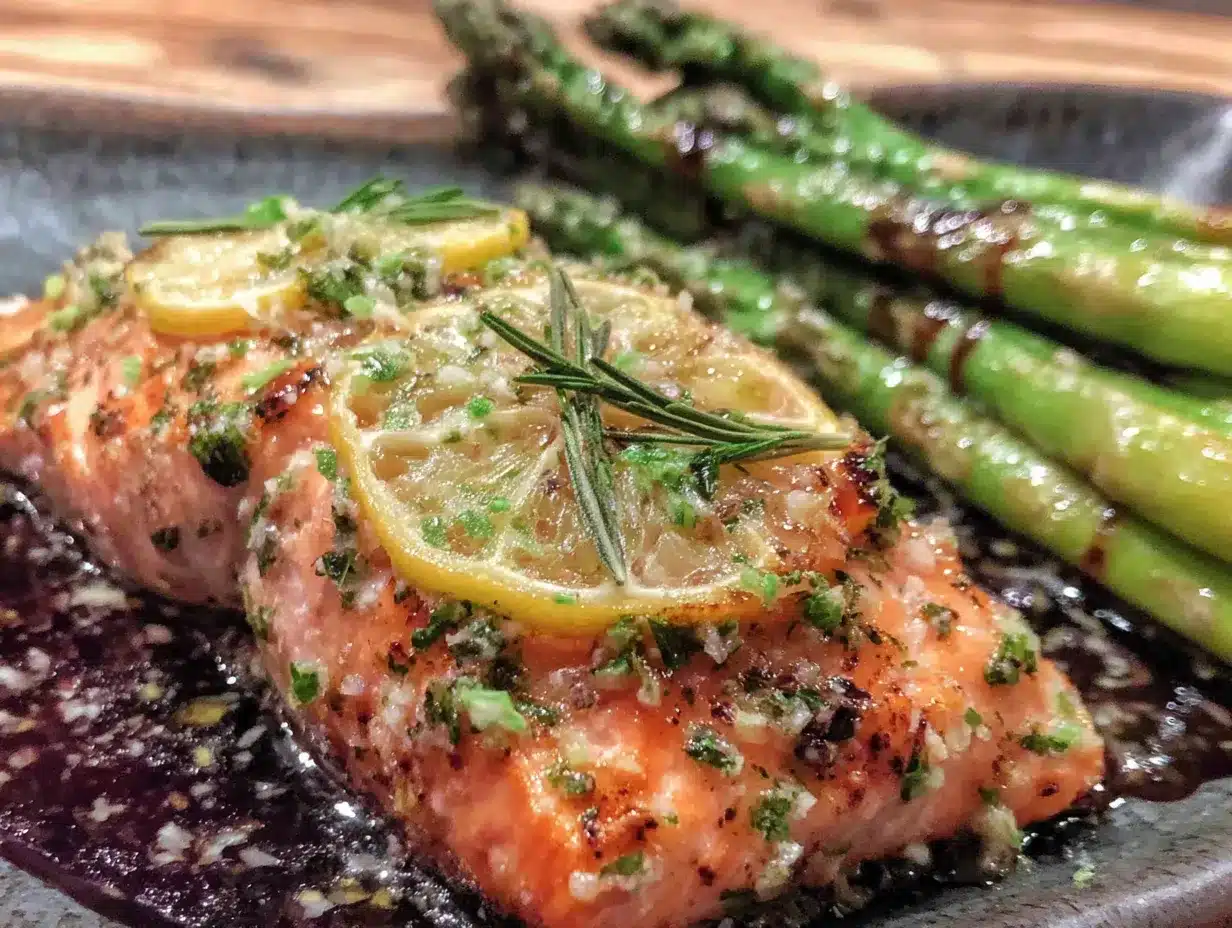
- Season the salmon. Spoon the herb mixture evenly over each fillet, spreading it out to cover the top surface. Don’t worry about being perfect—just get it all on there. Lay the lemon slices on top of the herb mixture, overlapping slightly if needed. The lemon will steam the fish as it bakes, keeping it incredibly moist.
- Add the asparagus. Arrange the seasoned asparagus around the salmon fillets on the same baking sheet. Try to keep them in a single layer so they roast instead of steam. If they overlap a bit, that’s okay—just give them a little shake halfway through.
- Bake. Place the baking sheet in the preheated oven and bake for 12-15 minutes, depending on the thickness of your salmon. The salmon is done when it flakes easily with a fork and the internal temperature reaches 145°F (63°C). The asparagus should be tender-crisp with slightly charred tips—that’s the good stuff.
- Optional Parmesan finish. If you’re using Parmesan, sprinkle it over the asparagus during the last 5 minutes of baking. It gets golden and crispy and adds a salty, nutty kick that pairs beautifully with the lemon herb salmon.
- Rest and serve. Remove the baking sheet from the oven and let it rest for 2-3 minutes. This allows the juices to redistribute so the salmon stays moist. Carefully transfer the salmon and asparagus to plates, discarding the lemon slices if you prefer (they’re edible but a bit intense). Serve immediately.
A few sensory cues to watch for: the salmon should look opaque and slightly firm to the touch when it’s done—if it still looks translucent in the center, give it another minute or two. The asparagus should be bright green and easily pierced with a fork but not mushy. And your kitchen should smell like a Mediterranean seaside café, which is honestly the best part.
Cooking Tips & Techniques
I’ve made this recipe enough times to have a few tricks up my sleeve. Here’s what I’ve learned:
Don’t overcrowd the pan. If your salmon fillets are touching or overlapping, they’ll steam instead of roast, and you’ll lose that lovely browning on the edges. Give them at least an inch of space. If you’re making a double batch, use two baking sheets.
Room temperature salmon cooks more evenly. Take the salmon out of the fridge about 15 minutes before you start cooking. This takes the chill off and helps it cook through without the outside getting overcooked while the center stays raw. I know it’s a small thing, but it makes a noticeable difference.
Watch the thickness. Not all salmon fillets are created equal. A thick center-cut fillet might need 15-17 minutes, while a thin tail piece could be done in 10. If your fillets vary in thickness, check the thinner ones first and remove them early if needed. You can always pop them back in for a minute if they’re underdone.
The lemon slice trick is real. I used to just squeeze lemon juice over the salmon before baking, but laying thin slices directly on top creates a gentle steam barrier that keeps the fish incredibly moist. Plus, the lemon flavor infuses more deeply. Just don’t use thick slices—they won’t soften enough and can make the top soggy.
One mistake I made early on: I used to flip the salmon halfway through baking because I thought it needed to cook evenly on both sides. Don’t do this! Baked salmon should cook skin-side down the entire time. Flipping it breaks the delicate flesh and dries it out. Trust the process.
If you’re looking for more weeknight dinner inspiration, you might enjoy this quick garlic butter shrimp pasta—it’s another one-pan wonder that comes together in about 20 minutes.
Variations & Adaptations
This recipe is wonderfully flexible. Here are some ways to change it up:
Dietary Variations:
- Dairy-Free: Skip the Parmesan (obviously) and you’re good to go. The recipe is naturally dairy-free without it.
- Keto/Low-Carb: This is already keto-friendly! The asparagus is low in carbs, and the salmon provides healthy fats. Just skip any sugary additions.
- Paleo/Whole30: Use ghee or avocado oil instead of olive oil if you want, but olive oil is generally fine for Paleo. Skip the cheese.
Flavor Twists:
- Spicy Lemon Herb: Add ½ teaspoon red pepper flakes to the herb mixture for a subtle kick. The heat pairs surprisingly well with the lemon.
- Mediterranean Style: Add ¼ cup chopped kalamata olives and 2 tablespoons capers to the baking sheet alongside the asparagus. It adds a briny, salty depth that’s incredible.
- Garlic Butter Version: Swap the olive oil in the herb mixture for 2 tablespoons melted butter. It makes everything richer and more indulgent.
Cooking Method Variations:
- Air Fryer: Cook the salmon at 375°F (190°C) for 8-10 minutes in your air fryer. Cook the asparagus separately at 375°F for 5-7 minutes. The air fryer gives the salmon a slightly crispier exterior.
- Grilled: Grill the salmon over medium-high heat for 4-5 minutes per side, and grill the asparagus in a grill basket for 3-4 minutes. The smoky char adds a whole new dimension.
I once tried a version with orange slices instead of lemon when I ran out of lemons—it was surprisingly good, especially with a sprinkle of fresh thyme. Don’t be afraid to experiment with whatever citrus you have on hand.
Serving & Storage Suggestions
This salmon is best served fresh out of the oven, but here’s how to make the most of it:
Serving: Plate the salmon with a generous portion of roasted asparagus alongside. A squeeze of fresh lemon juice right before serving brightens everything up. I like to serve it with a simple side of creamy roasted butternut squash soup on colder days, or a light green salad when it’s warm out. The salmon also pairs beautifully with rice, quinoa, or crusty bread to soak up the juices.
Storage: Leftover salmon keeps in an airtight container in the refrigerator for up to 3 days. The asparagus will keep for about 2 days but will soften over time. I don’t recommend freezing cooked salmon—the texture gets mealy and watery when thawed.
Reheating: The best way to reheat salmon is in a low oven (300°F/150°C) for about 10 minutes, or in a skillet over medium-low heat with a splash of water or lemon juice. The microwave works in a pinch but will dry it out, so cover it with a damp paper towel and use 30-second intervals. The asparagus can be reheated in the same oven or skillet, or enjoyed cold in a salad the next day.
Flavor development: Interestingly, the salmon actually tastes better the next day when eaten cold—the lemon and herb flavors meld together overnight. I’ve been known to make extra just so I can have it flaked over a lunch salad the next day.
Nutritional Information & Benefits
This meal is as good for you as it is delicious. Here’s the approximate nutritional breakdown per serving (one salmon fillet plus asparagus, without Parmesan):
- Calories: 380-420
- Protein: 35-40g
- Fat: 22-26g (mostly healthy omega-3s)
- Carbohydrates: 8-10g
- Fiber: 3-4g
- Sugar: 3-4g (natural from asparagus)
- Sodium: 700-800mg (varies based on salt used)
Salmon is one of the best sources of omega-3 fatty acids, which support heart health, brain function, and reduce inflammation. It’s also packed with high-quality protein, B vitamins, and selenium. Asparagus is a nutritional powerhouse too—it’s rich in fiber, folate, vitamins A, C, and K, and contains antioxidants that help protect your cells.
This recipe is naturally gluten-free, dairy-free (if you skip the Parmesan), and low-carb, making it suitable for a variety of dietary needs. For those watching their sodium, you can reduce the salt to ½ teaspoon and still get plenty of flavor from the lemon and herbs.
If you’re looking for another nutrient-packed meal that’s just as easy, try this creamy slow cooker Tuscan white bean soup with kale—it’s a cozy, plant-based option that’s perfect for meal prep.
Conclusion
This easy lemon herb baked salmon with roasted asparagus has become my unofficial signature dish, and it’s not because I’m some kind of culinary genius. It’s because the recipe itself is so forgiving and foolproof that anyone can make it and feel like a rockstar. The lemon keeps the salmon moist, the herbs add freshness, and the asparagus roasts to perfection right alongside it—all on one pan, in under 30 minutes.
What I love most about this recipe is how adaptable it is. You can dress it up for a dinner party with a side of risotto or keep it simple for a Tuesday night with just the salmon and asparagus. It works for both. And every time I make it, I think back to that night with my sister and a bottle of wine, when I had nothing planned and everything turned out perfectly.
I’d love to hear how this turns out for you. Did you add any twists? Try it with a different vegetable? Make it for someone special? Drop a comment below and let me know—I read every single one, and your adaptations inspire me to keep experimenting. And if you loved it, share it with a friend who needs an easy, impressive dinner in their back pocket. Happy cooking!
Frequently Asked Questions
Can I use frozen salmon for this recipe?
Yes, you can! Just make sure to thaw it completely in the refrigerator overnight before cooking. Pat it very dry with paper towels to remove excess moisture—frozen salmon tends to release more water as it cooks, which can make it soggy. You might need to add 2-3 minutes to the baking time if the salmon is still slightly cold in the center.
What if I don’t have fresh herbs?
No problem at all. Use 1 teaspoon each of dried dill and dried parsley instead of the fresh amounts. Dried herbs are more concentrated, so you need less. You can also use Italian seasoning or herbes de Provence in a pinch—they’ll give a slightly different flavor profile but still taste great.
Can I make this recipe with other types of fish?
Absolutely. This lemon herb preparation works beautifully with any firm white fish like cod, halibut, or sea bass. Adjust the cooking time based on the thickness of the fillets—thinner fish like tilapia will cook faster (8-10 minutes), while thicker cuts like halibut might need a bit longer (15-18 minutes).
How do I know when the salmon is done?
The most reliable method is using an instant-read thermometer—the internal temperature should reach 145°F (63°C) at the thickest part. If you don’t have a thermometer, look for the salmon to turn opaque and flake easily when gently pressed with a fork. The center should no longer look translucent or raw.
Can I prep this recipe ahead of time?
You can prep the ingredients a day ahead—trim the asparagus, slice the lemon, and mix the herb paste. Store everything separately in the refrigerator. When you’re ready to cook, just assemble on the baking sheet and bake. I don’t recommend assembling the whole dish ahead of time because the lemon and herbs will start to cure the salmon, changing its texture.
Pin This Recipe!
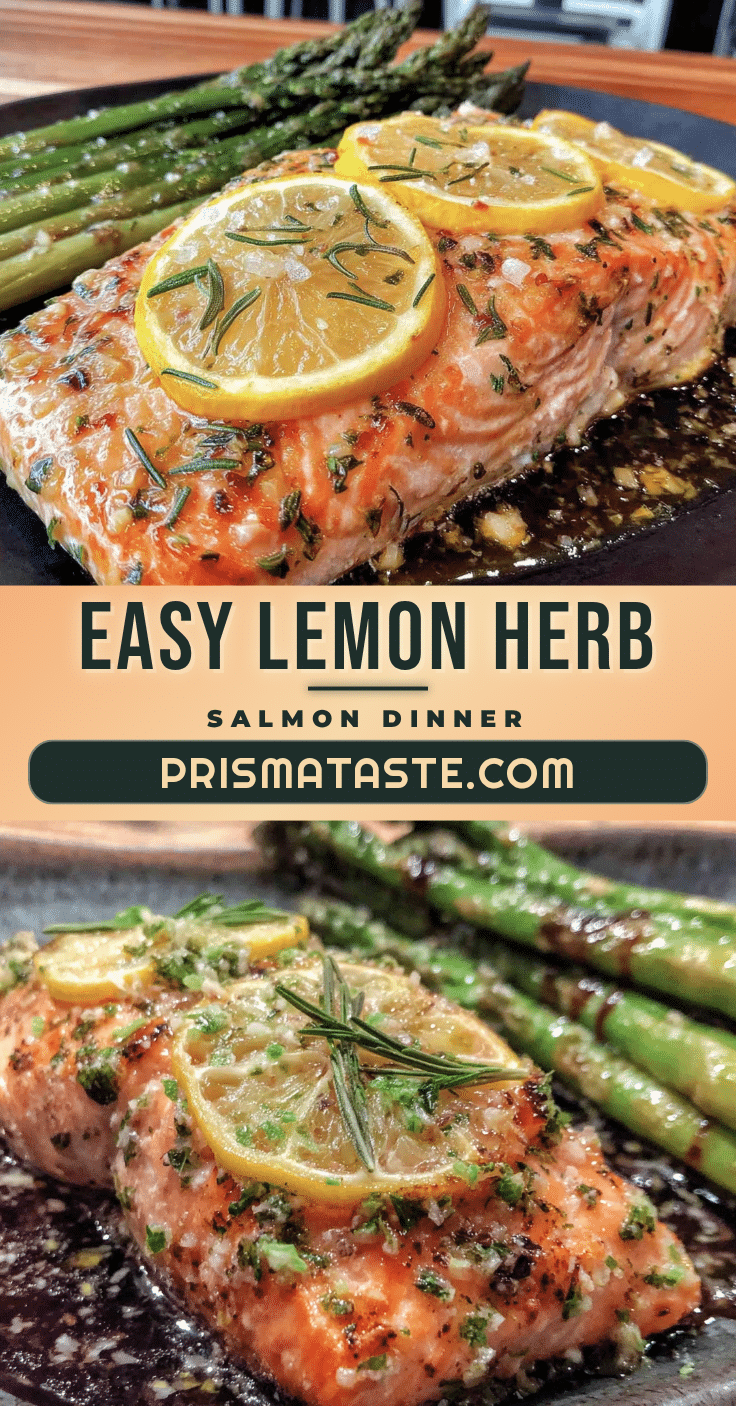
Easy Lemon Herb Baked Salmon with Roasted Asparagus
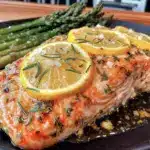
A quick and easy one-pan salmon recipe with bright lemon and fresh herbs, paired with perfectly roasted asparagus. Ready in under 30 minutes, it’s perfect for busy weeknights or impressing guests with minimal effort.
- Prep Time: 10 minutes
- Cook Time: 15 minutes
- Total Time: 25 minutes
- Yield: 4 servings 1x
- Category: Main Course
- Cuisine: American
Ingredients
- 4 salmon fillets (6 oz each, skin-on or skinless)
- 2 tablespoons olive oil
- 2 cloves garlic, minced
- 1 lemon, thinly sliced into rounds
- 2 tablespoons fresh dill, chopped (or 1 teaspoon dried dill)
- 2 tablespoons fresh parsley, chopped (or 1 teaspoon dried parsley)
- 1 teaspoon salt (kosher salt preferred)
- ½ teaspoon black pepper (freshly cracked)
- 1 bunch asparagus (about 1 pound), woody ends trimmed
- 1 tablespoon olive oil
- ½ teaspoon salt
- ¼ teaspoon black pepper
- ¼ cup grated Parmesan cheese (optional)
Instructions
- Preheat your oven to 400°F (200°C). Line a large rimmed baking sheet with parchment paper or aluminum foil.
- Prep the asparagus: Rinse and snap off woody ends. Pat dry. In a medium bowl, toss asparagus with 1 tablespoon olive oil, ½ teaspoon salt, and ¼ teaspoon black pepper until evenly coated. Set aside.
- Make the herb mixture: In a small bowl, combine minced garlic, chopped dill, chopped parsley, 2 tablespoons olive oil, 1 teaspoon salt, and ½ teaspoon black pepper. Stir into a chunky paste.
- Prep the salmon: Pat salmon fillets dry with paper towels. Place skin-side down on the prepared baking sheet, leaving space between fillets.
- Season the salmon: Spoon herb mixture evenly over each fillet. Lay lemon slices on top of the herb mixture, overlapping slightly if needed.
- Add the asparagus: Arrange seasoned asparagus around the salmon on the same baking sheet in a single layer.
- Bake: Place baking sheet in the preheated oven and bake for 12-15 minutes, depending on thickness. Salmon is done when it flakes easily with a fork and internal temperature reaches 145°F (63°C). Asparagus should be tender-crisp with slightly charred tips.
- Optional Parmesan finish: If using Parmesan, sprinkle over asparagus during the last 5 minutes of baking.
- Rest and serve: Remove from oven and let rest for 2-3 minutes. Transfer salmon and asparagus to plates. Discard lemon slices if desired. Serve immediately.
Notes
For best results, let salmon sit at room temperature for 15 minutes before cooking. Don’t overcrowd the pan—give fillets at least an inch of space. Avoid flipping the salmon during baking; cook skin-side down the entire time. The lemon slice trick creates a gentle steam that keeps salmon moist. If using dried herbs, reduce amount by half. For thicker asparagus, increase roasting time slightly; for thin asparagus, reduce time. Leftover salmon keeps in the refrigerator for up to 3 days.
Nutrition
- Serving Size: 1 salmon fillet with
- Calories: 400
- Sugar: 3.5
- Sodium: 750
- Fat: 24
- Saturated Fat: 4
- Carbohydrates: 9
- Fiber: 3.5
- Protein: 37
Keywords: baked salmon, lemon herb salmon, roasted asparagus, one-pan salmon, easy salmon recipe, weeknight dinner, healthy salmon, sheet pan salmon