“Is that… sage?” my neighbor called from across the fence, her head tilted like a golden retriever catching a scent. I was standing at my back door holding a steaming bowl, and apparently, the smell had traveled. “It smells like Thanksgiving in a mug.”
She wasn’t wrong. That first year I moved into this house, I spent October trying to figure out how to make the place smell like the home I grew up in. My mom’s kitchen had this specific fall aroma—a mix of roasting squash, browned butter, and something herbal that I could never quite identify until I started cooking it myself. Turns out, it was sage.
This roasted butternut squash soup with sage brown butter is the result of about eleven different attempts over three years. The first batch was too thin. The second was too sweet. The third had way too much nutmeg—honestly, it tasted like a candle. But somewhere around batch seven, I stopped trying to make it perfect and started paying attention to what actually tasted good. The sage brown butter happened by accident, when I got distracted and let the butter go a little too far. That nutty, toasty smell changed everything.
Now I make this soup every time the weather turns cold enough to need a sweater. It’s the kind of meal that doesn’t ask for much—just some time, a good blender, and a willingness to let butter do its thing.
Why You’ll Love This Recipe
I’ve tested this soup on picky eaters, on friends who claim they don’t like squash, and on my neighbor who now texts me when the leaves start changing to ask if I’m making it again. Every single time, the response is the same—quiet at first, then that little pause where someone takes a second spoonful before answering.
- Rich, Savory Comfort : The roasted squash brings natural sweetness, but the sage brown butter adds this deep, nutty richness that makes the soup feel indulgent without being heavy.
- Simple Ingredients : You need one squash, some aromatics, broth, butter, and fresh sage. That’s it. No cream required—the soup gets its velvety texture from the roasted squash itself.
- Make-Ahead Friendly : This soup actually tastes better the next day. The flavors settle and deepen overnight, which makes it perfect for meal prep or entertaining.
- Naturally Dairy-Free Option : As written, the soup base is dairy-free. The sage brown butter is added at the end, so if you need to skip it, you still have a fantastic roasted squash soup.
- Freezer Stable : Double the batch and freeze half. You’ll thank yourself on a cold Tuesday when you don’t feel like cooking.
What sets this apart from other squash soups is the roasting step. You’re not just boiling squash in broth—you’re caramelizing it first, which brings out sugars and deepens the flavor in a way that simmering alone can’t touch. The sage brown butter isn’t just garnish either. It’s stirred in at the end, so every spoonful carries that toasty, herbaceous note.
This is the soup you make when you want something that feels like a hug in a bowl. It’s quiet comfort food—no bells and whistles, just really good ingredients treated with care.
What Ingredients You Will Need
This recipe relies on a short list of ingredients, each pulling its weight. Here’s what you’ll need and why each one matters.
For the Soup
- 1 medium butternut squash (about 2 ½ to 3 pounds) — Look for one that feels heavy for its size with firm, unblemished skin. The neck portion has less seeds and more flesh, which makes for smoother soup.
- 1 medium yellow onion, roughly chopped — Adds savory depth that balances the squash’s sweetness.
- 3 cloves garlic, smashed — Whole cloves work fine here since everything gets blended anyway.
- 2 tablespoons olive oil — For roasting. Use a good-quality one since you’ll taste it.
- ½ teaspoon salt — I use fine sea salt. Adjust at the end.
- ¼ teaspoon black pepper — Freshly ground, please.
- ¼ teaspoon smoked paprika (optional) — Adds a subtle warmth that plays well with the sage.
- 3 cups vegetable broth or chicken broth — Use a low-sodium option so you control the salt. I prefer Better Than Bouillon roasted vegetable base for depth.
- ½ cup full-fat coconut milk or heavy cream — Coconut milk keeps it dairy-free and adds a silky finish. Heavy cream works beautifully too.
For the Sage Brown Butter
- 4 tablespoons unsalted butter — Salted butter works but adjust the added salt in the soup.
- 10-12 fresh sage leaves — Fresh is non-negotiable here. Dried sage won’t crisp the same way.
- Pinch of flaky salt — For finishing, like Maldon.
Ingredient Notes & Substitutions : If you can’t find butternut squash, kabocha or buttercup squash work beautifully. For a completely dairy-free version, use coconut milk and substitute the brown butter with 4 tablespoons of olive oil, infusing it with sage leaves over low heat. If you’re avoiding nightshades, skip the smoked paprika—the soup is still fantastic without it.
Equipment Needed
You don’t need a fancy kitchen to make this soup, but a few tools make the process smoother.
- Baking sheet — A half-sheet pan works perfectly. Line it with parchment for easy cleanup.
- Sharp chef’s knife — Butternut squash is dense. A dull knife is dangerous here.
- Vegetable peeler — For peeling the squash. A Y-peeler gives you more control.
- Large soup pot or Dutch oven — I use a 5-quart Le Creuset, but any heavy-bottomed pot works.
- Immersion blender or countertop blender — An immersion blender is easier and creates less mess. If using a countertop blender, blend in batches and remove the center cap to let steam escape.
- Small skillet — For browning the butter. Light-colored pans help you see the color change.
- Measuring spoons and kitchen scale — For accuracy, especially with the butter.
Budget-Friendly Tip : If you don’t own an immersion blender, let the soup cool slightly before transferring it to a regular blender. Hold a kitchen towel over the lid while blending to prevent splatters.
Preparation Method
Let’s get cooking. This recipe takes about 45 minutes from start to finish, with about 15 minutes of active work.
Step 1: Roast the Squash
Preheat your oven to 400°F (200°C). Peel the butternut squash with a vegetable peeler, then cut it in half lengthwise. Scoop out the seeds and stringy bits with a spoon. Cut the flesh into 1-inch cubes—try to keep them uniform so they roast evenly. Toss the cubes with 2 tablespoons olive oil, salt, pepper, and smoked paprika if using. Spread them in a single layer on your baking sheet. Roast for 25-30 minutes, flipping halfway, until the squash is tender and the edges are caramelized. You want golden-brown spots—that’s flavor.
Step 2: Sauté the Aromatics
While the squash roasts, heat a drizzle of olive oil in your soup pot over medium heat. Add the chopped onion and cook for 5-6 minutes until translucent and just starting to brown at the edges. Add the smashed garlic cloves and cook for another minute until fragrant. Don’t let the garlic burn—it turns bitter.
Step 3: Combine and Simmer
Add the roasted squash cubes to the pot with the onions and garlic. Pour in the broth—start with 3 cups. Bring everything to a gentle boil, then reduce the heat to low. Cover and let it simmer for 10 minutes. The squash should be very tender, almost falling apart when poked with a fork.
Step 4: Blend Until Silky
Remove the pot from heat. If using an immersion blender, blend directly in the pot until completely smooth—about 60 seconds. If using a countertop blender, work in batches and hold the lid with a towel. Blend until the soup is velvety with no chunks. Stir in the coconut milk or cream. Taste and adjust salt and pepper. The soup should be thick enough to coat the back of a spoon but still pourable. If it’s too thick, add more broth a quarter cup at a time.
Step 5: Make the Sage Brown Butter
In a small skillet over medium heat, melt the butter. Swirl the pan occasionally. After about 2-3 minutes, the butter will foam, then the foam will subside, and you’ll see golden-brown specks forming at the bottom. The moment you smell a nutty aroma, add the sage leaves. They’ll sizzle and crisp up in about 30 seconds. Immediately remove the pan from heat to prevent burning. The butter should be amber-colored, not dark brown.
Step 6: Finish and Serve
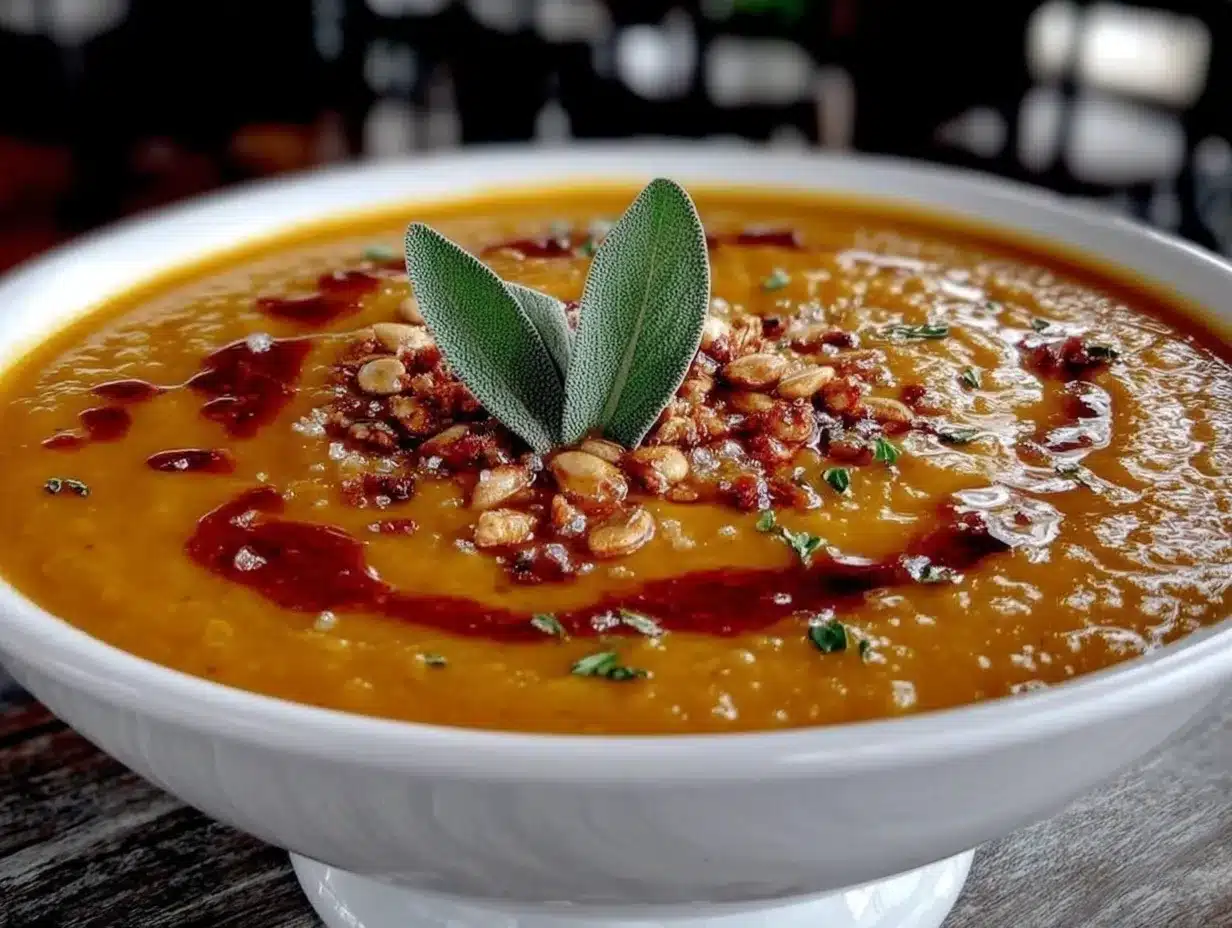
Ladle the soup into bowls. Drizzle a spoonful of sage brown butter over each serving, letting it swirl into the surface. Top with a few crispy sage leaves and a pinch of flaky salt. Serve hot.
Cooking Tips & Techniques
I’ve made this soup enough times to know exactly where things can go sideways. Here’s what I’ve learned the hard way.
Don’t skip the roasting step. I know it’s tempting to just boil the squash to save time, but roasting concentrates the sugars and adds a smoky depth that boiling can’t replicate. The caramelized edges are where the magic lives. If you’re short on time, you can roast the squash a day ahead and refrigerate it.
Watch the brown butter like a hawk. Brown butter goes from perfect to burnt in about 15 seconds. The moment you see golden specks and smell that nutty aroma, pull it off the heat. I’ve ruined more batches than I care to admit by walking away to answer a text. Stay at the stove.
Blend hot soup carefully. Hot liquid expands in a blender, and the pressure can blow the lid off—trust me, cleaning soup off the ceiling is not fun. Let the soup cool for 5 minutes before blending, and always remove the center cap from the blender lid to let steam escape. Cover the hole with a folded kitchen towel instead.
Season in layers. Add salt at the roasting stage, a little more during simmering, and finish with flaky salt on top. This builds complexity instead of making the soup taste salty. If the soup tastes flat at the end, a squeeze of lemon juice or a splash of apple cider vinegar can brighten it up.
Thin it gradually. Different squash varieties release different amounts of water. Start with 3 cups of broth and add more as needed. You can always thin a thick soup, but you can’t thicken a thin one without adding a starch or cream.
Variations & Adaptations
This soup is a great base for experimentation. Here are some ways I’ve adapted it over the years.
Spicy Version : Add ½ teaspoon of red pepper flakes along with the garlic, or stir in 1 tablespoon of harissa paste at the blending stage. The heat cuts through the richness beautifully.
Roasted Apple & Squash : Peel and cube one Honeycrisp apple and roast it alongside the squash. The apple adds a subtle sweetness and fruitiness that pairs wonderfully with the sage. This is my favorite fall variation.
Coconut Curry Twist : Substitute 1 tablespoon of curry powder for the smoked paprika, and use full-fat coconut milk instead of cream. The warm spices complement the squash and make the soup feel completely different.
Low-Carb Option : Replace half the butternut squash with roasted cauliflower florets. Roast the cauliflower at 425°F (220°C) until deeply browned. It blends into a silky texture with fewer carbs.
Instant Pot Adaptation : Sauté the onions and garlic using the sauté function. Add the raw cubed squash and broth, then pressure cook on high for 8 minutes. Quick-release, blend, and finish with the brown butter. It cuts the cooking time in half.
Nut-Free Brown Butter : If you’re avoiding dairy, brown 4 tablespoons of vegan butter (Miyoko’s works best) with the sage leaves. The flavor is slightly different but still delicious.
Serving & Storage Suggestions
This soup is versatile enough for casual weeknights or dinner parties. Here’s how I serve and store it.
Serving : Ladle the soup into warm bowls—cold bowls cool it down fast. Top with the sage brown butter and crispy sage leaves right before serving so they stay crisp. I like to serve this with crusty sourdough bread for dipping, or alongside a simple arugula salad with lemon vinaigrette to cut the richness. For a heartier meal, pair it with some cozy crockpot fall harvest chicken stew for a full autumn spread.
Storage : Let the soup cool completely before storing. Transfer it to an airtight container and refrigerate for up to 5 days. The flavors actually deepen after a day or two. If you’ve already added the brown butter, it will solidify when chilled—just reheat gently and stir to re-emulsify.
Freezing : This soup freezes beautifully. Pour cooled soup into freezer-safe bags or containers, leaving an inch of headroom for expansion. Freeze flat in bags for easy stacking. It keeps for up to 3 months. Thaw overnight in the refrigerator before reheating.
Reheating : Reheat gently on the stovetop over medium-low heat, stirring occasionally. If the soup has thickened in the fridge, add a splash of broth or water to thin it. Avoid boiling—it can cause the coconut milk or cream to separate. If using a microwave, reheat in 30-second bursts, stirring between each.
Make-Ahead Tip : Make the soup base (without the brown butter) up to 3 days ahead. Make the sage brown butter fresh just before serving. The crispy sage leaves lose their crunch within an hour, so add them at the last minute.
Nutritional Information & Benefits
This soup is as nourishing as it is comforting. Here’s a rough breakdown per serving (based on 4 servings, using coconut milk).
| Nutrient | Amount per Serving |
|---|---|
| Calories | 285 |
| Total Fat | 18g |
| Saturated Fat | 10g |
| Carbohydrates | 28g |
| Fiber | 6g |
| Sugar | 8g |
| Protein | 4g |
| Vitamin A | 457% DV |
| Vitamin C | 45% DV |
| Potassium | 820mg |
Health Highlights : Butternut squash is loaded with vitamin A (from beta-carotene), which supports eye health and immune function. Sage has been used traditionally for its antioxidant properties and may help with digestion. The olive oil provides heart-healthy monounsaturated fats. This soup is naturally gluten-free and, when made with coconut milk, dairy-free as well.
Dietary Notes : Contains dairy if using butter and heavy cream. For a vegan version, use vegan butter and coconut milk. Not suitable for nut-free diets if using coconut milk (coconut is technically a fruit, but some people with tree nut allergies react to it).
Conclusion
This roasted butternut squash soup with sage brown butter is the kind of recipe that becomes a seasonal tradition. It’s simple enough for a Tuesday night but special enough for company. The roasted squash gives it body and sweetness, while the sage brown butter adds that nutty, savory finish that makes people close their eyes after the first spoonful.
I’ve made this for Thanksgiving dinners, for sick friends, and for myself on cold afternoons when I needed something warm. It never disappoints. The best part? You can tweak it endlessly—add more spice, swap in different squash, or skip the brown butter entirely and still have a fantastic soup.
If you make this, I’d love to hear how it turns out. Leave a comment below or tag me in your photos. And if you’re looking for more cozy fall meals, don’t miss the cozy apple cider donut bread with cinnamon sugar for dessert—it’s the perfect sweet ending to this savory bowl.
Go ahead, roast that squash. Brown that butter. You deserve a bowl of something warm.
Frequently Asked Questions
Can I use pre-cut butternut squash from the store?
Absolutely. Look for fresh pre-cut cubes in the produce section. They’ll roast slightly faster since they’re already cut, so check for doneness around 20 minutes. Avoid frozen squash for roasting—it releases too much water and won’t caramelize properly.
Why did my brown butter burn?
Brown butter goes from perfect to burnt fast because the milk solids toast quickly once the water evaporates. Use medium heat, not high, and swirl the pan constantly. The moment you see golden specks and smell a nutty aroma, pull it off the heat immediately. If you see dark brown specks or smell a bitter, burnt scent, start over.
Can I make this soup ahead for a party?
Yes, and I actually recommend it. Make the soup base up to 3 days ahead and refrigerate. The flavors meld and deepen overnight. Make the sage brown butter fresh just before serving—the crispy sage leaves lose their crunch after an hour. Reheat the soup gently on the stovetop, then drizzle with the brown butter right before serving.
How do I make this soup vegan?
Use olive oil or vegan butter for the brown butter (Miyoko’s works great) and full-fat coconut milk instead of heavy cream. The rest of the recipe is already vegan. The flavor will be slightly different but still delicious—the coconut milk adds a subtle tropical note that pairs well with the sage.
My soup turned out too thin. How do I fix it?
Don’t panic. Simmer the soup uncovered over medium-low heat for 10-15 minutes to reduce it. Stir occasionally to prevent sticking. If it’s still too thin, blend in a small cooked potato or a handful of raw cashews (soaked in hot water for 15 minutes) to add body without changing the flavor.
Pin This Recipe!
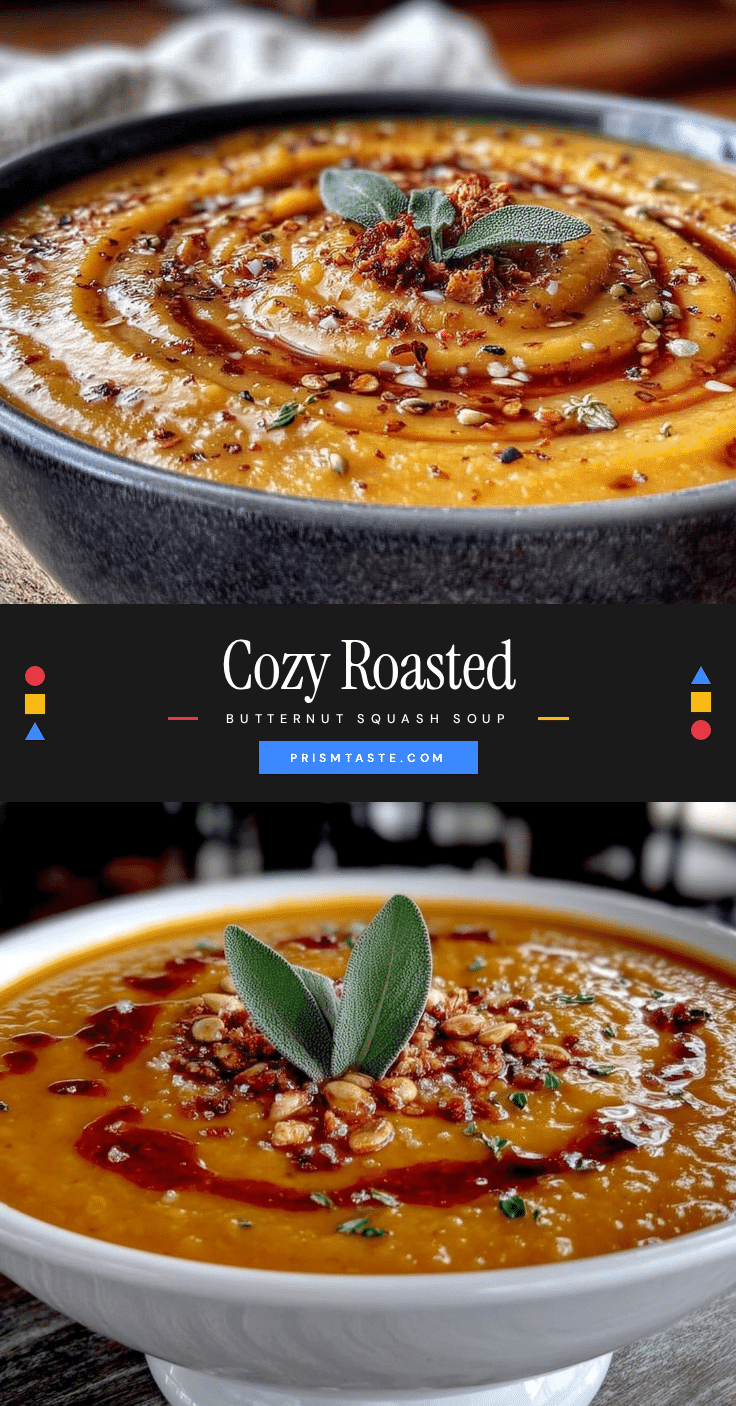
Cozy Roasted Butternut Squash Soup with Sage Brown Butter

A rich, savory roasted butternut squash soup finished with nutty sage brown butter. This comforting fall soup is naturally creamy, dairy-free optional, and perfect for meal prep or entertaining.
- Prep Time: 15 minutes
- Cook Time: 30 minutes
- Total Time: 45 minutes
- Yield: 4 servings 1x
- Category: Soup
- Cuisine: American
Ingredients
- 1 medium butternut squash (about 2 ½ to 3 pounds), peeled, seeded, and cut into 1-inch cubes
- 1 medium yellow onion, roughly chopped
- 3 cloves garlic, smashed
- 2 tablespoons olive oil
- ½ teaspoon fine sea salt
- ¼ teaspoon freshly ground black pepper
- ¼ teaspoon smoked paprika (optional)
- 3 cups low-sodium vegetable broth or chicken broth
- ½ cup full-fat coconut milk or heavy cream
- 4 tablespoons unsalted butter
- 10–12 fresh sage leaves
- Pinch of flaky salt (for finishing)
Instructions
- Preheat oven to 400°F (200°C). Peel the butternut squash, cut in half lengthwise, scoop out seeds, and cut into 1-inch cubes. Toss with olive oil, salt, pepper, and smoked paprika (if using). Spread in a single layer on a parchment-lined baking sheet. Roast for 25-30 minutes, flipping halfway, until tender and caramelized.
- While squash roasts, heat a drizzle of olive oil in a large soup pot or Dutch oven over medium heat. Add chopped onion and cook for 5-6 minutes until translucent and lightly browned. Add smashed garlic and cook for 1 minute until fragrant.
- Add roasted squash cubes to the pot with onions and garlic. Pour in 3 cups of broth. Bring to a gentle boil, then reduce heat to low. Cover and simmer for 10 minutes until squash is very tender.
- Remove pot from heat. Using an immersion blender, blend until completely smooth (about 60 seconds). Alternatively, let cool slightly and blend in batches in a countertop blender, removing center cap and covering with a towel. Stir in coconut milk or cream. Taste and adjust salt and pepper. Add more broth if needed to reach desired consistency.
- In a small skillet over medium heat, melt butter. Swirl occasionally. After 2-3 minutes, butter will foam, then foam subsides and golden-brown specks appear. When you smell a nutty aroma, add sage leaves. They will sizzle and crisp in about 30 seconds. Immediately remove from heat.
- Ladle soup into bowls. Drizzle sage brown butter over each serving, top with crispy sage leaves and a pinch of flaky salt. Serve hot.
Notes
Don’t skip roasting the squash—it caramelizes and deepens flavor. Watch brown butter carefully; it goes from perfect to burnt in seconds. Blend hot soup carefully to avoid splatters. Season in layers for best flavor. Soup thickens when chilled; thin with broth when reheating. Make soup base up to 3 days ahead; make brown butter fresh just before serving.
Nutrition
- Serving Size: 1 serving (about 1 ½
- Calories: 285
- Sugar: 8
- Sodium: 820
- Fat: 18
- Saturated Fat: 10
- Carbohydrates: 28
- Fiber: 6
- Protein: 4
Keywords: butternut squash soup, sage brown butter, fall soup, roasted squash soup, creamy soup, dairy-free soup, gluten-free soup, vegetarian soup