I had been looking for a chicken noodle soup that actually tasted like someone spent the whole day stirring it—without requiring me to actually spend the whole day stirring it. For years, I just accepted that homemade soup meant either a bland broth with sad, overcooked noodles or a complicated production that left my kitchen looking like a disaster zone. The canned stuff was fine in a pinch, but it never hit that spot—you know the one. The deep, quiet comfort of a bowl that feels like a hug from the inside out.
It happened on a random Tuesday in late October. I had a cold settling into my chest, a fridge full of leftover roast chicken, and absolutely no energy for anything complicated. I grabbed a pot, threw in some aromatics, and started pulling things from the pantry without much of a plan. The dill was an accident—I’d bought it for a salmon dinner that never happened, and it was wilting in the crisper drawer. I chopped it up and tossed it in mostly out of guilt.
That first spoonful stopped me mid-sniffle. The dill didn’t just add flavor—it changed the whole personality of the soup. It made the broth feel brighter, more alive, without losing any of that cozy, slow-cooked depth. I remember standing at the stove, eating straight from the ladle, thinking, This is it. This is the one I’ve been looking for.
It wasn’t a eureka moment with fireworks. It was quieter than that. More like finally finding the sweater you forgot you owned in the back of your closet—the one that fits just right and makes everything feel okay.
Why You’ll Love This Recipe
This isn’t just another chicken noodle soup recipe. It’s the one I make when I’m sick, when I’m sad, when I’m celebrating, or when I just need something warm to hold onto. And honestly? It delivers every single time.
- Simple Ingredients, Big Flavor: You probably have most of these in your kitchen right now. No fancy spice blends or hard-to-find imports. Just honest, real food that works together beautifully.
- One Pot, Minimal Mess: Everything happens in a single Dutch oven or stockpot. Less cleanup means more time curled up on the couch with your bowl.
- Ready in Under an Hour: From chopping to serving, this comes together in about 45 minutes. That’s faster than delivery in most neighborhoods.
- Fresh Dill Makes It Special: That accidental addition turned into my signature move. The dill adds a subtle anise-like freshness that cuts through the richness of the broth and makes every spoonful feel bright and intentional.
- Freezes Like a Dream: Make a double batch and stash half for those days when you need comfort but don’t have the energy to cook. Just leave the noodles out until you’re ready to serve.
- Crowd-Pleasing Magic: I’ve served this to picky kids, soup snobs, and friends who “don’t really like chicken soup.” Empty bowls every time.
What sets this apart from every other chicken noodle soup recipe out there is the technique. Most recipes have you boil everything together until the noodles turn to mush and the chicken gets stringy. Not here. We’re building flavor in layers—sautéing the aromatics first, building the broth with real chicken pieces, and cooking the noodles separately so they stay perfectly tender. And that dill? It goes in at the very end, right before serving, so its bright, herbal notes hit you fresh in every bite.
This is the kind of soup that makes you close your eyes after the first spoonful. It’s comfort food at its most honest—no shortcuts, no gimmicks, just good cooking that feels like coming home.
What Ingredients You Will Need
This recipe relies on simple, wholesome ingredients to deliver that deep, soul-warming flavor. Nothing here is fussy or hard to find—just good pantry staples and a few fresh items that make all the difference.
For the Broth Base
- 2 tablespoons unsalted butter (adds richness; olive oil works too, but butter gives that cozy flavor)
- 1 large yellow onion, diced (about 1½ cups; sweet onions are fine too, but yellow gives the best savory depth)
- 3 medium carrots, peeled and sliced into rounds (about 1½ cups; I like them thicker for texture, but thin slices cook faster)
- 3 celery stalks, sliced (about 1 cup; include the leafy tops for extra flavor if you have them)
- 4 cloves garlic, minced (fresh only—pre-minced stuff won’t give you the same aromatic punch)
- 1 teaspoon salt (plus more to taste; I prefer fine sea salt here)
- ½ teaspoon black pepper (freshly ground is best)
- ½ teaspoon dried thyme (or 1½ teaspoons fresh thyme leaves)
- ¼ teaspoon turmeric (optional, but it gives the broth that gorgeous golden color)
For the Soup
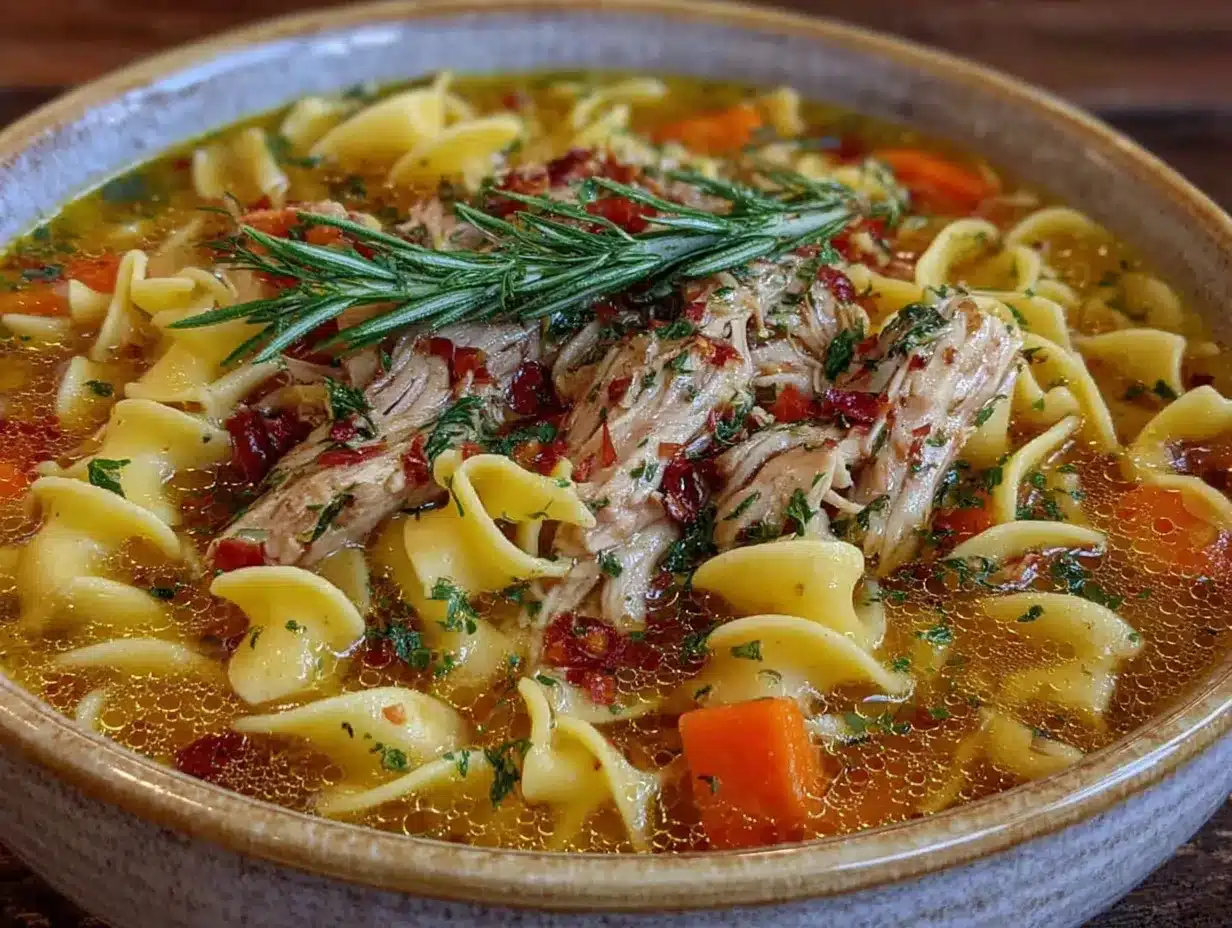
- 1½ pounds boneless, skinless chicken thighs (breasts work too, but thighs stay juicier and add more flavor to the broth. I’ve tested both—thighs win every time.)
- 8 cups low-sodium chicken broth (I use Swanson or Kitchen Basics; homemade is lovely if you have it, but good store-bought works perfectly)
- 2 cups water (gives you room to adjust the saltiness as the soup reduces)
- 2 bay leaves (don’t skip these—they add a subtle layer of flavor you’ll miss if they’re gone)
- 8 ounces wide egg noodles (I prefer No Yolks or Reames frozen egg noodles; the wide ones catch more broth)
- ⅓ cup fresh dill, chopped (pack it loosely; this is the star of the show, so don’t skimp)
- 2 tablespoons fresh lemon juice (about half a lemon; this brightens everything at the end)
- Fresh parsley for garnish (optional, but pretty)
Ingredient Tips & Substitutions
For the chicken, I really do recommend thighs. I learned this the hard way after years of dry, stringy chicken breast soup. Thighs stay tender even if you simmer them a few minutes too long, and they release enough fat into the broth to make it silky without being greasy.
If you’re gluten-free, swap the egg noodles for your favorite gluten-free pasta or use rice instead. Just adjust the cooking time based on what you choose. For a dairy-free version, use olive oil instead of butter—it changes the flavor slightly but still tastes wonderful.
Fresh dill is non-negotiable here. Dried dill has a completely different flavor profile—more muted, almost grassy—and it won’t give you that bright, pop-of-herbaceousness that makes this soup special. If you absolutely can’t find fresh dill, try fresh parsley with a pinch of dried dill, but honestly, it won’t be the same soup.
Equipment Needed
You don’t need a fancy kitchen to make this soup, but having the right tools makes the process smoother and more enjoyable.
- Large Dutch oven or stockpot (5-6 quart capacity is ideal; I use my trusty Lodge enameled cast iron—it holds heat beautifully and makes the soup taste like it simmered all day)
- Chef’s knife and cutting board (a sharp knife makes dicing the vegetables so much easier; dull knives are dangerous, trust me)
- Wooden spoon or silicone spatula (for stirring and scraping up any browned bits from the bottom)
- Measuring cups and spoons (I keep a set dedicated just for savory cooking so they don’t taste like vanilla extract)
- Fine-mesh strainer (for skimming any foam from the broth if needed, though this recipe rarely produces much)
- Separate pot for noodles (any medium saucepan works; cooking the noodles separately is the key to perfect texture)
- Tongs (for removing the chicken thighs from the pot when they’re done cooking)
- Ladle (for serving; a deep, wide ladle is best for getting plenty of broth and solids in each bowl)
If you don’t have a Dutch oven, any heavy-bottomed stockpot will work. The key is even heat distribution so nothing scorches on the bottom. A cheap thin pot can work in a pinch, but you’ll need to stir more frequently and watch the heat carefully.
Preparation Method
Let’s make some soup. I’ve broken this down into clear steps with all the little details I wish someone had told me when I first started making chicken noodle soup from scratch.
Step 1: Sauté the Aromatics (8-10 minutes)
Place your Dutch oven or stockpot over medium heat and add the butter. Let it melt until it’s foamy but not browning—about 1 minute. Add the diced onion, sliced carrots, and celery. Stir everything together so the vegetables are coated in the butter.
Cook, stirring occasionally, for about 6-7 minutes. You want the onions to become translucent and the carrots to start softening, but they shouldn’t be fully cooked yet. The edges of the onions should look just slightly golden.
Add the minced garlic, salt, pepper, dried thyme, and turmeric (if using). Stir constantly for about 1 minute—until the garlic smells amazing and the spices are fragrant. Don’t let the garlic burn; burned garlic turns bitter and will ruin your whole broth. If the pot seems too dry, add a splash of chicken broth to cool things down.
Step 2: Build the Broth (20-25 minutes)
Pour in the chicken broth and water. Add the bay leaves. Stir everything together, scraping the bottom of the pot with your wooden spoon to release any flavorful browned bits (this is called deglazing, and it’s where a lot of the flavor hides).
Nestle the chicken thighs into the liquid. They should be mostly submerged—if they’re not, add a little more broth or water. Bring the liquid to a gentle boil over medium-high heat, then immediately reduce the heat to low so the soup is at a gentle simmer. You should see small bubbles breaking the surface, not a rolling boil.
Cover the pot and let it simmer for 20 minutes. Don’t rush this part—the chicken needs time to cook through and release its flavor into the broth. While it simmers, you can prep your noodles and chop your dill.
Step 3: Cook the Noodles Separately (8-10 minutes)
This step is non-negotiable if you want perfect soup. Fill a separate medium pot with water, salt it generously (about 1 tablespoon of salt per quart of water—pasta water should taste like the sea), and bring it to a boil.
Add the egg noodles and cook according to package directions, usually 7-9 minutes for wide egg noodles. Drain them in a colander, then rinse briefly with cool water to stop the cooking. Toss them with a tiny drizzle of olive oil to prevent sticking, and set them aside.
Why separate? If you cook the noodles in the soup, they’ll absorb all that beautiful broth and turn into mushy, swollen blobs within hours. By cooking them separately, you can add them to individual bowls as you serve, and the leftovers stay perfect for days.
Step 4: Shred the Chicken (5 minutes)
After 20 minutes of simmering, use tongs to transfer the chicken thighs to a cutting board. Let them rest for 2-3 minutes—they’ll be hot, so be careful.
Using two forks (or your fingers if they’re cool enough), shred the chicken into bite-sized pieces. Don’t over-shred it into tiny strings; you want some chunks that give you a nice bite of meat in every spoonful. Discard any large pieces of fat or gristle.
While you’re shredding, fish out the bay leaves from the pot and discard them. They’ve done their job.
Step 5: Finish the Soup (5 minutes)
Return the shredded chicken to the pot. Stir in the chopped fresh dill and fresh lemon juice. Taste the broth and adjust the seasoning—you might want another pinch of salt or a bit more pepper. The lemon juice is crucial here; it brightens everything and makes the dill sing. Don’t skip it.
Let the soup simmer for another 2-3 minutes to let the flavors meld. The broth should be golden, fragrant, and absolutely irresistible.
Step 6: Assle and Serve
Place a generous portion of cooked noodles in the bottom of each bowl. Ladle the hot soup over the top, making sure each bowl gets plenty of chicken and vegetables. Garnish with fresh parsley if you’re feeling fancy, and maybe an extra sprig of dill for looks.
Serve immediately, with crusty bread or buttery crackers on the side for dipping. The first spoonful is going to be good—I promise.
Cooking Tips & Techniques
After making this soup what feels like a hundred times, I’ve collected a few tricks that make the difference between good soup and can’t-stop-eating-it soup.
Don’t boil the broth. A gentle simmer is your friend. Boiling makes the broth cloudy and can toughen the chicken. If you see big, rolling bubbles, turn the heat down. The soup should be talking to you in whispers, not shouting.
Salt in layers. Add salt at the beginning when you sauté the vegetables, then taste and adjust at the end. If you add all the salt at the start, you might end up with an overly salty broth as it reduces. Season as you go, and taste often.
The lemon juice trick—I learned this from a chef friend who makes the best soups I’ve ever tasted. A splash of acid at the end wakes up all the other flavors. It doesn’t make the soup taste lemony; it just makes everything taste more like itself. Trust the process.
One mistake I made for years was adding the dill too early. I’d throw it in with the broth and let it simmer away, thinking more cooking time meant more flavor. Nope. Dill is delicate—it loses its punch the longer it cooks. Add it at the very end, right before serving, and you’ll get that bright, fresh pop that makes this soup special.
For the best texture, undercook your noodles by about a minute. They’ll finish cooking slightly when you add the hot soup over them, and they’ll stay firmer longer. Nobody likes mushy noodles.
If you’re meal-prepping, here’s a pro tip: store the soup base (broth, chicken, vegetables) separately from the noodles. Combine them only when you’re ready to eat. The soup base will keep in the fridge for 4-5 days, and cooked noodles will last about 3 days on their own.
Variations & Adaptations
One of the best things about this soup is how adaptable it is. I’ve made dozens of versions over the years, and they’ve all been delicious in their own way.
Herb Swap: If you’re not a dill fan (though I can’t imagine why), try fresh tarragon or parsley instead. Tarragon gives it a subtle licorice note that’s lovely with chicken. Basil works in a pinch too, but it’s a different vibe entirely—more Italian, less Eastern European.
Vegetable Variations: I’ve added sliced mushrooms, chopped zucchini, and even shredded cabbage to this soup with great results. In the summer, I throw in fresh corn cut off the cob and some diced zucchini for a lighter version. In the winter, parsnips and turnips add earthy sweetness. Just add heartier vegetables earlier and tender ones toward the end.
Spice It Up: For a little heat, add a pinch of red pepper flakes along with the garlic. Or stir in a teaspoon of harissa paste at the end for a North African twist. My husband loves it with a generous dash of hot sauce on top, but I prefer the clean, pure flavor of the original.
Dietary Adaptations: For a gluten-free version, use rice noodles or gluten-free pasta. Just cook them separately and add to bowls as you serve. For a low-carb version, skip the noodles entirely and add extra vegetables or cauliflower rice. The broth is so flavorful that you won’t miss the carbs.
One personal variation I love is adding a parmesan rind to the broth while it simmers. It adds an umami depth that’s absolutely magical. Just fish it out before serving. I learned this trick from making creamy roasted tomato soup, and it works beautifully here too.
Serving & Storage Suggestions
This soup is at its best served piping hot, with steam rising off the surface and that fresh dill scent hitting your nose before the spoon even reaches your mouth. I like to serve it in deep bowls with a thick slice of crusty sourdough or a warm, buttery dinner roll on the side for dipping.
For a complete meal, pair it with a simple green salad dressed with lemon vinaigrette. The brightness of the salad complements the rich, savory soup perfectly. If you’re feeling indulgent, a pumpkin snickerdoodle cookie for dessert makes for a cozy fall dinner that feels like a warm hug from start to finish.
Storage Instructions: Store the soup base (without noodles) in an airtight container in the refrigerator for up to 5 days. The flavors actually get better after a day or two as they meld together. Keep cooked noodles in a separate container, and they’ll last about 3 days.
Freezing: This soup freezes beautifully. Let the soup base cool completely, then transfer to freezer-safe containers or zip-top bags. Leave about an inch of headspace for expansion. It will keep for up to 3 months. Thaw overnight in the refrigerator before reheating. Do not freeze cooked noodles—they’ll turn into a sad, mushy mess when thawed.
Reheating: Reheat the soup base on the stovetop over medium-low heat, stirring occasionally. If it’s too thick, add a splash of water or broth. Once it’s hot, add your desired amount of cooked noodles and let them warm through for about a minute. You can also reheat individual portions in the microwave—about 2-3 minutes on high, stirring halfway through.
The soup’s flavor deepens and becomes even more complex on the second day. It’s one of those rare dishes that tastes even better as leftovers, so don’t be afraid to make a big batch.
Nutritional Information & Benefits
This cozy chicken noodle soup isn’t just soul food—it’s actually good for you too. Here’s the approximate nutritional breakdown for one serving (about 1½ cups of soup with noodles):
- Calories: 385
- Protein: 28g
- Fat: 14g
- Carbohydrates: 35g
- Fiber: 3g
- Sodium: 720mg (varies based on broth and added salt)
Health Benefits: This soup is packed with nutrients that actually help you feel better. Chicken provides lean protein for muscle repair and immune function. Carrots are loaded with beta-carotene (which your body converts to vitamin A), and celery offers antioxidants and anti-inflammatory compounds. The garlic and onions contain allicin, a compound known for its immune-boosting properties.
Fresh dill isn’t just for flavor—it’s rich in vitamins A and C, and has been used for centuries as a digestive aid. The warm broth helps keep you hydrated and can soothe sore throats and congestion. This is the kind of food that genuinely makes you feel better, not just in your heart but in your body too.
Dietary Considerations: This recipe is dairy-free if you use olive oil instead of butter. For a lower-sodium version, use unsalted broth and adjust the salt at the end. It’s naturally nut-free and egg-free (the noodles don’t contain eggs despite the name).
Conclusion
This cozy homestyle chicken noodle soup with fresh dill is more than just a recipe—it’s a bowl of comfort that I genuinely believe everyone should have in their rotation. It’s the soup I turn to when I’m under the weather, when the weather outside is miserable, or when I just need something warm and familiar to ground me.
The fresh dill makes it special in a way that’s hard to describe until you taste it. It takes something classic and gives it a little personality—a little brightness in the middle of all that cozy richness. And honestly? That’s what good cooking is all about.
I’d love to hear how this soup turns out for you. Did you add your own twist? Did the dill win you over? Drop a comment below and let me know—I read every single one, and your stories and adaptations are what keep me coming back to the kitchen day after day. If you share a photo on social media, tag me so I can see your beautiful bowls of soup.
Until next time, stay warm and keep cooking from the heart.
Frequently Asked Questions
Can I use chicken breasts instead of thighs?
Absolutely, but be careful not to overcook them. Chicken breasts cook faster than thighs—about 12-15 minutes of simmering instead of 20. Check for doneness with a meat thermometer (165°F internal temperature) and remove them as soon as they’re cooked through to prevent them from drying out.
Can I make this in a slow cooker or Instant Pot?
Yes! For a slow cooker, sauté the vegetables on the stovetop first, then transfer everything except the noodles and dill to the slow cooker. Cook on low for 6-8 hours or high for 3-4 hours. Shred the chicken, then stir in the dill and lemon juice at the end. For an Instant Pot, use the sauté function for the vegetables, then pressure cook on high for 10 minutes with a natural release. Add the noodles separately afterward.
How do I keep the noodles from getting mushy in leftovers?
Cook the noodles separately and store them apart from the soup base. When you’re ready to eat, reheat the soup base and add the noodles to your individual bowl. This way, the noodles stay firm and the broth stays clear. The cooked noodles will keep for about 3 days in the fridge on their own.
Can I freeze this soup?
You can freeze the soup base (broth, chicken, and vegetables) for up to 3 months. Let it cool completely, then transfer to freezer-safe containers. Thaw overnight in the fridge before reheating. Do not freeze the noodles—they’ll become mushy. Cook fresh noodles when you’re ready to serve the thawed soup.
What can I substitute for fresh dill?
Fresh dill is really the star here, but if you can’t find it, try fresh tarragon or parsley for a different but still delicious flavor. You can also use 1 tablespoon of dried dill, but add it earlier in the cooking process (about 10 minutes before the end) so it has time to rehydrate. The flavor won’t be quite as bright, but it’ll still be a good soup.
Pin This Recipe!
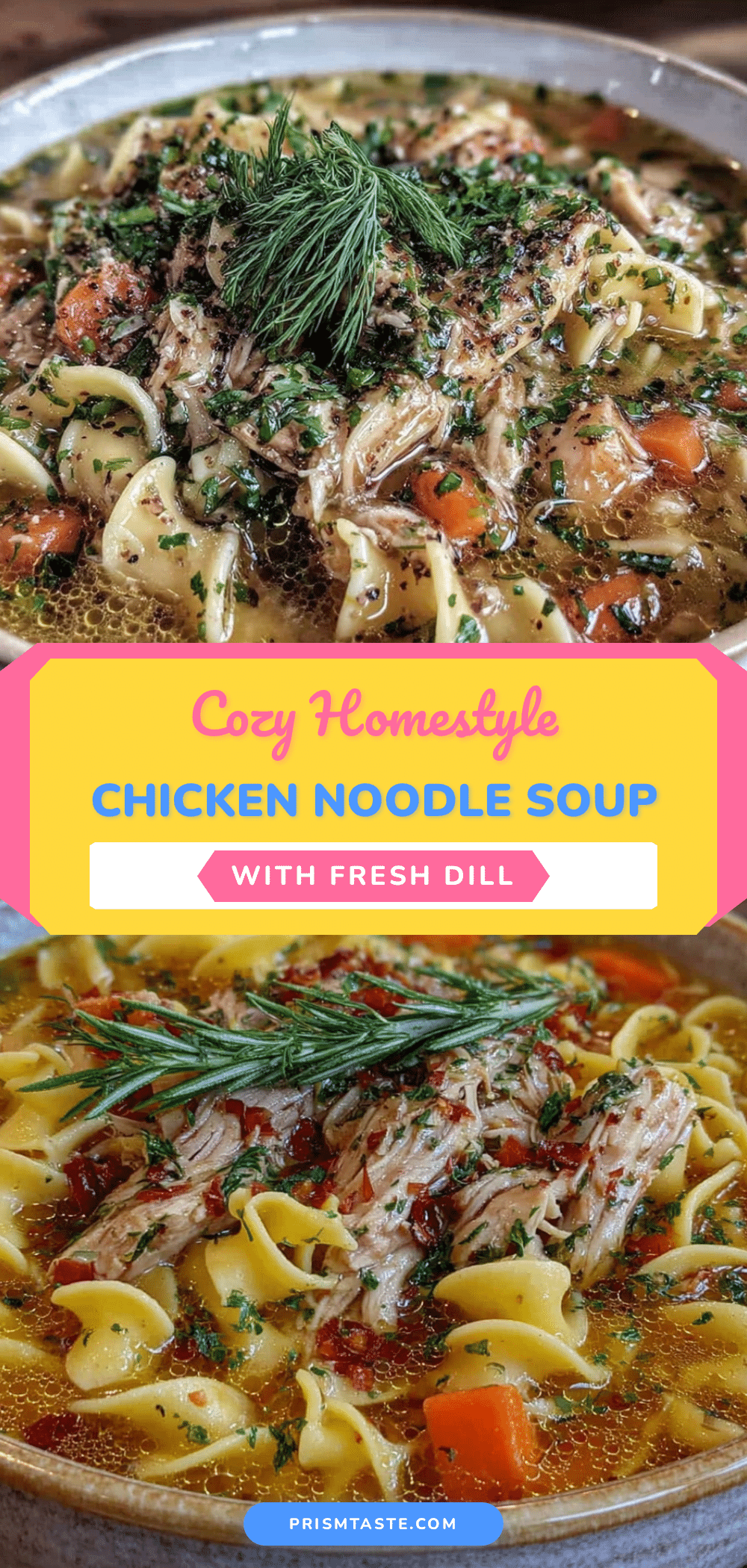
Cozy Homestyle Chicken Noodle Soup with Fresh Dill

A comforting chicken noodle soup with a bright, fresh dill twist that tastes like it simmered all day but comes together in under an hour. This one-pot wonder features tender chicken, perfectly cooked noodles, and a golden broth that feels like a hug from the inside out.
- Prep Time: 15 minutes
- Cook Time: 30 minutes
- Total Time: 45 minutes
- Yield: 6 servings 1x
- Category: Main Course
- Cuisine: American
Ingredients
- 2 tablespoons unsalted butter
- 1 large yellow onion, diced (about 1½ cups)
- 3 medium carrots, peeled and sliced into rounds (about 1½ cups)
- 3 celery stalks, sliced (about 1 cup)
- 4 cloves garlic, minced
- 1 teaspoon salt (plus more to taste)
- ½ teaspoon black pepper (freshly ground)
- ½ teaspoon dried thyme
- ¼ teaspoon turmeric (optional)
- 1½ pounds boneless, skinless chicken thighs
- 8 cups low-sodium chicken broth
- 2 cups water
- 2 bay leaves
- 8 ounces wide egg noodles
- ⅓ cup fresh dill, chopped
- 2 tablespoons fresh lemon juice (about half a lemon)
- Fresh parsley for garnish (optional)
Instructions
- Sauté the aromatics: Place a large Dutch oven or stockpot over medium heat and add the butter. Let it melt until foamy but not browning, about 1 minute. Add the diced onion, sliced carrots, and celery. Cook, stirring occasionally, for 6-7 minutes until the onions are translucent and the carrots start to soften. Add the minced garlic, salt, pepper, dried thyme, and turmeric (if using). Stir constantly for about 1 minute until fragrant. Do not let the garlic burn.
- Build the broth: Pour in the chicken broth and water. Add the bay leaves. Stir, scraping the bottom of the pot to release any browned bits. Nestle the chicken thighs into the liquid, ensuring they are mostly submerged. Bring to a gentle boil over medium-high heat, then reduce heat to low for a gentle simmer. Cover and simmer for 20 minutes.
- Cook the noodles separately: Fill a separate medium pot with water, salt generously (about 1 tablespoon salt per quart of water), and bring to a boil. Add the egg noodles and cook according to package directions, usually 7-9 minutes. Drain, rinse briefly with cool water, and toss with a drizzle of olive oil to prevent sticking. Set aside.
- Shred the chicken: After 20 minutes, use tongs to transfer the chicken thighs to a cutting board. Let rest for 2-3 minutes. Shred the chicken into bite-sized pieces using two forks. Discard any large pieces of fat or gristle. Remove and discard the bay leaves from the pot.
- Finish the soup: Return the shredded chicken to the pot. Stir in the chopped fresh dill and fresh lemon juice. Taste and adjust seasoning with more salt or pepper if needed. Let simmer for another 2-3 minutes to meld flavors.
- Assemble and serve: Place a generous portion of cooked noodles in the bottom of each bowl. Ladle the hot soup over the top, ensuring each bowl gets plenty of chicken and vegetables. Garnish with fresh parsley if desired. Serve immediately with crusty bread or buttery crackers.
Notes
Cook noodles separately to prevent them from becoming mushy in leftovers. Add dill at the very end to preserve its bright flavor. For meal prep, store soup base (broth, chicken, vegetables) separately from noodles. The soup base keeps in the fridge for 4-5 days and freezes for up to 3 months. Do not freeze cooked noodles. For a gluten-free version, use gluten-free pasta or rice. For a low-carb version, skip noodles and add extra vegetables or cauliflower rice.
Nutrition
- Serving Size: 1½ cups
- Calories: 385
- Sugar: 6
- Sodium: 720
- Fat: 14
- Saturated Fat: 5
- Carbohydrates: 35
- Fiber: 3
- Protein: 28
Keywords: chicken noodle soup, homemade soup, comfort food, chicken soup with dill, one pot meal, easy dinner, healthy soup, winter soup, cold remedy