The crumb on this apple cider cake isn’t just moist — it’s almost velvety, with a tight, tender grain that practically hums with apple flavor. That first forkful, still warm, with the brown butter glaze pooling into every crevice? That’s the moment I knew I’d be making this cake every single fall. It happened on a Tuesday afternoon, rain tapping against the kitchen window, the house smelling like a candle you wish actually smelled this good.
I had a half-gallon of fresh apple cider sitting in the fridge, the kind from the orchard with the pulp settled at the bottom. You know the one. I’d already made a batch of cozy apple cider donut bread with cinnamon sugar earlier that week, and I still had cider left. A cake felt right. Something loaf-shaped, unfussy, the kind you can slice for breakfast without feeling weird about it.
But here’s the thing about apple cider in baking — it’s not as straightforward as you’d think. It’s thinner than milk, less fatty than buttermilk, and if you’re not careful, it can make your cake gummy or, worse, flavorless. I learned that the hard way. My first attempt came out of the oven looking beautiful, but it tasted like a vague memory of apple. Not what I was after.
So I went back to the drawing board. I reduced the cider. I played with the fat ratio. I added a splash of lemon juice to mimic buttermilk’s tang, because apple cider needs something sharp to wake it up. And then I made the brown butter glaze — not as an afterthought, but as the anchor. The nutty, toasty depth of browned butter doesn’t just sweeten the cake; it gives it a savory edge that makes the apple flavor sing. Honestly, I think this cake is more about that glaze than the cake itself. Almost.
This recipe stuck because it solved a problem I didn’t know I had: how to make an apple cake that tastes like the whole season, not just a hint of it. No spice overload, no dense, soggy crumb. Just a tender, cider-kissed loaf with a glaze that crackles when you bite into it. If you’ve ever wanted a cake that feels like a hug in loaf form, this is it.
Why You’ll Love This Recipe
I’ve tested this cake six times to get the texture just right. Six times. My family is still asking when I’m going to make it again, and I’ve already promised them another loaf this weekend. That’s the kind of recipe this is — the one you keep coming back to, the one that disappears before you’ve had your second slice.
- Quick & Easy : This cake comes together in about 15 minutes of active prep. The oven does the rest. It’s perfect for a lazy Sunday morning or a last-minute dessert when guests are on their way.
- Simple Ingredients : You probably already have everything you need. Apple cider, butter, flour, sugar, eggs, a few spices. No fancy extracts or hard-to-find items.
- Perfect for Fall : This is the cake you bring to a potluck, serve with coffee on a crisp afternoon, or slice for breakfast with a pat of butter. It’s versatile like that.
- Crowd-Pleaser : Kids love it. Adults love it. Even people who say they don’t like apple desserts have been caught sneaking a second slice. I’ve seen it happen.
- Unbelievably Delicious : The texture is what gets you. It’s not dry, not dense, not crumbly — it’s that perfect middle ground, with a tender crumb that holds up to the glaze without getting soggy.
What makes this recipe different from the rest is the reduced cider and the brown butter glaze. Most apple cider cakes use the cider straight from the jug, which means you end up with a lot of liquid and not enough flavor. By reducing the cider, you concentrate the apple taste without making the batter too wet. And the brown butter glaze? It’s not just sweet. It’s nutty, almost caramel-like, with a hint of salt that balances the fruit. This isn’t just another apple cake — it’s the one that made me stop looking for others.
This recipe is the kind that makes you close your eyes after the first bite. It’s comfort food reimagined — simple, honest, and deeply satisfying. Perfect for impressing guests without stress, or turning a quiet evening into something memorable.
What Ingredients You Will Need
This recipe uses simple, wholesome ingredients to deliver bold apple flavor and a tender, velvety crumb. Most of these are pantry staples, and the few that aren’t are easy to find at any grocery store.
- Apple Cider : 1 cup (240 ml) fresh apple cider. I prefer the unpasteurized kind from the orchard, but any good-quality cider works. You’ll reduce it on the stove to concentrate the flavor, so don’t skip this step — it’s the secret to a cake that actually tastes like apples.
- Unsalted Butter : 1 cup (2 sticks, 226 g), divided. You’ll use half for the cake and half for the brown butter glaze. I recommend using a good European-style butter like Kerrygold for the glaze — it browns more evenly and has a richer flavor.
- All-Purpose Flour : 2 cups (250 g). Spoon and level it into your measuring cup for accuracy. If you’re measuring by volume, fluff the flour first with a fork to avoid packing it down.
- Granulated Sugar : 1 cup (200 g). Regular white sugar works perfectly here. It adds sweetness without overpowering the apple flavor.
- Light Brown Sugar : 1/2 cup (100 g), packed. This adds moisture and a hint of molasses that complements the cider. Make sure it’s fresh and soft — if it’s hard as a rock, microwave it for 10 seconds with a damp paper towel.
- Large Eggs : 2, at room temperature. Cold eggs can seize the batter, so let them sit on the counter for 30 minutes before you start.
- Vegetable Oil : 1/3 cup (80 ml). This keeps the cake moist even after it cools. I use a neutral oil like canola or grapeseed — don’t use olive oil here, as the flavor is too strong.
- Buttermilk : 1/2 cup (120 ml), at room temperature. If you don’t have buttermilk, you can make a quick substitute by adding 1 teaspoon of lemon juice or white vinegar to 1/2 cup of milk and letting it sit for 5 minutes.
- Vanilla Extract : 2 teaspoons. Pure vanilla extract is best, but imitation works in a pinch. I’ve used both, and honestly, the difference is subtle in this recipe.
- Ground Cinnamon : 1 teaspoon. This is the backbone of the spice blend. Use a good-quality cinnamon like Ceylon or Saigon for the best flavor.
- Ground Nutmeg : 1/4 teaspoon. Freshly grated is amazing if you have it, but pre-ground works fine.
- Ground Allspice : 1/4 teaspoon. This adds a warm, almost clove-like note that rounds out the apple flavor.
- Salt : 1/2 teaspoon. Don’t skip this — salt balances the sweetness and enhances the other flavors.
- Baking Powder : 1 1/2 teaspoons. Make sure it’s fresh (test it by dropping a bit in hot water — it should bubble vigorously).
- Baking Soda : 1/4 teaspoon. This helps the cake rise and gives it a tender crumb.
- Powdered Sugar : 1 1/2 cups (180 g), for the glaze. Sift it if it’s lumpy — nobody wants a lumpy glaze.
- Heavy Cream : 3-4 tablespoons, for the glaze. You can also use milk, but cream makes the glaze richer and silkier.
Equipment Needed
You don’t need a lot of fancy equipment for this cake. Here’s what I use:
- 9×5-inch Loaf Pan : This is the standard size. If you use a smaller pan, your cake will take longer to bake and may dome too much. If you use a larger pan, the cake will be shorter and bake faster. I like a metal pan for even browning, but glass or ceramic work too — just reduce the oven temperature by 25°F if using glass.
- Parchment Paper : Line your loaf pan with a sling of parchment paper for easy removal. I learned this the hard way after a cake stuck to the pan and I had to serve it in chunks.
- Small Saucepan : For reducing the apple cider and browning the butter. A light-colored pan is helpful for browning butter because you can see the color change more easily.
- Medium Mixing Bowls : One for dry ingredients, one for wet ingredients. I use glass bowls because they don’t retain odors.
- Whisk : For mixing the dry ingredients and combining the batter. A hand whisk is fine — no need for an electric mixer unless you want one.
- Rubber Spatula : For folding the batter and scraping the bowl. A silicone spatula is heat-resistant and won’t scratch your bowls.
- Cooling Rack : Essential for even cooling. If you let the cake cool in the pan, the bottom will get soggy.
- Measuring Cups and Spoons : For accuracy. I use dry measuring cups for dry ingredients and a liquid measuring cup for wet ones.
Preparation Method
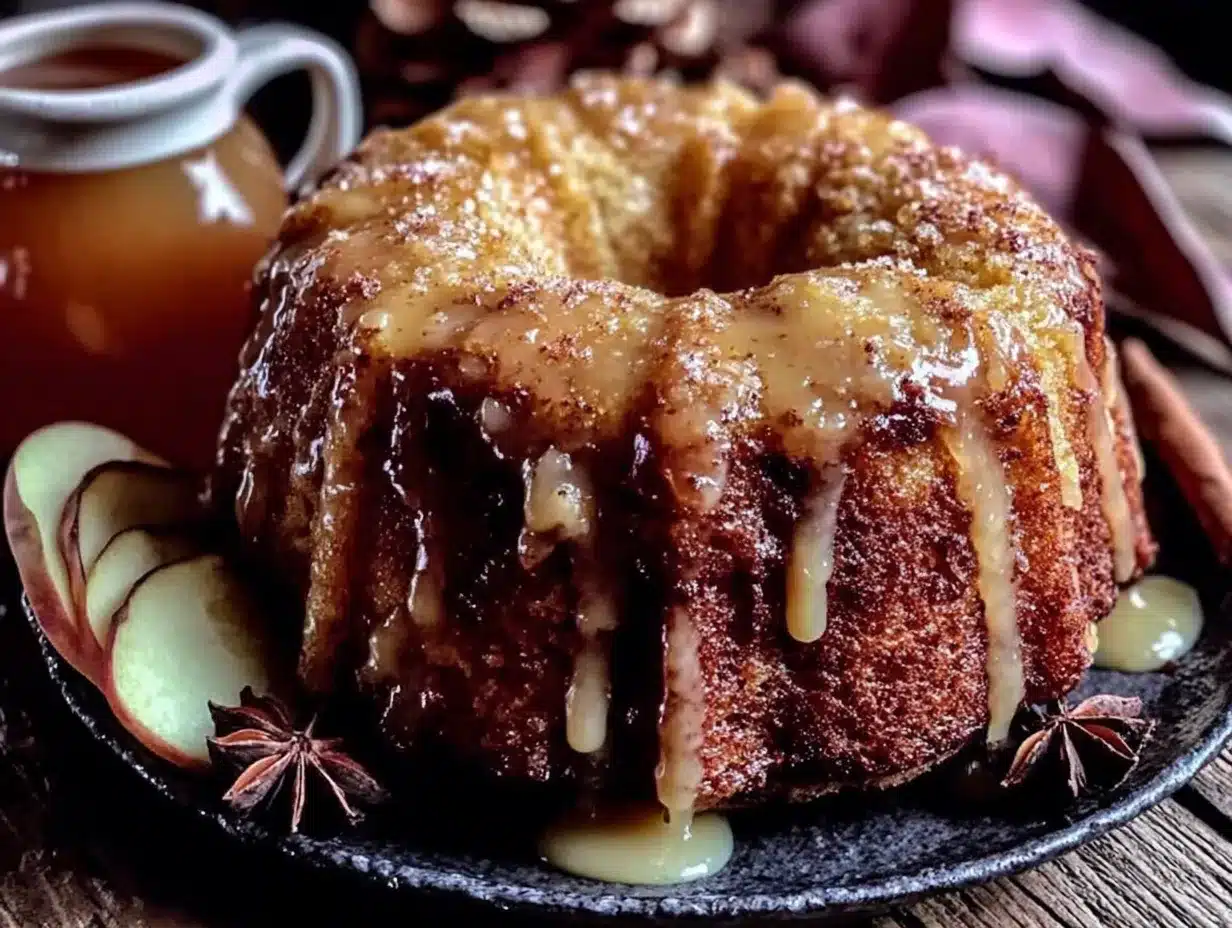
Let’s get to the fun part. This recipe is straightforward, but there are a few key steps that make all the difference. Take your time with the cider reduction — it’s worth it.
- Preheat and Prep : Preheat your oven to 350°F (175°C). Grease a 9×5-inch loaf pan with butter or nonstick spray, then line it with a parchment paper sling, leaving about 2 inches of overhang on the long sides. This makes lifting the cake out a breeze.
- Reduce the Apple Cider : Pour 1 cup of apple cider into a small saucepan. Bring it to a boil over medium-high heat, then reduce the heat to medium-low and let it simmer, stirring occasionally, until it’s reduced to about 1/4 cup. This takes about 12-15 minutes. You’re looking for a syrupy consistency — it should coat the back of a spoon. Watch it carefully toward the end, as it can burn quickly. Set it aside to cool slightly.
- Brown the Butter : In the same saucepan (or a separate one, if you prefer), melt 1/2 cup (1 stick) of unsalted butter over medium heat. Swirl the pan occasionally. The butter will foam, then the foam will subside, and you’ll see brown specks forming at the bottom. This takes about 5-7 minutes. Once it smells nutty and the specks are a deep amber, remove it from the heat immediately and pour it into a heatproof bowl to stop the cooking. Let it cool for 10 minutes.
- Mix Dry Ingredients : In a medium bowl, whisk together 2 cups all-purpose flour, 1 teaspoon cinnamon, 1/4 teaspoon nutmeg, 1/4 teaspoon allspice, 1/2 teaspoon salt, 1 1/2 teaspoons baking powder, and 1/4 teaspoon baking soda. Set aside.
- Mix Wet Ingredients : In a large bowl, whisk together 1 cup granulated sugar and 1/2 cup packed light brown sugar. Add 2 large eggs and whisk until smooth and slightly thickened, about 1 minute. Add 1/3 cup vegetable oil, 1/2 cup buttermilk, 2 teaspoons vanilla extract, and the cooled reduced cider. Whisk until combined. The mixture should look smooth and pale.
- Combine Wet and Dry : Pour the dry ingredients into the wet ingredients and fold gently with a rubber spatula until just combined. A few streaks of flour are okay — overmixing will make the cake tough. The batter will be thick but pourable.
- Bake the Cake : Pour the batter into the prepared loaf pan and spread it evenly. Bake for 50-60 minutes, or until a toothpick inserted into the center comes out clean or with a few moist crumbs. The top should be golden brown and cracked slightly. If the top is browning too quickly (after about 40 minutes), tent it loosely with foil.
- Cool the Cake : Let the cake cool in the pan for 15 minutes, then use the parchment sling to lift it out onto a cooling rack. Let it cool completely before glazing — about 1 hour. If you glaze it while it’s still warm, the glaze will soak in and disappear.
- Make the Brown Butter Glaze : While the cake cools, make the glaze. In a small bowl, whisk together 1 1/2 cups powdered sugar (sifted), 3 tablespoons of the reserved brown butter (warm but not hot), and 2-3 tablespoons of heavy cream. Whisk until smooth and pourable. If it’s too thick, add more cream a teaspoon at a time. If it’s too thin, add more powdered sugar.
- Glaze and Serve : Pour the glaze over the cooled cake, letting it drip down the sides. Let the glaze set for about 10 minutes before slicing. Serve at room temperature or slightly warm.
Cooking Tips & Techniques
I’ve made this cake enough times to know where things can go wrong. Here’s what I’ve learned:
- Don’t Rush the Cider Reduction : This is the most important step. If you don’t reduce the cider enough, your cake will be bland. If you reduce it too much, it’ll be too sweet and sticky. Aim for a syrupy consistency — about 1/4 cup from 1 cup of cider. I once got distracted and let it reduce to a thick paste. The cake was still good, but the texture was off.
- Brown Butter Patience : Browning butter is a game of seconds. Once you see those brown specks form, take it off the heat immediately. The butter continues to cook in the hot pan, so pouring it into a cool bowl stops the process. I’ve burned more batches than I’d like to admit, and burnt butter tastes bitter, not nutty.
- Room Temperature Ingredients : Cold eggs and buttermilk can cause the batter to seize, resulting in a dense cake. Let them sit on the counter for 30 minutes before you start. If you’re in a hurry, you can warm the buttermilk in the microwave for 10 seconds and place the eggs in a bowl of warm water for 5 minutes.
- Fold, Don’t Stir : When combining the wet and dry ingredients, use a gentle folding motion. Overmixing develops gluten, which makes the cake tough. A few streaks of flour are fine — they’ll disappear as you fold.
- Check for Doneness Early : Ovens vary, so start checking your cake at the 50-minute mark. A toothpick inserted into the center should come out clean or with a few moist crumbs. If the toothpick is wet with batter, bake for another 5 minutes and check again.
- Glaze at the Right Time : The cake must be completely cool before you add the glaze. If it’s even slightly warm, the glaze will melt and slide off. I learned this when I glazed a cake after 30 minutes of cooling and ended up with a puddle of glaze at the bottom of the plate.
Variations & Adaptations
This recipe is forgiving, and I’ve tried a few variations that worked well. Here are some ideas:
- Gluten-Free Option : Substitute the all-purpose flour with a 1:1 gluten-free baking flour blend. I’ve used Bob’s Red Mill 1-to-1 Baking Flour, and the texture was surprisingly close to the original. Add 1/4 teaspoon xanthan gum if your blend doesn’t include it.
- Dairy-Free Adaptation : Use a plant-based butter for both the cake and the glaze, and substitute the buttermilk with 1/2 cup of unsweetened almond milk mixed with 1 teaspoon of lemon juice. For the glaze, use a dairy-free cream or full-fat coconut cream. I’ve tested this with Miyoko’s vegan butter, and it worked beautifully.
- Spiced Apple Cake : Add 1/2 teaspoon of ground ginger and 1/4 teaspoon of ground cloves to the dry ingredients for a more complex spice profile. This version is especially good with a chai-spiced glaze (add 1/2 teaspoon of chai masala to the powdered sugar).
- Apple Cider Donut Cake : For a fun twist, toss the cooled cake (before glazing) in a mixture of 1/4 cup melted butter, 1/2 cup granulated sugar, and 1 tablespoon cinnamon. Then drizzle with the brown butter glaze. It tastes just like a cider donut, but in cake form.
- Maple Brown Butter Glaze : Replace 2 tablespoons of the heavy cream with pure maple syrup for a deeper, more autumnal flavor. This pairs beautifully with the apple cider cake and is a great option for Thanksgiving.
Serving & Storage Suggestions
This cake is best served at room temperature or slightly warm. The glaze sets into a thin, crackly shell that shatters when you cut into it. I like to serve it with a dollop of lightly sweetened whipped cream or a scoop of vanilla ice cream for dessert. For breakfast, a slice with a cup of coffee or tea is all you need.
If you’re serving this for a gathering, consider pairing it with a warm drink like a homemade pumpkin spice latte or a simple hot apple cider. The flavors complement each other perfectly.
To store the cake, wrap it tightly in plastic wrap or place it in an airtight container. It will keep at room temperature for up to 3 days. The glaze may soften slightly over time, but the cake will stay moist. If you’re storing it for longer, refrigerate it for up to 5 days. Bring it to room temperature before serving for the best texture.
You can also freeze this cake. Wrap the unglazed cake tightly in plastic wrap, then in foil, and freeze for up to 3 months. When you’re ready to serve, thaw it overnight in the refrigerator, bring it to room temperature, and then glaze it fresh. I’ve done this for holiday prep, and it works like a charm.
One note: the flavors actually improve after a day or two. The apple cider flavor deepens, and the spices mellow into something more rounded. So don’t be afraid to make this cake a day ahead — it’ll be even better.
Nutritional Information & Benefits
Here’s the estimated nutritional breakdown for one slice (based on 10 slices per loaf):
- Calories : 385
- Total Fat : 18g
- Saturated Fat : 8g
- Cholesterol : 65mg
- Sodium : 220mg
- Total Carbohydrates : 54g
- Dietary Fiber : 1g
- Sugars : 36g
- Protein : 4g
This cake is a treat, so I’m not going to pretend it’s health food. But there are a few redeeming qualities. The apple cider provides a small amount of vitamin C and antioxidants, and the cinnamon has anti-inflammatory properties. Plus, using buttermilk and oil keeps the cake moist without needing a ton of butter in the batter itself.
If you’re watching your sugar intake, you can reduce the granulated sugar to 3/4 cup, but the cake will be slightly less sweet and the texture may be a bit drier. I’ve tried it with coconut sugar, and while the flavor was good, the color was darker and the crumb was denser.
For those with dietary restrictions, the gluten-free and dairy-free variations work well. Just be mindful that the nutritional values will change with substitutions.
Conclusion
This cozy apple cider cake with brown butter glaze is the kind of recipe that feels like coming home. It’s simple enough for a weekday bake, special enough for a holiday table, and honest enough that you’ll make it again and again. The reduced cider gives it a concentrated apple flavor that no extract can replicate, and the brown butter glaze adds a nutty, caramelized finish that makes every bite worth savoring.
I hope you’ll try this recipe and make it your own. Maybe you’ll add extra cinnamon, swap the glaze for a cream cheese frosting, or serve it warm with a scoop of ice cream. Whatever you do, I’d love to hear about it. Leave a comment below and let me know how it turned out — did you make any changes? Did your family love it as much as mine did?
If you enjoyed this recipe, share it with a friend who loves fall baking. And if you’re looking for more cozy recipes, check out my cozy small batch pumpkin bread with maple butter or my cozy pumpkin chai latte muffins with maple glaze — they’re perfect for this time of year.
Happy baking, friends. 🍎
Frequently Asked Questions
Can I use store-bought apple juice instead of apple cider?
You can, but the flavor won’t be as rich. Apple juice is thinner and less concentrated, so you’ll need to reduce it even more to get a strong apple taste. If you’re in a pinch, add 1/4 teaspoon of apple cider vinegar to the juice before reducing to mimic the tang of real cider.
Why did my cake sink in the middle?
This usually happens if the cake is underbaked or if you opened the oven door too early. Make sure your oven is at the right temperature (use an oven thermometer if you’re unsure) and don’t open the door for the first 35 minutes of baking. If the cake sinks slightly, it’s still fine to eat — just a little less photogenic.
Can I make this recipe into muffins?
Absolutely! Grease a 12-cup muffin tin or line it with paper liners. Fill each cup about 2/3 full and bake at 350°F for 18-22 minutes, or until a toothpick comes out clean. The glaze can be drizzled over the cooled muffins. This is a great option for a grab-and-go breakfast.
How do I know when the brown butter is done?
Watch for the butter to turn a deep amber color and smell nutty and toasty. You’ll see brown specks forming at the bottom of the pan. As soon as you see that, take it off the heat. It’s better to pull it a little early than to let it burn, because burnt butter tastes bitter and can ruin the glaze.
Can I skip the brown butter glaze?
You can, but I wouldn’t recommend it. The glaze is what makes this cake special. If you’re short on time, you can dust the cake with powdered sugar or serve it with a simple vanilla glaze (1 cup powdered sugar + 2 tablespoons milk + 1/2 teaspoon vanilla). But the brown butter glaze really is the star here.
Pin This Recipe!
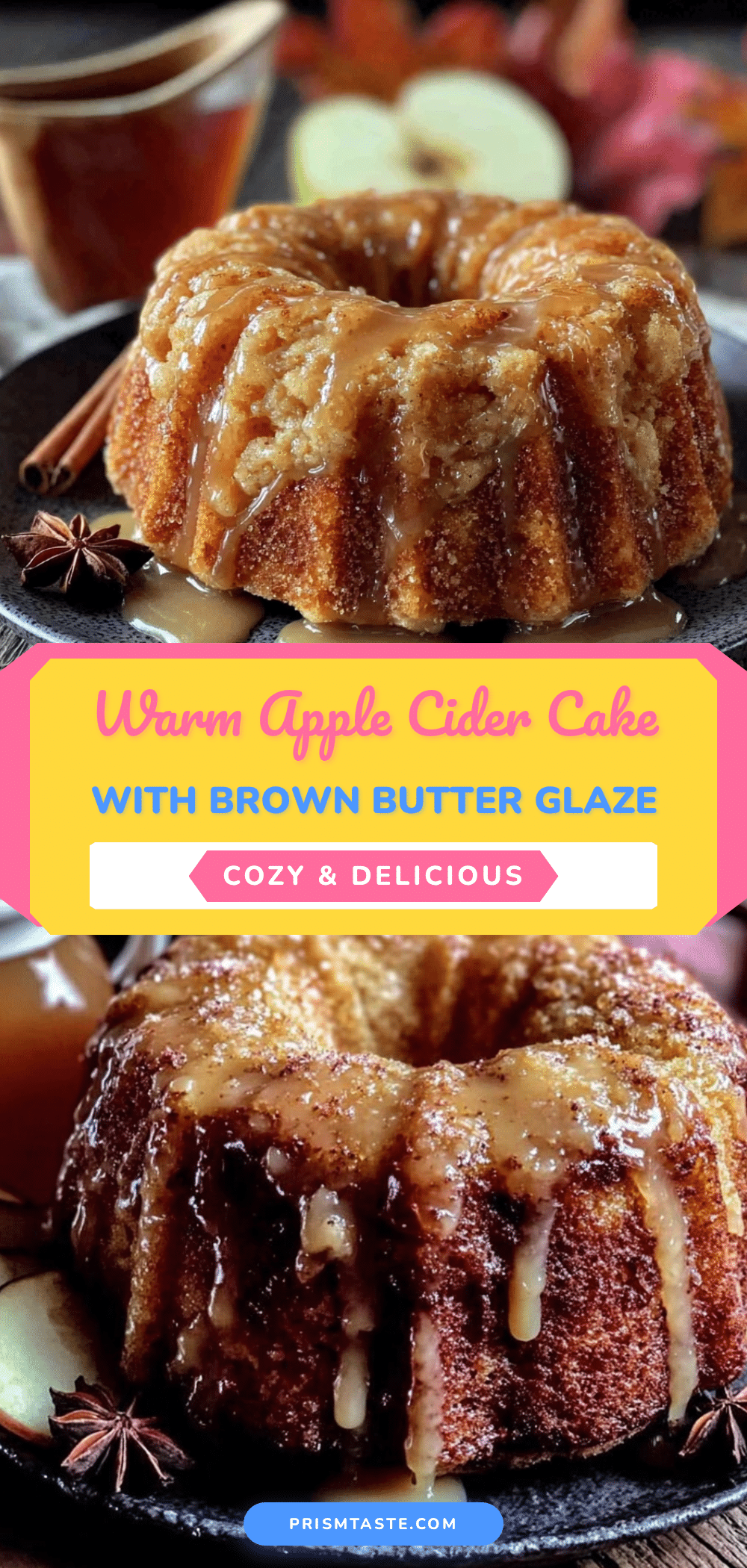
Cozy Apple Cider Cake with Easy Brown Butter Glaze
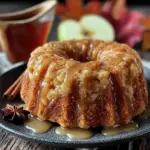
A tender, velvety apple cider loaf cake with a concentrated apple flavor and a nutty brown butter glaze. Perfect for fall baking, this cake is moist, flavorful, and easy to make.
- Prep Time: 15 minutes
- Cook Time: 50-60 minutes
- Total Time: 1 hour 15 minutes
- Yield: 10 servings 1x
- Category: Dessert
- Cuisine: American
Ingredients
- 1 cup (240 ml) fresh apple cider
- 1 cup (2 sticks, 226 g) unsalted butter, divided
- 2 cups (250 g) all-purpose flour
- 1 cup (200 g) granulated sugar
- 1/2 cup (100 g) packed light brown sugar
- 2 large eggs, at room temperature
- 1/3 cup (80 ml) vegetable oil
- 1/2 cup (120 ml) buttermilk, at room temperature
- 2 teaspoons vanilla extract
- 1 teaspoon ground cinnamon
- 1/4 teaspoon ground nutmeg
- 1/4 teaspoon ground allspice
- 1/2 teaspoon salt
- 1 1/2 teaspoons baking powder
- 1/4 teaspoon baking soda
- 1 1/2 cups (180 g) powdered sugar, sifted
- 3–4 tablespoons heavy cream
Instructions
- Preheat your oven to 350°F (175°C). Grease a 9×5-inch loaf pan with butter or nonstick spray, then line it with a parchment paper sling, leaving about 2 inches of overhang on the long sides.
- Pour 1 cup of apple cider into a small saucepan. Bring it to a boil over medium-high heat, then reduce the heat to medium-low and let it simmer, stirring occasionally, until it’s reduced to about 1/4 cup (about 12-15 minutes). Set aside to cool slightly.
- In the same saucepan, melt 1/2 cup (1 stick) of unsalted butter over medium heat. Swirl the pan occasionally until the butter turns a deep amber color and smells nutty (about 5-7 minutes). Remove from heat immediately and pour into a heatproof bowl to stop cooking. Let cool for 10 minutes.
- In a medium bowl, whisk together 2 cups all-purpose flour, 1 teaspoon cinnamon, 1/4 teaspoon nutmeg, 1/4 teaspoon allspice, 1/2 teaspoon salt, 1 1/2 teaspoons baking powder, and 1/4 teaspoon baking soda. Set aside.
- In a large bowl, whisk together 1 cup granulated sugar and 1/2 cup packed light brown sugar. Add 2 large eggs and whisk until smooth and slightly thickened, about 1 minute. Add 1/3 cup vegetable oil, 1/2 cup buttermilk, 2 teaspoons vanilla extract, and the cooled reduced cider. Whisk until combined.
- Pour the dry ingredients into the wet ingredients and fold gently with a rubber spatula until just combined. A few streaks of flour are okay.
- Pour the batter into the prepared loaf pan and spread it evenly. Bake for 50-60 minutes, or until a toothpick inserted into the center comes out clean or with a few moist crumbs. If the top is browning too quickly (after about 40 minutes), tent it loosely with foil.
- Let the cake cool in the pan for 15 minutes, then use the parchment sling to lift it out onto a cooling rack. Let it cool completely before glazing (about 1 hour).
- While the cake cools, make the glaze: In a small bowl, whisk together 1 1/2 cups powdered sugar (sifted), 3 tablespoons of the reserved brown butter (warm but not hot), and 2-3 tablespoons of heavy cream. Whisk until smooth and pourable.
- Pour the glaze over the cooled cake, letting it drip down the sides. Let the glaze set for about 10 minutes before slicing. Serve at room temperature or slightly warm.
Notes
Don’t rush the cider reduction; it’s key for flavor. Brown butter can burn quickly, so watch carefully. Use room temperature ingredients for best texture. The cake must be completely cool before glazing to prevent the glaze from melting off.
Nutrition
- Serving Size: 1 slice
- Calories: 385
- Sugar: 36
- Sodium: 220
- Fat: 18
- Saturated Fat: 8
- Carbohydrates: 54
- Fiber: 1
- Protein: 4
Keywords: apple cider cake, brown butter glaze, fall dessert, apple cake, loaf cake, easy cake recipe