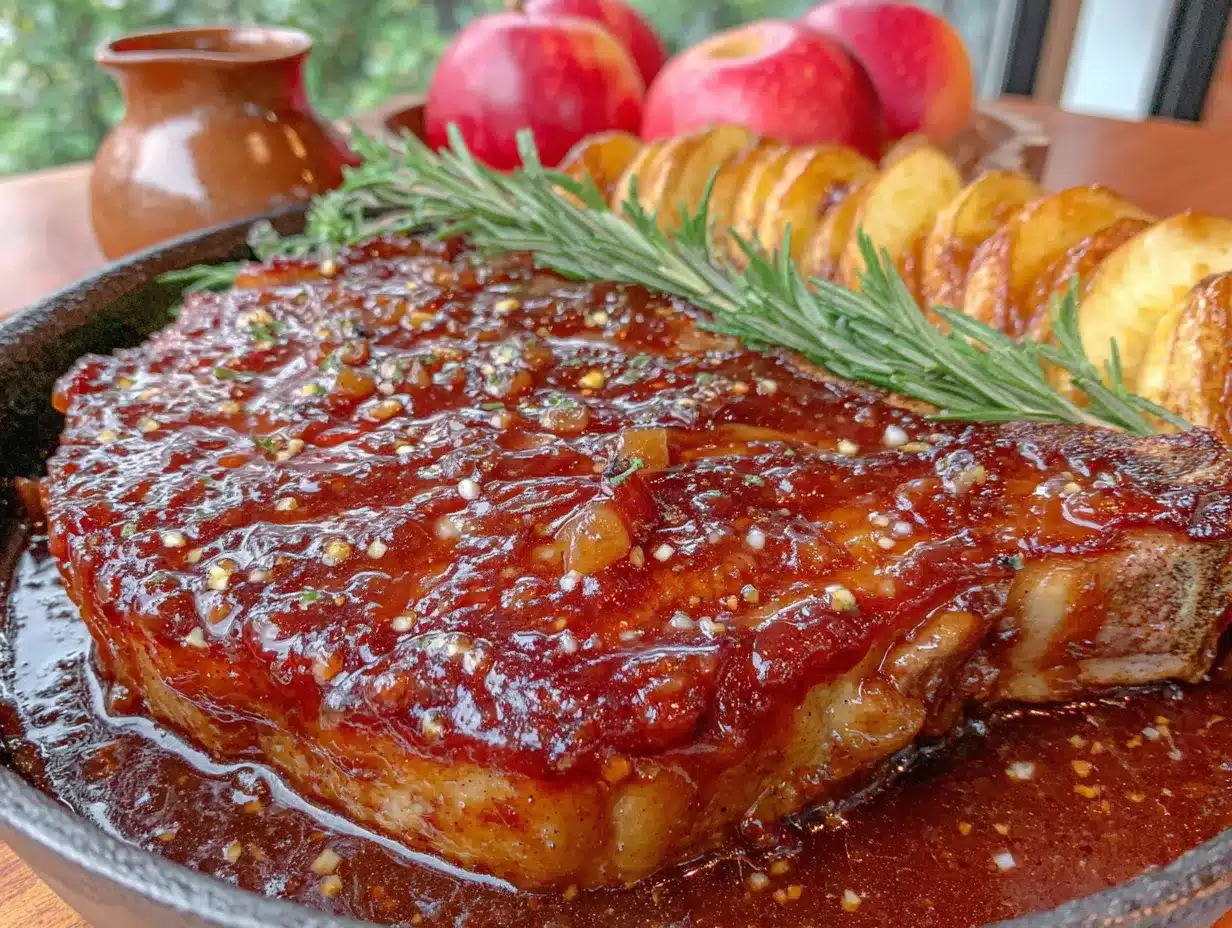
I burned the first batch of these pork chops so badly I had to air out the kitchen for an entire day. The smoke alarm went off. Twice. The second time, the meat came out tough and dry, like I’d cooked it twice over. The third time, I finally figured out what the recipe wasn’t telling me. The apple cider isn’t a flavor addition. It’s the whole point of the cooking method. It tenderizes the meat, creates a sauce, and fills your whole house with a smell that should be illegal in the best way. This cozy apple cider braised pork chops recipe is the one I kept coming back to until I got it right.
I wasn’t even looking for a braised pork recipe. It was a rainy Tuesday in late October, and I had a pack of thick-cut chops in the fridge and a half-gallon of apple cider from the farmers market that I bought on impulse. You know when you buy something with no plan and then feel like you have to use it or it’ll sit in the fridge until it turns into science experiment? That was me. So I grabbed a heavy pot, threw in some onions, poured in the cider, and hoped for the best.
That first attempt was a lesson in patience. Braising is not a fast process, and I kept lifting the lid to check, which let all the steam escape. The pork turned out dry, the sauce was thin, and I was frustrated. But there was something about the flavor underneath all that failure that made me try again. The sweetness of the cider, the savory depth of the seared pork, the way the onions melted into the liquid. I knew it could be incredible. I just had to stop rushing it.
Now, this recipe is my go-to for those evenings when I want something that feels like a hug in a bowl. It’s not fancy. It’s not complicated. It’s just honest, cozy food that works. And honestly, the fact that I messed it up so many times makes me love it even more. Because now I know exactly what to tell you so you get it right on the first try.
Why You’ll Love This Recipe
This isn’t just another pork chop recipe. It’s the one that makes you wonder why you ever bothered with dry, pan-seared chops in the first place. Here’s why this one stands out:
- One-Pan Wonder: Everything happens in a single pot or Dutch oven. Less cleanup, more time to relax. I’m not a fan of doing dishes, and this recipe respects that.
- Foolproof Tenderness: Braising in apple cider guarantees juicy, fall-apart pork every single time. No more dry, overcooked chops. The acid in the cider breaks down the meat fibers naturally.
- Simple Pantry Ingredients: You probably have most of these already. Onions, garlic, apple cider, a little mustard, some fresh herbs. No special trips to the store required.
- Incredible Sauce: The braising liquid reduces into this thick, glossy, sweet-savory sauce that you’ll want to spoon over everything. Mashed potatoes, rice, crusty bread. You’ve been warned.
- Perfect for Fall and Beyond: It screams autumn, but honestly, I make this year-round. It’s cozy enough for a cold winter night but light enough for a spring dinner when you pair it with a fresh salad.
- Crowd-Pleaser: I’ve served this to picky eaters, meat-and-potatoes types, and even people who claim they don’t like pork. Every single person asked for the recipe. It’s that good.
What makes this recipe different from all the others out there is the technique. Most braised pork chop recipes have you add the liquid and walk away. But I take an extra step. I caramelize the onions first, then deglaze with the cider, and I don’t rush the simmer. That extra fifteen minutes of patience transforms the sauce from thin and watery into something that coats the back of a spoon. It’s a small thing, but it makes a massive difference.
And let’s be real. There’s something about the smell of apples and pork cooking together that just feels like home. It’s the kind of meal that slows you down. You take a bite, and you actually notice the flavors. You’re not just eating because it’s dinner time. You’re eating because it’s good.
What Ingredients You Will Need
This recipe uses simple, wholesome ingredients to create something that tastes far more complex than it is. Most of these are pantry staples, but a few deserve a closer look.
For the Pork Chops
- 4 bone-in pork chops, about 1-inch thick: Bone-in is non-negotiable here. The bone adds flavor and helps keep the meat moist during the long braise. I prefer thick-cut chops because they can handle the cooking time without drying out. If you only have boneless, reduce the braising time by about 10 minutes.
- 2 tablespoons olive oil: Use a good-quality olive oil for searing. It needs a high smoke point, so avoid extra-virgin here. Regular olive oil or avocado oil works great.
- 1 teaspoon salt: I use kosher salt. It’s less salty by volume than table salt, so if you’re using table salt, cut it back to ¾ teaspoon.
- ½ teaspoon black pepper: Freshly ground is best. Pre-ground pepper loses its punch over time.
- 1 teaspoon smoked paprika: This adds a subtle smokiness that pairs beautifully with the sweet apple cider. Regular paprika works in a pinch, but smoked is better.
- ½ teaspoon garlic powder: Not the same as fresh garlic, but it adds a nice background flavor to the seasoning rub.
For the Braising Base
- 1 large yellow onion, thinly sliced: Yellow onions are perfect here because they get sweet and jammy as they cook. Red onions work too, but they turn a bit purple in the sauce.
- 3 cloves garlic, minced: Fresh garlic is a must. The jarred stuff just doesn’t have the same punch. I buy whole heads and mince them myself.
- 2 cups apple cider: Not apple cider vinegar. Unfiltered apple cider is ideal because it has more flavor and body. If you can’t find it, high-quality apple juice works, but it’s thinner and slightly sweeter. I recommend [brand] for the best balance of sweet and tart.
- 1 cup chicken broth: Low-sodium is best so you can control the salt level. Homemade is wonderful, but boxed broth is perfectly fine.
- 2 tablespoons Dijon mustard: This adds a tangy depth that cuts through the sweetness of the cider. Whole grain mustard is a nice alternative if you want a little texture.
- 2 tablespoons brown sugar: Light or dark both work. Dark brown sugar adds a deeper molasses flavor. This helps balance the acidity of the cider and mustard.
- 2 sprigs fresh thyme: Thyme and pork are a classic pairing. If you only have dried, use 1 teaspoon, but add it earlier to let it rehydrate.
- 1 sprig fresh rosemary: Rosemary adds an earthy, pine-like note. Don’t go overboard. One sprig is plenty.
- 1 bay leaf: This adds a subtle herbal note that you won’t notice on its own, but you’ll miss it if it’s not there.
For the Finish
- 1 tablespoon butter: Unsalted is best so you can control the seasoning. This gets whisked in at the end to give the sauce a silky, glossy finish.
- 1 tablespoon cornstarch mixed with 2 tablespoons cold water (optional): Only use this if you want a thicker sauce. I usually don’t need it because the natural reduction does the job, but if you’re in a hurry, this slurry works.
- Fresh parsley, chopped, for garnish: Totally optional, but it adds a pop of green and freshness at the end.
Equipment Needed
You don’t need a lot of fancy tools for this recipe. Here’s what you’ll need:
- Dutch oven or heavy-bottomed pot with a lid: A 5- to 6-quart Dutch oven is ideal. Cast iron enameled is my favorite because it holds heat evenly. If you don’t have one, any heavy pot with a tight-fitting lid will work. Avoid thin pots. They’ll burn the bottom.
- Sharp chef’s knife: A good knife makes slicing onions and mincing garlic a breeze. Dull knives are dangerous and frustrating.
- Cutting board: Wood or plastic, doesn’t matter. Just make sure it’s stable.
- Tongs: For flipping the pork chops without piercing the meat. Piercing releases juices, and we want to keep those inside.
- Wooden spoon or spatula: For stirring the onions and scraping up the browned bits from the bottom of the pot. That’s called fond, and it’s pure flavor.
- Measuring cups and spoons: Accurate measurements matter, especially for the liquid ingredients.
- Small bowl: For the cornstarch slurry if you use it.
I’ve made this recipe in a cheap stainless steel pot and an expensive Le Creuset. Both worked fine. The expensive one held heat better, but the cheap one got the job done. Don’t let equipment hold you back. Use what you have.
Preparation Method
Let’s get cooking. This method is straightforward, but there are a few key moments where patience pays off. Trust me on this.
- Pat the pork chops dry. Use paper towels to remove all the moisture from the surface. This is crucial for a good sear. Wet meat steams instead of browning. Season both sides generously with salt, pepper, smoked paprika, and garlic powder. Let them sit at room temperature for 15 minutes. This helps the seasoning stick and allows the meat to cook more evenly.
- Heat the olive oil in your Dutch oven over medium-high heat. You want the oil shimmering but not smoking. If it smokes, it’s too hot. Lower the heat and wait a minute.
- Sear the pork chops in batches if needed. Don’t crowd the pot. Place them in the hot oil and let them cook without moving for 3-4 minutes. You’re looking for a deep golden-brown crust. Flip and repeat on the other side. The internal temperature at this point will be around 120°F. That’s fine. We’re not cooking them through yet. Transfer the chops to a plate and set aside.
- Reduce the heat to medium. Add the sliced onions to the pot. There will be some browned bits stuck to the bottom. That’s good. Scrape them up with your wooden spoon as the onions cook. Sauté the onions for 6-8 minutes, stirring occasionally, until they’re soft and starting to turn golden. If they start to stick, add a splash of the chicken broth.
- Add the minced garlic and cook for 30 seconds, stirring constantly. Garlic burns fast, so don’t walk away. You should smell it immediately.
- Pour in the apple cider and chicken broth. Use your spoon to scrape up every last bit of the browned fond from the bottom of the pot. This is where the flavor lives. Stir in the Dijon mustard and brown sugar until dissolved.
- Add the thyme sprigs, rosemary sprig, and bay leaf. Nestle them into the liquid. Bring the mixture to a gentle boil, then reduce the heat to low so it’s at a steady simmer. Not a rolling boil. A gentle bubble.
- Return the pork chops to the pot, nestling them into the liquid. They should be mostly submerged. If they’re not, add a little more broth or water. Cover the pot with the lid.
- Braise for 45-50 minutes. Set a timer and do not lift the lid for the first 30 minutes. Every time you lift the lid, steam escapes, and the temperature drops. The pork is done when it’s fork-tender and reaches an internal temperature of 145°F. I usually check at the 40-minute mark with an instant-read thermometer.
- Remove the pork chops from the pot and transfer them to a clean plate. Tent them loosely with foil to keep them warm. Discard the thyme sprigs, rosemary sprig, and bay leaf.
- Finish the sauce. Increase the heat to medium-high and let the braising liquid simmer uncovered for 5-7 minutes until it reduces by about half and thickens slightly. It should coat the back of a spoon. If you want it thicker, whisk in the cornstarch slurry and cook for another minute until it thickens.
- Remove the pot from the heat and whisk in the tablespoon of butter until it melts and the sauce looks glossy. Taste and adjust seasoning with salt and pepper.
- Return the pork chops to the pot, spoon the sauce over them, and garnish with fresh parsley. Serve immediately.
Cooking Tips & Techniques
I learned most of these the hard way, so you don’t have to.
Don’t skip the sear. I know it’s tempting to just dump everything in the pot and walk away, but that golden crust on the pork is where the deep, savory flavor comes from. It takes four minutes per side. That’s it. Do it.
Low and slow is the rule. Braising is not a fast process. If you crank the heat to speed things up, the pork will toughen and the sauce will reduce too quickly. Keep it at a gentle simmer. Bubbles should be lazy, not aggressive.
Let the pork rest. After braising, let the chops sit under foil for at least five minutes before serving. This allows the juices to redistribute throughout the meat. If you cut into them immediately, all those juices will run out onto the plate, and you’ll have dry pork.
Watch your salt. The braising liquid reduces, which concentrates the salt. If you salted aggressively at the beginning, the final sauce might be too salty. Start with less salt in the broth and adjust at the end.
Use an instant-read thermometer. Pork chops are done at 145°F. But because they’re braising in liquid, they can handle a little more time without drying out. I pull them at 145°F to be safe. Overcooking is the number one mistake people make with pork, and a thermometer eliminates that risk.
Scrape the fond. Those browned bits on the bottom of the pot after searing are not burnt. They’re concentrated flavor. When you add the liquid, scrape them up with your spoon. If you don’t, they’ll burn during the braise and make the sauce bitter.
One mistake I made: I once used apple cider vinegar instead of apple cider. Do not do this. The vinegar is too acidic and will make the sauce sour. Always double-check your bottle before pouring.
Variations & Adaptations
This recipe is flexible. Here are a few ways to make it your own.
Apple and Onion Swap: Add one diced apple (Honeycrisp or Granny Smith) to the pot along with the onions. It breaks down during the braise and adds natural sweetness and texture. I’ve done this with pears too, and it’s fantastic.
Herb Variations: Not a fan of rosemary? Use sage instead. It pairs beautifully with apple and pork. Thyme and sage together are a classic fall combination. Just stick to fresh herbs if you can.
Dairy-Free Option: Skip the butter at the end and use a splash of full-fat coconut milk or heavy cream. The coconut milk adds a subtle sweetness that works surprisingly well with the apple cider. I tried this once when I was out of butter, and it was a happy accident.
Spicy Twist: Add ½ teaspoon of red pepper flakes along with the garlic. The heat cuts through the sweetness of the cider and adds a nice kick. Not enough to make it spicy, just enough to wake up your taste buds.
Slow Cooker Adaptation: Sear the pork and cook the onions in a skillet, then transfer everything to a slow cooker. Cook on low for 6-7 hours or on high for 3-4 hours. Thicken the sauce on the stovetop before serving. This is my go-to method when I’m busy during the day.
Gluten-Free: This recipe is naturally gluten-free as written. Just make sure your chicken broth is certified gluten-free if that’s a concern. Skip the cornstarch slurry or use arrowroot powder instead.
Low-Carb Option: Replace the brown sugar with a sugar-free alternative like monk fruit sweetener or erythritol. The apple cider has natural sugars, so the sauce will still be sweet enough. It won’t be exactly the same, but it’s a solid substitute.
Serving & Storage Suggestions
These pork chops are best served hot, straight from the pot. The sauce will thicken slightly as it cools, so spoon it generously over the meat.
What to Serve With It: This dish begs for something to soak up the sauce. Mashed potatoes are my first choice. The creamy texture against the savory-sweet sauce is perfect. Buttered egg noodles, creamy polenta, or crusty bread all work beautifully. For a lighter option, try a simple green salad with a tangy vinaigrette to cut through the richness. If you’re looking for a side dish that’s just as cozy, I’ve been making this alongside my crispy air fryer corn on the cob for a complete fall dinner that feels like a celebration.
Storage: Leftover pork chops keep well in the refrigerator for up to 3 days. Store them in an airtight container with the sauce. The flavors actually deepen overnight, so leftovers might taste even better the next day.
Reheating: The best way to reheat is low and slow. Place the pork and sauce in a covered skillet over low heat for 8-10 minutes, adding a splash of broth or water if the sauce has thickened too much. You can also reheat in the microwave in 30-second bursts, but the meat won’t be as tender. Avoid high heat, which will dry out the pork.
Freezing: This recipe freezes beautifully. Place the cooled pork chops and sauce in a freezer-safe container. They’ll keep for up to 3 months. Thaw overnight in the refrigerator before reheating. I like to double the batch and freeze half for busy nights.
How Flavors Develop: The sauce gets richer and more complex after a day in the fridge. The apple cider mellows out, and the herbs meld together. If you can, make this a day ahead. It’s one of those dishes that rewards patience.
Nutritional Information & Benefits
Here’s the estimated nutritional breakdown per serving (based on 4 servings, using bone-in pork chops and all the sauce):
| Nutrient | Amount Per Serving |
|---|---|
| Calories | 420 |
| Protein | 38g |
| Fat | 22g |
| Saturated Fat | 8g |
| Carbohydrates | 18g |
| Fiber | 1g |
| Sugar | 14g |
| Sodium | 720mg |
Pork chops are an excellent source of high-quality protein, which helps with muscle repair and keeps you feeling full. They also provide B vitamins, particularly B12 and B6, which support energy metabolism. The apple cider adds a small amount of vitamin C and antioxidants, while the onions and garlic contribute prebiotic fiber that supports gut health.
This recipe is naturally gluten-free and can be made dairy-free with a simple swap. It’s also relatively low in carbohydrates for a comfort food dish, making it a good option for those watching their carb intake. The braising method keeps the meat lean and tender without adding excess fat.
From a wellness perspective, this is the kind of meal that feels indulgent but is actually quite balanced. It’s comfort food that doesn’t leave you feeling heavy or sluggish. I love that about it.
Conclusion
These cozy apple cider braised pork chops are the kind of recipe that makes you slow down and actually enjoy cooking. It’s not a race. It’s a process. And the reward is a plate of tender, juicy pork swimming in a sauce that tastes like autumn in a spoon.
I’ve made this recipe more times than I can count, and it never gets old. It’s the one I turn to when I need a win in the kitchen. The one that makes me feel like I actually know what I’m doing. And now it’s yours.
Try it. Burn the first batch like I did, or get it right on the first try. Either way, you’ll end up with something delicious. And if you make it your own with a twist or a substitution, I want to hear about it. Drop a comment below and tell me how it went. Share your photo. Ask a question. I read every single one.
Here’s to cozy dinners, happy kitchens, and the kind of food that makes you close your eyes after the first bite.
Frequently Asked Questions
Can I use boneless pork chops for this recipe?
Yes, you can. Boneless chops cook faster, so reduce the braising time by about 10 minutes. Check for doneness at the 35-minute mark. The bone adds flavor and moisture, so the boneless version won’t be quite as tender, but it’s still delicious.
What if I don’t have apple cider?
You can substitute with high-quality apple juice. It will be slightly sweeter and thinner, so you might need to simmer the sauce a little longer to thicken it. Avoid apple cider vinegar unless you want a very sour dish.
Can I make this in a slow cooker?
Absolutely. Sear the pork and cook the onions in a skillet first, then transfer everything to a slow cooker. Cook on low for 6-7 hours or on high for 3-4 hours. Thicken the sauce on the stovetop before serving.
How do I prevent the pork from drying out?
Don’t overcook it. Use an instant-read thermometer and pull the pork at 145°F. Also, keep the lid on during braising. Every time you lift it, steam escapes, and the meat dries out. Patience is key.
Can I freeze the leftovers?
Yes. Store the cooled pork and sauce in a freezer-safe container for up to 3 months. Thaw overnight in the refrigerator and reheat gently on the stovetop. The sauce might separate slightly, but a quick whisk will bring it back together.
Pin This Recipe!

Cozy Apple Cider Braised Pork Chops: Easy One-Pan Dinner
Tender, fall-apart pork chops braised in a sweet and savory apple cider sauce. This one-pan wonder is perfect for cozy fall dinners and is surprisingly simple to make.
- Prep Time: 15 minutes
- Cook Time: 1 hour
- Total Time: 1 hour 15 minutes
- Yield: 4 servings 1x
- Category: Main Course
- Cuisine: American
Ingredients
- 4 bone-in pork chops, about 1-inch thick
- 2 tablespoons olive oil
- 1 teaspoon salt
- ½ teaspoon black pepper
- 1 teaspoon smoked paprika
- ½ teaspoon garlic powder
- 1 large yellow onion, thinly sliced
- 3 cloves garlic, minced
- 2 cups apple cider
- 1 cup chicken broth, low-sodium
- 2 tablespoons Dijon mustard
- 2 tablespoons brown sugar
- 2 sprigs fresh thyme
- 1 sprig fresh rosemary
- 1 bay leaf
- 1 tablespoon unsalted butter
- 1 tablespoon cornstarch mixed with 2 tablespoons cold water (optional)
- Fresh parsley, chopped, for garnish
Instructions
- Pat the pork chops dry with paper towels. Season both sides generously with salt, pepper, smoked paprika, and garlic powder. Let sit at room temperature for 15 minutes.
- Heat the olive oil in a Dutch oven over medium-high heat until shimmering. Sear the pork chops in batches (if needed) for 3-4 minutes per side, until deep golden brown. Transfer to a plate and set aside.
- Reduce heat to medium. Add the sliced onions to the pot and sauté for 6-8 minutes, stirring occasionally, until soft and golden. Scrape up any browned bits from the bottom.
- Add the minced garlic and cook for 30 seconds, stirring constantly.
- Pour in the apple cider and chicken broth. Scrape up all the browned fond from the bottom. Stir in the Dijon mustard and brown sugar until dissolved.
- Add the thyme sprigs, rosemary sprig, and bay leaf. Bring to a gentle boil, then reduce heat to low for a steady simmer.
- Return the pork chops to the pot, nestling them into the liquid. Cover with a lid and braise for 45-50 minutes, without lifting the lid for the first 30 minutes. Pork is done when fork-tender and internal temperature reaches 145°F.
- Remove the pork chops to a plate and tent with foil. Discard the herb sprigs and bay leaf.
- Increase heat to medium-high and simmer the braising liquid uncovered for 5-7 minutes until reduced by half and slightly thickened. If desired, whisk in the cornstarch slurry and cook for 1 minute more.
- Remove from heat and whisk in the butter until melted and glossy. Season with salt and pepper to taste.
- Return the pork chops to the pot, spoon sauce over them, and garnish with fresh parsley. Serve immediately.
Notes
Don’t skip the sear; it adds deep flavor. Keep the lid on during braising to retain moisture. Use an instant-read thermometer to avoid overcooking. Let pork rest for 5 minutes before serving.
Nutrition
- Serving Size: 1 pork chop with sau
- Calories: 420
- Sugar: 14
- Sodium: 720
- Fat: 22
- Saturated Fat: 8
- Carbohydrates: 18
- Fiber: 1
- Protein: 38
Keywords: apple cider braised pork chops, one-pan pork chops, fall dinner, braised pork, easy pork chop recipe