I ruined three turkey breasts before I finally understood what they needed. Not burned them, exactly—more like I turned out dry, flavorless slabs of meat that even gravy couldn’t save. The first one I brined too long, the second I overcooked by a full hour, and the third I just gave up on halfway through and ordered pizza. That last one hurt the most because I had this beautiful bottle of pomegranate molasses sitting on the counter, and I was too frustrated to even open it. It sat there for weeks, this dark, tangy-sweet syrup I’d bought on a whim at a Middle Eastern market, mocking me every time I walked past. I’d read about using it in glazes, but every recipe I found seemed fussy—marinades that required overnight waiting, complicated reductions, steps that assumed you had all day to babysit a turkey breast. And honestly, I don’t. Most of us don’t. We want something that looks like we spent hours on it without actually spending hours on it. That’s what this pomegranate molasses glazed turkey breast finally became—the recipe I wish I’d had back when I was staring at that third ruined bird, wondering why something so simple felt so impossible. It took me a while to get here, but I think that’s why I trust it now. I earned this one the hard way.
Why You’ll Love This Recipe
This isn’t just another turkey recipe. This is the one that makes people ask for the recipe before they’ve even finished eating. I’ve tested it more times than I care to count, tweaking the glaze ratio, adjusting the oven temperature, and learning exactly when to baste for that perfect sticky-sweet crust.
- Incredibly Easy: From start to finish, this comes together in about 90 minutes with only 10 minutes of active prep. No brining, no complicated techniques, no special equipment.
- Pantry-Friendly Ingredients: Besides the pomegranate molasses, you probably already have everything in your kitchen. No hunting down obscure spices or specialty items.
- Perfect for Special Occasions: Thanksgiving, Christmas, Easter, or just a Sunday dinner that feels fancy—this turkey breast looks impressive enough for company but is easy enough for a regular weeknight.
- Foolproof Results: The glaze acts as a protective barrier, keeping the meat incredibly moist while developing that gorgeous caramelized exterior. Even if you’re nervous about cooking poultry, this recipe builds in some forgiveness.
- Unforgettable Flavor: The pomegranate molasses brings this sweet-tart depth that pairs beautifully with the savory turkey. It’s not like anything you’ve had before—in the best way possible.
What makes this different from every other glazed turkey recipe out there is the balance. Most glazes are either too sweet (think honey ham territory) or too acidic. This one hits that perfect middle ground where the fruitiness of the pomegranate complements the turkey instead of overwhelming it. The first time I served this, my husband took one bite and just sat there chewing slowly with his eyes closed. That’s the kind of reaction this recipe gets. It’s comfort food that feels special, which is exactly what I want when I’m cooking for people I love.
What Ingredients You Will Need
This recipe uses simple, everyday ingredients to create something that tastes anything but ordinary. The pomegranate molasses does most of the heavy lifting here, so you don’t need a long list of complicated components.
For the Turkey
- 1 bone-in, skin-on turkey breast (about 4-5 pounds / 1.8-2.3 kg) — Bone-in gives you more flavor and helps prevent drying out. If you can only find boneless, reduce cooking time by about 15-20 minutes.
- 2 tablespoons olive oil — Helps the seasoning stick and encourages browning. I use extra virgin, but regular works fine too.
- 1 teaspoon salt — I prefer kosher salt for its clean flavor and easy pinching. Diamond Crystal is my go-to.
- 1/2 teaspoon black pepper — Freshly ground makes a difference here.
- 1 teaspoon garlic powder — Not fresh garlic, which can burn under the high heat. The powder gives you that savory depth without the risk.
- 1 teaspoon dried thyme — Pairs beautifully with the pomegranate. You can use fresh thyme too; just triple the amount.
- 1/2 teaspoon smoked paprika — Adds a subtle smokiness that plays off the sweet glaze nicely.
For the Pomegranate Molasses Glaze
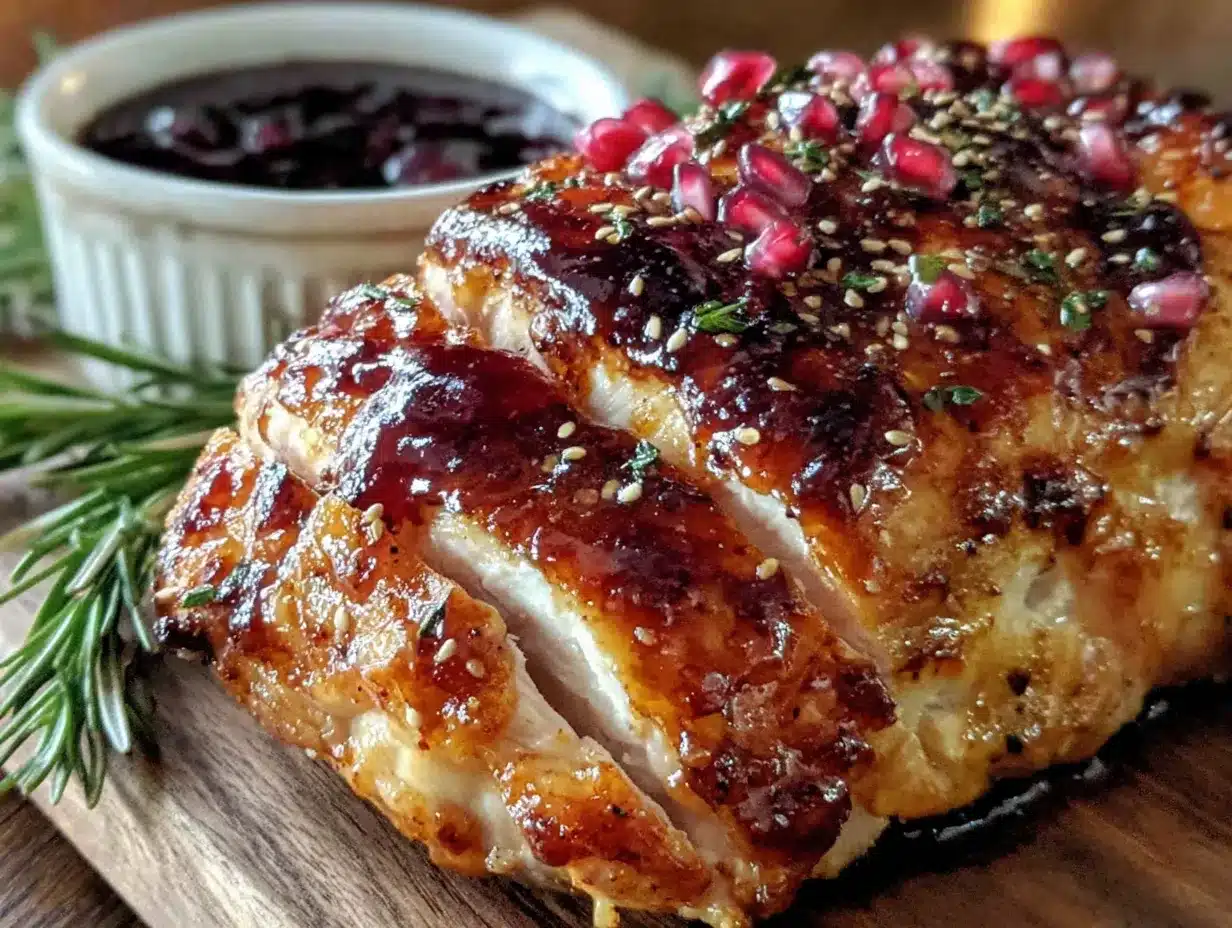
- 1/2 cup pomegranate molasses — This is the star. Look for it in the international aisle of well-stocked grocery stores, Middle Eastern markets, or online. I like the Cortas brand for its consistent thickness and balanced sweetness.
- 2 tablespoons honey — Adds sweetness and helps the glaze caramelize. You can substitute maple syrup if that’s what you have.
- 1 tablespoon Dijon mustard — Cuts through the sweetness and adds a little tangy complexity. Don’t skip this; it balances everything.
- 1 tablespoon unsalted butter — Melted, for richness and shine at the end.
- 1 teaspoon apple cider vinegar — Brightens up the flavors and keeps the glaze from being cloying.
- Pinch of salt and pepper
For the Pan
- 1/2 cup chicken broth — Pour this into the bottom of the roasting pan to keep the pan drippings from burning and to create a little steam.
- Optional: Fresh herbs for garnish — Rosemary sprigs, fresh thyme, or pomegranate arils make for a beautiful presentation.
One thing I’ve learned is that ingredient quality matters more here than you might think. The pomegranate molasses, in particular, varies a lot between brands. Some are very thin and tart, others are thick and almost syrupy sweet. If yours is on the thinner side, you might want to simmer it on the stovetop for a few minutes to reduce it before using. And if you’re feeling adventurous, you could even try making your own pomegranate molasses—it’s just reduced pomegranate juice with a little sugar and lemon juice. But honestly, the store-bought stuff works great and saves you a step.
Equipment Needed
- Roasting pan — A 9×13-inch baking dish works perfectly if you don’t have a traditional roasting pan. Just make sure it has sides high enough to catch the drippings.
- Wire rack — Placing the turkey on a rack inside the pan allows hot air to circulate underneath, cooking the bottom more evenly. If you don’t have one, you can use rolled-up foil strips as a makeshift rack.
- Meat thermometer — This is non-negotiable for poultry. An instant-read thermometer is fine, but a leave-in probe thermometer makes life easier. I’ve used my Thermapen for years and it’s never let me down.
- Small saucepan — For making the glaze. Any small pot works.
- Basting brush — A silicone brush is ideal because it doesn’t shed bristles into your glaze.
- Aluminum foil — For tenting the turkey if it browns too quickly.
- Cutting board and sharp knife — For resting and carving.
You don’t need anything fancy here. I’ve made this recipe in a cheap baking dish from the dollar store and it turned out just fine. The only thing I wouldn’t skimp on is the thermometer. Overcooked turkey is sad turkey, and a good thermometer is the best insurance policy you can buy.
Preparation Method
Step 1: Prep the Turkey (5 minutes)
Take your turkey breast out of the refrigerator about 30 minutes before you plan to cook it. This takes the chill off and helps it cook more evenly. Pat it completely dry with paper towels—this is crucial for getting that crispy skin. In a small bowl, mix together the salt, pepper, garlic powder, dried thyme, and smoked paprika. Rub the olive oil all over the turkey breast, then sprinkle the seasoning mixture evenly over the entire surface, including underneath the skin if you can get your fingers in there. Don’t be shy with it.
Step 2: Make the Glaze (5 minutes)
While the turkey sits, combine the pomegranate molasses, honey, Dijon mustard, and apple cider vinegar in a small saucepan. Warm it over low heat, whisking until everything is smooth and combined. Don’t let it boil—you just want it warm enough to brush on easily. Remove from heat and stir in the melted butter. Set aside about 1/4 cup of the glaze for serving later.
Step 3: Set Up for Roasting (5 minutes)
Preheat your oven to 375°F (190°C). Place a wire rack inside your roasting pan and pour the chicken broth into the bottom of the pan. Place the seasoned turkey breast on the rack, skin side up. The broth will create steam and keep things moist, plus it catches those flavorful drippings.
Step 4: Initial Roast (45 minutes)
Roast the turkey breast uncovered for 45 minutes. During this time, the skin will start to crisp up and turn golden. Don’t open the oven door—trust the process. If you’re using a leave-in probe thermometer, insert it into the thickest part of the breast at the 30-minute mark, making sure it doesn’t touch the bone.
Step 5: Glaze and Continue (30-40 minutes)
After 45 minutes, remove the turkey from the oven and brush a generous layer of the glaze all over the skin. Return it to the oven and continue roasting. Glaze it again every 15 minutes until the internal temperature reaches 160°F (71°C). You should get about 2-3 more glazing sessions in. The glaze will darken and caramelize, creating that gorgeous mahogany crust. If the skin starts getting too dark before the meat is done, tent loosely with aluminum foil.
Step 6: Rest and Carve (15 minutes)
Once the turkey hits 160°F, remove it from the oven. The temperature will continue rising to 165°F (74°C) during resting, which is the safe zone for poultry. Transfer the turkey to a cutting board and tent loosely with foil. Let it rest for at least 15 minutes—don’t skip this. Resting allows the juices to redistribute throughout the meat. If you cut into it too soon, all those beautiful juices will run out onto the cutting board instead of staying in the meat.
After resting, carve against the grain into thick slices. Drizzle with the reserved glaze and serve immediately. The meat should be incredibly juicy with a slight pinkish hue near the bone—that’s perfectly cooked, not underdone.
Cooking Tips & Techniques
I learned most of these the hard way, so you don’t have to. The biggest mistake I made early on was not patting the turkey dry enough. Wet skin steams instead of crisps, and you end up with this sad, rubbery texture that no amount of glaze can fix. Really get in there with those paper towels. Another thing: don’t glaze too early. If you brush the glaze on during the first 45 minutes, the sugar will burn before the turkey is fully cooked. Wait until the skin has had time to render and crisp up a bit before you start layering on that sweet stuff.
Temperature management is everything here. I used to think I could eyebox it, but I was wrong. A good meat thermometer is worth its weight in gold. And remember that the turkey will continue cooking after you pull it out of the oven—that’s called carryover cooking. If you wait until it hits 165°F in the oven, it’ll end up closer to 170°F by the time you carve it, which is dry territory. Pull it at 160°F and let the rest do the work.
If you’re feeling ambitious, you can use the pan drippings to make a quick pan sauce. After removing the turkey, place the roasting pan on the stovetop over medium heat. Add a splash of white wine or more chicken broth, scrape up all the browned bits, and let it reduce by half. Whisk in a tablespoon of butter and you’ve got a simple, delicious sauce that pairs perfectly with the glaze.
Variations & Adaptations
This recipe is forgiving, and I’ve tried quite a few variations over the years. Here are some of my favorites:
- Spicy Pomegranate Glaze: Add 1/2 teaspoon of red pepper flakes or a minced chipotle pepper in adobo to the glaze. The heat cuts through the sweetness beautifully and gives it a little kick.
- Herb-Infused Version: Add 2 sprigs of fresh rosemary and 3 sprigs of fresh thyme to the pan juices while roasting. The aromatics infuse the meat and the pan drippings with this incredible savory depth.
- Citrus Twist: Replace the apple cider vinegar with fresh orange juice and add a teaspoon of orange zest to the glaze. The citrus brightens everything up and complements the pomegranate perfectly.
- Garlic Lover’s Version: Slice a whole head of garlic in half horizontally and place it cut-side down in the pan. The garlic roasts slowly, becoming sweet and spreadable, and it seasons the pan drippings too.
- Dietary Adaptations: For a dairy-free version, simply use olive oil instead of butter in the glaze. For a lower-sugar option, reduce the honey to 1 tablespoon—the pomegranate molasses is already quite sweet on its own.
My personal favorite variation is the herb-infused one. I made it for a small Thanksgiving gathering a few years back, and my mother-in-law, who is notoriously picky about turkey, asked for seconds. That was a win I’m still riding.
Serving & Storage Suggestions
This pomegranate molasses glazed turkey breast is stunning served on a large platter, garnished with fresh rosemary sprigs and a scattering of pomegranate arils. The bright red seeds against the dark, glossy glaze make for a gorgeous presentation that looks like you spent way more effort than you actually did. Serve it warm, sliced thick, with the reserved glaze drizzled over the top.
For sides, I love pairing this with roasted vegetables—think Brussels sprouts, carrots, or sweet potatoes tossed in olive oil and roasted alongside the turkey during the last 30 minutes. A simple wild rice pilaf or creamy mashed potatoes soak up the extra glaze beautifully. If you’re feeling festive, a side of caramelized grilled peach crisp makes for a perfect seasonal dessert that echoes the fruity notes in the glaze.
For storage, let any leftovers cool completely, then wrap them tightly in plastic wrap or aluminum foil, or place them in an airtight container. Refrigerated, the turkey will keep for 3-4 days. The flavors actually deepen overnight, so leftovers might be even better the next day. To reheat, place slices in a baking dish with a splash of chicken broth, cover with foil, and warm in a 300°F (150°C) oven for about 10-15 minutes. You can also microwave individual portions, but the oven method preserves the texture better. The glaze can be stored separately in the refrigerator for up to a week—it’s great drizzled over roasted vegetables or even used as a salad dressing base.
This turkey also freezes surprisingly well. Slice it, wrap portions tightly in plastic wrap and then foil, and freeze for up to 3 months. Thaw overnight in the refrigerator before reheating.
Nutritional Information & Benefits
Here’s the approximate nutritional breakdown for a 6-ounce serving of this pomegranate molasses glazed turkey breast:
- Calories: 380
- Protein: 42g
- Fat: 14g
- Carbohydrates: 18g
- Fiber: 0g
- Sugar: 15g
- Sodium: 520mg
Turkey breast is an excellent source of lean protein, which is great for muscle maintenance and keeping you feeling full. Pomegranate molasses is rich in antioxidants, particularly punicalagins, which are known for their anti-inflammatory properties. The honey provides natural sweetness with a lower glycemic impact than refined sugar, and the olive oil contributes heart-healthy monounsaturated fats.
This recipe is naturally gluten-free and can be made dairy-free with a simple butter substitution. If you’re watching your sugar intake, you can reduce the honey in the glaze without sacrificing too much flavor—the pomegranate molasses is plenty sweet on its own. Just be aware that the glaze will be thinner and less sticky without the honey.
Conclusion
This pomegranate molasses glazed turkey breast has become my go-to recipe for every occasion that calls for something special. It’s the dish I bring to Friendsgiving, the centerpiece of our small Christmas dinner, and the meal I make when I want to remind myself that I actually can cook. The combination of sweet, tangy, and savory is just right—not too heavy, not too light, but perfectly balanced in a way that makes everyone at the table take notice.
I hope you give this recipe a try, and I hope you make it your own. Maybe you’ll add extra garlic, or swap in maple syrup for the honey, or serve it with a side of cozy crockpot beef stew for a truly indulgent winter meal. Whatever you do, I’d love to hear about it. Drop a comment below and let me know how it turned out, or share your own twist on the glaze. And if you’re looking for another impressive but easy dinner idea, you might also enjoy this honey garlic glazed salmon—it uses a similar glazing technique that you’ll already be a pro at. Happy cooking, friends. You’ve got this.
Frequently Asked Questions
Can I use a boneless turkey breast for this recipe?
Yes, you can. Boneless turkey breasts cook faster, so reduce the initial roasting time to about 30 minutes before you start glazing. The internal temperature should still reach 160°F before resting. Just be aware that boneless breasts tend to dry out more easily, so keep a close eye on that thermometer.
Where can I find pomegranate molasses?
Most well-stocked grocery stores carry it in the international or specialty foods aisle. Middle Eastern markets almost always have it. If you can’t find it locally, you can order it online, or make your own by simmering 4 cups of pomegranate juice with 1/2 cup sugar and 1 tablespoon lemon juice until it reduces to about 1 cup.
Can I make the glaze ahead of time?
Absolutely. The glaze can be made up to a week in advance and stored in an airtight container in the refrigerator. Just warm it gently before using so it brushes on smoothly. You might need to whisk in a teaspoon of water if it thickens up too much.
What if my glaze starts burning in the oven?
If the glaze is getting too dark before the turkey is fully cooked, tent the breast loosely with aluminum foil. This will prevent further browning while allowing the meat to continue cooking. Make sure the foil isn’t touching the skin, or it might stick.
Can I cook this in a slow cooker instead of the oven?
I don’t recommend it for this particular recipe. The oven’s dry heat is essential for getting that crispy skin and caramelized glaze. A slow cooker would produce a moist but pale result without the beautiful texture. If you’re set on using a slow cooker, you could cook the turkey breast on low for 4-5 hours, then transfer it to a baking sheet, brush with glaze, and broil for 3-5 minutes to get some color.
Pin This Recipe!
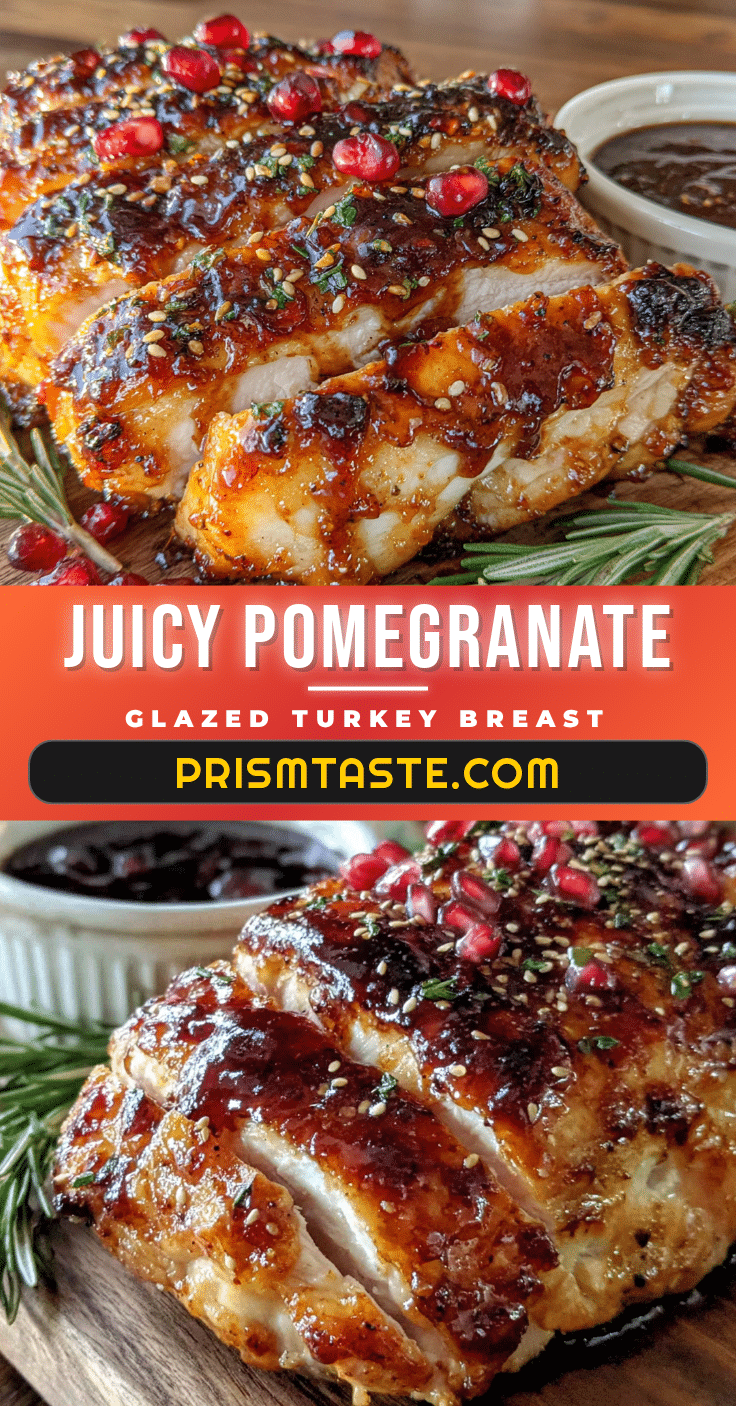
Best Easy Pomegranate Molasses Glazed Turkey Breast
This foolproof pomegranate molasses glazed turkey breast is incredibly easy, with only 10 minutes of active prep and a gorgeous caramelized crust. Perfect for special occasions, it delivers unforgettable sweet-tart flavor and moist, tender meat every time.
- Prep Time: 10 minutes
- Cook Time: 1 hour 15 minutes to 1 hour 25 minutes
- Total Time: 1 hour 25 minutes to 1 hour 35 minutes
- Yield: 6 servings 1x
- Category: Main Course
- Cuisine: American
Ingredients
- 1 bone-in, skin-on turkey breast (about 4–5 pounds / 1.8–2.3 kg)
- 2 tablespoons olive oil
- 1 teaspoon salt
- 1/2 teaspoon black pepper
- 1 teaspoon garlic powder
- 1 teaspoon dried thyme
- 1/2 teaspoon smoked paprika
- 1/2 cup pomegranate molasses
- 2 tablespoons honey
- 1 tablespoon Dijon mustard
- 1 tablespoon unsalted butter, melted
- 1 teaspoon apple cider vinegar
- Pinch of salt and pepper
- 1/2 cup chicken broth
- Optional: Fresh herbs for garnish (rosemary sprigs, fresh thyme, or pomegranate arils)
Instructions
- Take the turkey breast out of the refrigerator about 30 minutes before cooking. Pat it completely dry with paper towels.
- In a small bowl, mix together salt, pepper, garlic powder, dried thyme, and smoked paprika. Rub olive oil all over the turkey breast, then sprinkle the seasoning mixture evenly over the entire surface, including underneath the skin if possible.
- Combine pomegranate molasses, honey, Dijon mustard, and apple cider vinegar in a small saucepan. Warm over low heat, whisking until smooth. Do not let it boil. Remove from heat and stir in melted butter. Set aside about 1/4 cup of the glaze for serving later.
- Preheat oven to 375°F (190°C). Place a wire rack inside a roasting pan and pour chicken broth into the bottom of the pan. Place the seasoned turkey breast on the rack, skin side up.
- Roast the turkey breast uncovered for 45 minutes. Do not open the oven door.
- After 45 minutes, remove the turkey from the oven and brush a generous layer of glaze all over the skin. Return to the oven and continue roasting, glazing every 15 minutes until the internal temperature reaches 160°F (71°C). If the skin gets too dark, tent loosely with aluminum foil.
- Once the turkey hits 160°F, remove from the oven. Transfer to a cutting board and tent loosely with foil. Let rest for at least 15 minutes. The temperature will rise to 165°F (74°C) during resting.
- Carve against the grain into thick slices. Drizzle with reserved glaze and serve immediately.
Notes
Pat the turkey dry for crispy skin. Do not glaze too early; wait until after the first 45 minutes to prevent burning. Use a meat thermometer for accuracy; pull at 160°F and let carryover cooking bring it to 165°F. For a dairy-free version, use olive oil instead of butter. For lower sugar, reduce honey to 1 tablespoon. Leftovers keep 3-4 days in the refrigerator or freeze for up to 3 months.
Nutrition
- Serving Size: 6 ounces
- Calories: 380
- Sugar: 15
- Sodium: 520
- Fat: 14
- Saturated Fat: 4
- Carbohydrates: 18
- Protein: 42
Keywords: pomegranate molasses glazed turkey breast, easy turkey breast recipe, holiday turkey, glazed turkey, pomegranate turkey