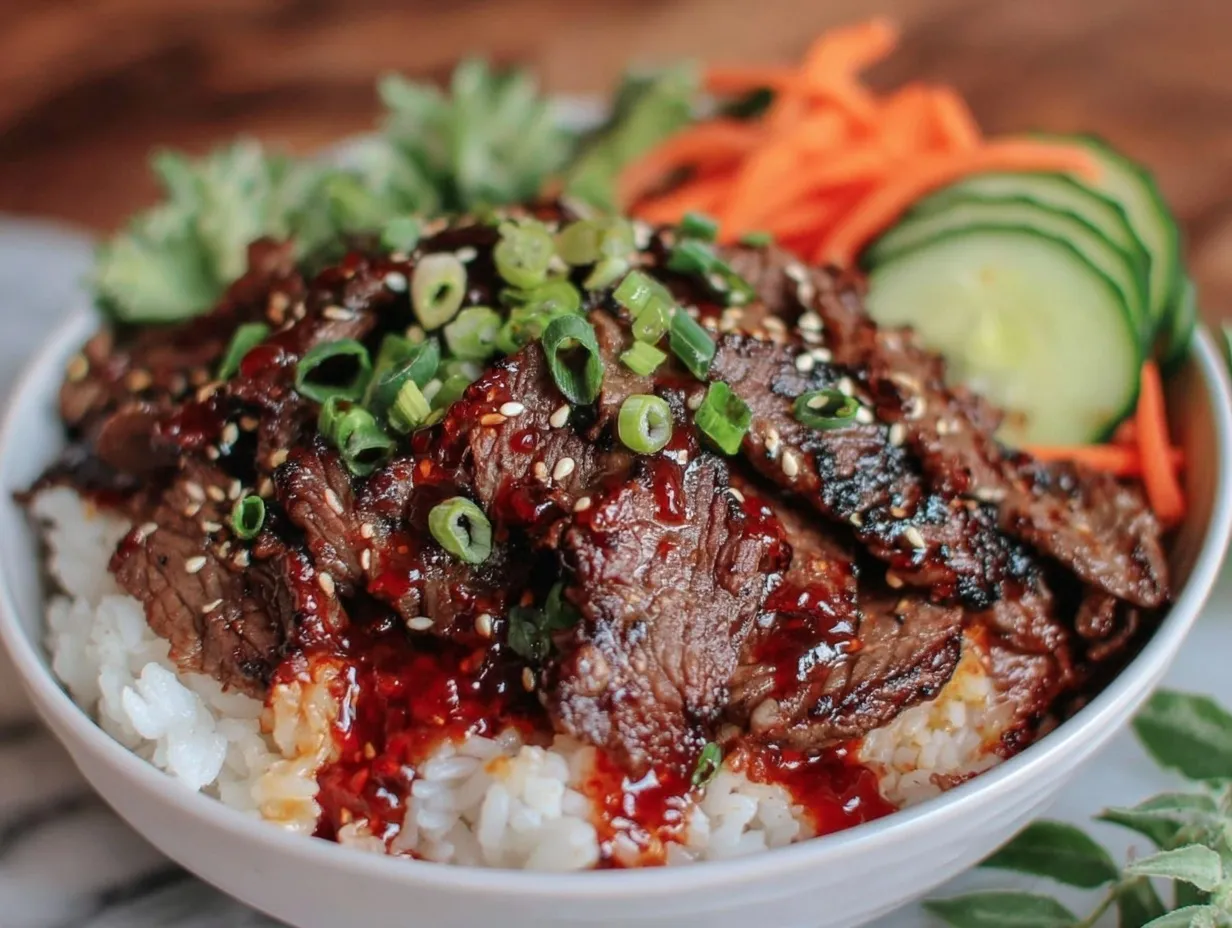
“Hey, you’ve got to try this Korean beef bowl I whipped up last night,” my coworker texted me just as I was wrapping up a long day. Honestly, I was skeptical—spicy Korean flavors sounded a bit intimidating after work. But curiosity won, so I gave it a shot. The moment the garlic and ginger hit the pan, the kitchen filled with this warm, inviting aroma that honestly felt like a mini-vacation for my senses.
I wasn’t expecting the spicy gochujang sauce to be so balanced—fiery yet slightly sweet and perfectly tangy. The beef was tender, coated in this glossy sauce that clung to every grain of rice. It was simple, fast, and satisfying in a way I didn’t think possible on a hectic weekday night. Since then, this flavorful Korean beef bowl with spicy gochujang sauce has become my go-to for busy evenings when I want something comforting but with a kick.
What surprised me most was how easy it was to put together with pantry staples I already had. I remember thinking, “Why haven’t I made this before?” It’s not just a recipe; it’s a little ritual that turns chaos into calm, bite by bite. That’s why this bowl stuck with me — it’s honest, bold, and effortless all at once.
Why You’ll Love This Recipe
This Korean beef bowl with spicy gochujang sauce isn’t just another dinner idea. I’ve tested this recipe multiple times to get every detail just right, from the perfect sauce ratio to achieving tender, juicy beef without fuss. It’s been family-approved and even got a nod from my picky friend who usually shies away from spicy food.
- Quick & Easy: Ready in under 30 minutes, it fits perfectly into busy weeknights or quick lunch preps.
- Simple Ingredients: No need for specialty stores; the core ingredients like gochujang, soy sauce, and ground beef are pantry staples in many kitchens.
- Perfect for Any Occasion: Whether you’re feeding a hungry family or craving a solo dinner, this bowl feels special yet approachable.
- Crowd-Pleaser: Kids and adults alike enjoy the sweet-spicy combo, making it great for casual gatherings.
- Unbelievably Delicious: The umami-packed sauce with a spicy punch makes every bite memorable without being overwhelming.
What sets this recipe apart is the way the spicy gochujang sauce is balanced with just the right touch of sweetness and acidity, creating layers of flavor that don’t overpower. I also love the technique of quickly searing the beef to lock in juices while keeping it tender. It’s the kind of meal that makes you close your eyes and savor that perfect harmony of heat and savory goodness.
For a similar flavor vibe with a fresh twist, you might enjoy my fresh cucumber tomato avocado salad with lemon vinaigrette, which pairs beautifully alongside this bowl for a refreshing crunch.
What Ingredients You Will Need
This recipe uses straightforward, wholesome ingredients to deliver bold Korean flavors and a satisfying texture without complicated steps or hard-to-find items. Most are pantry staples or easy to find at your local grocery store, and swaps are simple if needed.
- Ground beef: 1 pound (450 g) – I prefer 80/20 for the best balance of flavor and juiciness.
- Gochujang (Korean chili paste): 2 tablespoons – the star spicy-sweet ingredient; I recommend Chung Jung One brand for authentic flavor.
- Soy sauce: 3 tablespoons – adds depth and saltiness; low sodium is an easy swap.
- Brown sugar: 1 tablespoon – balances the heat with a hint of sweetness.
- Garlic: 3 cloves, minced – for that punch of aroma and flavor.
- Fresh ginger: 1 teaspoon, grated – adds a subtle zing and warmth.
- Sesame oil: 1 teaspoon – toasted sesame oil gives a nutty finish.
- Green onions: 2, sliced thinly – for garnish and fresh bite.
- Cooked rice: 4 cups (about 800 g) – short grain or jasmine rice works great.
- Sesame seeds: 1 tablespoon, toasted – optional but adds texture and visual appeal.
- Optional vegetables: shredded carrots, steamed broccoli, or thin cucumber slices for freshness and crunch.
If you want a gluten-free bowl, substitute tamari or coconut aminos for soy sauce. For a lower-carb version, try serving over cauliflower rice. I’ve also swapped ground beef for ground turkey in a pinch, which worked surprisingly well.
Equipment Needed
- Large skillet or non-stick frying pan: Essential for cooking the beef evenly and preventing sticking. I use a heavy-bottomed skillet for even heat distribution.
- Wooden spoon or spatula: For stirring and breaking up the beef as it cooks.
- Measuring spoons: To get the sauce ratios right.
- Knife and cutting board: To mince garlic, grate ginger, and slice green onions.
- Rice cooker or pot: For perfectly cooked rice; a rice cooker saves time and effort but a pot works fine too.
If you don’t have a garlic press, mincing with a knife works just as well. For toasting sesame seeds, a small dry pan on medium heat is all you need—just keep your eye on them so they don’t burn.
Preparation Method
- Cook the rice: Prepare 4 cups (800 g) of rice according to package instructions. This usually takes about 20 minutes. Fluff and keep warm.
- Prepare aromatics: Mince 3 cloves of garlic and grate 1 teaspoon (2 g) of fresh ginger. Slice 2 green onions thinly, separating the white and green parts. These will be used at different stages.
- Toast sesame seeds: In a small dry skillet over medium heat, toast 1 tablespoon (9 g) of sesame seeds until golden and fragrant, about 2 minutes. Stir frequently to avoid burning. Set aside.
- Cook the beef: Heat 1 teaspoon (5 ml) of sesame oil in a large skillet over medium-high heat. Add 1 pound (450 g) ground beef, breaking it up with a wooden spoon. Cook until browned and no longer pink, about 5-7 minutes. Drain excess fat if needed.
- Add aromatics: Stir in the minced garlic and grated ginger with the beef. Cook for 1-2 minutes until fragrant but not burnt.
- Make the sauce: In a small bowl, mix 2 tablespoons (30 g) gochujang, 3 tablespoons (45 ml) soy sauce, and 1 tablespoon (12 g) brown sugar until smooth.
- Combine: Pour the sauce over the beef and stir well to coat evenly. Cook for another 2-3 minutes until the sauce thickens slightly and clings to the beef.
- Assemble the bowl: Divide the cooked rice into four bowls. Spoon the beef mixture on top. Garnish with sliced green onion tops and toasted sesame seeds.
- Optional: Add fresh or steamed veggies like shredded carrots, broccoli, or cucumber slices for texture and color.
Tip: If your sauce seems too thick, splash a teaspoon of water to loosen it up. If it’s too spicy, a little extra brown sugar can mellow it out. The key is tasting as you go!
Cooking Tips & Techniques
One thing I learned the hard way is to avoid overcrowding the pan. Cooking the beef in a single layer helps it brown better, giving more flavor and texture rather than steaming. Also, don’t rush the garlic and ginger step—letting them soften gently in the hot pan releases their aroma without bitterness.
Using ground beef with some fat content (like 80/20) is important here. Leaner beef can turn dry quickly. If you prefer lean meat, add a teaspoon of oil before cooking. And for that glossy, sticky sauce, stirring constantly in the last few minutes helps it cling to the beef perfectly.
Multitasking is your friend: start the rice first, prep aromatics while it cooks, then move to the beef. This way, everything finishes around the same time, and you’re not left waiting or rushing at the end.
Lastly, don’t skip toasting the sesame seeds. They add a subtle crunch and nutty aroma that rounds out the whole bowl. I keep a small jar of toasted seeds handy so I can sprinkle them on other dishes like my crispy bang bang shrimp tacos too.
Variations & Adaptations
- Protein swaps: Ground turkey or chicken work well if you want a lighter option. I’ve also tried thinly sliced flank steak for a chewier texture.
- Vegetarian version: Replace beef with crumbled tofu or cooked mushrooms, using tamari instead of soy sauce for gluten-free needs.
- Spice level adjustments: For milder heat, reduce gochujang to 1 tablespoon and add a teaspoon of honey for sweetness. If you like it fiery, add a pinch of red pepper flakes or a drizzle of chili oil on top.
- Serving styles: Turn this into a lettuce wrap meal by spooning the beef mixture into crisp lettuce leaves with extra veggies.
- Seasonal twists: In summer, fresh cucumber and shredded carrot add brightness, while winter calls for steamed broccoli or sautéed spinach to warm things up.
I once threw in some kimchi on the side, which gave the bowl a zingy, fermented kick that balanced the richness beautifully — highly recommend trying that if you want to upgrade your game.
Serving & Storage Suggestions
This bowl is best served hot and fresh, with the beef sizzling and rice fluffy. I like to garnish with extra green onions and a sprinkle of toasted sesame seeds for that final pop of flavor and texture. You can plate it with a side of quick pickled cucumbers or a simple Asian slaw for crunch.
Leftovers store well in an airtight container in the fridge for up to 3 days. Reheat gently in a skillet or microwave, adding a splash of water to prevent drying out. The flavors actually deepen after resting overnight, making it a great make-ahead meal.
If you want to prep ahead, cook the beef mixture and rice separately, then combine and garnish just before serving. This trick saved me more than once on busy nights.
Pairing this bowl with a light, refreshing drink like a sparkling yuzu soda or a cold green tea complements the spicy gochujang sauce nicely. For a fun twist on summer entertaining, consider serving alongside a refreshing red white and blue layered cocktail to brighten up the table.
Nutritional Information & Benefits
This Korean beef bowl packs a flavorful punch while offering a balanced meal. A typical serving contains approximately 450 calories, 25 grams of protein, 35 grams of carbohydrates, and 18 grams of fat. The protein from the beef supports muscle repair, while the carbs from rice fuel energy.
Gochujang, made from fermented chili peppers, contributes beneficial probiotics that support digestion. Garlic and ginger add antioxidants and anti-inflammatory properties, making this bowl satisfying and nourishing. If you swap to brown rice or cauliflower rice, you can reduce carbs and increase fiber.
Keep in mind soy sauce contains gluten unless you use tamari, so choose accordingly if you have sensitivities. For a wholesome comfort meal that still respects your health goals, this bowl strikes a nice balance.
Conclusion
This flavorful Korean beef bowl with spicy gochujang sauce is one of those recipes that feels like a hug on a plate. It’s simple enough to make on a busy night, yet packed with bold, authentic flavors that keep you coming back for more. I love how versatile it is — you can tweak the spice, swap proteins, or add veggies to suit your mood and pantry.
Cooking this bowl always reminds me that great meals don’t have to be complicated, and sometimes the easiest recipes become your favorites. Feel free to personalize it and share how you make it your own. I’d love to hear about your twists or how it fits into your weeknight routine!
For more quick and tasty dinner ideas, you might enjoy my fresh lemon garlic shrimp pasta that’s just as satisfying and speedy.
FAQs
Can I use other cuts of beef for this recipe?
Absolutely! Ground beef is convenient, but thinly sliced ribeye or flank steak also works well. Just adjust cooking times to avoid overcooking.
How spicy is the gochujang sauce?
Gochujang has a moderate heat level with a sweet and savory flavor. You can easily adjust the spiciness by adding less gochujang or balancing with sugar or honey.
Is this recipe gluten-free?
To make it gluten-free, swap regular soy sauce with tamari or coconut aminos. The rest of the ingredients are naturally gluten-free.
Can I prepare this recipe ahead of time?
Yes, cook the beef and rice separately and store in the fridge. Reheat and assemble just before serving for the best taste and texture.
What sides go well with this Korean beef bowl?
Simple sides like steamed or pickled vegetables, kimchi, or a crisp salad work great. For a heartier meal, try pairing with savory BBQ pulled pork nachos for a fun contrast of flavors.
Pin This Recipe!
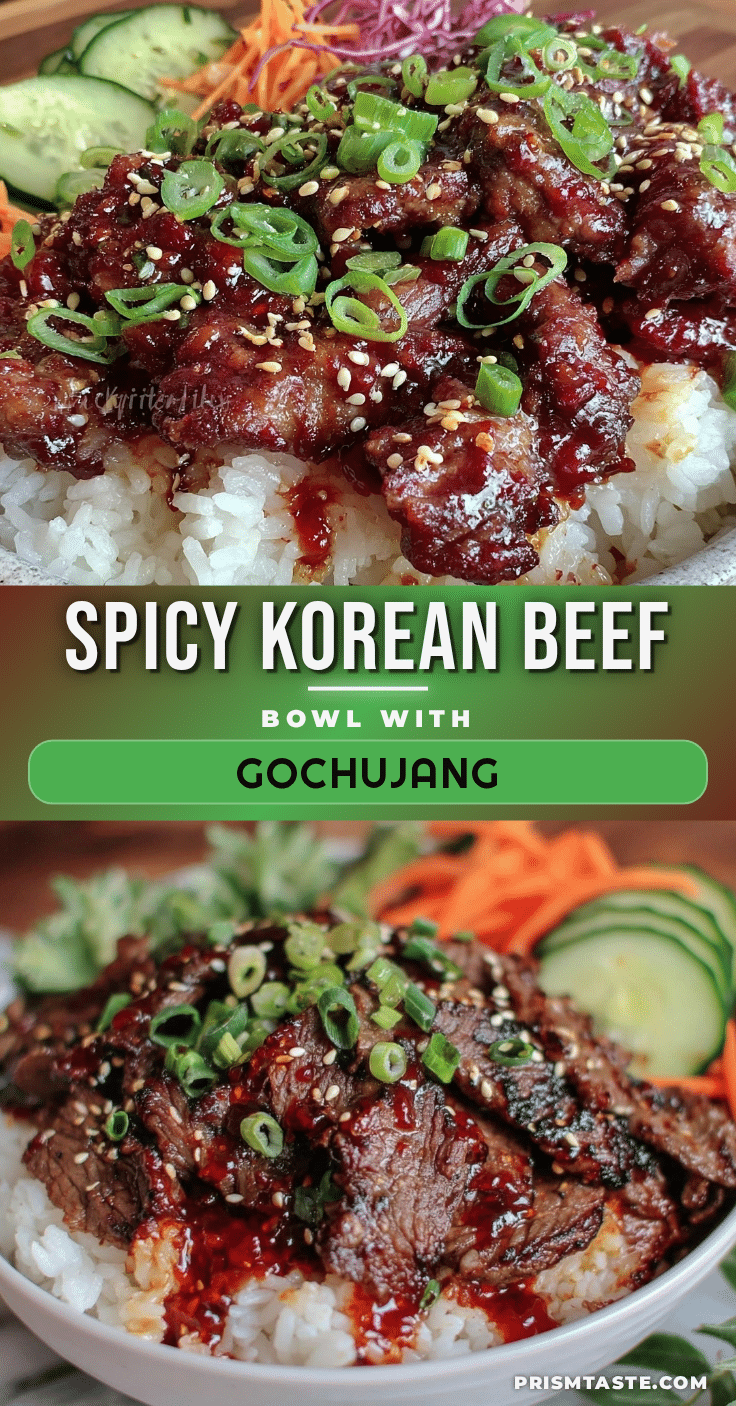
Flavorful Korean Beef Bowl Recipe with Easy Spicy Gochujang Sauce
A quick and easy Korean beef bowl featuring tender ground beef coated in a balanced spicy-sweet gochujang sauce, served over fluffy rice. Perfect for busy weeknights, this recipe delivers bold, authentic flavors with minimal fuss.
- Prep Time: 10 minutes
- Cook Time: 20 minutes
- Total Time: 30 minutes
- Yield: 4 servings 1x
- Category: Main Course
- Cuisine: Korean
Ingredients
- 1 pound (450 g) ground beef (80/20 preferred)
- 2 tablespoons gochujang (Korean chili paste)
- 3 tablespoons soy sauce (low sodium optional)
- 1 tablespoon brown sugar
- 3 cloves garlic, minced
- 1 teaspoon fresh ginger, grated
- 1 teaspoon toasted sesame oil
- 2 green onions, sliced thinly
- 4 cups cooked rice (short grain or jasmine)
- 1 tablespoon toasted sesame seeds (optional)
- Optional vegetables: shredded carrots, steamed broccoli, or thin cucumber slices
Instructions
- Cook 4 cups (800 g) of rice according to package instructions, about 20 minutes. Fluff and keep warm.
- Mince 3 cloves garlic and grate 1 teaspoon fresh ginger. Slice 2 green onions thinly, separating white and green parts.
- Toast 1 tablespoon sesame seeds in a small dry skillet over medium heat until golden and fragrant, about 2 minutes. Stir frequently to avoid burning. Set aside.
- Heat 1 teaspoon sesame oil in a large skillet over medium-high heat. Add 1 pound ground beef, breaking it up with a wooden spoon. Cook until browned and no longer pink, about 5-7 minutes. Drain excess fat if needed.
- Stir in minced garlic and grated ginger with the beef. Cook for 1-2 minutes until fragrant but not burnt.
- In a small bowl, mix 2 tablespoons gochujang, 3 tablespoons soy sauce, and 1 tablespoon brown sugar until smooth.
- Pour the sauce over the beef and stir well to coat evenly. Cook for another 2-3 minutes until the sauce thickens slightly and clings to the beef.
- Divide cooked rice into four bowls. Spoon beef mixture on top. Garnish with sliced green onion tops and toasted sesame seeds.
- Optional: Add fresh or steamed veggies like shredded carrots, broccoli, or cucumber slices for texture and color.
Notes
Avoid overcrowding the pan to brown beef properly. Toast sesame seeds carefully to avoid burning. Adjust sauce thickness with water if needed. For gluten-free, substitute soy sauce with tamari or coconut aminos. Protein swaps include ground turkey, chicken, or flank steak. Spice level can be adjusted by varying gochujang amount or adding chili flakes.
Nutrition
- Serving Size: 1 bowl (rice and bee
- Calories: 450
- Sugar: 8
- Sodium: 900
- Fat: 18
- Saturated Fat: 7
- Carbohydrates: 35
- Fiber: 2
- Protein: 25
Keywords: Korean beef bowl, gochujang sauce, spicy Korean recipe, quick dinner, ground beef recipe, easy weeknight meal