“You’re telling me this bread needs no kneading?” I remember the exact moment my skeptical side kicked in while staring at the floured mess on my counter. Honestly, I’d always thought homemade bread meant hours of elbow grease and a kitchen covered in flour dust. But that afternoon, after a hectic morning juggling emails and a cranky toddler, I just wanted something straightforward, something that wouldn’t demand a second job as a baker. I tossed together this no-knead rosemary olive bread on a whim, almost forgetting about it for the better part of the day.
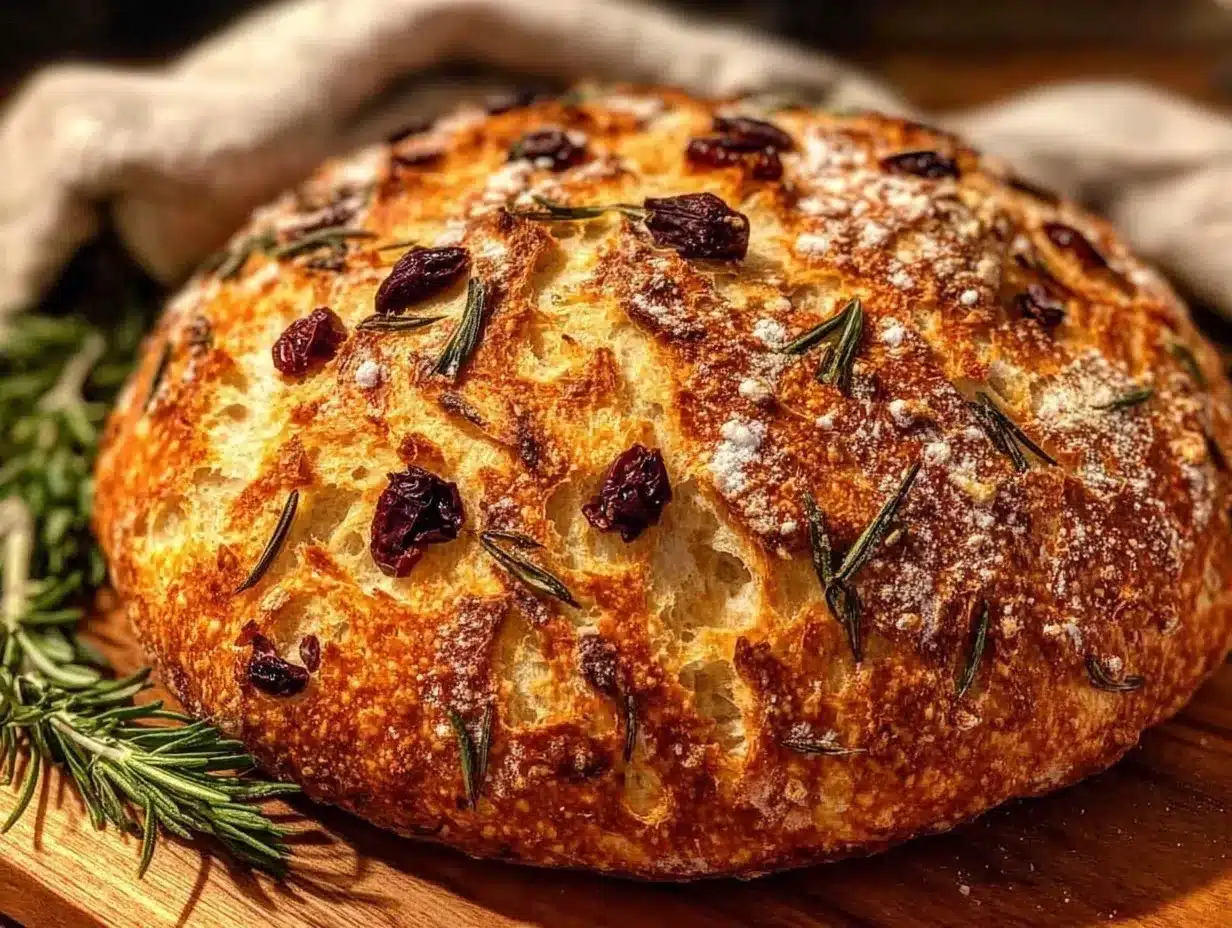
The smell that wafted through the house when I finally pulled it from the oven was something else—earthy rosemary, briny olives, and that irresistible rustic crust crackling as it cooled. It felt like a little slice of calm, a quiet reset. I sliced into it and found a tender, chewy crumb dotted with those olives, each bite carrying a simple punch of flavor that made me pause. This homemade no-knead rosemary olive bread with rustic crust quickly became my go-to for weekend mornings or when I needed to impress without the stress.
There’s something so honest about bread made this way—no fuss, just patience and good ingredients coming together. It stuck with me because it’s approachable yet special, a bread that tells a story with every bite. And that, honestly, is why it’s become a kitchen staple I can’t imagine living without.
Why You’ll Love This Recipe
From my many attempts baking bread at home, this homemade no-knead rosemary olive bread recipe stands out for several reasons that make it a keeper:
- Quick & Easy: It comes together in under 15 minutes of hands-on time, making it perfect for busy weeknights or last-minute cravings.
- Simple Ingredients: No need for fancy shopping trips — pantry staples and a handful of fresh rosemary and olives are all you need.
- Perfect for Rustic Crust Fans: The crust develops that satisfying crackle and chewiness that bread lovers crave without complicated techniques.
- Crowd-Pleaser: Whether it’s a brunch gathering or a casual dinner, this bread gets rave reviews from friends and family alike.
- Unbelievably Delicious: The combination of fragrant rosemary and savory olives creates a flavor that’s both comforting and a little unexpected.
What sets this recipe apart is its no-knead magic. Letting the dough rest overnight gives time for flavor to deepen and gluten to develop naturally. I’ve tested versions with different olives (kalamata or green) and found that chopping them just right keeps the crumb moist without sogginess. The light sprinkle of coarse sea salt on top before baking adds just the right finishing touch.
Honestly, it’s the kind of bread that makes you close your eyes after the first bite and think, “Yeah, I nailed this.” It’s rustic comfort food that feels homemade but looks like you spent hours fussing over it—without all that hassle.
What Ingredients You Will Need
This recipe uses simple, wholesome ingredients to deliver bold flavor and that satisfying chewy texture without any fuss. Most of these you probably have on hand, and substitutions are straightforward.
- All-purpose flour (3 cups / 375 g) – The base of the bread; you can swap for bread flour if you want a chewier texture.
- Instant yeast (1/4 teaspoon) – Just a pinch to keep things slow and easy; no need to proof.
- Fine sea salt (1 1/2 teaspoons) – Balances the flavors and enhances the crust.
- Water (1 1/2 cups / 360 ml), lukewarm – Hydrates the dough; tap water works fine.
- Fresh rosemary (2 tablespoons, finely chopped) – Adds that fragrant herbal note; use fresh for best aroma.
- Olives (1 cup / 150 g, pitted and roughly chopped) – Kalamata or green olives both work beautifully; I prefer Kalamata for their deep flavor.
- Olive oil (1 tablespoon, plus extra for greasing) – Keeps the dough moist and contributes to the crust’s richness.
- Coarse sea salt (for sprinkling) – Gives the crust a nice finishing crunch and salty pop.
Pro tip: If you want to make this gluten-free, swapping all-purpose flour for a gluten-free blend designed for bread baking works fairly well, though you might lose a bit of chew. And if olives aren’t your thing, try swapping in sun-dried tomatoes or roasted garlic to keep the rustic vibe.
Equipment Needed
For the best results with this no-knead rosemary olive bread, here’s what you’ll want on hand:
- Large mixing bowl: For combining ingredients comfortably. A glass or ceramic one works great because it retains warmth well.
- Dutch oven or heavy oven-safe pot with lid: Essential for creating the steamy environment that forms the crust’s signature crunch. Cast iron works best but any heavy pot that can take high heat will do.
- Wooden spoon or spatula: For mixing the wet dough gently without overworking it.
- Kitchen scale (optional but recommended): For precise measurements, especially if you’re repeating the recipe often.
- Baking parchment paper: Makes transferring the dough into the hot pot easier and prevents sticking.
If you don’t have a Dutch oven, a deep baking dish covered tightly with foil can work, but the crust won’t be quite as crispy. Also, I’ve found that a thermometer helps for checking the internal temperature of the bread, aiming for about 200°F (93°C) to confirm it’s fully baked.
Preparation Method
- Mix the dry ingredients: In your large mixing bowl, combine 3 cups (375 g) of all-purpose flour, 1/4 teaspoon instant yeast, and 1 1/2 teaspoons fine sea salt. Stir them together so everything’s evenly distributed. This step takes about 5 minutes.
- Add wet ingredients and rosemary: Pour in 1 1/2 cups (360 ml) lukewarm water and 1 tablespoon olive oil. Toss in the finely chopped 2 tablespoons fresh rosemary. Stir gently with a wooden spoon until you get a shaggy, sticky dough. Don’t worry about smoothness; it’ll feel loose and wet.
- Fold in the olives: Add 1 cup (150 g) pitted and roughly chopped olives. Fold them in carefully to spread evenly without deflating the dough. This should take about 2 minutes.
- Cover and let ferment: Cover the bowl tightly with plastic wrap or a clean kitchen towel. Leave it at room temperature (around 70°F / 21°C) for 12 to 18 hours. The dough will rise slowly and develop bubbles, signaling it’s ready. This long rest is key for flavor and gluten development.
- Shape the dough: Dust your work surface with flour. Gently scrape the dough onto it — it’ll be sticky, so handle with care. Shape it into a rough round ball by folding edges under. Avoid kneading; just coax it into shape. Let it rest for 30 minutes, loosely covered.
- Preheat the oven and pot: Place your Dutch oven with the lid inside the oven and preheat to 450°F (230°C) for at least 30 minutes. This step ensures the pot is hot enough to create that rustic crust.
- Prepare for baking: Carefully remove the hot pot. Transfer the dough onto a piece of parchment paper, sprinkle the top with coarse sea salt, and gently lower it into the pot using the paper as a sling.
- Bake covered: Cover with the lid and bake for 30 minutes. This traps steam, which crisps the crust and keeps the inside soft.
- Finish baking uncovered: Remove the lid and bake for another 15 to 20 minutes until the crust is deep golden brown and crackly. You’ll know it’s done when it sounds hollow tapping the bottom (or reaches 200°F / 93°C internally).
- Cool completely: Transfer the bread to a wire rack and let it cool for at least an hour before slicing. This rest lets the crumb set perfectly.
If you find the dough too sticky to handle, lightly oil your hands rather than adding more flour. Too much flour can make the bread dense. Also, if you want a stronger rosemary flavor, sprinkle a few extra needles on top right before baking. I once forgot the olives — still good, but the olives really make this bread memorable.
Cooking Tips & Techniques
Making no-knead bread is forgiving, but these tips will help keep your loaf stellar every time:
- Patience is everything: The long fermentation is what turns simple ingredients into flavorful bread. Resist the urge to rush this step; the dough needs time to develop.
- Watch water temperature: Too hot and you risk killing the yeast; too cold and it won’t activate well. Lukewarm (about 100°F / 38°C) is your sweet spot.
- Don’t skip the preheating: Heating your Dutch oven thoroughly is essential to achieve that crackling crust. I learned this the hard way after a limp, pale crust attempt.
- Handle the dough gently: No kneading means no overworking. Treat the dough like a delicate cloud when shaping.
- Use parchment paper: It’s a game-changer for easy transfer into the hot pot and cleanup.
- Experiment with olives: Chopping size matters — too big and they fall out, too small and they blend into the dough. Roughly chopped is best.
One time, I forgot to remove the lid for the last bake stage and ended up with a soft crust. Lesson learned: the uncovered bake crisps things up perfectly.
Variations & Adaptations
This homemade no-knead rosemary olive bread is a versatile base you can tweak to suit your taste or dietary needs:
- Herb swap: Try fresh thyme or oregano instead of rosemary for a different herbal note.
- Olives out, nuts in: Substitute olives with chopped walnuts or pecans for a nutty crunch.
- Gluten-free version: Use a gluten-free all-purpose blend with xanthan gum. The texture will vary, but flavor stays great.
- Cheese addition: Fold in 1/2 cup (50 g) crumbled feta or shredded parmesan for an extra savory punch.
I recently experimented by adding sun-dried tomatoes alongside the olives, which gave the bread a lovely sweet-tart contrast that paired perfectly with a bowl of creamy roasted tomato basil soup. It turned a simple loaf into a meal.
Serving & Storage Suggestions
This bread shines when served fresh and warm, but it also keeps well:
- Serving temperature: Best sliced after cooling for an hour; slightly warm is perfect for soft crumb and crispy crust.
- Pairings: Goes wonderfully with olive oil and balsamic for dipping, or alongside hearty soups like the slow cooker beef ragu.
- Storage: Keep the loaf wrapped in a clean kitchen towel inside a bread box or paper bag at room temperature for up to 2 days.
- Freezing: Slice and freeze in an airtight bag for up to 3 months. Toast slices straight from the freezer for best texture.
- Reheating: Warm in a 350°F (175°C) oven for 5-10 minutes to revive the crust’s crunch.
Flavors mellow and deepen after a day, so sometimes I slice the bread thick and use it for sandwiches the next day—especially with the tender crockpot French dip sandwiches I love making.
Nutritional Information & Benefits
This homemade no-knead rosemary olive bread offers more than just taste:
- Each slice (about 2 oz / 56 g) provides roughly 150 calories, 4 grams of fat (mostly from olive oil and olives), 25 grams of carbs, and 4 grams of protein.
- Olives contribute heart-healthy monounsaturated fats and antioxidants, while fresh rosemary adds anti-inflammatory compounds.
- The slow fermentation helps break down gluten, making the bread easier to digest for some people.
- This recipe is naturally vegetarian and can be made vegan by ensuring the olive oil and olives are free from animal products.
As someone mindful of what I feed my family, I appreciate that this bread pairs wholesome ingredients with a simple method, making it a nourishing choice without compromise on flavor.
Conclusion
Making this homemade no-knead rosemary olive bread with rustic crust has been a quiet joy in my kitchen. It’s one of those recipes that proves good things don’t have to be complicated. The ease of no-knead combined with the fragrant punch of rosemary and olives means you’re never far from a loaf that feels both comforting and special.
Feel free to customize it with your favorite herbs or add-ins. I love how adaptable it is, whether I’m serving it alongside a rich stew or using it for simple sandwiches. It’s become one of those recipes I trust to impress without the stress.
Give it a try and let the aroma fill your home—that’s when you know you’re onto something good. And if you want to make a full meal, pairing this bread with dishes like slow cooker salsa verde chicken burrito bowls makes for a tasty, no-fuss dinner.
FAQs
- Can I use dried rosemary instead of fresh?
Yes, but reduce to 1 teaspoon since dried herbs are more concentrated, and the flavor won’t be as bright. - Do I have to use a Dutch oven?
A Dutch oven is best for crust, but a heavy oven-safe pot with a lid or a covered baking dish can work as substitutes. - How long does the dough need to rise?
Ideally, 12 to 18 hours at room temperature. This slow rise develops flavor and texture. - Can I make this bread without olives?
Absolutely! You can leave them out or substitute with other mix-ins like nuts or sun-dried tomatoes. - What’s the best way to store leftover bread?
Keep it wrapped in a kitchen towel or paper bag at room temperature for up to 2 days, or slice and freeze for longer storage.
Pin This Recipe!
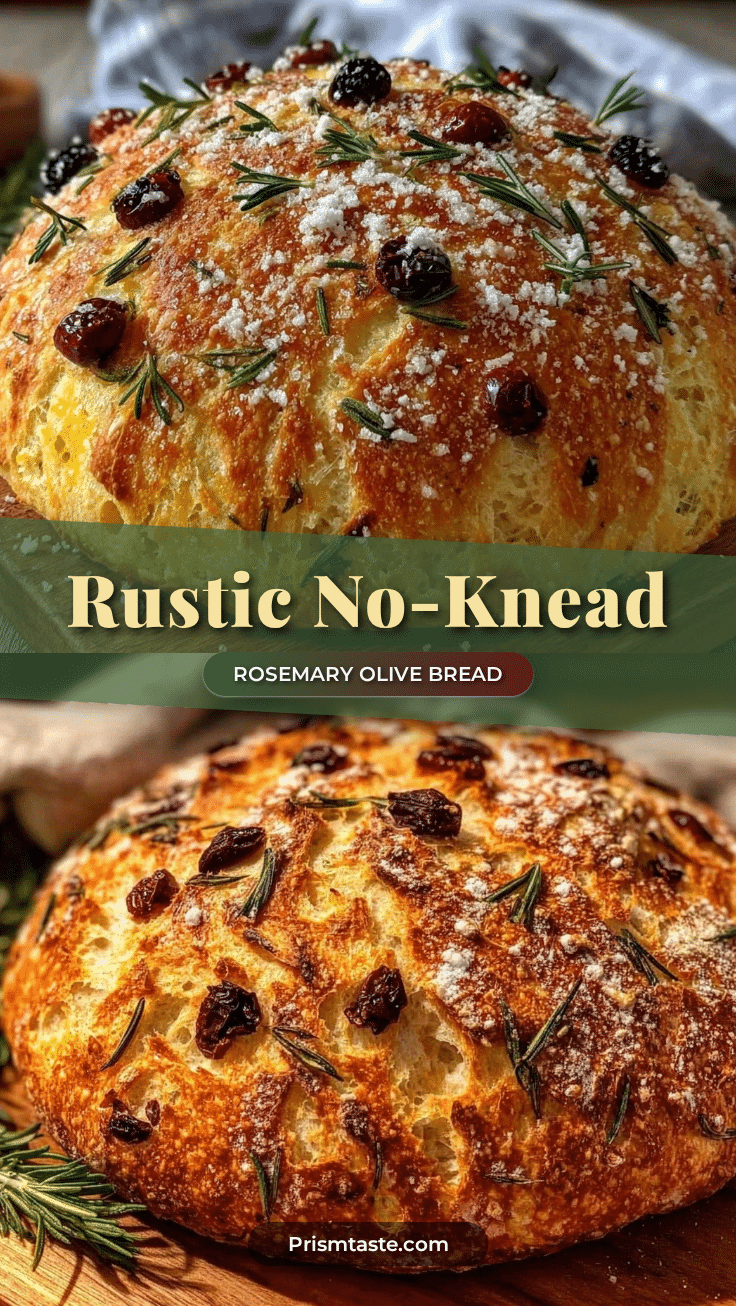
Homemade No-Knead Rosemary Olive Bread
A simple, no-knead bread recipe featuring fragrant rosemary and savory olives, perfect for rustic crust lovers and easy weekend baking.
- Prep Time: 15 minutes
- Cook Time: 45 minutes
- Total Time: 13 hours
- Yield: 1 loaf (about 8 servings) 1x
- Category: Bread
- Cuisine: American
Ingredients
- 3 cups (375 g) all-purpose flour
- 1/4 teaspoon instant yeast
- 1 1/2 teaspoons fine sea salt
- 1 1/2 cups (360 ml) lukewarm water
- 2 tablespoons fresh rosemary, finely chopped
- 1 cup (150 g) pitted and roughly chopped olives (Kalamata or green)
- 1 tablespoon olive oil, plus extra for greasing
- Coarse sea salt for sprinkling
Instructions
- In a large mixing bowl, combine 3 cups (375 g) all-purpose flour, 1/4 teaspoon instant yeast, and 1 1/2 teaspoons fine sea salt. Stir to evenly distribute.
- Add 1 1/2 cups (360 ml) lukewarm water, 1 tablespoon olive oil, and 2 tablespoons finely chopped fresh rosemary. Stir gently with a wooden spoon until a shaggy, sticky dough forms.
- Fold in 1 cup (150 g) pitted and roughly chopped olives carefully to spread evenly without deflating the dough.
- Cover the bowl tightly with plastic wrap or a clean kitchen towel and let ferment at room temperature (around 70°F / 21°C) for 12 to 18 hours until the dough rises and bubbles form.
- Dust a work surface with flour. Gently scrape the dough onto it and shape into a rough round ball by folding edges under. Let rest for 30 minutes, loosely covered.
- Preheat the oven to 450°F (230°C) with a Dutch oven or heavy oven-safe pot with lid inside for at least 30 minutes.
- Carefully remove the hot pot. Transfer the dough onto a piece of parchment paper, sprinkle the top with coarse sea salt, and lower it into the pot using the paper as a sling.
- Cover with the lid and bake for 30 minutes to trap steam and crisp the crust.
- Remove the lid and bake uncovered for another 15 to 20 minutes until the crust is deep golden brown and crackly, or until the internal temperature reaches 200°F (93°C).
- Transfer the bread to a wire rack and cool completely for at least one hour before slicing.
Notes
If dough is too sticky to handle, lightly oil your hands instead of adding more flour to avoid dense bread. For stronger rosemary flavor, sprinkle extra needles on top before baking. A thermometer helps confirm doneness at 200°F (93°C). If no Dutch oven, use a heavy covered baking dish but crust may be less crispy.
Nutrition
- Serving Size: 1 slice (about 2 oz
- Calories: 150
- Fat: 4
- Carbohydrates: 25
- Protein: 4
Keywords: no-knead bread, rosemary bread, olive bread, rustic crust bread, easy bread recipe, homemade bread