Late October evening, rain tapping against the kitchen window, and the only thing I wanted was something that felt like a secret. Not a scary Halloween thing, but something elegant—dark, dramatic, a little bit mysterious. I had a block of cream cheese softening on the counter, a bottle of black cocoa powder I’d ordered on a whim weeks ago, and a spider web stencil I’d cut from parchment paper while waiting for my coffee to brew. That’s how this Black Velvet Spider Web Cheesecake happened. Not because I was planning a party, but because I wanted to make something that felt like a quiet, grown-up celebration.
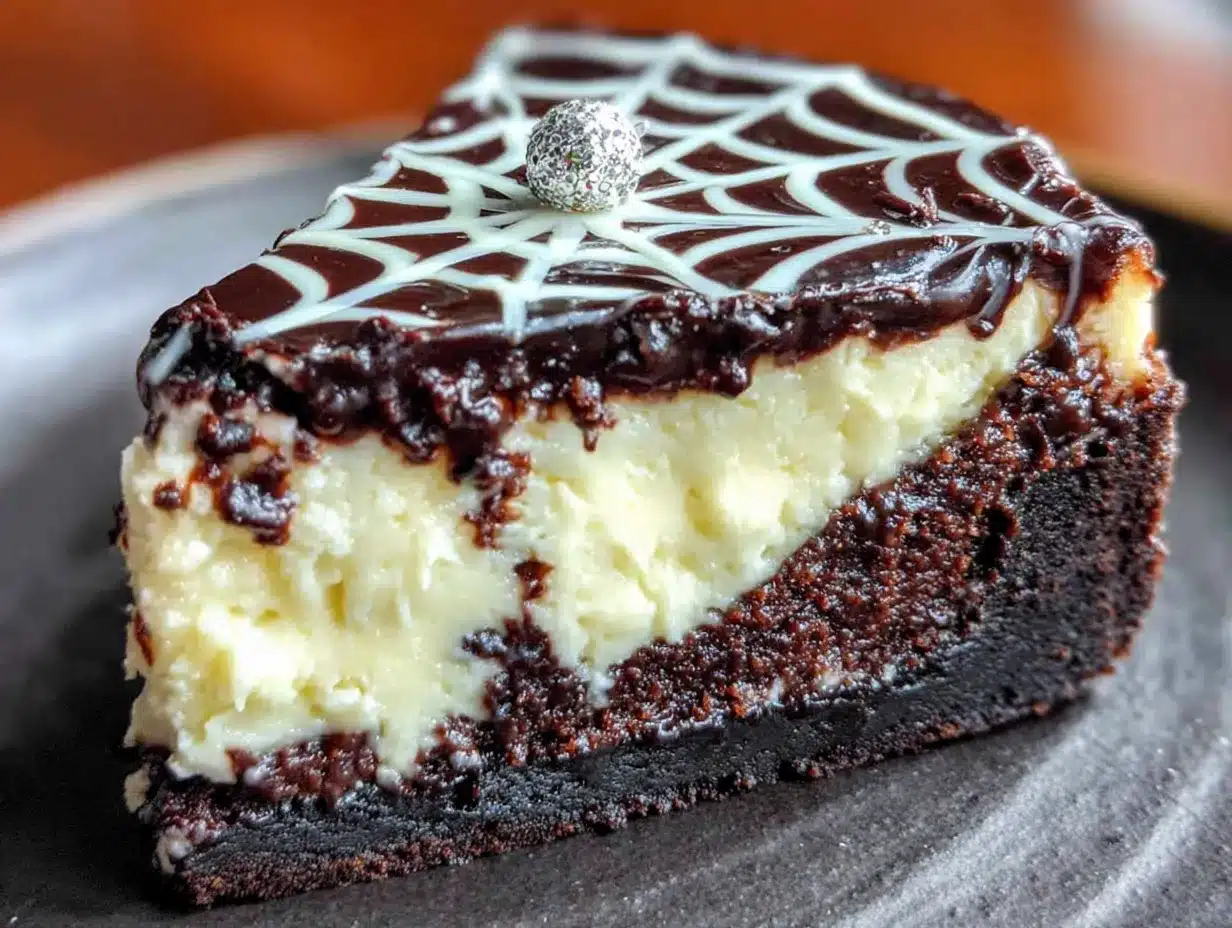
I’m not one for gaudy Halloween desserts. The candy-corn everything, the neon frosting—it’s just not my style. But a black velvet cheesecake with a spider web design? That felt different. It felt like something you’d serve at a midnight dinner party, or eat alone in candlelight with a cup of black coffee. The black cocoa gives it this deep, almost charcoal color, and the flavor is like an Oreo’s sophisticated cousin—less sweet, more complex, with a hint of something almost smoky.
The first time I made it, I messed up the web. The white chocolate drizzle pooled in all the wrong places, and it looked more like a sad abstract painting than a spider web. But the taste? Perfect. So I tried again, and again, until I figured out the trick. Now it’s the one dessert I make every October, even if it’s just for me. It’s not about showing off. It’s about taking something classic—cheesecake—and giving it a little drama. Trust me, once you taste that black velvet crust against the creamy filling, you’ll understand why this recipe stuck.
Why You’ll Love This Recipe
This isn’t your average Halloween cheesecake. It’s the kind of dessert that makes people stop mid-bite and ask, “What’s in this?” The black cocoa powder is the star here—it’s what gives the cheesecake that stunning dark color and a rich, almost malty flavor that regular cocoa just can’t match.
Here’s what makes it worth your time:
- Stunning Presentation : The spider web design looks professional but is surprisingly easy to do. You don’t need any special tools—just a piping bag or zip-top bag and a toothpick.
- Rich, Complex Flavor : Black cocoa powder gives the cheesecake a deep, Oreo-like taste that’s less sweet and more sophisticated than standard chocolate cheesecake. It’s the kind of flavor that lingers.
- Make-Ahead Friendly : Cheesecake actually tastes better after a day in the fridge. You can make this two days ahead of your Halloween party and just add the web design the day you serve it.
- No Water Bath Needed : I tested this recipe multiple times to find a method that doesn’t require a water bath. The cheesecake stays creamy and crack-free without all the fuss.
- Crowd-Pleaser : I brought this to a small Halloween gathering last year, and even the people who said they “don’t like cheesecake” went back for seconds. It’s that good.
What makes this recipe different from other Halloween cheesecakes is the balance. It’s not just a gimmick—the flavor is genuinely outstanding. The black cocoa in the crust and the filling ties everything together, so every bite tastes intentional. And honestly, there’s something deeply satisfying about pulling that toothpick through the white chocolate and watching a perfect spider web appear. It feels like magic, even the tenth time you do it.
What Ingredients You Will Need
This recipe uses simple, wholesome ingredients that come together to create something truly special. Most of these are pantry staples, but a few—like the black cocoa powder—are worth seeking out for the dramatic effect and flavor they bring.
For the Black Velvet Crust
- 1 ½ cups chocolate cookie crumbs (about 15 Oreo cookies, cream removed, or use chocolate graham crackers) — I prefer using Oreo cookies without the filling for the deepest color and flavor. Pulse them in a food processor until they’re fine crumbs.
- ¼ cup black cocoa powder (I recommend King Arthur Flour or Rodelle brand for the best color) — this is what gives the crust that dramatic dark color and rich flavor.
- ¼ cup granulated sugar — just enough to balance the bitterness of the cocoa.
- 6 tablespoons unsalted butter, melted — use real butter here; margarine won’t give you the same rich flavor or texture.
For the Black Velvet Cheesecake Filling
- 24 ounces cream cheese, softened to room temperature (three 8-ounce blocks) — full-fat cream cheese is non-negotiable here. Low-fat versions will make the cheesecake dense and gummy.
- 1 cup granulated sugar — standard white sugar works best for texture.
- 3 tablespoons black cocoa powder — sifted to remove any lumps. This is the key ingredient for that stunning color.
- 1 teaspoon vanilla extract — pure vanilla, not imitation, for the best flavor.
- ¼ teaspoon salt — just a pinch to balance the sweetness.
- 3 large eggs, room temperature — cold eggs will seize the batter and create lumps.
- 1 cup sour cream, room temperature — this adds moisture and a slight tang that cuts through the richness.
For the Spider Web Design
- ½ cup white chocolate chips or melting wafers — use a good quality brand like Ghirardelli or Guittard for smooth melting.
- 1 teaspoon coconut oil or vegetable shortening — this helps the white chocolate flow smoothly for the web design.
The black cocoa powder is really the hero here. It’s different from regular cocoa—it’s been alkalized, which makes it darker and less acidic. The flavor is milder, almost like an Oreo, with subtle notes of vanilla and caramel. You can find it at most grocery stores in the baking aisle, or order it online. If you can’t find black cocoa, you can substitute Dutch-process cocoa, but the color won’t be as dramatic.
Equipment Needed
You don’t need a lot of fancy equipment for this cheesecake, but a few specific tools will make the process much smoother.
- 9-inch springform pan — this is essential for removing the cheesecake cleanly. I’ve had my Cuisinart springform pan for years, and it’s never let me down. If you don’t have one, you can use a deep-dish pie plate, but it’s harder to get clean slices.
- Electric hand mixer or stand mixer — a hand mixer works perfectly fine. Just make sure your cream cheese is fully softened to avoid lumps.
- Food processor — for crushing the cookies into fine crumbs. You can also put the cookies in a zip-top bag and crush them with a rolling pin, but a food processor is faster and gives more consistent results.
- Piping bag or zip-top bag — for drizzling the white chocolate. A zip-top bag with a tiny corner snipped off works great.
- Toothpick or skewer — for creating the spider web design. A wooden skewer works better than a toothpick because it’s longer, but a toothpick will do the job.
- Large baking sheet — place the springform pan on a baking sheet to catch any drips during baking.
I’ve made this cheesecake with both a hand mixer and a stand mixer, and honestly, the hand mixer is easier for scraping down the sides. If you’re using a stand mixer, stop halfway through to scrape the bowl well. And if you don’t have a springform pan, a 9-inch round cake pan lined with parchment paper will work, but the slices won’t be as clean.
Preparation Method
Take your time with this recipe. Cheesecake rewards patience, and rushing through the steps is the fastest way to end up with cracks or a dense texture. Here’s exactly how to do it.
Step 1: Prepare the Crust
Preheat your oven to 325°F (160°C). In a food processor, pulse the chocolate cookie crumbs, black cocoa powder, and sugar until combined. Drizzle in the melted butter and pulse again until the mixture looks like wet sand. Press the mixture firmly into the bottom of a 9-inch springform pan. Use the bottom of a measuring cup to press it down evenly. Bake for 10 minutes, then set aside to cool while you make the filling.
Step 2: Make the Cheesecake Filling
In a large bowl, beat the softened cream cheese with an electric mixer on medium speed until smooth and creamy—about 2 minutes. Scrape down the sides and bottom of the bowl. Add the sugar and beat until combined, about 1 minute. Sift the black cocoa powder over the mixture and beat on low speed until fully incorporated. Add the vanilla extract and salt, and beat just until combined.
Add the eggs one at a time, beating on low speed after each addition until just combined. Overmixing at this stage will incorporate too much air and cause cracks. Finally, add the sour cream and mix on low speed until the batter is smooth and uniform. Scrape the bowl one more time to make sure everything is evenly mixed.
Step 3: Bake the Cheesecake
Pour the filling over the cooled crust and smooth the top with a spatula. Place the springform pan on a large baking sheet and bake at 325°F (160°C) for 50-60 minutes. The edges should be set and slightly puffed, but the center should still jiggle slightly when you gently shake the pan. It will continue to set as it cools.
Turn off the oven, crack the oven door open, and let the cheesecake cool inside for 1 hour. This gradual cooling prevents cracks. Then, remove the cheesecake from the oven and let it cool completely on a wire rack—about 2 hours. Once it’s at room temperature, cover the pan with plastic wrap and refrigerate for at least 6 hours, preferably overnight.
Step 4: Create the Spider Web Design
Once the cheesecake is fully chilled and set, it’s time for the fun part. Remove the sides of the springform pan and place the cheesecake on a serving plate. In a small microwave-safe bowl, combine the white chocolate chips and coconut oil. Microwave in 20-second intervals, stirring between each, until fully melted and smooth. Let it cool for 2-3 minutes—if it’s too hot, it will melt the surface of the cheesecake.
Transfer the melted white chocolate to a piping bag or a small zip-top bag with a tiny corner snipped off. Pipe a small circle in the center of the cheesecake. Then, pipe concentric circles around it, spacing them about 1 inch apart. Working quickly while the chocolate is still wet, use a toothpick or skewer to drag lines from the center outward, through all the circles. Wipe the toothpick clean after each drag. Repeat this all the way around the cheesecake, and you’ll have a perfect spider web pattern.
Refrigerate the cheesecake for at least 30 minutes to set the web design before serving.
Cooking Tips & Techniques
I’ve made this cheesecake at least a dozen times, and I’ve learned a few things the hard way. Here are the tips that make the biggest difference.
Room temperature ingredients are non-negotiable. Cold cream cheese will leave you with lumpy batter, and cold eggs can cause the mixture to curdle. Take everything out of the fridge at least 2 hours before you start baking. If you forget, you can soften cream cheese in the microwave on low power in 10-second bursts—but watch it carefully.
Don’t overmix the batter. Once you add the eggs, mix just until they’re incorporated. Overmixing incorporates too much air, which creates bubbles that rise to the surface and cause cracks. You want a dense, creamy texture, not a fluffy one.
The cooling process matters more than you think. I used to take cheesecake straight from the oven to the counter, and I always ended up with a cracked surface. Now I leave it in the turned-off oven with the door cracked for an hour, and I’ve never had a crack since. It’s the single most important step for a smooth top.
For the web design, work fast but don’t panic. If the white chocolate starts to set before you finish the web, just pop it in the microwave for 5 seconds to warm it up again. And if your first few lines don’t look perfect, that’s okay—the beauty of a spider web is that it’s supposed to look a little organic and imperfect.
Variations & Adaptations
This recipe is surprisingly flexible. Here are a few ways to change it up.
Gluten-Free Version : Use gluten-free chocolate sandwich cookies for the crust. Most brands work well, but check the label to make sure. The filling is naturally gluten-free, so this is an easy swap.
Dairy-Free Adaptation : Substitute the cream cheese with a high-quality dairy-free cream cheese like Kite Hill or Miyoko’s. Use coconut cream in place of sour cream, and vegan butter for the crust. The texture will be slightly softer, but the flavor is still excellent.
Orange Chocolate Twist : Add 1 teaspoon of orange zest to the filling along with the vanilla extract. The orange and black cocoa combination is incredible—it tastes like a fancy European chocolate bar. I tried this version last Halloween and it was a hit.
Mini Cheesecake Version : Press the crust into a 12-cup muffin tin lined with paper liners. Divide the filling evenly among the cups and bake for 18-22 minutes. These are perfect for parties and portion control. Just reduce the white chocolate for the web design accordingly.
Peanut Butter Swirl : Drop spoonfuls of creamy peanut butter over the filling before baking and swirl it with a knife. The salty peanut butter against the dark cocoa is a match made in heaven.
Serving & Storage Suggestions
This cheesecake is best served cold, straight from the fridge. The texture is denser and creamier when it’s thoroughly chilled, and the spider web design stays crisp and defined.
For serving, use a sharp knife dipped in hot water and wiped dry between each slice. This gives you clean, photogenic slices without dragging the white chocolate web across the surface. I like to serve it on a dark plate to make the web design pop.
Storage is simple: cover the cheesecake loosely with plastic wrap or place it in an airtight container and refrigerate for up to 5 days. The flavor actually improves after a day or two as the cocoa and vanilla meld together. You can also freeze the cheesecake (without the web design) for up to 3 months. Wrap it tightly in plastic wrap, then aluminum foil. Thaw overnight in the refrigerator, then add the web design before serving.
This cheesecake pairs beautifully with a cup of black coffee or a glass of cold milk. If you’re serving it for a Halloween party, consider adding a few spooky graveyard dirt cup pudding cups or perfect mummy cake pops to round out the dessert table. For a non-dessert option, fresh witch’s brew iced matcha latte makes a fun and colorful drink pairing.
Nutritional Information & Benefits
Per slice (based on 12 servings), this cheesecake contains approximately:
- Calories: 420
- Fat: 28g
- Carbohydrates: 38g
- Protein: 8g
- Sugar: 28g
While this is definitely a treat, there are a few nutritional bright spots. Black cocoa powder is rich in antioxidants called flavonoids, which can help reduce inflammation and support heart health. The cream cheese and sour cream provide calcium and protein, and the eggs add B vitamins and healthy fats. Plus, because this cheesecake is so rich and satisfying, a small slice goes a long way—you won’t be reaching for seconds the way you might with a lighter dessert.
This recipe is vegetarian and can be made gluten-free or dairy-free with the substitutions mentioned above. It is not suitable for vegans in its current form, but a cashew-based cheesecake alternative could work if you’re looking for a plant-based option.
Conclusion
This Black Velvet Spider Web Cheesecake is the kind of dessert that feels special without being fussy. It’s dramatic enough for a Halloween party, but the flavor is so good you’ll want to make it all year round. The black cocoa gives it a depth that regular chocolate cheesecake just can’t touch, and the spider web design is genuinely fun to create.
I love this recipe because it proves that holiday-themed desserts don’t have to be gimmicky or overly sweet. You can have something that looks stunning and tastes sophisticated, all while still feeling like a treat. Whether you’re making it for a crowd or just for yourself on a rainy October evening, this cheesecake delivers.
If you give this recipe a try, I’d love to hear how it turns out. Leave a comment below and let me know if your spider web came out perfect on the first try—or if it took a few attempts like mine did. And if you put your own spin on it, share that too. Happy baking, and don’t forget to save room for a second slice.
Frequently Asked Questions
Can I use regular cocoa powder instead of black cocoa?
You can, but the color won’t be as dark and dramatic. Regular cocoa powder will give you a brown cheesecake, not a black one. The flavor will also be more intense and slightly more acidic. If you can’t find black cocoa, Dutch-process cocoa is the next best option for a darker color and milder flavor.
Why did my cheesecake crack on top?
Cracks usually happen from overbaking, overmixing, or sudden temperature changes. Make sure you don’t open the oven door while the cheesecake is baking, and always cool it gradually in the turned-off oven with the door cracked. Also, be careful not to overmix the batter once you add the eggs.
How do I get clean slices of cheesecake?
Use a sharp knife and dip it in hot water before each cut. Wipe the blade dry with a clean towel between slices. This prevents the cheesecake from sticking to the knife and gives you clean edges. For the spider web design, slice carefully to avoid dragging the white chocolate.
Can I make this cheesecake ahead of time?
Absolutely. In fact, cheesecake tastes better after a day in the fridge. You can make the entire cheesecake (without the web design) up to 2 days ahead. Add the white chocolate spider web design the day you plan to serve it for the best presentation.
My white chocolate seized and became lumpy. What went wrong?
White chocolate is sensitive to heat and moisture. If even a drop of water gets into the melting bowl, the chocolate will seize and become grainy. Make sure your bowl and utensils are completely dry. Also, melt the chocolate slowly in short bursts—20 seconds at a time—and stir between each burst. Adding a teaspoon of coconut oil helps keep it smooth.
Pin This Recipe!
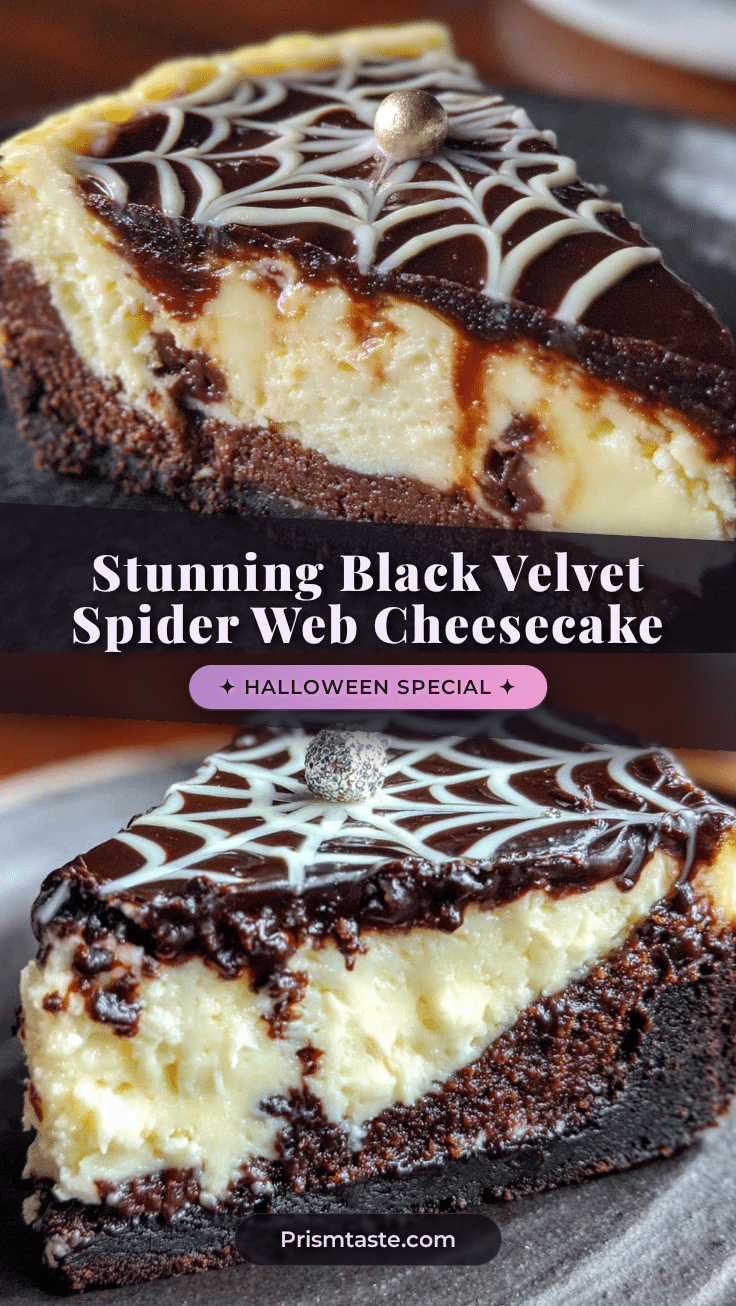
Stunning Black Velvet Spider Web Cheesecake – Easy Homemade Recipe
A dramatic and elegant Halloween cheesecake with a deep black cocoa flavor and a stunning white chocolate spider web design. This rich, creamy cheesecake is surprisingly easy to make and perfect for a sophisticated celebration.
- Prep Time: 30 minutes
- Cook Time: 50-60 minutes
- Total Time: 6 hours 30 minutes (includes chilling)
- Yield: 12 servings 1x
- Category: Dessert
- Cuisine: American
Ingredients
- 1 ½ cups chocolate cookie crumbs (about 15 Oreo cookies, cream removed)
- ¼ cup black cocoa powder
- ¼ cup granulated sugar
- 6 tablespoons unsalted butter, melted
- 24 ounces cream cheese, softened to room temperature
- 1 cup granulated sugar
- 3 tablespoons black cocoa powder, sifted
- 1 teaspoon vanilla extract
- ¼ teaspoon salt
- 3 large eggs, room temperature
- 1 cup sour cream, room temperature
- ½ cup white chocolate chips or melting wafers
- 1 teaspoon coconut oil or vegetable shortening
Instructions
- Preheat oven to 325°F (160°C). In a food processor, pulse chocolate cookie crumbs, black cocoa powder, and sugar until combined. Drizzle in melted butter and pulse until mixture looks like wet sand. Press firmly into bottom of a 9-inch springform pan. Bake for 10 minutes, then set aside to cool.
- In a large bowl, beat softened cream cheese with an electric mixer on medium speed until smooth and creamy, about 2 minutes. Scrape down sides and bottom of bowl. Add sugar and beat until combined, about 1 minute. Sift black cocoa powder over mixture and beat on low speed until fully incorporated. Add vanilla extract and salt, beat just until combined.
- Add eggs one at a time, beating on low speed after each addition until just combined. Add sour cream and mix on low speed until batter is smooth and uniform. Scrape bowl to ensure even mixing.
- Pour filling over cooled crust and smooth top with a spatula. Place springform pan on a large baking sheet. Bake at 325°F (160°C) for 50-60 minutes, until edges are set and center jiggles slightly. Turn off oven, crack door open, and let cheesecake cool inside for 1 hour. Remove from oven and cool completely on a wire rack, about 2 hours. Cover with plastic wrap and refrigerate for at least 6 hours, preferably overnight.
- Once cheesecake is fully chilled, remove sides of springform pan and place on serving plate. In a small microwave-safe bowl, combine white chocolate chips and coconut oil. Microwave in 20-second intervals, stirring between each, until fully melted and smooth. Let cool for 2-3 minutes.
- Transfer melted white chocolate to a piping bag or small zip-top bag with a tiny corner snipped off. Pipe a small circle in the center of the cheesecake, then pipe concentric circles around it, spacing about 1 inch apart. Working quickly while chocolate is still wet, use a toothpick or skewer to drag lines from the center outward through all circles. Wipe toothpick clean after each drag. Repeat all the way around the cheesecake to create a spider web pattern.
- Refrigerate cheesecake for at least 30 minutes to set the web design before serving.
Notes
Room temperature ingredients are essential for a smooth batter. Do not overmix once eggs are added to prevent cracks. Cool cheesecake gradually in the turned-off oven to avoid cracking. For the web design, work quickly while the white chocolate is still wet. If white chocolate starts to set, microwave for 5 seconds to warm it up. Cheesecake can be made up to 2 days ahead (without web design) and stored in the refrigerator.
Nutrition
- Serving Size: 1 slice
- Calories: 420
- Sugar: 28
- Sodium: 320
- Fat: 28
- Saturated Fat: 16
- Carbohydrates: 38
- Fiber: 2
- Protein: 8
Keywords: black velvet cheesecake, spider web cheesecake, Halloween cheesecake, black cocoa cheesecake, easy cheesecake recipe