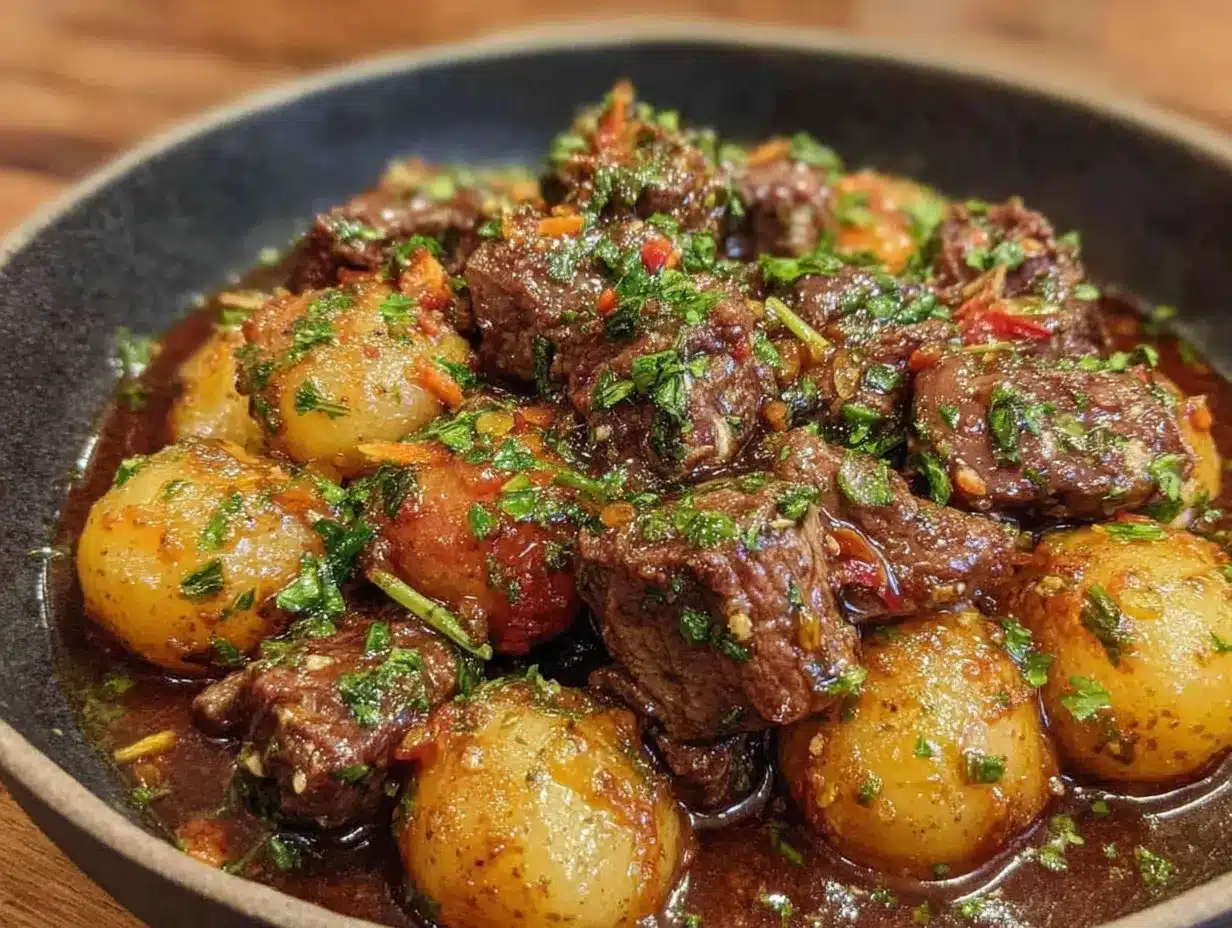
The way the broth clings to the potatoes—that’s the whole point. Not a thin, watery thing, but something that coats each cube like a quiet promise. I spent years chasing that texture, the kind that makes you slow down with every spoonful. This hearty poor man’s beef and potato stew started not in a fancy kitchen, but on a Tuesday night when the fridge looked sad and the paycheck felt even sadder. I had a pound of chuck, a bag of Yukon Golds, and the stubborn belief that a good meal doesn’t need a lot of money.
Honestly, the first time I made it, I was just trying to stretch what I had. You know how it is—you brown the meat, toss in whatever vegetables are hiding in the crisper drawer, and cross your fingers. But something clicked that night. The slow simmer did its magic, and what came out of that pot was more than the sum of its parts. It was thick, savory, and deeply satisfying in a way that felt like a hug after a long day. I remember thinking, “This is it. This is the one I’ll make forever.”
And I wasn’t wrong. This recipe stuck because it’s not just about saving money—it’s about cooking with intention. It’s about taking simple, humble ingredients and coaxing out their best selves. The beef gets tender, the potatoes soak up all that flavor, and the broth becomes this rich, almost velvety thing that you’ll want to sop up with crusty bread. It’s the kind of meal that reminds you why you love to cook in the first place.
Why You’ll Love This Recipe
I’ve tested this stew more times than I can count, and I can tell you with confidence: this is the version you’ll come back to again and again. It hits every note without any of the fuss. Here’s why it works:
- Budget-Friendly: This is the definition of a frugal meal. Beef chuck or stew meat is affordable, potatoes are a pantry staple, and the rest of the ingredients are probably in your kitchen right now. No fancy cuts or exotic spices required.
- One Pot Wonder: Everything comes together in a single Dutch oven or heavy pot. Less cleanup, more time to relax. That’s a win in my book.
- Thick, Rich Broth Without Flour: The secret is in the technique—browning the meat deeply and letting the potatoes break down naturally. You get that luscious texture without any pasty taste.
- Deep, Developed Flavor: Don’t skip the browning step. That crust on the beef is where all the flavor lives. It’s the difference between a good stew and a great one.
- Comfort Food at Its Core: This is the kind of meal that makes you close your eyes after the first bite. It’s warming, hearty, and soul-soothing in the best possible way.
- Perfect for Meal Prep: The flavors actually get better after a day in the fridge. Make a big batch on Sunday and enjoy it all week.
This isn’t just another beef stew recipe. It’s the one I’ve perfected over years of trial and error. It’s the one my family asks for when the weather turns cold, and it’s the one that proves you don’t need a lot of money to eat like royalty.
Ingredients You Will Need
This recipe uses simple, wholesome ingredients that work together to create something truly special. Most of these are pantry staples, which is exactly what you want in a budget-friendly meal. Let’s break down each one so you know exactly what to look for.
- 1 ½ pounds beef chuck or stew meat, cut into 1-inch cubes: Don’t be tempted to buy pre-cut stew meat that’s already in the store—it’s often made from random scraps. Buy a whole chuck roast and cube it yourself. It’s cheaper, and you get better, more uniform pieces. I prefer chuck because it has enough marbling to stay tender during the long simmer.
- 3 tablespoons olive oil, divided: You’ll use some for browning the meat and some for sautéing the vegetables. A good quality olive oil makes a difference, but any neutral oil works fine.
- 1 large yellow onion, diced: Yellow onions have the best balance of sweetness and bite for a stew. They melt into the broth as they cook, adding depth without overpowering anything.
- 3 cloves garlic, minced: Fresh garlic is non-negotiable here. The jarred stuff just doesn’t have the same punch. Add it after the onions have softened so it doesn’t burn.
- 4 medium carrots, peeled and sliced into rounds: Carrots add a natural sweetness that balances the savory beef. Slice them thick enough so they hold their shape during the long simmer but still get tender.
- 3 celery stalks, sliced: Celery gives the stew a subtle herbaceous note. It’s a classic mirepoix ingredient for a reason.
- 2 pounds Yukon Gold or Russet potatoes, peeled and cut into 1-inch cubes: Yukon Golds are my first choice because they hold their shape well but also release enough starch to thicken the broth naturally. Russets work too, but they’ll break down more, which isn’t a bad thing if you want an even thicker stew.
- 4 cups beef broth, low-sodium: Use a good quality broth here. I recommend Pacific Foods or Better Than Bouillon for the best flavor. Low-sodium is important so you can control the salt level yourself.
- 1 cup water: Just enough liquid to cover everything without drowning it. You can adjust this based on how thick you want the stew.
- 2 tablespoons tomato paste: This adds a deep, savory richness and a beautiful color. Don’t skip it—it’s a flavor powerhouse.
- 2 bay leaves: They add a subtle floral note that you’ll miss if you leave them out. Just remember to remove them before serving.
- 1 teaspoon dried thyme: Thyme and beef are a classic pairing. It adds an earthy, slightly minty flavor that complements the meat perfectly.
- 1 teaspoon smoked paprika: This is my secret weapon. It adds a subtle smokiness that makes the stew taste like it’s been cooking all day, even if you started it an hour ago.
- Salt and freshly ground black pepper, to taste: Season in layers—a little at the beginning, more at the end. This builds flavor gradually.
- 2 tablespoons fresh parsley, chopped (for garnish): A fresh finish brightens up the whole dish. It’s optional, but highly recommended.
Equipment Needed
You don’t need a lot of fancy gear for this one, which is part of the beauty. Here’s what you’ll need:
- Large Dutch oven or heavy-bottomed pot (5-6 quart): This is your workhorse. A Dutch oven distributes heat evenly and holds temperature well, which is crucial for browning and simmering. If you don’t have one, a heavy stockpot works fine—just keep an eye on the heat to prevent scorching.
- Sharp chef’s knife: Cubing beef and chopping vegetables is so much easier with a sharp knife. It’s worth the investment, honestly. I use a Wüsthof, but any good quality knife will do.
- Cutting board: A sturdy wooden or plastic board that won’t slip around. I prefer wood because it’s gentler on knives.
- Wooden spoon or spatula: For scraping up all those delicious browned bits from the bottom of the pot. That’s where the flavor lives.
- Measuring cups and spoons: Accuracy matters, especially with the broth and seasonings.
- Mixing bowls: For holding your prepped ingredients. It makes the cooking process so much smoother.
If you don’t have a Dutch oven, don’t stress. A thick-bottomed pot will do the job. Just be patient with the browning and don’t rush it.
Preparation Method
Let’s get cooking. This process is straightforward, but each step matters. Take your time, and you’ll be rewarded with a stew that tastes like it simmered all day.
- Prep your ingredients first. This is the most important step. Cube the beef, dice the onion, mince the garlic, slice the carrots and celery, and peel and cube the potatoes. Having everything ready to go makes the cooking process smooth and stress-free. Trust me, you don’t want to be chopping potatoes while the beef is browning.
- Season the beef generously. Pat the beef cubes dry with paper towels—this is crucial for browning. Season them all over with salt and pepper. Don’t be shy; you’ll lose some seasoning in the browning process.
- Heat 2 tablespoons of olive oil in your Dutch oven over medium-high heat. Wait until the oil is shimmering but not smoking. You want it hot enough to sear the meat, not steam it.
- Brown the beef in batches. Add the beef cubes in a single layer, making sure not to overcrowd the pot. If you crowd them, they’ll steam instead of brown, and you’ll lose all that flavor. Cook for 3-4 minutes per side until deeply browned. Use a wooden spoon to scrape up any bits that stick to the bottom—that’s flavor gold. Transfer the browned beef to a plate and set aside.
- Reduce heat to medium and add the remaining 1 tablespoon of olive oil. Add the diced onion and cook for 4-5 minutes, stirring occasionally, until softened and translucent. The onions will pick up all those browned bits from the bottom of the pot.
- Add the minced garlic, sliced carrots, and sliced celery. Cook for another 3-4 minutes, stirring frequently, until the vegetables start to soften. The garlic should be fragrant but not browned.
- Stir in the tomato paste. Cook for 1-2 minutes, stirring constantly. This cooks out the raw flavor and deepens the tomato’s sweetness. You’ll see it darken slightly—that’s what you want.
- Return the browned beef to the pot. Add the cubed potatoes, bay leaves, dried thyme, and smoked paprika. Stir everything together so the spices coat the meat and vegetables.
- Pour in the beef broth and water. Add enough liquid to just barely cover the ingredients. You don’t want it swimming in broth—this is a stew, not a soup. Bring it to a gentle boil.
- Reduce heat to low, cover the pot, and let it simmer. This is where the magic happens. Simmer for 1 ½ to 2 hours, stirring occasionally. The beef should be fork-tender, and the potatoes should be soft but still holding their shape. If the stew looks too thick, add a splash of water or broth. If it’s too thin, remove the lid for the last 20 minutes to let some liquid evaporate.
- Remove the bay leaves. They’ve done their job, and you don’t want anyone biting into one.
- Taste and adjust seasoning. Add more salt and pepper if needed. This is your last chance to perfect the flavor.
- Let the stew rest for 10 minutes before serving. This allows the flavors to settle and the broth to thicken slightly. Serve hot, garnished with fresh parsley.
Cooking Tips & Techniques
I’ve made this stew more times than I can count, and I’ve learned a few things along the way. These tips will help you get the best results every time.
Don’t rush the browning. This is the single most important step. The Maillard reaction—that browning of the meat—creates hundreds of flavor compounds that make your stew taste rich and complex. If you skip it or rush it, you’ll end up with a bland, gray stew. Take your time, brown in batches, and don’t be afraid to let the meat get dark.
Pat the meat dry. Wet meat won’t brown. It’ll just steam in the pan. Take a few extra seconds to pat those beef cubes dry with paper towels before seasoning. It makes a world of difference.
Use low-sodium broth. This gives you control over the salt level. If you use regular broth, you might end up with an overly salty stew, especially as it reduces. Season at the end, not the beginning.
Let it simmer low and slow. A gentle simmer is key. If you boil it, the meat will toughen and the potatoes will fall apart. You want tiny bubbles, not a rolling boil. This is a patience game, and it pays off.
Skim the fat if you want. After browning and simmering, there might be a layer of fat on top. If it bothers you, use a spoon to skim it off. I usually leave a little bit because it adds flavor, but it’s your call.
Make it ahead. This stew is actually better the next day. The flavors meld and deepen overnight. Make it a day ahead, refrigerate it, and reheat gently on the stove. It’s a lifesaver for busy weeknights.
Variations & Adaptations
This recipe is a great base, but don’t be afraid to make it your own. Here are some variations I’ve tried and loved.
Add More Vegetables: This stew is incredibly versatile. Toss in a cup of frozen peas in the last 10 minutes of cooking for a pop of sweetness and color. Add a handful of green beans or a diced zucchini for extra nutrients. Mushrooms are also a fantastic addition—they add an earthy, umami flavor that complements the beef beautifully.
Make It Thicker: If you prefer a thicker stew, mash a few of the potatoes against the side of the pot with your spoon. Their starch will release into the broth and thicken it naturally. Alternatively, you can mix 1 tablespoon of cornstarch with 2 tablespoons of cold water and stir it in during the last 10 minutes of cooking.
Spice It Up: For a little heat, add a pinch of red pepper flakes or a diced jalapeño along with the onions. A splash of Worcestershire sauce or a teaspoon of Dijon mustard also adds depth and complexity.
Herb Variations: Swap the thyme for rosemary or oregano for a different flavor profile. A sprig of fresh rosemary added during the simmering gives the stew a lovely piney aroma. Just remember to remove it before serving.
Dietary Adaptations: To make this gluten-free, ensure your beef broth is certified gluten-free. The recipe itself is naturally gluten-free. For a lower-carb version, swap half the potatoes for cauliflower florets. Add them in the last 30 minutes of cooking so they don’t turn to mush.
Serving & Storage Suggestions
This stew is a complete meal in a bowl, but it pairs beautifully with a few simple sides.
Serving: Serve the stew hot, ladled into deep bowls. Garnish with a generous sprinkle of fresh parsley. For a complete meal, serve with crusty bread for dipping—a warm baguette or sourdough is perfect. A simple side salad with a tangy vinaigrette balances the richness of the stew. I also love serving it over a scoop of mashed potatoes or egg noodles for extra heartiness.
Storage: Let the stew cool completely before storing. Transfer it to an airtight container and refrigerate for up to 4 days. The flavors will continue to develop, making it even more delicious the next day. For longer storage, freeze the stew in freezer-safe containers for up to 3 months. Leave a little headspace in the container because the liquid will expand as it freezes.
Reheating: Reheat the stew gently on the stovetop over medium-low heat, stirring occasionally. Add a splash of water or broth if it’s too thick. You can also reheat individual portions in the microwave in 30-second intervals, stirring between each. The stew will thicken as it sits, so don’t be alarmed if it looks more like a gravy the next day—it’s still delicious.
Flavor Development: I’ve noticed that this stew tastes best on day two. The flavors have time to meld and deepen, and the texture becomes even more luxurious. If you can, make it a day ahead and let it rest in the fridge. It’s a game-changer.
Nutritional Information & Benefits
This stew is not just comforting—it’s also surprisingly nutritious. Here’s a quick breakdown per serving (based on 6 servings):
| Nutrient | Amount |
|---|---|
| Calories | ~380 |
| Protein | 28g |
| Fat | 15g |
| Carbohydrates | 35g |
| Fiber | 5g |
| Sugar | 6g |
| Sodium | 650mg (varies by broth) |
Beef is an excellent source of high-quality protein, iron, and B vitamins, which support energy levels and red blood cell production. Potatoes are packed with potassium, vitamin C, and fiber, especially if you leave the skins on. Carrots are rich in beta-carotene, which supports eye health. This stew is naturally gluten-free and dairy-free, making it suitable for a wide range of dietary needs. If you’re watching your sodium, use low-sodium broth and go easy on the added salt.
Conclusion
This hearty poor man’s beef and potato stew is proof that you don’t need a lot of money or fancy ingredients to make something truly special. It’s the kind of meal that fills your kitchen with the best kind of aroma, the kind that makes everyone wander in and ask, “What’s for dinner?” It’s humble, honest, and deeply satisfying.
I love this recipe because it reminds me why I started cooking in the first place—to nourish the people I love with food that comes from the heart. It’s flexible, forgiving, and always, always delicious. Whether you’re feeding a family on a budget or just craving a bowl of pure comfort, this stew delivers every single time.
I’d love to hear how it turns out for you! Leave a comment below and let me know if you tried any variations. Share this recipe with a friend who needs a little comfort in their life, and don’t forget to tag me in your photos. Happy cooking, friends!
Frequently Asked Questions
Can I use a different cut of beef?
Absolutely. Chuck is my first choice because it has great marbling and becomes tender with slow cooking. But you can also use bottom round, brisket, or even a budget-friendly cut like London broil. Just avoid lean cuts like sirloin, which can dry out during the long simmer.
Can I make this in a slow cooker?
Yes! Brown the beef and sauté the vegetables on the stovetop first, then transfer everything to a slow cooker. Cook on low for 6-8 hours or on high for 3-4 hours. The flavors will be just as deep and rich.
How do I thicken the stew if it’s too thin?
If your stew is thinner than you’d like, you have a few options. Mash a few of the potatoes against the side of the pot to release their starch. Or mix 1 tablespoon of cornstarch with 2 tablespoons of cold water and stir it in during the last 10 minutes of cooking. Let it simmer uncovered to thicken.
Can I freeze this stew?
Definitely! This stew freezes beautifully. Let it cool completely, then transfer it to freezer-safe containers. It will keep for up to 3 months. Thaw overnight in the refrigerator and reheat gently on the stovetop.
What can I serve with this stew?
Crusty bread is my go-to for dipping into that rich broth. A simple green salad with a tangy vinaigrette cuts through the richness nicely. You can also serve it over mashed potatoes, egg noodles, or rice for an even heartier meal.
Pin This Recipe!
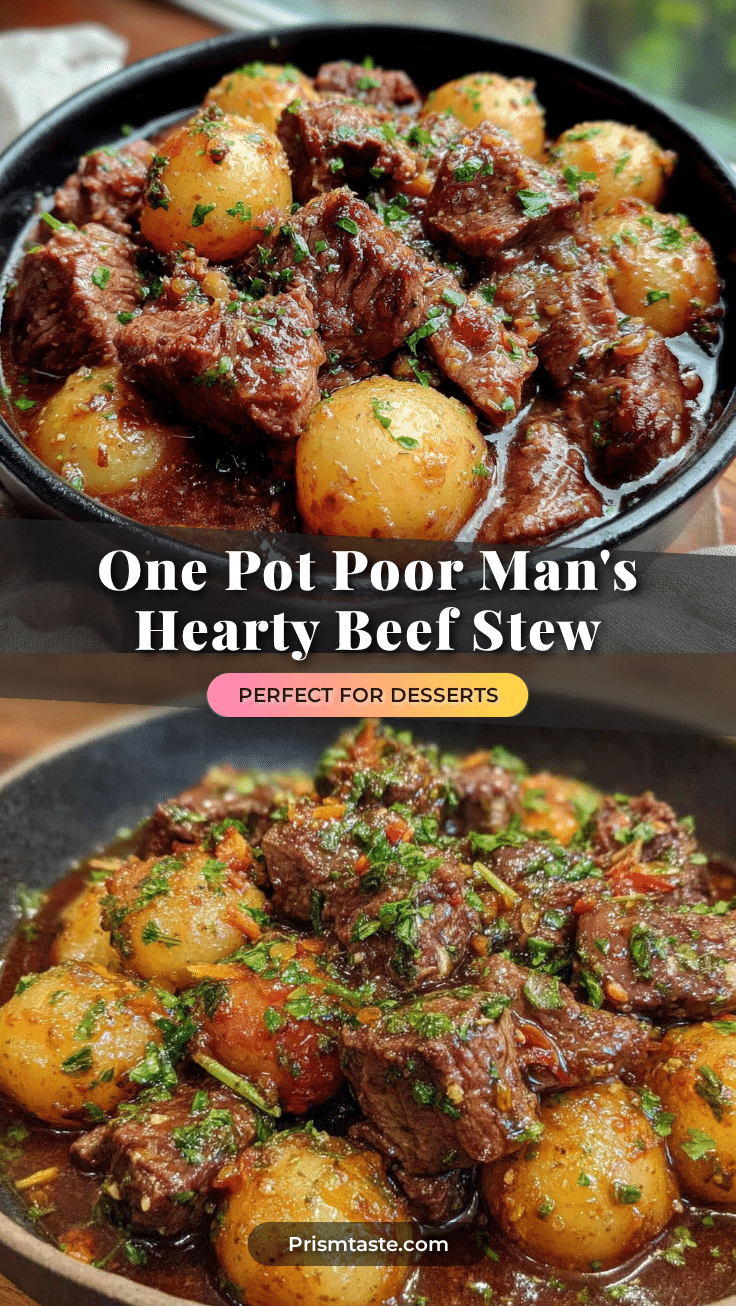
Hearty Poor Mans Beef and Potato Stew: Easy One Pot Meal
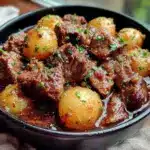
A thick, savory, and deeply satisfying beef and potato stew that proves you don’t need a lot of money to eat like royalty. This one-pot wonder features tender beef, potatoes that soak up all the flavor, and a rich, velvety broth.
- Prep Time: 20 minutes
- Cook Time: 1 hour 45 minutes
- Total Time: 2 hours 5 minutes
- Yield: 6 servings 1x
- Category: Main Course
- Cuisine: American
Ingredients
- 1 ½ pounds beef chuck or stew meat, cut into 1-inch cubes
- 3 tablespoons olive oil, divided
- 1 large yellow onion, diced
- 3 cloves garlic, minced
- 4 medium carrots, peeled and sliced into rounds
- 3 celery stalks, sliced
- 2 pounds Yukon Gold or Russet potatoes, peeled and cut into 1-inch cubes
- 4 cups low-sodium beef broth
- 1 cup water
- 2 tablespoons tomato paste
- 2 bay leaves
- 1 teaspoon dried thyme
- 1 teaspoon smoked paprika
- Salt and freshly ground black pepper, to taste
- 2 tablespoons fresh parsley, chopped (for garnish)
Instructions
- Prep your ingredients first. Cube the beef, dice the onion, mince the garlic, slice the carrots and celery, and peel and cube the potatoes.
- Season the beef generously. Pat the beef cubes dry with paper towels and season them all over with salt and pepper.
- Heat 2 tablespoons of olive oil in your Dutch oven over medium-high heat until shimmering.
- Brown the beef in batches. Add the beef cubes in a single layer without overcrowding. Cook for 3-4 minutes per side until deeply browned. Transfer to a plate and set aside.
- Reduce heat to medium and add the remaining 1 tablespoon of olive oil. Add the diced onion and cook for 4-5 minutes until softened and translucent.
- Add the minced garlic, sliced carrots, and sliced celery. Cook for another 3-4 minutes, stirring frequently.
- Stir in the tomato paste and cook for 1-2 minutes, stirring constantly.
- Return the browned beef to the pot. Add the cubed potatoes, bay leaves, dried thyme, and smoked paprika. Stir to coat.
- Pour in the beef broth and water. Bring to a gentle boil.
- Reduce heat to low, cover the pot, and simmer for 1 ½ to 2 hours, stirring occasionally, until beef is fork-tender and potatoes are soft.
- Remove the bay leaves.
- Taste and adjust seasoning with more salt and pepper if needed.
- Let the stew rest for 10 minutes before serving. Serve hot, garnished with fresh parsley.
Notes
Don’t rush the browning step—it’s crucial for flavor. Pat the meat dry before seasoning. Use low-sodium broth to control salt. For a thicker stew, mash some potatoes against the pot or use a cornstarch slurry. This stew tastes even better the next day.
Nutrition
- Serving Size: 1 serving
- Calories: 380
- Sugar: 6
- Sodium: 650
- Fat: 15
- Saturated Fat: 4
- Carbohydrates: 35
- Fiber: 5
- Protein: 28
Keywords: beef stew, potato stew, poor man's stew, one pot meal, budget-friendly, comfort food, hearty stew, easy dinner