The sizzle of veal cutlets meeting hot butter, the aroma of fresh sage dancing with salty prosciutto—if you’ve ever stood over a stovetop and let those scents wash over you, you know exactly what kind of magic I’m talking about. When I first tried Saltimbocca, it was one of those “pause and smile” moments—the kind that makes you close your eyes in bliss and just soak up every bite. The thin veal, draped in a blanket of prosciutto and sage, nestled in a rich, buttery pan sauce, is the stuff of Italian daydreams. Pure, savory comfort (with a wow factor that’s hard to beat).
Honestly, the first time I made this Saltimbocca recipe at home, I was trying to impress my husband on our anniversary, and—no surprise—he declared it “restaurant-worthy” after the first forkful. What started as an ambitious kitchen experiment quickly became our go-to for special occasions and “just because” nights. I still remember my aunt peeking into the kitchen, drawn by the scent, and snatching a piece straight from the pan before dinner was even served! If you’re anything like my family, you’ll find folks sneaking bites before the plates are set (and yes, that’s part of the fun).
Saltimbocca isn’t just about flavor; it’s tradition, nostalgia, and a little bit of Italian opera all rolled into one. It’s the kind of dish that feels fancy but, let’s face it, is dangerously easy to pull off on a weeknight. I wish I’d stumbled on this recipe years ago—it would have saved me from countless bland chicken dinners. So, whether you’re looking to brighten up your Pinterest dinner board, wow guests at your next gathering, or just treat yourself to something special, this Saltimbocca recipe is about to become your new favorite. I tested (and retested) every step of this process—just for you, in the name of research, of course. This is one for the recipe box, the family gathering, and those nights when you need a little extra comfort on your plate. Trust me, you’re going to want to bookmark this one!
Why You’ll Love This Saltimbocca Recipe
When you’re on the hunt for a meal that feels gourmet but doesn’t keep you tied to the stove, this Saltimbocca recipe is the answer. I’ve been making versions of it for years—through busy workweeks, special family celebrations, and even the occasional “I just need something really good” Tuesday night. After tons of trial and error (and a few “oops, that’s too salty” moments), I can tell you exactly why this version is the one my friends and family request most.
- Quick & Easy: You’ll have dinner on the table in under 30 minutes, which means more time for eating and less for fussing.
- Simple Ingredients: If you’ve got veal, prosciutto, and sage, you’re basically ready to go. The rest? Pantry staples you already own.
- Perfect for Entertaining: Looks like it came from a fancy Italian bistro, but you made it in your own kitchen—no sweat, just smiles.
- Crowd-Pleaser: Kids love the crispy prosciutto (mine call it “fancy bacon”), and adults go wild for the silky pan sauce.
- Unbelievably Delicious: The combo of tender veal, salty prosciutto, fragrant sage, and buttery sauce is just on another level—truly “soul food.”
What sets this Saltimbocca apart from all the others? Well, I use a simple flour dusting for a delicate crust, and I swear by swirling cold butter into the sauce at the end for that rich, glossy finish. No shortcuts on flavor, but no complicated steps, either. The sage leaves infuse the veal with a subtle earthiness that makes each bite feel special. I’ve tested this with chicken and pork, too—so you’re never stuck if you can’t find veal at the store.
Honestly, Saltimbocca is about more than just taste. It’s the dish I serve when I want to see my loved ones’ eyes light up, when I want to turn a regular night into a celebration, or when I need a plateful of comfort after a long day. It’s a recipe that delivers every time: reliable, flexible, and downright delicious. Whether you’re a seasoned cook or just starting out, you’ll love the way this Saltimbocca turns out—promise.
What Ingredients You Will Need
This Saltimbocca recipe uses simple, wholesome ingredients to create bold flavors and that signature melt-in-your-mouth texture. You’ll be surprised at how a handful of pantry and fridge staples can transform into such a memorable meal. Most of these are easy to find at your local store, and I’ll share my favorite brands and some handy substitution tips, too.
- For the Veal & Assembly:
- Veal scallopini (1 lb / 450 g, thinly sliced) – Look for slices about 1/4-inch (6 mm) thick. If veal isn’t available, you can use thinly sliced chicken or pork cutlets.
- Prosciutto (6-8 slices, about 3 oz / 85 g) – Choose a good-quality Italian prosciutto; I like the San Daniele or Parma varieties for their delicate saltiness. Thinly sliced is best.
- Fresh sage leaves (12-16 leaves) – The star aromatic! Fresh is a must here; dried just doesn’t have the same punch.
- All-purpose flour (1/3 cup / 40 g) – For dusting the veal. Use gluten-free all-purpose flour if needed.
- Kosher salt and freshly ground black pepper – Go easy on the salt, since prosciutto is quite salty.
- Toothpicks or small skewers – To secure the sage and prosciutto to the veal.
- For the Buttery Pan Sauce:
- Unsalted butter (4 tbsp / 56 g) – I prefer European-style butter like Plugrá for extra richness, but any unsalted variety works.
- Olive oil (2 tbsp / 30 ml) – Just enough to keep the butter from burning. Go for a mild, fruity type (like California Olive Ranch).
- Dry white wine (1/2 cup / 120 ml) – Pinot Grigio or Sauvignon Blanc are my go-to picks. Chicken broth works if you want to skip the wine.
- Low-sodium chicken broth (1/2 cup / 120 ml) – Adds depth to the sauce. Homemade or store-bought, both are fine.
- Lemon (1, juiced) – For a bright, fresh finish. I sometimes add a few thin slices to the pan for extra zing.
- Optional Garnishes:
- Extra fresh sage leaves – Fried in butter for a crispy topping, if you’re feeling fancy.
- Lemon wedges – For serving, adds a burst of freshness.
Ingredient Tips: If you’re gluten-free, just swap the flour for your favorite alternative. For dairy-free, use a vegan butter in the sauce. And if you’re feeling adventurous, try adding a splash of Marsala wine or a pinch of cracked pink peppercorns for a twist. Fresh ingredients make a world of difference here, especially the sage and prosciutto—don’t skimp!
Equipment Needed
- Large skillet or sauté pan: A 12-inch (30 cm) nonstick or stainless steel pan is perfect. If you have a heavy-bottomed skillet, even better for heat control.
- Meat mallet or rolling pin: For pounding the veal. If you don’t have a mallet, a sturdy mug or the bottom of a small saucepan works in a pinch (just cover the meat with plastic wrap first).
- Sharp knife and cutting board: For prepping the veal and sage.
- Toothpicks or small skewers: These keep the prosciutto and sage snug on the veal. In a pinch, uncooked spaghetti broken into short pieces does the trick (and is edible!).
- Tongs or spatula: For flipping the cutlets without tearing the prosciutto.
- Measuring cups and spoons: For accuracy—especially with the sauce.
- Small bowl: For dredging the veal in flour. Any cereal bowl works!
- Paper towels: For patting the veal dry and draining excess oil after frying.
Personal note: I’ve used everything from cast iron pans to old nonstick skillets for Saltimbocca. My favorite is a heavy-bottomed stainless steel pan—it gives the best golden crust. If your pan is on the thin side, just keep an eye on the heat! And don’t forget: always hand-wash your meat mallet to keep it in good shape.
Preparation Method
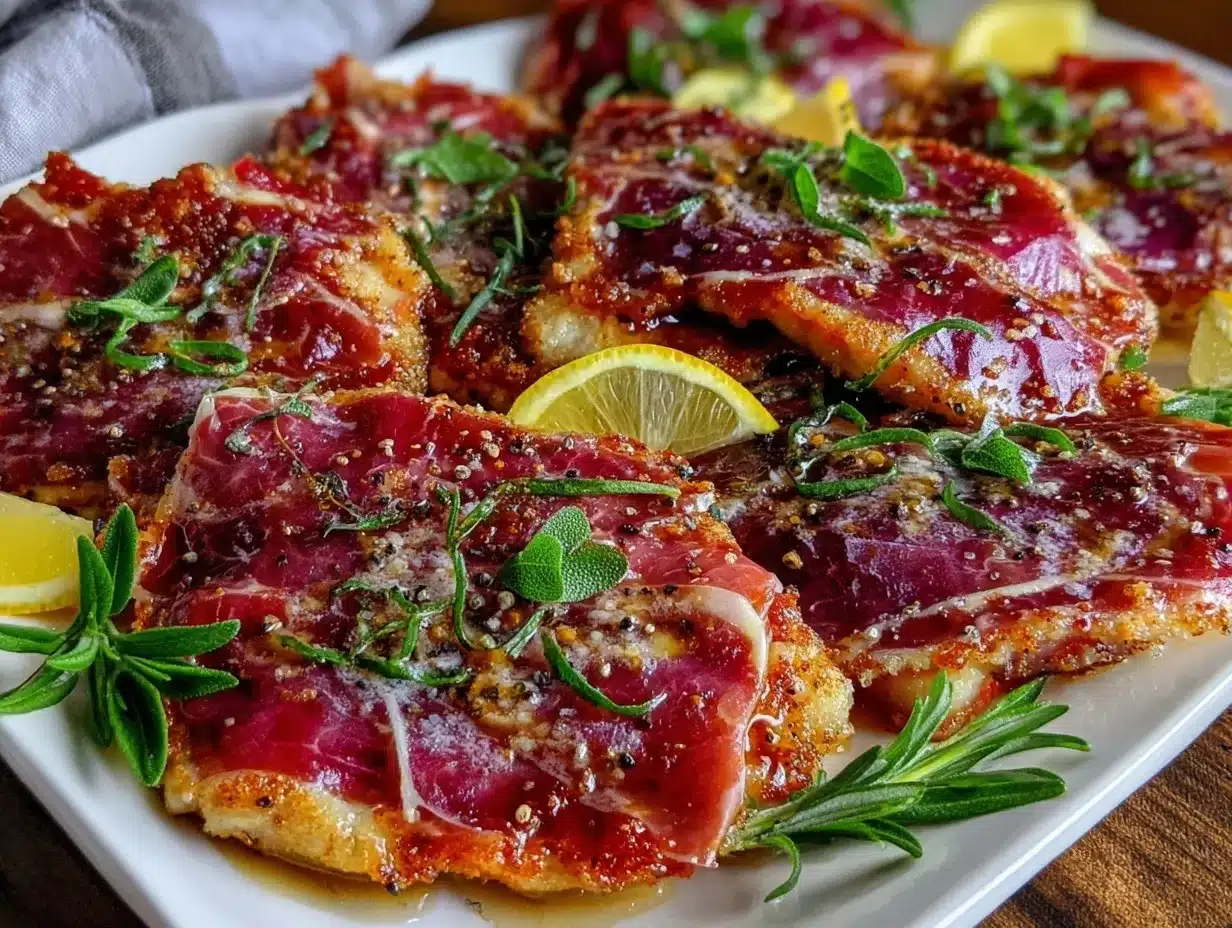
- Prep the veal: Place each veal scallopini between two sheets of plastic wrap. Using a meat mallet or rolling pin, gently pound the pieces to about 1/4-inch (6 mm) thickness. This helps them cook evenly and stay tender. If you see ragged edges, don’t worry—it adds character!
- Assemble the cutlets: Pat each piece dry with paper towels. Lightly season both sides with black pepper and a tiny pinch of kosher salt (remember, prosciutto is salty). Lay 1–2 sage leaves on top of each cutlet, then cover with a slice of prosciutto, pressing gently to help it stick. Secure everything with a toothpick or skewer.
- Dredge the veal: Pour the flour into a shallow bowl. Dredge each assembled veal cutlet in flour, shaking off the excess. This helps create a delicate crust and thickens the pan sauce later.
- Brown the cutlets: In your large skillet, heat 2 tbsp (30 g) of butter and 2 tbsp (30 ml) of olive oil over medium-high heat. When the butter foams (but before it turns brown), add the veal, prosciutto side down. Cook for 2–3 minutes, then flip and cook another 1–2 minutes. The prosciutto should be crisp and the veal golden. If your pan is small, work in batches, adding more butter as needed. Transfer the browned cutlets to a plate and tent with foil to keep warm.
- Deglaze the pan: Pour off any excess fat, leaving about 1 tbsp in the pan. Reduce heat to medium, then add the white wine. Let it bubble for 1–2 minutes, scraping up any brown bits with a wooden spoon (that’s flavor gold!).
- Make the sauce: Add the chicken broth and bring to a simmer. Cook for 3–4 minutes, letting the sauce reduce slightly. Squeeze in the juice of 1 lemon and stir.
- Finish with butter: Remove the pan from heat and swirl in the remaining 2 tbsp (28 g) of cold butter, one piece at a time. This makes the sauce glossy and rich. Taste and adjust seasoning if needed.
- Serve: Remove toothpicks from the veal (don’t forget, I’ve left one in before—yikes). Spoon the buttery pan sauce over the cutlets. Garnish with extra sage or lemon wedges, if desired.
Prep tips: If your veal sticks to the pan, don’t force it—give it another 30 seconds and it will release naturally. The sauce should be silky, not greasy; if it separates, just whisk vigorously or add a splash more broth. And always taste before serving—more lemon, a pinch of salt, or even a splash of wine can brighten things up at the end.
Cooking Tips & Techniques
- Pound evenly: Uneven veal means uneven cooking. I’ve learned the hard way that even a little thicker spot stays chewy, so give it a few extra taps with your mallet.
- Don’t overcook: Veal is tender and cooks fast. Two to three minutes per side is usually perfect. If you’re using chicken or pork, just adjust by 1–2 minutes longer. I once got distracted and ended up with tough veal—now I set a timer!
- Prosciutto side down first: This helps it crisp up without burning. If you start with the veal side, sometimes the prosciutto stays a bit soggy.
- Butter plus oil: Combining butter and oil keeps the butter from burning and gives a golden crust. If you use only butter, it can brown too quickly.
- Deglaze for flavor: Don’t skip scraping the pan after browning the meat. Those bits (fond) add a ton of depth to the sauce.
- Swirl, don’t boil, the butter: Remove the pan from heat before adding the last butter—otherwise, the sauce can break. I’ve curdled a few sauces in my day and trust me, gentle swirling works wonders.
- Keep it warm: If serving later, keep the veal tented with foil in a low oven (200°F/93°C) while you finish the sauce. This keeps everything juicy and warm without drying out the meat.
Little mistakes are part of the fun—once I forgot to secure the prosciutto and ended up with a “Saltimbocca scramble.” Still delicious, just not as pretty! With a bit of timing and a good skillet, you’ll have perfect Saltimbocca every time.
Variations & Adaptations
- Chicken Saltimbocca: Can’t find veal? Thinly sliced chicken breast works beautifully. Just pound to the same thickness and follow the recipe as written. It’s just as crowd-pleasing and more budget-friendly.
- Gluten-Free Option: Use a gluten-free flour blend for dredging. I’ve tried Cup4Cup and Bob’s Red Mill with great results. The sauce stays silky, and nobody will know the difference.
- Dairy-Free Adaptation: Swap the butter for a good dairy-free margarine or olive oil. The sauce won’t be quite as rich, but it’s still delicious and perfect for those avoiding dairy.
- Seasonal Twist: In summer, add a handful of cherry tomatoes to the pan sauce for a burst of sweetness. In winter, a splash of Marsala wine adds warmth and depth.
- Vegetarian Take: For my vegetarian friends, I’ve made this with thinly sliced eggplant instead of veal—just skip the prosciutto and layer with smoked provolone for a fun twist.
Honestly, my favorite variation is swapping in pork tenderloin medallions for the veal—affordable, tender, and just as tasty. Play around and make it your own! Saltimbocca is forgiving, and the flavors adapt well to whatever you have on hand.
Serving & Storage Suggestions
Saltimbocca is best served hot and fresh, right after the buttery sauce is spooned over the top. I like to arrange the cutlets on a warm platter, drizzle generously with sauce, and sprinkle with crispy fried sage or a few lemon wedges for a pop of color.
Perfect Pairings: Serve alongside creamy mashed potatoes, simple risotto, or a crisp green salad. A glass of dry white wine (like Pinot Grigio) or even a light red (think Chianti) is the perfect match. For a full Italian feast, add roasted vegetables or crusty bread to soak up every drop of sauce.
Storing Leftovers: Store any leftovers in an airtight container in the refrigerator for up to 2 days. To reheat, place cutlets and sauce in a skillet over medium-low heat, adding a splash of chicken broth if the sauce thickens too much. Microwave is okay, but the oven or stovetop keeps the veal from drying out.
The flavors deepen overnight, so leftovers are still tasty—just be gentle reheating to keep the veal tender. I’ve even tucked leftovers into a sandwich the next day (talk about a fancy lunch!).
Nutritional Information & Benefits
Each serving of Saltimbocca (about 2 cutlets with sauce) has approximately:
- Calories: 340
- Protein: 28g
- Carbohydrates: 10g
- Fat: 18g
- Sodium: 550mg
Veal is a lean, high-protein meat that’s rich in B vitamins, zinc, and iron. Prosciutto adds robust flavor with minimal fat, while sage offers antioxidants and a lovely herbal aroma. If you need to reduce sodium, choose a low-salt prosciutto and go easy on added salt. For gluten-free or dairy-free eaters, simple swaps make this recipe fit your needs perfectly.
I love that Saltimbocca brings big flavor without heavy cream or loads of cheese. It’s a lighter take on Italian comfort, and it always feels like a treat—even when you’re keeping an eye on nutrition.
Conclusion
If you’re ready for a recipe that’s both impressive and totally doable, this Saltimbocca is it. With a handful of ingredients and a few easy techniques, you’ll have a dish that’s guaranteed to get rave reviews. The buttery pan sauce, crispy prosciutto, and fragrant sage will transport you to an Italian trattoria—no passport required!
Feel free to mix things up: swap the veal for chicken, go gluten-free, or add your favorite seasonal twist. That’s the beauty of Saltimbocca—it adapts to you. Personally, I love the way it brings everyone to the table, forks at the ready, with smiles all around.
Give it a try and let me know how you make it your own! Drop a comment below, share your Saltimbocca photos, or tell me your favorite side dish pairing. Here’s to delicious dinners, happy kitchens, and new family favorites—buon appetito!
Frequently Asked Questions
Can I make Saltimbocca ahead of time?
You can assemble the veal cutlets with prosciutto and sage a few hours ahead. Keep them covered in the fridge, then dredge in flour and cook just before serving for the best texture.
What’s a good substitute for veal?
Thinly sliced chicken breast or pork tenderloin medallions are great alternatives. Just pound them to 1/4-inch thickness and follow the same steps.
Can I use dried sage instead of fresh?
Fresh sage is really important for classic flavor and aroma. If you must use dried, sprinkle lightly on the veal, but the taste won’t be quite the same.
Is there a non-alcoholic substitute for the white wine in the sauce?
Yes! Use extra chicken broth with a splash of lemon juice or a dash of white wine vinegar for acidity. The sauce will still be rich and delicious.
How do I keep the prosciutto from falling off?
Securing with toothpicks works best. Press the prosciutto firmly onto the veal before cooking, and always cook prosciutto side down first to help it crisp and adhere.
Pin This Recipe!
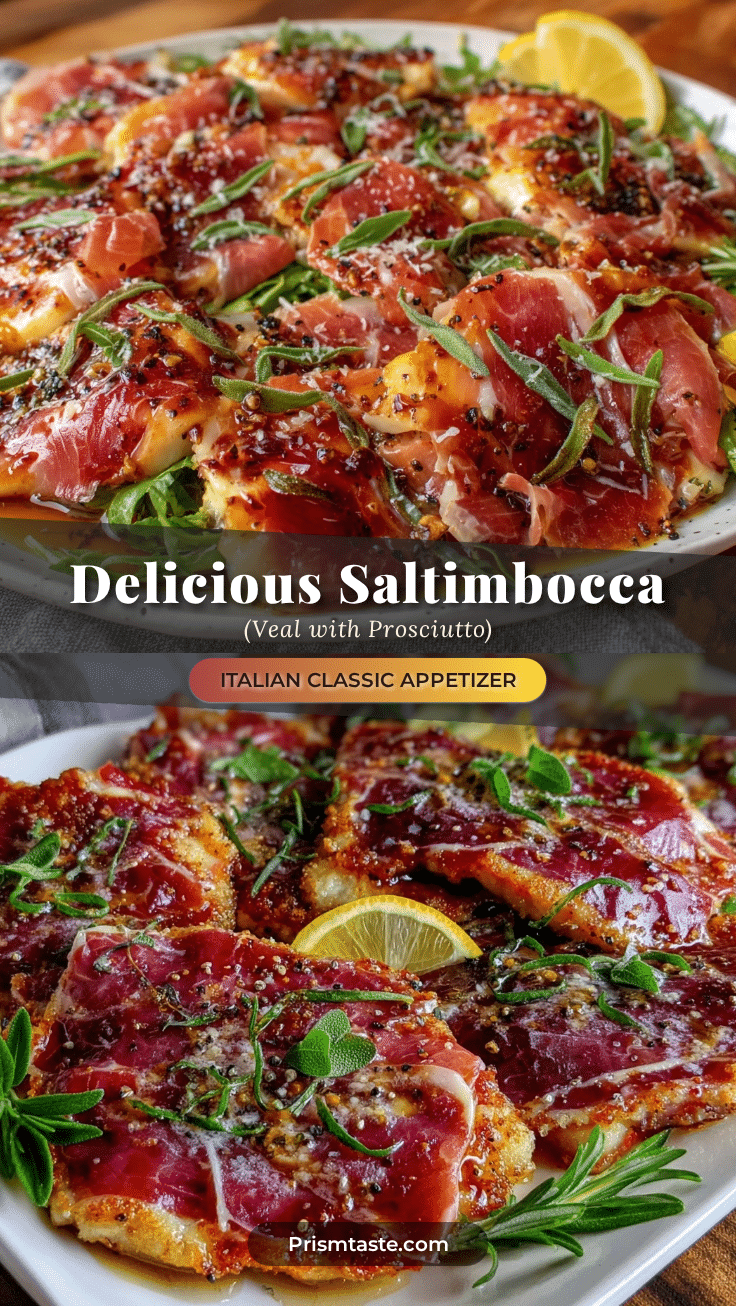
Saltimbocca Recipe – Easy Veal with Prosciutto in Buttery Sauce
Saltimbocca is a classic Italian dish featuring tender veal cutlets topped with prosciutto and fresh sage, cooked in a rich, buttery pan sauce. This recipe is quick, easy, and perfect for special occasions or weeknight dinners.
- Prep Time: 15 minutes
- Cook Time: 15 minutes
- Total Time: 30 minutes
- Yield: 4 servings 1x
- Category: Main Course
- Cuisine: Italian
Ingredients
- 1 lb veal scallopini, thinly sliced (about 1/4-inch thick)
- 6–8 slices prosciutto (about 3 oz), thinly sliced
- 12–16 fresh sage leaves
- 1/3 cup all-purpose flour (or gluten-free flour)
- Kosher salt and freshly ground black pepper, to taste
- Toothpicks or small skewers
- 4 tbsp unsalted butter, divided
- 2 tbsp olive oil
- 1/2 cup dry white wine (or chicken broth)
- 1/2 cup low-sodium chicken broth
- 1 lemon, juiced
- Optional: extra fresh sage leaves (for garnish)
- Optional: lemon wedges (for serving)
Instructions
- Place each veal scallopini between two sheets of plastic wrap and gently pound to about 1/4-inch thickness.
- Pat veal dry with paper towels. Season both sides lightly with black pepper and a tiny pinch of kosher salt.
- Lay 1–2 sage leaves on each cutlet, then cover with a slice of prosciutto. Secure with a toothpick or skewer.
- Pour flour into a shallow bowl. Dredge each assembled veal cutlet in flour, shaking off excess.
- Heat 2 tbsp butter and 2 tbsp olive oil in a large skillet over medium-high heat. When butter foams, add veal, prosciutto side down. Cook 2–3 minutes, flip, and cook another 1–2 minutes until golden and prosciutto is crisp. Work in batches if needed. Transfer browned cutlets to a plate and tent with foil.
- Pour off excess fat, leaving about 1 tbsp in the pan. Reduce heat to medium, add white wine, and let bubble for 1–2 minutes, scraping up brown bits.
- Add chicken broth and bring to a simmer. Cook 3–4 minutes to reduce slightly. Stir in lemon juice.
- Remove pan from heat and swirl in remaining 2 tbsp cold butter, one piece at a time, until sauce is glossy.
- Remove toothpicks from veal. Spoon buttery pan sauce over cutlets. Garnish with extra sage or lemon wedges if desired.
Notes
For gluten-free, use a gluten-free flour blend. For dairy-free, substitute butter with vegan margarine or olive oil. Chicken or pork can be used instead of veal. If sauce separates, whisk vigorously or add a splash more broth. Serve immediately for best texture. Leftovers can be stored in the fridge for up to 2 days and gently reheated.
Nutrition
- Serving Size: About 2 cutlets with
- Calories: 340
- Sugar: 1
- Sodium: 550
- Fat: 18
- Saturated Fat: 8
- Carbohydrates: 10
- Fiber: 1
- Protein: 28
Keywords: Saltimbocca, veal, prosciutto, Italian, buttery sauce, easy dinner, main course, gluten-free option, chicken saltimbocca, special occasion, weeknight meal