Let me tell you, the sizzle of plump shrimp hitting a hot skillet, mingling with the nutty aroma of roasted peanuts and that sweet-savory sauce clinging to every noodle—there’s nothing quite like it. If you close your eyes, you can almost hear the clink of chopsticks and the bustle of a Bangkok night market right in your kitchen. The first time I ever made Pad Thai with shrimp, I was honestly nervous (those flavors seemed so magical and mysterious!). But one bite in, and I was absolutely hooked—the balance of tangy tamarind, bright lime, and just the right dose of heat is pure, nostalgic comfort.
I remember the rainy Saturday when I decided to recreate the Pad Thai I’d fallen for at a tiny family-run Thai place in my college town. Back then, I was knee-high to a grasshopper when it came to homemade Asian dishes, and I had no idea how dangerously easy this recipe could be. My family couldn’t stop sneaking noodles straight from the pan (and I can’t really blame them). It was the kind of moment where you pause, take a deep breath, and just smile because you know you’re onto something truly special.
Now, Pad Thai with shrimp is a staple for gatherings and weeknight dinners alike. It’s the dish everyone requests for birthdays, potlucks, or when we need a little edible pick-me-up. The crunch of peanuts, the pop of fresh scallion, and the silky rice noodles—honestly, I wish I’d discovered this recipe years ago. So, whether you’re looking to brighten up your Pinterest board, surprise your kids with a sweet-and-savory treat, or just need a meal that feels like a warm hug, you’re going to want to bookmark this one. And yes—I’ve tested it more times than I’d like to admit (all in the name of research, of course).
Why You’ll Love This Pad Thai with Shrimp
Cooking Pad Thai with shrimp at home isn’t just about replicating takeout flavors—it’s about bringing that lively, bustling Thai street food energy into your kitchen. After dozens of noodle-twirling, sauce-tasting, and wok-scorching sessions, here’s why this version will steal your heart (and your taste buds):
- Quick & Easy: Ready in just about 30 minutes, from start to finish. No fancy chef skills required—perfect for busy weeknights or when you’re hangry and want food, fast.
- Simple Ingredients: Everything is easy to find at your local grocery store (no wild-goose chases for tamarind paste or fish sauce, trust me).
- Perfect for Dinner Parties or Cozy Nights: This Pad Thai with shrimp is just as happy starring at a family-style dinner as it is being twirled up solo in front of the TV. It’s a crowd-pleaser wherever it goes.
- Crowd-Pleaser: Kids gobble it up, adults rave, and picky eaters always come back for seconds. Shrimp adds a touch of luxury, while the crunchy peanuts keep things fun.
- Unbelievably Delicious: The sweet, tangy, and umami-packed sauce coats every noodle. The shrimp is juicy, the peanuts are crunchy, and the lime brings it all alive. Every bite is a little party.
What sets this Pad Thai apart? For starters, the sauce is perfectly balanced—enough tang from tamarind, just-right sweetness, and a gentle background heat (not the kind that leaves you sweating). I toss the shrimp in at the very end for that just-cooked, juicy pop—no rubbery seafood here! And the peanuts? They aren’t just a garnish—they’re a starring texture in every forkful. Honestly, it’s the kind of recipe that makes you close your eyes after the first bite and just savor it. It’s comfort food, but with a Thai twist—healthier, faster, and packed with flavor that lingers.
So, whether you want to impress your friends without breaking a sweat or just need a foolproof dinner after a long day, this Pad Thai with shrimp is about to become your go-to. And hey, if you sneak a few noodles from the pan while plating…no one’s judging.
What Ingredients You Will Need
This Pad Thai with shrimp recipe uses simple, wholesome ingredients that pack a punch of flavor and deliver the signature chewy, saucy, crunchy experience—without the fuss. Most of these are pantry staples or easy to swap, so you’re never more than a grocery run away from a noodle night. Here’s what you’ll need:
- For the noodles:
- 8 oz (225 g) dried flat rice noodles (medium-width; found in the Asian section—brands like Thai Kitchen or A Taste of Thai work great)
- For the shrimp:
- 12 oz (340 g) large raw shrimp, peeled and deveined (tail-on or off, your call)
- 1/2 tsp kosher salt
- 1/4 tsp black pepper
- For the sauce:
- 3 tbsp fish sauce (Red Boat or Thai Kitchen are solid picks)
- 2 tbsp tamarind concentrate or paste (you can sub with 2 tbsp fresh lime juice and 1 tbsp brown sugar if needed)
- 2 tbsp brown sugar (light or dark, both work)
- 1 tbsp soy sauce (low sodium is fine)
- 1 tbsp water
- 1/2 to 1 tsp Sriracha or chili garlic sauce (to taste; optional for heat lovers)
- For the stir-fry:
- 2 large eggs
- 3 tbsp neutral oil (like canola, peanut, or vegetable oil)
- 3 cloves garlic, minced
- 3 green onions, sliced (light and dark green parts separated)
- 1 cup (100 g) bean sprouts (plus extra for topping if you love crunch)
- 1/2 cup (70 g) roasted unsalted peanuts, roughly chopped
- 1 medium carrot, julienned or shredded (optional for extra color and crunch)
- For garnish:
- Fresh cilantro leaves, roughly chopped
- Lime wedges
- Extra peanuts and green onions
- Crushed red pepper or chili flakes (for spice fiends)
Substitution Tips: If you’re gluten-free, use tamari instead of soy sauce. For a vegetarian version, swap the shrimp with extra-firm tofu (drained and cubed) and use soy sauce in place of fish sauce. You can also toss in bell peppers, snap peas, or whatever veggies you have lying around. When tamarind isn’t handy, that lime juice and brown sugar hack is a lifesaver. See? There’s wiggle room for everyone.
Equipment Needed
You don’t need a commercial kitchen or a fancy wok to whip up Pad Thai with shrimp—just a few trusty tools and a bit of enthusiasm. Here’s what I reach for every time:
- Large nonstick skillet or wok: A wok is traditional and perfect for tossing noodles, but a big nonstick or stainless skillet works just as well (I’ve used both with great results).
- Medium saucepan: For soaking or boiling rice noodles.
- Colander or strainer: To drain noodles (nothing fancy needed—my $3 plastic one is still going strong after a decade).
- Measuring cups and spoons: Precision helps—especially for the sauce.
- Wooden spoon or spatula: For stirring and tossing everything together. A silicone spatula is also great for scraping up those tasty bits.
- Sharp knife and cutting board: For prepping veggies and shrimp.
- Small bowl: To whisk together the Pad Thai sauce.
If you don’t have a wok, don’t sweat it—just use your largest skillet so the noodles don’t crowd and steam. I’ve made this on everything from a glass stovetop to an induction burner, and it turns out tasty every time. And for those on a budget, kitchen basics totally get the job done (my first pad Thai was in a $15 pan from the thrift shop!). Just give your tools a quick rinse right after cooking to keep sticky sauce from hardening—your future self will thank you.
Preparation Method: How to Make Pad Thai with Shrimp
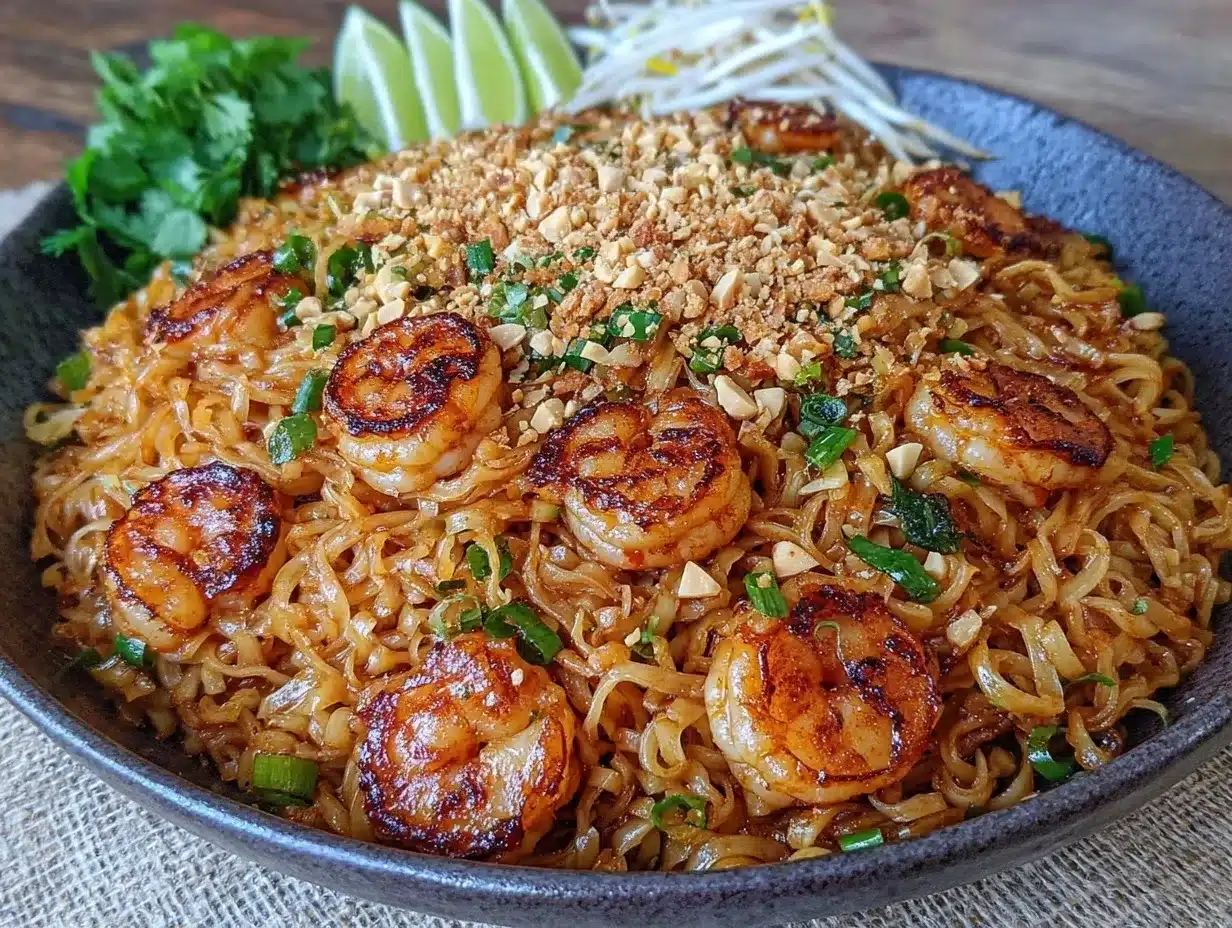
-
Soak the rice noodles (10-15 minutes):
Place 8 oz (225 g) of dried rice noodles in a large heatproof bowl. Pour boiling water over the noodles until submerged. Stir gently every couple of minutes, soaking until they’re pliable but still al dente (about 10-15 minutes). Drain and set aside.
Tip: Don’t over-soak! The noodles will finish cooking in the pan. If you’re in a rush, you can simmer them for 4-5 minutes, but don’t let them get mushy. -
Mix the sauce:
In a small bowl, whisk together 3 tbsp fish sauce, 2 tbsp tamarind paste, 2 tbsp brown sugar, 1 tbsp soy sauce, 1 tbsp water, and Sriracha (if using). Set aside.
Note: Taste your sauce—it should be tangy, sweet, and salty. Adjust as needed (I sometimes sneak an extra dash of lime). -
Season the shrimp:
Toss 12 oz (340 g) of shrimp with 1/2 tsp kosher salt and 1/4 tsp black pepper. Pat dry with a paper towel. This keeps them juicy and helps them sear. -
Prep your stir-fry station:
Crack 2 large eggs into a bowl and whisk lightly. Have your veggies, peanuts, and garnishes ready. Pad Thai cooks fast once you start! -
Cook the shrimp (2-3 minutes):
Heat 1 tbsp oil in your wok or skillet over medium-high. Add the shrimp in a single layer. Cook 1 minute per side, until just pink and curled. Remove to a plate—don’t overcook (rubbery shrimp are a bummer). -
Scramble the eggs (1 minute):
Add another tablespoon of oil to the pan. Pour in the eggs, stirring gently with your spatula to scramble until just set. Push eggs to the side. -
Sauté the aromatics (1-2 minutes):
Add 1 more tbsp oil, then toss in 3 cloves of minced garlic and the white/light green parts of your green onions. Stir fry until fragrant (about 30 seconds), then add in the carrots if using. -
Bring it all together (3-4 minutes):
Add the drained noodles to the pan, followed by the sauce. Use tongs to gently toss everything so the noodles soak up that sauce. If things look dry, splash in a tablespoon of water.
Add back the shrimp, eggs, and toss in 1 cup bean sprouts and half your chopped peanuts. Stir fry just until everything is heated through and glossy. -
Garnish and serve:
Remove from heat. Top with the reserved green onion tops, extra bean sprouts, remaining peanuts, fresh cilantro, and lime wedges. Serve immediately with more chili flakes and lime if you like things zippy.
Personal tip: If your noodles clump, add a splash of water and gently loosen with tongs. Taste as you go—Pad Thai should be lively, not bland. And don’t skip the peanuts—they’re the crunch in every bite!
Cooking Tips & Techniques
After making Pad Thai with shrimp more times than I can count, I’ve picked up a few tricks (and learned from my share of kitchen “oops” moments):
- Wok versus Skillet: A wok gives you classic smoky “wok hei” flavor, but a wide nonstick skillet does just fine if that’s what you have. The trick is high heat and not overcrowding—otherwise, things go soggy.
- Timing is Everything: Pad Thai waits for no one. Have all your ingredients chopped, measured, and ready before you start. Once the noodles hit the pan, you’re just minutes from dinner.
- No Mushy Noodles: Undercook your noodles slightly during the soaking phase; they’ll finish in the stir-fry. If you over-soak, they’ll break apart and go gluey. Trust me, I’ve made this mistake more than once.
- Shrimp Perfection: Don’t toss those shrimp in with the noodles—they’ll overcook. Sear them first, set them aside, then fold them in at the end for maximum juiciness.
- Layer Textures: Peanuts and bean sprouts aren’t just for looks! They add crunch that plays perfectly against the soft noodles and tender shrimp.
- Adjust to Taste: Like it tangier? Add more lime. Need more heat? Extra Sriracha or chili flakes. Pad Thai is forgiving—make it yours.
- Multitasking: Soak your noodles while you prep the rest—efficiency is key. And if you’re cooking for a crowd, double the sauce and cook in batches to keep things from steaming.
Honestly, the first time I made Pad Thai, my noodles were mush and my shrimp were chewy—but I kept at it, and now it’s a dish I can pull off with one hand tied behind my back (well, almost). The real secret? Confidence, curiosity, and not being afraid to taste as you go. You’ll find your groove.
Variations & Adaptations
Pad Thai with shrimp is endlessly adaptable, so don’t be afraid to make it your own. Here are some of my favorite twists and swaps:
- Vegetarian or Vegan Pad Thai: Swap the shrimp for extra-firm tofu (pressed and cubed). Use soy sauce or tamari instead of fish sauce and skip the eggs for vegan. Add more veggies like bell peppers and snap peas for color.
- Chicken or Beef Pad Thai: Use thinly sliced chicken breast or flank steak instead of shrimp. Sear the meat before the eggs, set aside, and add back in with the noodles.
- Low-Carb Pad Thai: Try spiralized zucchini or shirataki noodles instead of rice noodles. The sauce and toppings work beautifully with veggie noodles.
- Nut-Free Option: Omit peanuts and use roasted sunflower seeds or just extra bean sprouts for crunch.
- Seasonal Add-Ins: In summer, I love tossing in fresh Thai basil, or in spring, a handful of tender asparagus.
- Extra-Spicy: Add more Sriracha, sliced Thai chilies, or a drizzle of chili oil at the end.
One of my favorite personal spins is swapping in leftover grilled salmon for the shrimp and adding a handful of fresh mint. The flavors still sing, but with a fun twist. There’s no wrong way—just delicious ways that fit your cravings and needs.
Serving & Storage Suggestions
Pad Thai with shrimp is best served piping hot, straight from the wok or skillet. Pile it high in a shallow bowl, sprinkle with extra peanuts, and add a generous squeeze of lime. A sprinkle of fresh cilantro and sliced green onion makes it look as good as it tastes. Chopsticks are fun, but a fork works just fine (especially for kids or noodle newbies).
For a full meal, pair with a crisp Thai cucumber salad, iced Thai tea, or a cold lager. If you’re hosting, serve with veggie spring rolls and sweet chili dipping sauce for the real Thai restaurant vibe.
Leftovers keep well in an airtight container in the refrigerator for up to 2 days. The noodles will soak up the sauce as they sit, so when reheating, add a splash of water or chicken broth and warm gently in a skillet over medium heat. Avoid the microwave if you can—it can make the shrimp a bit tough. Flavors actually deepen overnight, so don’t be surprised if tomorrow’s lunch tastes even better.
Nutritional Information & Benefits
A generous serving of Pad Thai with shrimp (about 1/4 of this recipe) lands around 450-500 calories, with 25-30 grams of protein, moderate healthy fats (thanks, peanuts and shrimp), and about 50-60 grams of carbs. Shrimp is an excellent low-fat protein source, rich in B12, selenium, and iodine. Peanuts give a satisfying crunch and healthy fats, while bean sprouts and fresh herbs add vitamins and fiber.
If you’re watching sodium, opt for low-sodium soy sauce and reduce the fish sauce a smidge. For gluten-free, use tamari and double-check your noodles. Allergens? This dish does contain peanuts, eggs, and shellfish, so sub as needed (see Variations). I love how balanced this meal feels—it’s hearty, energizing, and you can load up the veggies for even more nutrition. Pad Thai is proof that comfort food can be nourishing, too.
Conclusion
Pad Thai with shrimp is a weeknight lifesaver and a showstopper for special occasions. It’s got all the flavors you crave—tangy, sweet, salty, and spicy—wrapped up in bouncy noodles and topped with crunchy peanuts. What’s not to love? You can adapt it endlessly: swap the protein, add more veggies, or tweak the sauce until it’s just right for your family’s tastes.
Personally, I come back to this recipe over and over because it’s reliable, quick, and always gets rave reviews (even from my pickiest eaters). I hope it brings as much joy to your table as it has to mine. If you give it a try, let me know how it goes—drop a comment, share your photos, or tell me your favorite twist. Happy cooking, and may your noodles never stick!
Frequently Asked Questions
What if I can’t find tamarind paste for Pad Thai with shrimp?
No worries! Substitute with 2 tablespoons of fresh lime juice and an extra tablespoon of brown sugar. The flavor is slightly different but still delicious and authentic enough for a quick fix.
Can I use frozen shrimp for this recipe?
Absolutely. Just thaw your shrimp in cold water, pat dry, and proceed as written. Frozen shrimp work perfectly and are often fresher than “fresh” at the store.
How do I keep the rice noodles from sticking together?
After draining the soaked noodles, toss them with a little oil if you’re not using them right away. And don’t over-soak—slightly firm noodles will finish cooking in the pan.
Is Pad Thai with shrimp gluten-free?
If you use gluten-free tamari instead of soy sauce and check that your fish sauce is gluten-free, yes! Always read labels, as brands vary.
Can I double this recipe for a crowd?
Yes, but cook in batches. Overcrowding the pan can make the noodles soggy. Keep batches warm in a low oven if needed, then combine with sauce and toppings just before serving.
Pin This Recipe!
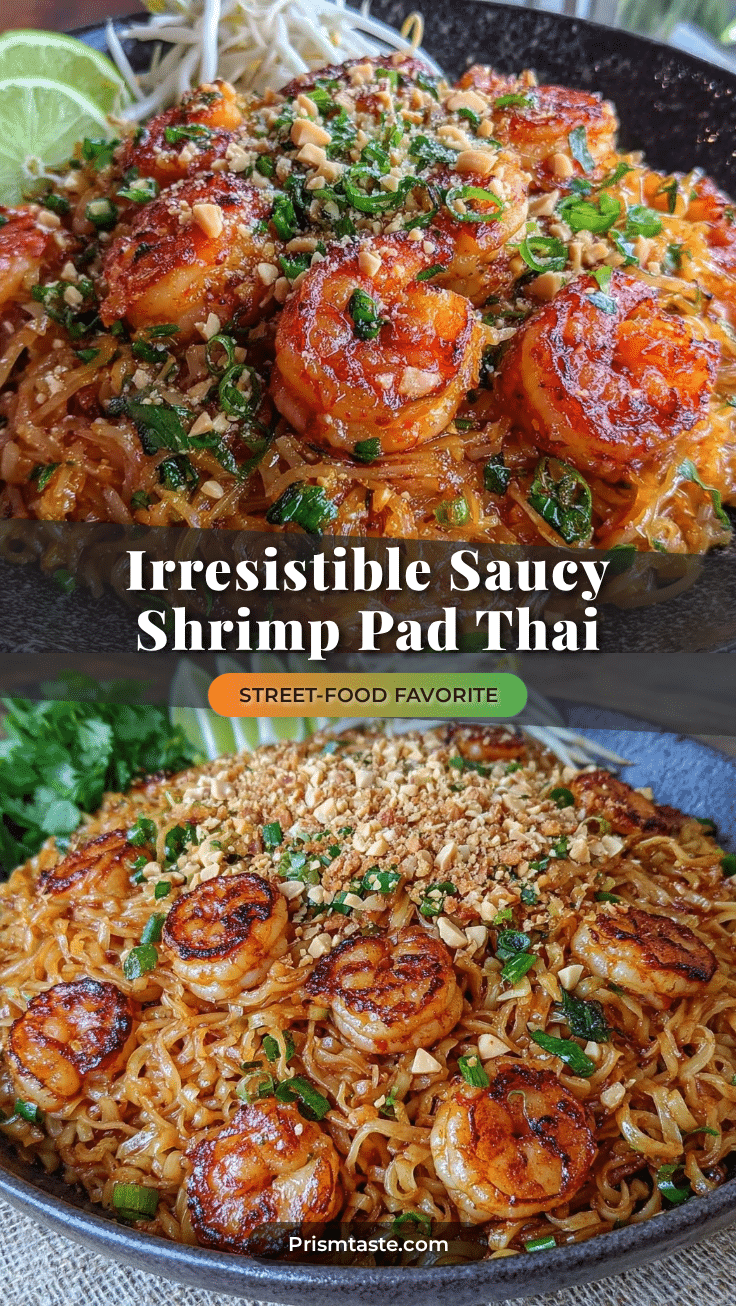
Pad Thai with Shrimp

This easy homemade Pad Thai with shrimp brings the vibrant flavors of Thai street food to your kitchen, featuring chewy rice noodles, juicy shrimp, crunchy peanuts, and a perfectly balanced sweet-tangy sauce. Ready in about 30 minutes, it’s a crowd-pleasing dinner for busy weeknights or special occasions.
- Prep Time: 15 minutes
- Cook Time: 15 minutes
- Total Time: 30 minutes
- Yield: 4 servings 1x
- Category: Main Course
- Cuisine: Thai
Ingredients
- 8 oz dried flat rice noodles (medium-width)
- 12 oz large raw shrimp, peeled and deveined
- 1/2 tsp kosher salt
- 1/4 tsp black pepper
- 3 tbsp fish sauce
- 2 tbsp tamarind concentrate or paste (or 2 tbsp fresh lime juice + 1 tbsp brown sugar)
- 2 tbsp brown sugar
- 1 tbsp soy sauce (low sodium)
- 1 tbsp water
- 1/2 to 1 tsp Sriracha or chili garlic sauce (optional)
- 2 large eggs
- 3 tbsp neutral oil (canola, peanut, or vegetable oil)
- 3 cloves garlic, minced
- 3 green onions, sliced (light and dark green parts separated)
- 1 cup bean sprouts (plus extra for topping)
- 1/2 cup roasted unsalted peanuts, roughly chopped
- 1 medium carrot, julienned or shredded (optional)
- Fresh cilantro leaves, roughly chopped (for garnish)
- Lime wedges (for garnish)
- Extra peanuts and green onions (for garnish)
- Crushed red pepper or chili flakes (for garnish)
Instructions
- Place rice noodles in a large heatproof bowl and cover with boiling water. Soak for 10-15 minutes, stirring occasionally, until pliable but al dente. Drain and set aside.
- In a small bowl, whisk together fish sauce, tamarind paste (or lime juice and extra brown sugar), brown sugar, soy sauce, water, and Sriracha (if using). Taste and adjust as needed.
- Toss shrimp with kosher salt and black pepper. Pat dry with a paper towel.
- Crack eggs into a bowl and whisk lightly. Prepare veggies, peanuts, and garnishes.
- Heat 1 tbsp oil in a wok or large skillet over medium-high. Add shrimp in a single layer and cook 1 minute per side until just pink and curled. Remove to a plate.
- Add another tablespoon of oil to the pan. Pour in eggs and scramble gently until just set. Push eggs to the side.
- Add remaining oil, then garlic and the white/light green parts of green onions. Stir fry until fragrant (about 30 seconds), then add carrots if using.
- Add drained noodles to the pan, followed by the sauce. Toss gently with tongs to coat noodles. If dry, add a splash of water.
- Return shrimp and eggs to the pan. Add bean sprouts and half the peanuts. Stir fry until heated through and glossy.
- Remove from heat. Top with reserved green onion tops, extra bean sprouts, remaining peanuts, cilantro, and lime wedges. Serve immediately with chili flakes and extra lime if desired.
Notes
For gluten-free, use tamari instead of soy sauce and check fish sauce labels. Undercook noodles slightly during soaking; they’ll finish in the pan. Sear shrimp separately for best texture. Add more veggies or swap protein as desired. Toss noodles with a little oil after draining to prevent sticking if not using immediately.
Nutrition
- Serving Size: About 1/4 of recipe
- Calories: 475
- Sugar: 11
- Sodium: 1100
- Fat: 18
- Saturated Fat: 3
- Carbohydrates: 55
- Fiber: 4
- Protein: 28
Keywords: Pad Thai, shrimp, Thai noodles, easy dinner, homemade, Asian, stir-fry, weeknight meal, peanuts, gluten-free option