There’s this magical moment that happens in my kitchen—just as the soy glaze starts bubbling and that unmistakable aroma of garlic, ginger, and caramelized brown sugar fills the air. The scent alone can make you stop in your tracks, close your eyes for a second, and picture those glossy slices of savory Mongolian beef sizzling away, just like you’d find at PF Chang’s. The first time I tried making this Mongolian Beef recipe (PF Chang’s copycat), I was honestly floored by how close it came to the restaurant version—maybe even a touch better because, well, it was homemade (and I got to lick the spoon without any judgment).
I remember the first bite—tender strips of beef, coated in a sticky soy glaze, with just the right balance of sweet and salty. It was the kind of moment where you pause, take a deep breath, and just smile because you know you’ve stumbled onto something truly special. My kids hovered around the stove, sneaking tastes straight from the pan, while my husband declared it “restaurant quality” (and he’s not one for hyperbole).
This recipe brings back memories of family dinners out, the kind where you order Mongolian beef “for the table,” but everyone secretly hopes it’ll end up closer to their own plate. When I was knee-high to a grasshopper, my mom would try to recreate restaurant favorites at home, but she never quite nailed that sticky, glossy sauce. I wish I’d found this version years ago—it’s become a staple for us, perfect for cozy nights in, sharing with friends, or jazzing up a plain old Tuesday. Let’s face it, there’s just something about a glossy, glistening beef stir-fry that makes dinner feel a little more special.
After testing (and retesting, in the name of research, of course), this Mongolian beef has earned a permanent spot in our rotation. It’s dangerously easy, there’s pure, nostalgic comfort in every bite, and you’re going to want to bookmark this one—trust me.
Why You’ll Love This Mongolian Beef Recipe (PF Chang’s Copycat)
When you want the flavors of your favorite restaurant without leaving home (or waiting for delivery), this Mongolian beef is a lifesaver. I’ve made it on frantic weeknights, lazy Sundays, and even for last-minute dinner guests. Years of cooking (and a fair amount of failed stir-fries) have taught me what really makes this dish shine, and this version checks every box.
- Quick & Easy: Comes together in under 30 minutes—yes, including prep! Perfect for when you’re craving that sticky soy glaze but don’t want to spend hours in the kitchen.
- Simple Ingredients: You probably have everything you need in your pantry right now. No hunting for obscure sauces or fancy cuts of beef.
- Perfect for Any Occasion: This Mongolian beef recipe is fantastic for weeknight dinners, potlucks, or even a fun “takeout at home” night. It’s also a Pinterest favorite—those glossy beef slices just beg to be photographed!
- Crowd-Pleaser: Kids, adults, picky eaters—everyone seems to love it. I’ve served it at family reunions and it disappears fast (I always wish I’d doubled the batch).
- Unbelievably Delicious: The sauce is everything—sticky, savory, with just the right hit of sweetness. The beef is tender but still has a bit of bite, and every bite tastes like it was made by a pro chef.
What really sets this apart from other recipes? It’s all about the technique. Slicing the beef thin, giving it a quick cornstarch toss, and frying it just right makes all the difference. Then there’s the sauce—made with real brown sugar and a dash of hoisin for depth. I’ve tinkered with the ratios so it’s not cloyingly sweet (like some versions), and there’s that savory punch you crave.
This isn’t just “another stir-fry.” It’s the kind of dish that makes you pause after the first bite, close your eyes, and maybe even let out a happy sigh. It’s comfort food, but lighter, faster, and with all the soul-soothing flavor you remember. Whether you’re looking to impress a date, feed your family, or just treat yourself, this Mongolian beef is the answer.
What Ingredients You Will Need for Savory Mongolian Beef (PF Chang’s Copycat)
This recipe uses simple, wholesome ingredients to deliver bold flavor and a satisfying, takeout-style texture without any fuss. Most of these are pantry staples—so you probably won’t need a special shopping trip.
- For the Beef:
- 1 lb (450g) flank steak, thinly sliced against the grain (sirloin or flat iron steak works too)
- 1/4 cup (30g) cornstarch (for coating, creates that signature crispy edge)
- 1/2 teaspoon kosher salt
- 1/4 teaspoon black pepper
- 2 tablespoons vegetable oil (or canola oil, for frying)
- For the Sticky Soy Glaze:
- 1/2 cup (120ml) low-sodium soy sauce (I like Kikkoman or San-J)
- 1/2 cup (100g) packed dark brown sugar (for deep caramel flavor)
- 1/4 cup (60ml) water
- 2 teaspoons hoisin sauce (adds depth, but optional)
- 1 tablespoon rice vinegar (balances the sweetness)
- 2 teaspoons fresh ginger, minced (or 1/2 teaspoon ground ginger, but fresh is best)
- 3 cloves garlic, minced (about 1 tablespoon)
- 1/4 teaspoon crushed red pepper flakes (optional, for a little heat)
- For Garnish:
- 3–4 green onions, sliced (for color and crunch)
- 1 tablespoon toasted sesame seeds (totally optional but looks so good for Pinterest!)
Ingredient Tips and Substitutions:
- Beef: Flank steak is classic, but sirloin or even pre-sliced stir-fry beef works in a pinch. Just slice it thin—freezing for 20 minutes makes this way easier.
- Soy Sauce: Low-sodium is best—full-salt can get overpowering. For gluten-free, use tamari or coconut aminos.
- Sweetener: I love dark brown sugar for its molasses kick, but light brown or even coconut sugar works too.
- Hoisin: Adds depth, but you can skip it or use oyster sauce for a different vibe.
- Heat: Red pepper flakes are totally optional—add more if you want spicy Mongolian beef, or leave them out for a milder version.
- Garnishes: Green onions and sesame seeds are for looks and crunch. If you don’t have them, no worries—the flavor is all in the beef and sauce.
In summer, I sometimes toss in fresh bell peppers or snap peas for color. And if you need to keep things gluten-free, just swap cornstarch for arrowroot and soy sauce for tamari.
Equipment Needed for Making Mongolian Beef at Home
You don’t need a fancy restaurant kitchen to make this Mongolian beef recipe. Here’s what I use (and my honest thoughts on each):
- Large Skillet or Wok: A 12-inch nonstick skillet works great, but a classic wok gives you that real stir-fry sizzle. Cast iron also works in a pinch (just be gentle with the glaze).
- Sharp Knife & Cutting Board: Thin slices are key, so grab your sharpest blade. If your knife is a little dull, pop the beef in the freezer for 20 minutes first.
- Mixing Bowls: For tossing beef in cornstarch and mixing the sauce. I use medium glass bowls—easier cleanup.
- Tongs or Chopsticks: Tongs are my go-to for flipping beef quickly, but chopsticks are fun for a real takeout feel.
- Measuring Cups & Spoons: For accuracy—especially with the sauce. (I’ve tried “eyeballing” it…not recommended.)
- Paper Towels: For blotting beef or draining after frying.
- Heat-Safe Spatula: For stirring the sauce and scraping every last bit of glaze onto the beef.
If you don’t own a wok, don’t worry—a big skillet works just fine. I’ve even used a regular sauté pan on busy nights. And if you’re on a budget, dollar-store tongs and a basic frying pan get the job done. Just avoid overcrowding the pan so the beef gets crispy, not steamed. A little maintenance tip: soak your pan right after for easier cleanup (that sticky glaze can be stubborn).
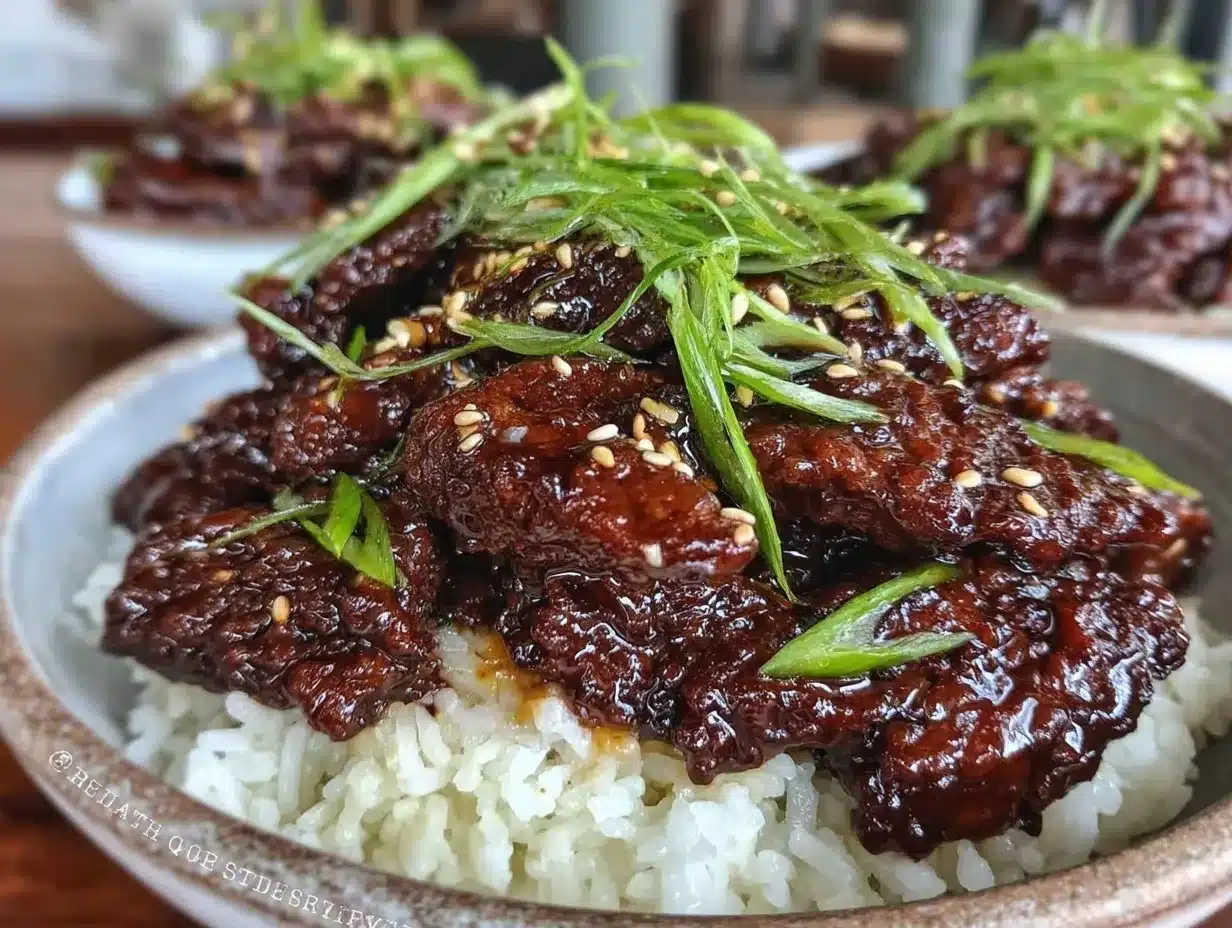
How to Make Savory Mongolian Beef (PF Chang’s Copycat) with Sticky Soy Glaze
-
Prep the Beef:
Slice 1 lb (450g) flank steak very thinly against the grain—aim for 1/4-inch (6 mm) slices. If slicing is tricky, freeze the beef for 20 minutes first. Pat the slices dry with paper towels, then toss them in a bowl with 1/4 cup (30g) cornstarch, 1/2 teaspoon salt, and 1/4 teaspoon black pepper. Make sure each piece is coated well.
Prep tip: Don’t skip drying the beef; moisture keeps it from crisping up. -
Make the Sticky Soy Glaze:
In a small bowl, whisk together 1/2 cup (120ml) low-sodium soy sauce, 1/2 cup (100g) dark brown sugar, 1/4 cup (60ml) water, 2 teaspoons hoisin sauce, 1 tablespoon rice vinegar, 2 teaspoons minced ginger, 1 tablespoon minced garlic, and 1/4 teaspoon red pepper flakes (if using). Set aside.
Sensory cue: The sauce should smell sweet, savory, and a little tangy. -
Fry the Beef:
Heat 2 tablespoons vegetable oil in a large skillet or wok over medium-high heat. When oil is shimmering, add beef in a single layer (work in batches if needed). Fry 1–2 minutes per side, just until edges are browned and crispy. Transfer cooked beef to a plate lined with paper towels.
Troubleshooting: If beef steams instead of crisps, your pan’s too crowded—fry in batches. -
Make the Glaze:
Pour out excess oil, leaving just a thin coating in the pan. Add the prepared glaze, bring to a simmer over medium heat, and cook 2–3 minutes, stirring, until slightly thickened. The sauce should bubble and look syrupy—don’t walk away, it thickens quickly.
Warning: Stir constantly—brown sugar can burn fast. -
Toss Beef with Sauce:
Return fried beef to the pan. Toss with tongs until every slice is glossy and coated, about 1–2 minutes. Don’t cook much longer, or the beef can get tough.
Sensory cue: The beef should look shiny and feel sticky to the touch. -
Finish & Garnish:
Transfer Mongolian beef to a serving platter. Sprinkle with sliced green onions and toasted sesame seeds.
Personal tip: I like to serve immediately for best texture, but leftovers aren’t half bad.
Efficiency note: I usually prep the sauce and garnishes while the beef is frying. Multi-task and you’ll have dinner on the table in no time!
Cooking Tips & Techniques for Restaurant-Style Mongolian Beef
Years of stir-fry experiments (and a few kitchen fails) have taught me these tricks for the best Mongolian beef:
- Slice Against the Grain: Always. This breaks up tough muscle fibers, making each bite tender—not chewy. Trust me, I tried the “with the grain” shortcut once. Never again.
- Pat Beef Dry: Moisture is the enemy of crispiness. Use paper towels, even if it feels fussy. Soggy beef is a bummer.
- Cornstarch Coating: Go light—just enough to dust each piece. Too much and the beef gets gummy, too little and you miss that lovely crisp edge.
- High Heat, Don’t Crowd: Give each piece some space in the pan. Overcrowding makes beef steam, not sear. Fry in batches for best results (I learned this the messy, soggy way).
- Watch the Sauce: The glaze thickens fast, especially with all that brown sugar. Stir constantly and pull it off the heat as soon as it’s syrupy—overcooked sauce turns into candy (I’ve chipped a tooth, not kidding).
- Multitasking: While the beef fries, chop your green onions and prep the rice. It’s the only way I can get dinner on the table in 30 minutes flat.
- Taste as You Go: Every soy sauce is a little different—give the sauce a quick taste and adjust sugar or vinegar if needed.
If you mess up (like I have), don’t stress. The beef is forgiving, and even the less-than-perfect batches are pretty darn tasty. With a little practice, you’ll get that restaurant look and flavor every time.
Variations & Adaptations for Your Mongolian Beef Recipe
One of the best things about this Mongolian beef (PF Chang’s copycat) recipe is how easy it is to tweak. Whether you’re dealing with allergies, picky eaters, or just want to mix it up, here are some tried-and-true options:
- Gluten-Free Mongolian Beef: Swap soy sauce for gluten-free tamari or coconut aminos. Use arrowroot starch instead of cornstarch for the coating. I’ve done this when cooking for friends with celiac—it works beautifully.
- Low-Sugar or Keto-Friendly: Replace brown sugar with a brown sugar substitute like Swerve or monk fruit sweetener. Use beef sirloin and skip the hoisin for lower carbs. The flavor is still rich and satisfying.
- Add Veggies: Toss in sliced bell peppers, broccoli florets, or sugar snap peas during the last minute of cooking. This adds crunch, color, and a little extra nutrition.
- Spicier Version: Double the red pepper flakes or stir in a spoonful of chili garlic sauce for heat lovers.
- Allergen Adaptations: For soy allergies, try coconut aminos. For sesame allergies, simply skip the sesame seed garnish.
- Chicken or Tofu Swap: You can use thinly sliced chicken breast or extra-firm tofu instead of beef. My kids love the tofu version with a touch more ginger.
Personally, I love tossing in a handful of steamed green beans near the end for Mongolian beef with an extra veggie kick. Don’t be afraid to experiment—this recipe is super forgiving and adaptable to almost any taste or dietary need!
Serving & Storage Suggestions for Mongolian Beef
This Mongolian beef is best served right after cooking, when the sauce is glossy and the beef is a little crispy. I like to plate it over a big mound of jasmine rice or fluffy white rice—let that sticky soy glaze soak in! For a low-carb twist, it’s also delicious over steamed broccoli or cauliflower rice.
For presentation (especially for Pinterest-worthy photos), sprinkle with plenty of green onions and a dash of sesame seeds. Add a colorful side like stir-fried snow peas or a cool cucumber salad.
To store leftovers, let the beef cool to room temperature, then pack it into airtight containers. Store in the refrigerator for up to 3 days. For longer storage, freeze in freezer-safe containers for up to a month—just note the beef will be a bit softer after freezing.
To reheat, warm gently in a skillet over medium-low heat with a splash of water or broth to loosen the sauce. Microwave works in a pinch, but the stovetop keeps the beef from getting rubbery. Honestly, the flavors deepen overnight, making the leftovers surprisingly craveable (if you have any left!).
Nutritional Information & Benefits
Each serving of this Mongolian beef (about 1/4 of the total recipe) is roughly:
- Calories: 350
- Protein: 25g
- Carbohydrates: 28g
- Fat: 14g
- Sugar: 18g
- Sodium: 900mg (using low-sodium soy sauce)
Health Benefits: You get a good dose of protein from the beef, and if you add extra veggies, it’s even better. Using low-sodium soy sauce helps keep salt in check. For gluten-free or keto, see the adaptations above.
This recipe contains soy and can be made nut-free (just skip sesame seeds). From a wellness perspective, I love that you control the sugar and sodium, and can add as many veggies as you like. It’s comfort food, but a little lighter and fresher than takeout.
Conclusion
If you’re looking for an easy, crowd-pleasing dinner that brings the PF Chang’s experience home, this Mongolian beef recipe is your answer. It’s quick, flexible, and seriously delicious—sticky soy glaze, tender beef, and all the takeout nostalgia you could want. Feel free to play around with the flavors and add your own twist; the recipe is forgiving and flexible.
Personally, I can never resist sneaking a piece straight from the pan (sorry, not sorry). This one’s become a family favorite for a reason, and I hope it brings as much joy to your table as it does to ours. Let me know how it goes—leave a comment, share your favorite adaptations, or tag me if you post it on Pinterest. You’re just a skillet away from restaurant-style Mongolian beef that’ll have everyone asking for seconds!
Frequently Asked Questions About Mongolian Beef (PF Chang’s Copycat)
Is Mongolian beef spicy?
Not by default—this version is mostly sweet and savory. If you like it spicy, just add extra red pepper flakes or a spoonful of chili garlic sauce to the glaze.
Can I use a different cut of beef?
Absolutely! Flank steak is traditional, but sirloin, skirt steak, or even pre-sliced stir-fry beef works. Just slice it thin and cook quickly for best results.
How do I make Mongolian beef gluten-free?
Simply use tamari or coconut aminos instead of soy sauce and swap cornstarch for arrowroot starch. Double-check all your sauces for hidden gluten.
Can I prep Mongolian beef ahead of time?
Yes! Slice the beef and mix the sauce up to 24 hours in advance. Fry the beef and toss with sauce just before you’re ready to serve for the best texture.
What’s the best way to reheat leftovers?
Gently reheat in a skillet over medium-low heat with a splash of water or broth. This keeps the beef tender and the glaze shiny. Avoid microwaving if you can—it’s fast but can make the beef a bit tough.
Pin This Recipe!
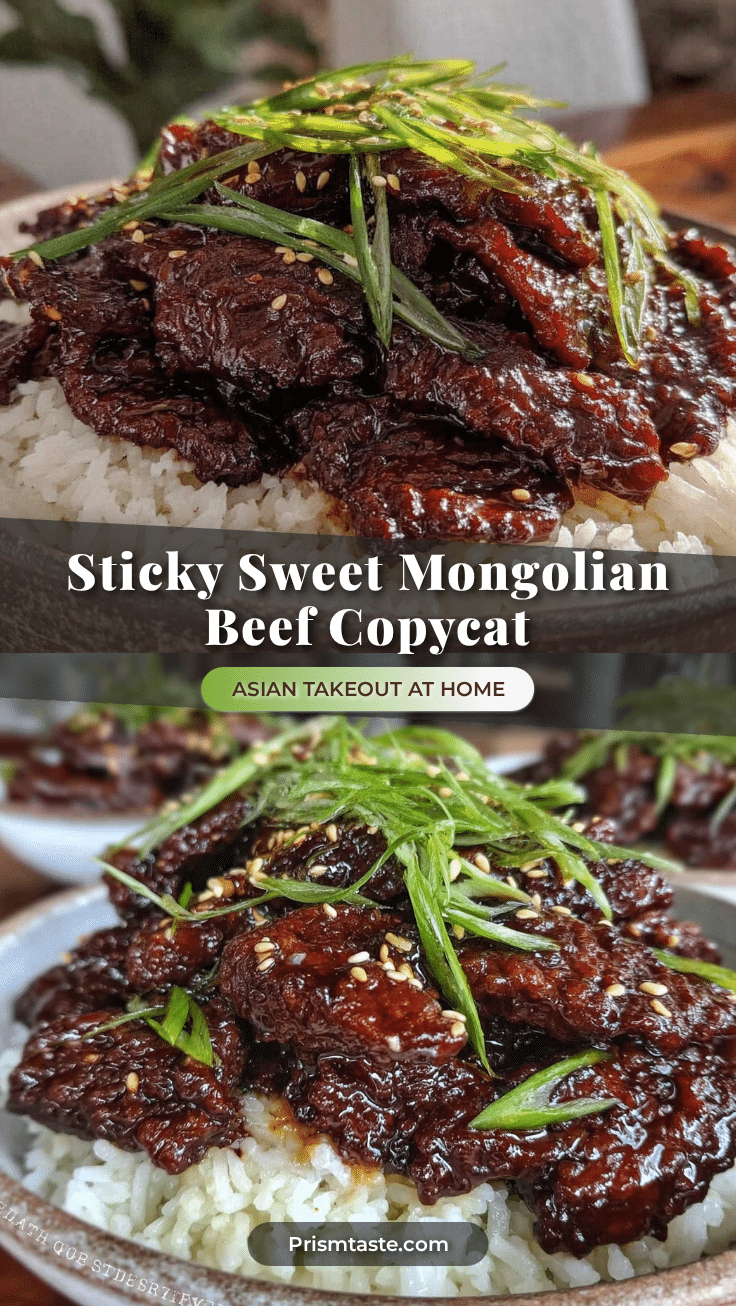
Mongolian Beef Recipe PF Chang’s Copycat – Easy Sticky Soy Glaze
This homemade Mongolian beef recipe features tender strips of beef coated in a sticky soy glaze, perfectly balanced between sweet and savory. It’s a quick, restaurant-style stir-fry that’s easy to make and sure to please any crowd.
- Prep Time: 10 minutes
- Cook Time: 15 minutes
- Total Time: 25 minutes
- Yield: 4 servings 1x
- Category: Main Course
- Cuisine: Chinese-American
Ingredients
- 1 lb flank steak, thinly sliced against the grain (sirloin or flat iron steak works too)
- 1/4 cup cornstarch
- 1/2 teaspoon kosher salt
- 1/4 teaspoon black pepper
- 2 tablespoons vegetable oil (or canola oil)
- 1/2 cup low-sodium soy sauce
- 1/2 cup packed dark brown sugar
- 1/4 cup water
- 2 teaspoons hoisin sauce (optional)
- 1 tablespoon rice vinegar
- 2 teaspoons fresh ginger, minced (or 1/2 teaspoon ground ginger)
- 3 cloves garlic, minced (about 1 tablespoon)
- 1/4 teaspoon crushed red pepper flakes (optional)
- 3–4 green onions, sliced (for garnish)
- 1 tablespoon toasted sesame seeds (optional, for garnish)
Instructions
- Slice the flank steak very thinly against the grain (about 1/4-inch slices). Pat dry with paper towels.
- Toss beef slices in a bowl with cornstarch, salt, and black pepper until well coated.
- In a small bowl, whisk together soy sauce, brown sugar, water, hoisin sauce, rice vinegar, ginger, garlic, and red pepper flakes (if using). Set aside.
- Heat vegetable oil in a large skillet or wok over medium-high heat. Add beef in a single layer (work in batches if needed) and fry 1–2 minutes per side until browned and crispy. Transfer cooked beef to a plate lined with paper towels.
- Pour out excess oil, leaving a thin coating in the pan. Add the prepared glaze, bring to a simmer over medium heat, and cook 2–3 minutes, stirring constantly, until slightly thickened and syrupy.
- Return fried beef to the pan and toss with the sauce until every slice is glossy and coated, about 1–2 minutes.
- Transfer Mongolian beef to a serving platter. Sprinkle with sliced green onions and toasted sesame seeds. Serve immediately.
Notes
Slice beef thinly against the grain for tenderness. Pat dry before coating for crispiness. Fry in batches to avoid steaming. Sauce thickens quickly—stir constantly and remove from heat when syrupy. For gluten-free, use tamari and arrowroot starch. Add veggies like bell peppers or snap peas for variation. Leftovers keep well and flavors deepen overnight.
Nutrition
- Serving Size: About 1/4 of the rec
- Calories: 350
- Sugar: 18
- Sodium: 900
- Fat: 14
- Saturated Fat: 3
- Carbohydrates: 28
- Fiber: 1
- Protein: 25
Keywords: Mongolian beef, PF Chang's copycat, sticky soy glaze, Chinese takeout, easy stir-fry, beef recipe, restaurant style, weeknight dinner, gluten-free option, quick dinner