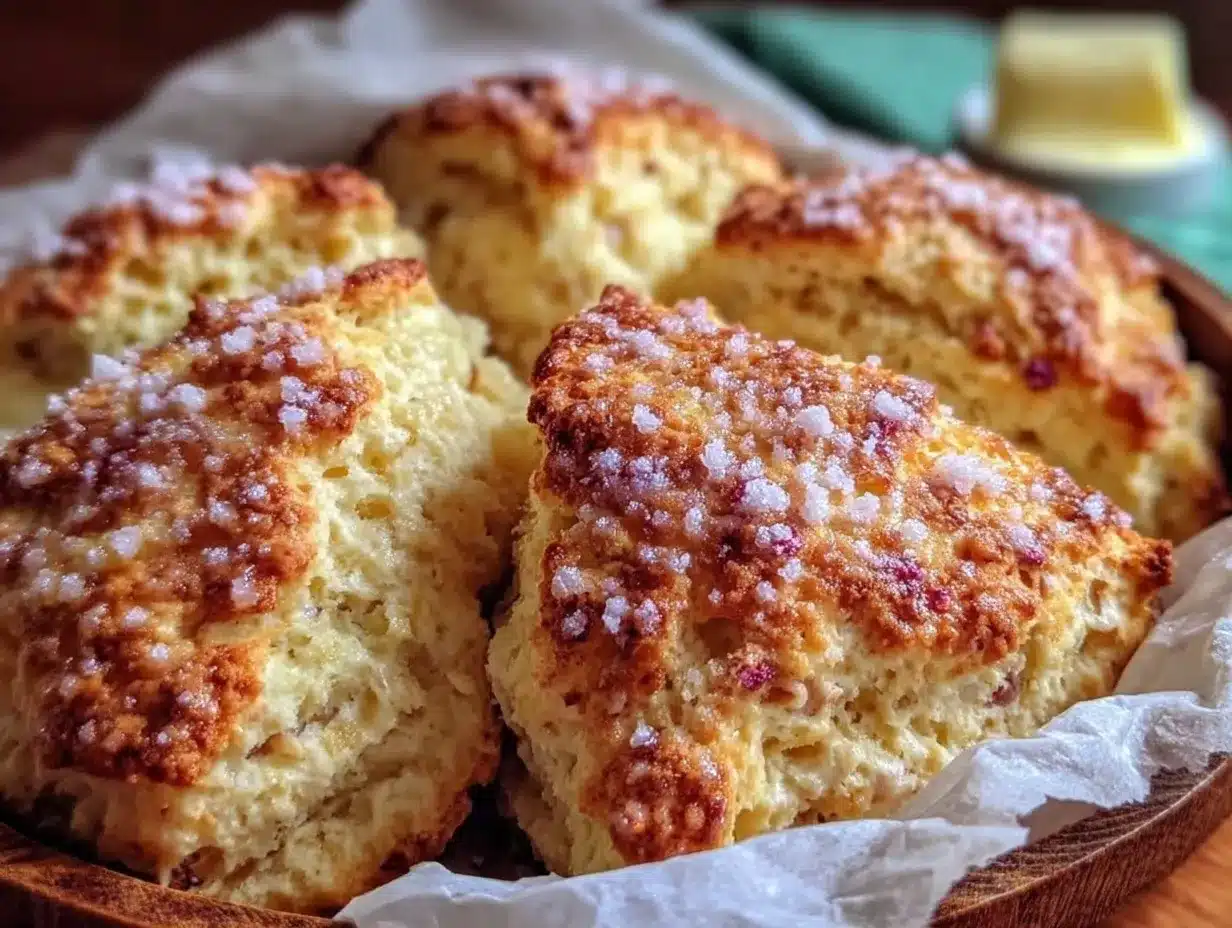
Imagine this—the kitchen fills with the warm, toasty aroma of fresh-baked bread, buttery oats, and just a hint of tangy buttermilk. The first time I pulled a batch of these fluffy Irish Soda Bread Scones with Rustic Oat Crumb out of my oven, I swear the scent stopped me in my tracks. The golden tops, dusted with a rustic oat topping, looked almost too pretty to eat (almost). I grabbed one while it was still warm, split it open, and slathered it with salted Irish butter. That first bite—crumbly, plush, and slightly sweet—was the kind of moment where you pause, take a deep breath, and just smile because you know you’re onto something truly special.
Honestly, I stumbled across this Irish soda bread scone recipe on a rainy Sunday when I was craving the cozy flavors from my grandmother’s kitchen, but didn’t feel like wrestling with yeast or fancy gadgets. When I was knee-high to a grasshopper, soda bread was a family staple, especially around St. Patrick’s Day. These scones are my modern twist, with a fluffy interior and that irresistible oat crumb on top—just like the Irish countryside in scone form.
My kids can’t keep their hands off these (I catch them sneaking back for “just one more” when they think I’m not looking), and even my husband—who claims not to have a sweet tooth—reaches for seconds. These are perfect for potlucks, brunches, or those afternoons when you just want something a little special with your tea. You know what? I wish I’d discovered this shortcut to comfort years ago. After many, many “research” batches, Irish soda bread scones with rustic oat crumb have become a staple for family breakfasts, gifting to neighbors, and honestly, just brightening up my Pinterest board with their cozy, rustic look. Trust me, this is the kind of recipe that feels like a warm hug—you’re going to want to bookmark it.
Why You’ll Love This Irish Soda Bread Scones Recipe
Let’s face it—when you find a recipe that checks all the boxes (easy, quick, comforting, and impressive), it’s a keeper. I’ve tinkered with this Irish soda bread scones recipe more times than I can count, testing every flour blend, oat ratio, and crumb topping in the name of achieving true scone perfection. Here’s why you’ll keep coming back to this one:
- Quick & Easy: These scones come together in just about 35 minutes, start to finish. No waiting around for dough to rise, no fancy mixers needed. Just mix, shape, and bake.
- Simple Ingredients: You probably have everything you need in your pantry already—think flour, oats, buttermilk, and a bit of sugar. No need to hunt down special Irish imports (unless you want to, of course!)
- Perfect for Any Occasion: These scones shine at brunch, work as an afternoon snack, or can even stand in for a fuss-free holiday bread. They’re the perfect sidekick for a hearty soup or a cup of tea.
- Crowd-Pleaser: Kids, grandparents, picky eaters—everyone loves them. I’ve made these scones for book club, school bake sales, and family brunches, and they always disappear fast.
- Unbelievably Delicious: The buttermilk brings a gentle tang, the rustic oat crumb adds crunch and depth, and the crumb is so fluffy it practically begs for a smear of jam or butter.
What sets my version apart? For starters, I blend in coarse whole oats for that homey, rustic finish and use chilled butter, cut in by hand, for layers of fluffiness. The oat crumb topping adds both texture and a subtle nuttiness you just don’t get from plain soda bread. Plus, there’s no yeast to fuss with—this is Irish comfort food made modern, and way less intimidating.
Really, these Irish soda bread scones are more than just a recipe—they’re a little slice of nostalgia, updated for today’s busy kitchens. Whether you’re impressing guests with something “homemade,” treating yourself after a long week, or just looking for the best companion to your morning coffee, these scones deliver the kind of soul-soothing satisfaction that makes you close your eyes and savor every bite. It’s comfort food reimagined—faster, a touch healthier, but with all the classic flavor you crave.
What Ingredients You Will Need
This Irish soda bread scones recipe keeps things simple, just like the best old-school family bakes. No fancy flours or hard-to-find add-ins—just wholesome, everyday ingredients that come together for maximum flavor and that signature rustic oat crumb. Here’s what you’ll need:
- For the Scones:
- 2 cups (240g) all-purpose flour (sifted for fluffiness)
- 1/2 cup (50g) old-fashioned rolled oats (plus more for topping)
- 1/4 cup (50g) granulated sugar (just enough for a gentle sweetness)
- 1 teaspoon baking soda (gives that classic soda bread lift)
- 1 teaspoon baking powder (for extra rise—trust me on this)
- 1/2 teaspoon fine sea salt
- 4 tablespoons (56g) cold unsalted butter, cubed (Kerrygold is my go-to, but any cold butter works)
- 1 large egg, room temperature
- 3/4 cup (180ml) buttermilk (adds that unmistakable tang—see below for subs)
- 1/2 cup (70g) raisins or currants (optional, but highly recommended for that classic Irish touch)
- For the Rustic Oat Crumb Topping:
- 1/4 cup (25g) rolled oats
- 2 tablespoons (25g) brown sugar (gives it that caramel note)
- 1 tablespoon (14g) cold butter
- Pinch of salt
Ingredient Notes & Substitutions:
- If you’re out of buttermilk, stir 1 tablespoon (15ml) lemon juice or vinegar into 3/4 cup (180ml) milk and let it sit for 5 minutes. Works like a charm.
- Swap half the all-purpose flour for whole wheat flour for a nuttier, heartier result (I do this sometimes when I want a more rustic vibe).
- No raisins? No problem—chopped dried apricots or cranberries work beautifully.
- For gluten-free scones, use a 1:1 gluten-free baking flour mix and certified gluten-free oats. The texture changes a bit, but still delightful.
- Dairy-free? Use vegan butter and your favorite plant-based milk soured with lemon juice.
I’m a fan of Bob’s Red Mill for oats and flour, but you can use whatever brand you like. In summer, I sometimes toss in a handful of blueberries instead of dried fruit—so good! The beauty of Irish soda bread scones is how forgiving they are. Just a handful of honest ingredients and you’re in business.
Equipment Needed
You don’t need fancy gear to make these Irish soda bread scones—just a few basics, plus a couple of handy alternatives if you’re working with a minimalist kitchen.
- Large Mixing Bowl: For combining your dry and wet ingredients. I use a ceramic bowl I’ve had for years (it’s been through a lot!), but any big bowl works fine.
- Pastry Cutter or Fork: For cutting in the cold butter. You can use clean hands if you don’t mind getting a little messy—sometimes the old ways are best.
- Baking Sheet: Lined with parchment paper for easy cleanup. No parchment? Just grease the pan well.
- Measuring Cups & Spoons: For accuracy, especially with baking soda and powder. A kitchen scale is helpful for those who want to get precise (and avoid dry scones).
- Small Bowl: For mixing the oat crumb topping.
- Bench Scraper or Sharp Knife: For shaping and cutting the dough into wedges.
- Cooling Rack: Optional, but it keeps the bottoms crisp.
If you don’t have a pastry cutter, two butter knives work in a pinch—or just rub the butter into the flour with your fingertips. I’ve used my hands more times than I can count (just work quickly to keep the butter cold). For a rustic look, I always pat the dough into a round and cut wedges, but you could use a biscuit cutter for rounds if you’re feeling fancy. My favorite tip? Wash everything right away—the oat crumb loves to stick if you let it dry!
Preparation Method
-
Preheat and Prep:
Preheat your oven to 400°F (200°C). Line a baking sheet with parchment paper or grease it lightly. This ensures those scones lift right off—no sticking, no sad bottoms.
-
Mix Dry Ingredients:
In a large bowl, whisk together 2 cups (240g) all-purpose flour, 1/2 cup (50g) rolled oats, 1/4 cup (50g) sugar, 1 teaspoon baking soda, 1 teaspoon baking powder, and 1/2 teaspoon salt. Make sure everything’s evenly blended (no clumps of soda hiding out!).
-
Cut in the Butter:
Add 4 tablespoons (56g) cold, cubed butter. Use a pastry cutter, fork, or your fingertips to work the butter into the dry mix until it looks like coarse crumbs—think pea-sized bits. The colder the butter, the fluffier the scones. If your kitchen is warm, stash the bowl in the fridge for a few minutes.
-
Add the Wet Ingredients:
In a separate bowl, whisk 1 large egg and 3/4 cup (180ml) buttermilk. Pour into the dry mix and fold together with a spatula just until a shaggy dough forms. Don’t overmix—it should look a little messy, which means tender scones.
-
Fold in Dried Fruit:
Gently stir in 1/2 cup (70g) raisins or currants if using. If the dough feels too sticky, sprinkle in a bit more flour (a tablespoon at a time). If it’s dry, add a splash more buttermilk.
-
Shape the Dough:
Turn the dough onto a lightly floured surface. Pat into a 7-inch (18cm) round (about 1 inch/2.5cm thick). For extra-rustic scones, don’t worry about perfect edges. Use a bench scraper or knife to cut into 8 wedges, or use a round cutter for traditional scones.
-
Make the Oat Crumb:
In a small bowl, rub together 1/4 cup (25g) oats, 2 tablespoons (25g) brown sugar, 1 tablespoon (14g) cold butter, and a pinch of salt until it forms clumps. Sprinkle generously over the scones.
-
Bake:
Arrange scones on the baking sheet, spacing them slightly apart. Bake for 16–18 minutes, or until golden brown and set. Your kitchen will smell amazing! If the tops brown too fast, loosely tent with foil for the last few minutes.
-
Cool and Serve:
Let the scones cool on the pan for 5 minutes, then transfer to a wire rack. They’re best warm but keep their flavor and texture for hours. If you want to get fancy, dust with a little extra oat crumb or a sprinkle of coarse sugar.
Troubleshooting: If your scones spread too much, the butter may have gotten too warm—chill the shaped dough for 10 minutes before baking next time. If they’re dry, bake a minute or two less, or add a bit more buttermilk. Trust me, you’ll get the hang of it—my first batch was a little flat, but practice makes perfect.
Cooking Tips & Techniques
If there’s one thing I’ve learned after making dozens (maybe hundreds?) of scones, it’s that a few small tweaks make a world of difference with Irish soda bread scones:
- Keep Ingredients Cold: Cold butter is non-negotiable. I sometimes even chill my flour if the kitchen is warm. This keeps the scones fluffy and helps create those little pockets of steam that give lift.
- Don’t Overmix: As tempting as it is to stir until smooth, stop when the dough just comes together. Overworking develops gluten, which leads to tough scones. A little rough texture is the secret to a tender crumb.
- Oven Accuracy: If your scones seem pale or underdone, your oven might run cool. An inexpensive oven thermometer has saved my bakes more than once. Every oven is a little quirky—don’t be afraid to check early and adjust as needed.
- Spacing on the Pan: Give each scone a little breathing room so the edges crisp up. If you want super-soft sides, bake the scones close together (touching slightly).
- Crumb Topping Tricks: I add a tiny pinch of cinnamon to the oat crumb when making these for fall—just enough to warm things up. If you like extra crunch, double the oat crumb and press it in gently.
- Multitasking: While the scones bake, I set out butter, jam, and tea cups so everything’s ready to go the moment they’re out of the oven. Efficiency—or impatience? You decide.
If you ever end up with dry scones (it happens to the best of us), split them and toast lightly before serving—they come right back to life. And if you’re worried about burnt bottoms, double up your baking sheet or use a silicone mat as insulation. These little tricks make all the difference, and after a few tries, you’ll be the scone pro in your circle.
Variations & Adaptations
The wonderful thing about Irish soda bread scones is how flexible they are. Here are some of my favorite ways to switch things up:
- Gluten-Free: Use a 1:1 gluten-free baking flour blend and certified GF oats. The texture is slightly more delicate, but still delicious. I’ve made this for friends and no one could tell the difference.
- Dairy-Free: Swap in vegan butter and use almond or oat milk soured with lemon juice. I’ve tried this for a dairy-sensitive friend and the scones were just as fluffy.
- Seasonal Add-Ins: In spring, swap raisins for fresh blueberries. In fall, add 1/2 teaspoon cinnamon and a handful of chopped apples. You can even sprinkle in some orange zest for brightness.
- Nutty Crunch: Stir in 1/3 cup chopped walnuts or pecans for a heartier bite.
- Sweet or Savory: For a savory twist, skip the sugar, add 1/2 cup sharp cheddar and a tablespoon of chopped chives. The oat crumb still works—just leave out the brown sugar and add a pinch of pepper.
One of my favorite spins? I once added chopped dried figs and a sprinkle of coarse sea salt on top—so good with honey butter. Don’t be afraid to experiment; this recipe is forgiving and lets you play with whatever you have on hand. The best scones are the ones you make your own!
Serving & Storage Suggestions
These Irish soda bread scones are best enjoyed slightly warm, with the oat crumb just a little crisp. I love serving them with salted Irish butter, tart marmalade, or even a drizzle of honey. For a proper Irish breakfast, serve alongside strong black tea or coffee (your favorite mug, please).
They look beautiful piled high in a linen-lined basket, and the rustic oat crumb makes them perfect for a cozy brunch spread or as a centerpiece for your next Pinterest-worthy tea party. If you’re feeling fancy, serve with clotted cream and fresh berries—trust me, no one will complain!
Leftovers? Store cooled scones in an airtight container at room temperature for up to 2 days, or refrigerate for up to 5 days. They freeze beautifully—just wrap tightly and pop in the freezer for up to a month. To reheat, warm in a 300°F (150°C) oven for 8–10 minutes, or toast halved scones for a crisp edge. The flavors deepen overnight, so don’t be surprised if tomorrow’s scone is even better than today’s.
Nutritional Information & Benefits
For a batch of 8 scones, each scone contains approximately:
- Calories: 225
- Carbohydrates: 36g
- Protein: 5g
- Fat: 7g
- Fiber: 2g
- Sugar: 9g
Thanks to the oats, these scones offer a little extra fiber and a satisfying, slow-release energy. Buttermilk brings calcium and tang, and if you use whole wheat flour, you’ll get a boost of B vitamins. You can adjust the sugar or swap in dried fruit for even more nutrition. These are nut-free as written, but always check your oats for cross-contamination if allergies are a concern. I love that you can make them fit your wellness goals without sacrificing that cozy, nostalgic taste.
Conclusion
If you’re searching for a scone recipe that’s as comforting as a woolly Irish sweater (but way easier to make), these Irish soda bread scones with rustic oat crumb are it. They come together with no fuss, taste absolutely amazing, and bring a little slice of cozy tradition to your table—whether you’re baking for a crowd or just treating yourself on a quiet morning.
Don’t be afraid to make these your own—try different fruits, flours, or toppings. The best part is seeing what you create! I never get tired of these scones (and neither does my family, judging by the empty tin every time). If you give these a try, let me know how they turn out—leave a comment, share your photos, or tell me your favorite twist!
Baking should be joyful, a little messy, and always delicious. So grab your bowl, preheat your oven, and get ready for a batch of scones that might just become your new staple. Happy baking, friends!
FAQs About Fluffy Irish Soda Bread Scones
Can I make these scones ahead of time?
Absolutely! Prepare the dough, shape the scones, and store them covered in the fridge overnight. Bake straight from the fridge the next morning—just add a minute or two to the baking time.
What if I don’t have buttermilk?
No worries—just mix 1 tablespoon lemon juice or vinegar with 3/4 cup milk, let it sit five minutes, and you have an instant substitute. Works just as well for that classic tang.
Can I freeze the baked scones?
Yes! Once cooled, wrap the scones tightly and freeze for up to a month. Reheat in a low oven or toaster until warmed through for that fresh-baked taste.
How do I keep my scones from getting dry?
Be careful not to overbake, and don’t overmix the dough. If your kitchen is dry, you can brush the tops with a little extra buttermilk before baking for added moisture.
Are these scones gluten-free?
As written, they use regular flour and oats, but you can substitute a gluten-free flour blend and certified GF oats for a gluten-free version. The texture will still be deliciously fluffy!
Pin This Recipe!

Irish Soda Bread Scones with Rustic Oat Crumb

These easy, fluffy Irish soda bread scones are a modern twist on a classic, featuring a rustic oat crumb topping and a tender, slightly sweet crumb. Perfect for breakfast, brunch, or a cozy afternoon treat with tea.
- Prep Time: 15 minutes
- Cook Time: 18 minutes
- Total Time: 33 minutes
- Yield: 8 scones 1x
- Category: Breakfast, Brunch, Snack
- Cuisine: Irish
Ingredients
- 2 cups all-purpose flour (sifted for fluffiness)
- 1/2 cup old-fashioned rolled oats (plus more for topping)
- 1/4 cup granulated sugar
- 1 teaspoon baking soda
- 1 teaspoon baking powder
- 1/2 teaspoon fine sea salt
- 4 tablespoons cold unsalted butter, cubed
- 1 large egg, room temperature
- 3/4 cup buttermilk
- 1/2 cup raisins or currants (optional)
- For the Rustic Oat Crumb Topping:
- 1/4 cup rolled oats
- 2 tablespoons brown sugar
- 1 tablespoon cold butter
- Pinch of salt
Instructions
- Preheat your oven to 400°F (200°C). Line a baking sheet with parchment paper or grease it lightly.
- In a large bowl, whisk together flour, rolled oats, sugar, baking soda, baking powder, and salt until evenly blended.
- Add cold, cubed butter. Use a pastry cutter, fork, or your fingertips to work the butter into the dry mix until it resembles coarse crumbs.
- In a separate bowl, whisk together the egg and buttermilk. Pour into the dry mix and fold together with a spatula just until a shaggy dough forms. Do not overmix.
- Gently stir in raisins or currants if using. If the dough is too sticky, add a bit more flour; if too dry, add a splash more buttermilk.
- Turn the dough onto a lightly floured surface. Pat into a 7-inch round, about 1 inch thick. Cut into 8 wedges or use a round cutter for traditional scones.
- In a small bowl, rub together oats, brown sugar, cold butter, and a pinch of salt until clumps form. Sprinkle generously over the scones.
- Arrange scones on the baking sheet, spacing them slightly apart. Bake for 16–18 minutes, or until golden brown and set. Tent with foil if tops brown too quickly.
- Let scones cool on the pan for 5 minutes, then transfer to a wire rack. Serve warm, optionally dusted with extra oat crumb or coarse sugar.
Notes
Keep ingredients cold for fluffier scones. Do not overmix the dough. For gluten-free, use a 1:1 gluten-free flour blend and certified gluten-free oats. For dairy-free, use vegan butter and soured plant-based milk. Scones freeze well and can be reheated in a low oven. Add cinnamon or nuts for variations.
Nutrition
- Serving Size: 1 scone
- Calories: 225
- Sugar: 9
- Sodium: 220
- Fat: 7
- Saturated Fat: 4
- Carbohydrates: 36
- Fiber: 2
- Protein: 5
Keywords: Irish soda bread scones, oat crumb scones, easy scone recipe, St. Patrick's Day, rustic scones, buttermilk scones, breakfast, brunch, quick bread