Let me tell you, the moment you toss fresh green peas with fragrant basil and nutty Parmesan, then crown it all with a luscious dollop of creamy burrata, your kitchen instantly fills with a scent that’s downright irresistible. I still remember the first time I stirred up this fresh pea pesto pasta with creamy burrata—it was one of those rare, perfect spring evenings when everything feels just right. The kind of moment where you pause, take a deep breath, and just smile because you know you’re onto something truly special.
Years ago, when I was knee-high to a grasshopper, my grandma would bring home bags of fresh peas from her garden. She’d make simple pastas that tasted like pure sunshine. This recipe is a fresh twist on those memories, blending the sweetness of peas with the silky richness of burrata—a cheese that’s honestly too good not to share. I stumbled upon this combo on a rainy weekend, trying to recreate that nostalgic comfort with a modern flair. My family couldn’t stop sneaking spoonfuls off the plates (and I can’t really blame them).
What’s fantastic about this fresh pea pesto pasta with creamy burrata is how dangerously easy it is to whip up, yet it feels like a gourmet meal. Perfect for spring dinners, casual lunches, or when you want to impress your friends without fussing for hours. You know what? After testing this recipe a handful of times (in the name of research, of course), it’s become a staple for family gatherings and even gifting in mason jars. If you’ve been hunting for that perfect spring meal that’s bursting with flavor and freshness, you’re going to want to bookmark this one.
Why You’ll Love This Recipe
Honestly, this fresh pea pesto pasta with creamy burrata hits all the right notes. After countless kitchen trials and some happy taste testers, here’s why it’s such a winner:
- Quick & Easy: Comes together in under 30 minutes—ideal for busy weeknights or last-minute dinner invites.
- Simple Ingredients: You likely have most of these in your pantry or fridge already, with fresh peas making a seasonal star appearance.
- Perfect for Spring Meals: Bright, light, and vibrant—just what you want when the weather starts warming up.
- Crowd-Pleaser: Kids, adults, even picky eaters love the sweet pea flavor paired with the creamy cheese.
- Unbelievably Delicious: The texture combo of smooth pesto, al dente pasta, and melting burrata is pure, nostalgic comfort food.
What sets this recipe apart? The fresh pea pesto is blended just right—nothing too oily or heavy—and the burrata adds a creamy burst without overwhelming the palate. Plus, swapping out traditional pine nuts for toasted almonds gives it a subtle crunch and nutty depth. This isn’t just another pesto pasta; it’s a fresh take that feels both indulgent and wholesome.
After the first bite, you’ll get why this dish isn’t just good—it’s the kind that makes you close your eyes and savor the moment. It’s perfect for impressing guests or simply treating yourself to something that tastes like spring on a plate.
What Ingredients You Will Need
This fresh pea pesto pasta with creamy burrata uses simple, wholesome ingredients that come together to deliver bold flavor and satisfying texture without the fuss. Most are pantry staples or easy to find seasonal fresh items.
- For the fresh pea pesto:
- Fresh green peas (about 1 ½ cups, shelled) – the star ingredient, sweet and vibrant
- Fresh basil leaves (1 cup packed) – adds that classic herbal note
- Toasted almonds (¼ cup) – gives a subtle crunch and nutty flavor (I prefer Blue Diamond for consistency)
- Grated Parmesan cheese (½ cup) – for that umami boost (look for Parmigiano-Reggiano if you can)
- Garlic cloves (2, minced) – adds a gentle kick, not too overpowering
- Extra virgin olive oil (⅓ cup) – use a good-quality brand like California Olive Ranch for smoothness
- Fresh lemon juice (1 tablespoon) – brightens the whole pesto
- Salt and freshly ground black pepper – to taste
- For the pasta:
- Spaghetti or linguine (12 oz / 340 g) – cook al dente for perfect bite
- Salt (for pasta water)
- For serving:
- Creamy burrata cheese (1 ball, about 8 oz / 225 g) – the crowning glory, soft and luscious
- Fresh basil leaves (a few, for garnish)
- Extra Parmesan (optional, for sprinkling)
- Freshly cracked black pepper (optional)
- Large pot for boiling pasta – a heavy-bottomed pot works best to keep water boiling steadily
- Food processor or high-speed blender – essential for making that smooth pea pesto (I’ve tried both; food processor gives a bit more texture)
- Colander or strainer – for draining pasta and peas
- Wooden spoon or tongs – for tossing pasta with pesto
- Measuring cups and spoons
- Serving bowls or plates
- Cook the pasta: Bring a large pot of salted water to a rolling boil. Add 12 oz (340 g) of spaghetti or linguine and cook according to package instructions until al dente, usually about 8-10 minutes. Reserve 1 cup (240 ml) of pasta cooking water before draining. Drain pasta and set aside.
- Prepare the fresh peas: While pasta cooks, blanch 1 ½ cups of fresh green peas in boiling water for 2 minutes until bright green and tender. Drain and immediately plunge into ice water to stop cooking and preserve color. Drain again and set aside.
- Make the pea pesto: In a food processor, combine the blanched peas, 1 cup fresh basil leaves, ¼ cup toasted almonds, ½ cup grated Parmesan, 2 minced garlic cloves, 1 tablespoon fresh lemon juice, and a pinch of salt and pepper. Pulse a few times to combine.
- Emulsify the pesto: With the processor running, slowly drizzle in ⅓ cup extra virgin olive oil until the mixture is smooth but still has some texture. Taste and adjust seasoning—sometimes a little more lemon juice or salt really brightens it up.
- Toss pasta with pesto: Return the drained pasta to the pot or a large bowl. Add the pea pesto and toss to coat evenly. Add reserved pasta water a little at a time (start with ¼ cup) to loosen the sauce and help it cling to the noodles. Keep tossing until you get a silky consistency.
- Plate and garnish: Divide the pesto pasta among serving plates or bowls. Tear or slice the burrata ball and place a generous dollop on top of each plate. Garnish with fresh basil leaves, extra Parmesan if desired, and a crack of black pepper.
- Serve immediately: This dish is best enjoyed fresh, while the burrata is still soft and creamy, melting into the warm pasta for that perfect bite.
- Pea prep matters: Blanching fresh peas briefly keeps their vibrant color and sweet flavor intact. Overcooking turns them dull and mushy—nobody wants that.
- Toast your nuts: Toasting almonds before adding them to the pesto boosts their nuttiness and adds depth. Use a dry skillet over medium heat, stirring frequently for 3-5 minutes until fragrant.
- Don’t over-blend: Pulse your pesto ingredients rather than pureeing continuously. A little texture in the pesto keeps it interesting and avoids a paste-like feel.
- Pasta water magic: Reserved pasta water contains starch, which helps bind the pesto to the noodles and creates a silky sauce. Add gradually to get the perfect consistency.
- Room temp burrata: Remove burrata from the fridge about 15 minutes before serving. Cold cheese won’t melt into the pasta the same way—warmth brings out that luscious creaminess.
- Season carefully: Since Parmesan is salty, add salt to the pesto and pasta gradually. Taste often to avoid over-salting.
- Multitasking tip: Blanch peas while pasta cooks to save time. You can even prep pesto ahead and refrigerate for a day, just stir in olive oil before tossing with pasta.
- Vegan version: Swap Parmesan for nutritional yeast and use a vegan burrata or creamy cashew cheese. Skip the cheese entirely and add extra toasted nuts for richness.
- Nut substitutions: If almonds aren’t your thing, try toasted walnuts or pine nuts. Each changes the flavor profile slightly but keeps that lovely crunch.
- Seasonal swaps: In summer, swap peas for fresh green beans or asparagus for a different green twist. You can even add a handful of fresh peas to the pasta for texture.
- Spicy kick: Add a pinch of red pepper flakes to the pesto or sprinkle on top before serving for a subtle heat boost.
- Grain alternatives: Use gluten-free pasta or spiralized zucchini noodles if you want a lighter, grain-free option.
Substitution tip: If fresh peas aren’t available, frozen peas work well too—just blanch them briefly to keep that bright green color. For a dairy-free option, swap burrata with a coconut cream drizzle or vegan cheese alternative.
Equipment Needed
If you don’t have a food processor, a sturdy blender can do the job, but you might need to stop and scrape down the sides a few times. For budget-friendly options, many brands like Hamilton Beach or Cuisinart offer reliable food processors under $50. And a tip from experience: keep your garlic cloves peeled and ready to go in a small bowl for quick assembly.
Preparation Method
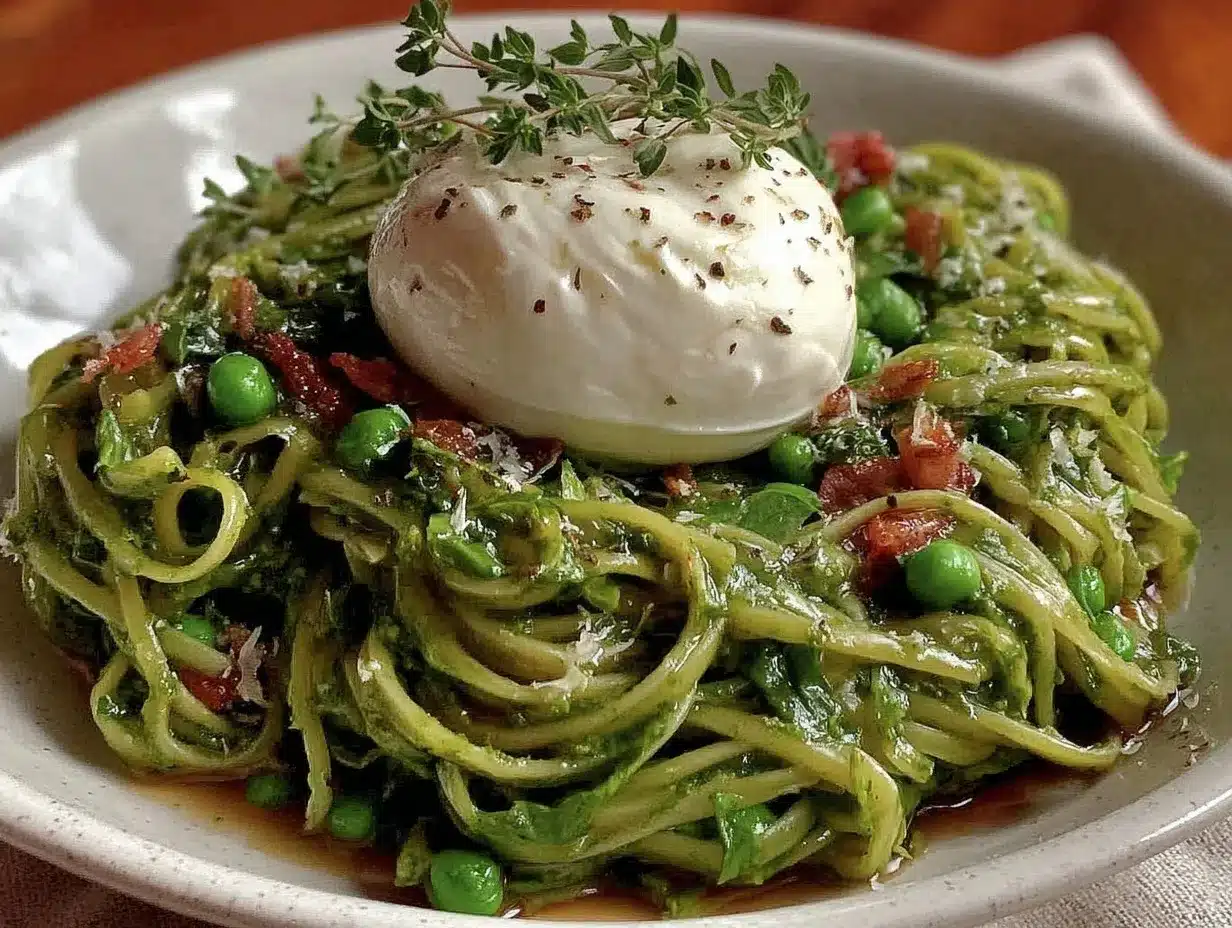
Pro tip: If your pesto seems thick, don’t hesitate to add a splash more olive oil or pasta water. It’ll help coat the noodles beautifully. Also, watch the garlic—you want it to add flavor without overpowering the delicate peas and cheese.
Cooking Tips & Techniques
Making fresh pea pesto pasta with creamy burrata is straightforward, but here are some insider tips to get it just right:
Variations & Adaptations
Fresh pea pesto pasta with creamy burrata is versatile—here are a few ways to make it your own:
One personal favorite? Adding a squeeze of fresh lemon zest right before serving—it lifts the whole dish and adds a bright, unexpected pop.
Serving & Storage Suggestions
This fresh pea pesto pasta with creamy burrata is best served warm, right after assembling. The contrast between the warm pasta and the cool, creamy burrata is just heavenly.
Pair it with a crisp white wine like Sauvignon Blanc or a light sparkling water with lemon to keep things fresh and balanced. A simple arugula salad with lemon vinaigrette makes a perfect side dish, adding peppery bite to the meal.
If you have leftovers (which is rare), store the pasta and burrata separately in airtight containers in the fridge. Pasta will keep for up to 2 days; burrata is best eaten fresh but can last a day refrigerated.
To reheat pasta, warm gently in a skillet with a splash of olive oil or reserved pasta water to prevent drying out. Add burrata fresh after reheating to keep that creamy texture intact. Flavors tend to mellow and deepen after a day, so leftovers can be even more comforting.
Nutritional Information & Benefits
This fresh pea pesto pasta with creamy burrata is a balanced dish packed with nutrients. Peas provide a good source of plant-based protein, fiber, and vitamin C, which supports immunity and skin health. Basil adds antioxidants, while almonds contribute healthy fats and vitamin E.
Burrata, while indulgent, offers calcium and protein, making it a satisfying cheese choice. Using olive oil adds heart-healthy monounsaturated fats. This recipe fits well into a balanced diet and can be enjoyed by those watching gluten intake when paired with gluten-free pasta.
Be mindful that Parmesan and burrata contain dairy and nuts are in the pesto, so those with allergies should adapt accordingly.
From a wellness perspective, this dish feels wholesome and fresh—perfect for spring when you want lighter meals without sacrificing flavor or satisfaction.
Conclusion
In the end, this fresh pea pesto pasta with creamy burrata is more than just a meal—it’s a celebration of spring’s best flavors in one delicious, easy-to-make dish. Whether you’re cooking for family, friends, or just treating yourself, it’s a recipe that’s sure to impress without the stress. I love how versatile and forgiving it is; you can tweak it based on what you have or like best.
If you give this recipe a try, I’d love to hear how you made it your own—drop a comment or share your favorite tweaks! Trust me, once you taste those sweet peas and silky burrata together, you’ll be coming back to this recipe again and again. So go ahead, bring a little spring to your table and enjoy every creamy, fresh bite!
FAQs
Can I use frozen peas instead of fresh peas?
Yes! Frozen peas work well if fresh aren’t available. Just blanch them briefly in boiling water to keep their bright color and flavor before making the pesto.
What type of pasta works best for this recipe?
Spaghetti or linguine are great choices because their shape holds the pesto nicely. But feel free to use your favorite pasta shape, like fusilli or penne.
How should I store leftovers?
Store pasta and burrata separately in airtight containers in the fridge. Pasta lasts 1-2 days; burrata is best fresh but can be kept for a day. Reheat the pasta gently and add fresh burrata when serving.
Can I make the pea pesto ahead of time?
Absolutely! Pea pesto can be prepared a day in advance and stored in the fridge. Stir in a little more olive oil before tossing with pasta to refresh the texture.
What is the best way to serve burrata?
Serve burrata at room temperature, about 15 minutes out of the fridge. This allows it to be soft and creamy, melting beautifully into the warm pasta for a decadent finish.
Pin This Recipe!
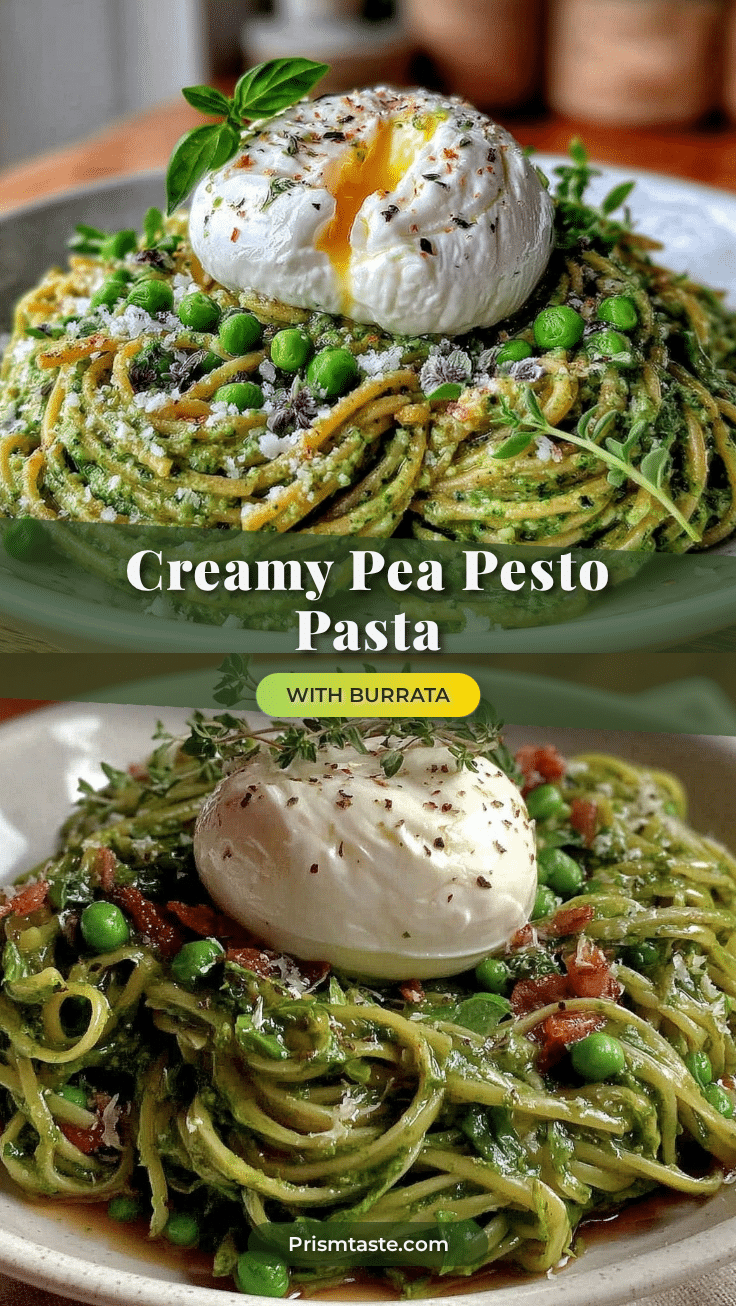
Fresh Pea Pesto Pasta with Creamy Burrata
A quick and easy spring meal combining fresh green peas, fragrant basil, toasted almonds, and Parmesan pesto, topped with creamy burrata cheese for a luscious finish.
- Prep Time: 10 minutes
- Cook Time: 15 minutes
- Total Time: 25 minutes
- Yield: 4 servings 1x
- Category: Main Course
- Cuisine: Italian
Ingredients
- 1 ½ cups fresh green peas, shelled
- 1 cup packed fresh basil leaves
- ¼ cup toasted almonds
- ½ cup grated Parmesan cheese
- 2 garlic cloves, minced
- ⅓ cup extra virgin olive oil
- 1 tablespoon fresh lemon juice
- Salt and freshly ground black pepper, to taste
- 12 oz spaghetti or linguine
- Salt for pasta water
- 1 ball (about 8 oz) creamy burrata cheese
- Fresh basil leaves for garnish
- Extra Parmesan cheese (optional, for sprinkling)
- Freshly cracked black pepper (optional)
Instructions
- Bring a large pot of salted water to a rolling boil. Add 12 oz of spaghetti or linguine and cook according to package instructions until al dente, about 8-10 minutes. Reserve 1 cup of pasta cooking water before draining. Drain pasta and set aside.
- While pasta cooks, blanch 1 ½ cups of fresh green peas in boiling water for 2 minutes until bright green and tender. Drain and immediately plunge into ice water to stop cooking and preserve color. Drain again and set aside.
- In a food processor, combine the blanched peas, 1 cup fresh basil leaves, ¼ cup toasted almonds, ½ cup grated Parmesan, 2 minced garlic cloves, 1 tablespoon fresh lemon juice, and a pinch of salt and pepper. Pulse a few times to combine.
- With the processor running, slowly drizzle in ⅓ cup extra virgin olive oil until the mixture is smooth but still has some texture. Taste and adjust seasoning as needed.
- Return the drained pasta to the pot or a large bowl. Add the pea pesto and toss to coat evenly. Add reserved pasta water a little at a time (start with ¼ cup) to loosen the sauce and help it cling to the noodles. Toss until silky consistency is achieved.
- Divide the pesto pasta among serving plates or bowls. Tear or slice the burrata ball and place a generous dollop on top of each plate. Garnish with fresh basil leaves, extra Parmesan if desired, and a crack of black pepper.
- Serve immediately while burrata is soft and creamy.
Notes
Blanch peas briefly to preserve color and sweetness. Toast almonds for added nuttiness. Add pasta water gradually to achieve a silky sauce. Serve burrata at room temperature for best creaminess. Pesto can be made ahead and stored refrigerated; stir in olive oil before use.
Nutrition
- Serving Size: About 1 plate (1/4 o
- Calories: 480
- Sugar: 6
- Sodium: 480
- Fat: 28
- Saturated Fat: 8
- Carbohydrates: 42
- Fiber: 7
- Protein: 18
Keywords: pea pesto pasta, creamy burrata, spring recipe, easy pasta, fresh peas, basil pesto, vegetarian pasta