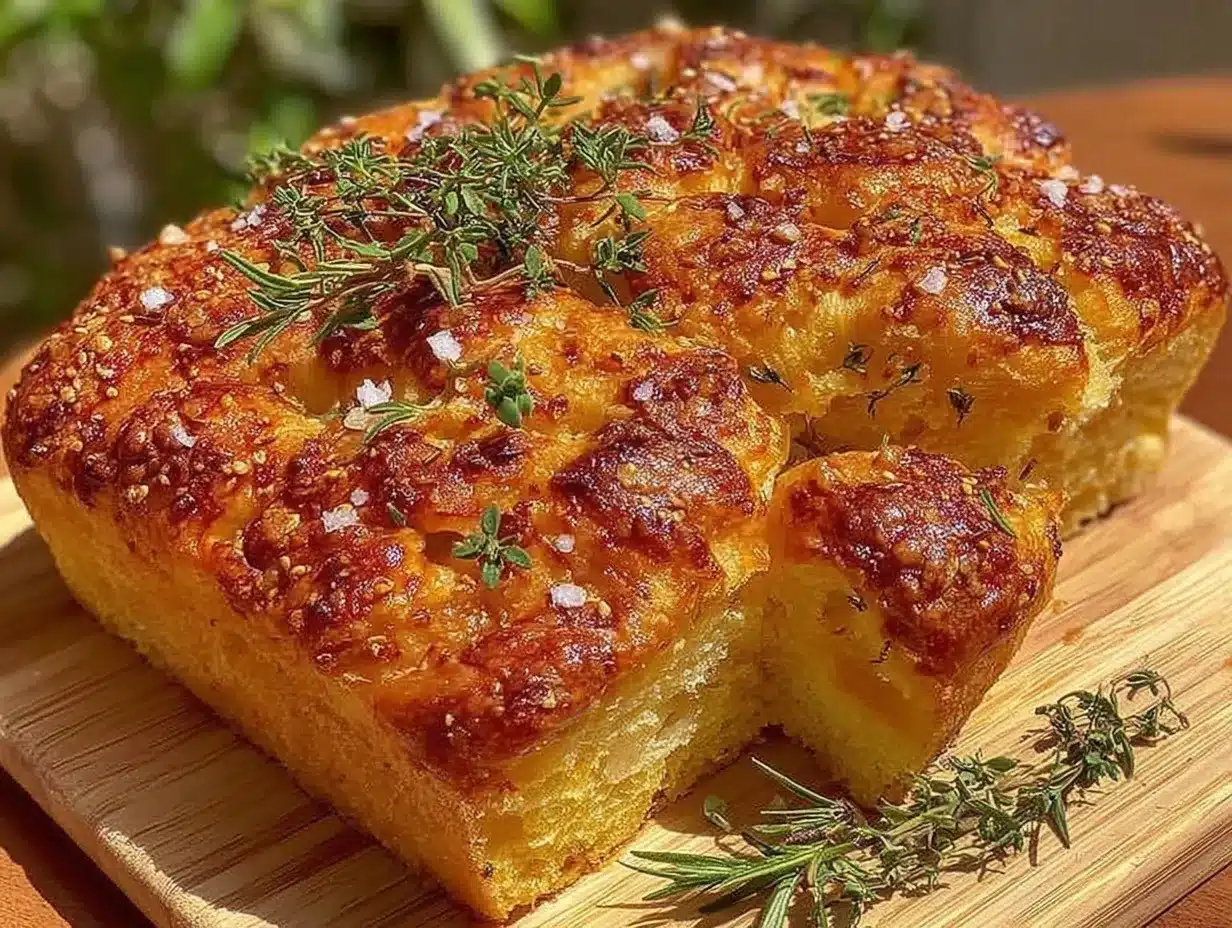
“You’re not seriously trying to make focaccia art, are you?” That’s what my roommate teased me one lazy Sunday morning, as I laid out sprigs of fresh rosemary, thyme, and sage over a thick slab of sourdough dough. Honestly, I was half-joking when I started, but it quickly became a relaxing ritual—pressing herbs into the dough like nature’s own paintbrushes. This crispy sourdough focaccia with garden herb art wasn’t planned; it arose from a leftover sourdough starter and an abundance of herbs from my tiny balcony garden.
The smell of olive oil mingled with the earthy scent of fresh herbs filled the kitchen and, well, it was hard not to get hooked. The crust turned out impossibly crisp while the inside stayed airy and tender, and the herb pattern made the bread almost too pretty to eat—almost. It’s funny how something so simple transformed a dull afternoon into a kind of quiet celebration.
What stuck with me was how this recipe felt approachable, even for someone who’s “not really a baker.” The dough doesn’t demand perfection, and the herbs give each focaccia a unique personality. It’s that kind of recipe you’ll find yourself making over and over, whether to impress company or just treat yourself on a random weekday. And trust me, once you get this crispy sourdough focaccia with garden herb art right, it becomes a staple you quietly brag about.
There’s a little magic in the crackling crust meeting the soft crumb, the visual surprise of herb leaves pressed like little green stamps, and the way it pairs with just about anything—from a simple olive oil drizzle to a hearty stew. It’s bread, but it’s art you can eat, and that’s why it’s stayed with me.
Why You’ll Love This Recipe
This crispy sourdough focaccia recipe has been tested countless times in my kitchen, and each batch has brought its own little wow moment. It’s not just bread; it’s a joyful, hands-on experience that rewards you with incredible flavor and texture every time.
- Quick & Easy: The dough takes a bit of time to rise, but the active prep is under 20 minutes, making it perfect for weekends or calm evenings.
- Simple Ingredients: No fancy stuff here—flour, water, salt, olive oil, and fresh herbs you might already have growing or can grab from the market.
- Perfect for Entertaining: Whether it’s a casual brunch or a dinner party, this focaccia doubles as a conversation starter and a crowd-pleaser.
- Crowd-Pleaser: Kids love the crispy edges, adults appreciate the rustic look and herbal aroma, and everyone asks for seconds.
- Unbelievably Delicious: The sourdough base adds a subtle tang that balances the richness of olive oil and the freshness of garden herbs.
What sets this focaccia apart is the technique of pressing whole herb sprigs into the dough before baking—it creates a natural, edible artwork that’s both rustic and elegant. Plus, using sourdough starter instead of commercial yeast adds depth and makes the crumb tender yet chewy. It’s a recipe that’s both a little special and totally doable, which is rare in bread baking.
Honestly, this isn’t just bread—it’s the kind of recipe that turns a simple meal into a moment. It’s also a subtle way to bring a bit of that garden freshness indoors, especially when you pair it with dishes like a cozy slow cooker beef ragu or creamy lemon ricotta stuffed shells with spinach. The herb art makes it feel personal—like you baked it just for yourself or someone special.
What Ingredients You Will Need
This recipe uses simple, wholesome ingredients to deliver bold flavor and satisfying texture without the fuss. Most are pantry staples, with the star being fresh garden herbs to create that signature herb art look. Here’s what you’ll need:
- Sourdough starter (active and bubbly, about 100g / 3.5 oz) – This provides the natural leavening and tang.
- All-purpose flour (400g / 3 1/4 cups) – I recommend King Arthur for consistent results.
- Water (300ml / 1 1/4 cups) – Lukewarm, to wake up the yeast in the starter.
- Sea salt (1 1/2 tsp) – For flavor and a slight crunch.
- Extra virgin olive oil (4 tbsp + extra for drizzling) – Use good quality like Colavita; it adds richness and helps achieve that crispy crust.
- Fresh herbs (a combination of rosemary, thyme, sage, oregano, or basil) – About 1/2 cup total, whole sprigs and leaves for pressing into the dough.
- Coarse sea salt flakes (for topping) – Adds a delightful crunch and flavor burst.
For substitutions: If you don’t have sourdough starter, you can use 2 tsp of instant yeast, but the flavor won’t be quite the same. For a gluten-free twist, swap all-purpose flour with a 1:1 gluten-free baking blend, but note the texture will change. If fresh herbs aren’t available, dried herbs can work but won’t have the same visual impact.
Equipment Needed
- Mixing bowl: Large enough for dough to rise comfortably. I prefer glass or stainless steel for easy cleaning.
- Dough scraper or spatula: Helps with mixing and handling sticky dough without frustration.
- Baking sheet or rectangular pan: A 9×13-inch (23×33 cm) pan works well for shaping the focaccia.
- Kitchen towel or plastic wrap: To cover the dough during rising.
- Measuring cups and spoons: Accurate measurements keep the recipe consistent.
- Oven: Preheated to 450°F (230°C) for that perfect crispy crust.
If you don’t have a dough scraper, a sturdy spatula or even a butter knife can assist. No fancy baking stone needed here, but a pizza stone can help if you want an extra crisp underside. I clean my baking pans with warm soapy water—no seasoning required, which is a relief.
Preparation Method
- Activate the starter: In a large bowl, combine 100g (3.5 oz) active sourdough starter with 300ml (1 1/4 cups) lukewarm water. Stir gently until the starter is mostly dissolved. This should take about 2 minutes.
- Add the flour and salt: Add 400g (3 1/4 cups) all-purpose flour and 1 1/2 tsp sea salt to the bowl. Mix with a spatula or your hands until the dough forms a rough, shaggy mass. This usually takes 3-4 minutes. The dough will be sticky—that’s normal.
- First rise (bulk fermentation): Cover the bowl with a damp kitchen towel or plastic wrap and let it sit at room temperature for 4 to 6 hours. The dough should become bubbly and roughly double in size. If your kitchen is cold, it might take longer.
- Shape the dough: Generously oil your baking sheet with 1-2 tbsp of olive oil. Transfer the dough to the sheet and gently stretch it out to fit—don’t worry about perfect edges. Use your fingers to dimple the surface, pressing down but not flattening completely. This step takes about 5 minutes.
- Second rise: Cover the dough loosely with plastic wrap or a towel and let it rest for another 1 to 2 hours until puffy but not doubled again.
- Add the garden herb art: Preheat your oven to 450°F (230°C). Gently press whole herb sprigs and leaves into the dough’s surface, arranging them in any pattern you like. Drizzle generously with 2-3 tbsp olive oil and sprinkle with coarse sea salt flakes. This should take 5-7 minutes.
- Bake the focaccia: Place the baking sheet in the oven and bake for 20 to 25 minutes. The edges should turn golden brown and crispy. You’ll smell the herbs and olive oil mingling—a good sign it’s ready.
- Cool before slicing: Let the focaccia cool on a wire rack for at least 10 minutes. This helps the crust stay crispy when you cut it.
If the dough seems too sticky to handle, lightly oil your fingers instead of adding flour—this keeps the crumb tender. For a more rustic look, don’t worry about perfect dimples or herb placement; every focaccia is unique.
Cooking Tips & Techniques
Getting focaccia right is mostly about patience and some simple tricks I picked up after a few too many dense or flat batches. First, don’t rush the rise—sourdough needs time to develop flavor and texture.
Use room temperature ingredients and keep your kitchen moderately warm (about 70°F or 21°C) to encourage fermentation. If it’s colder, your dough will take longer to proof, but that’s okay.
When dimpling the dough, be gentle but confident; the little pockets hold olive oil and create those coveted crispy, flavorful spots. Pressing the herbs too deep can cause them to burn, so just lightly nestle them on top.
Brush or drizzle olive oil generously—don’t skimp here. I learned that the oil is key to getting that glossy, golden crust that’s crisp without being greasy.
Common mistakes include over-handling the dough, which can deflate it, or under-proofing, which leads to a dense crumb. If your focaccia isn’t as airy as you want, try letting it rise a bit longer next time.
Last but not least, don’t cut into the focaccia right out of the oven. It needs a few minutes to set so the crumb doesn’t tear. If you want to multitask, you can prep a flavorful slow cooker salsa verde chicken burrito bowl while the focaccia bakes—it’s a great way to have a meal ready alongside your bread.
Variations & Adaptations
This crispy sourdough focaccia is a fantastic base for experimenting. Here are a few ways I’ve switched it up:
- Seasonal Herb Mix: In spring, I swap rosemary and thyme for fresh chives and lemon verbena for a bright twist. In fall, sage and oregano give a warmer, earthier note.
- Cheese Topping: Sprinkle grated parmesan or feta over the dough before baking to add salty richness and a golden crust. Just be careful not to overwhelm the herb art.
- Flavored Olive Oil: Infuse your olive oil with garlic or chili flakes before drizzling for a subtle kick. I’ve also tried a rosemary-infused oil that pairs beautifully with the herb art.
- Whole Wheat or Spelt Flour: Swap up to half the all-purpose flour for whole wheat or spelt for a nuttier, heartier bread.
- Allergen-Friendly: For a nut-free and dairy-free version, this recipe is already safe, but just ensure your olive oil is pure and no cross-contamination occurs.
Once, I even added thinly sliced cherry tomatoes on top with the herbs, which gave a juicy pop and made the focaccia feel like a mini garden on a plate. It pairs nicely with dishes like creamy baked feta orzo with spinach and sun-dried tomatoes for a full Mediterranean vibe.
Serving & Storage Suggestions
Serve this focaccia warm or at room temperature. It’s perfect on its own, dipped in extra virgin olive oil, or alongside soups and stews. I often slice it thick and use it to soak up sauces from dishes like tender crockpot French dip sandwiches—the crispy herb-studded crust just soaks up that savory au jus beautifully.
Store leftover focaccia in an airtight container at room temperature for up to 2 days. For longer storage, wrap tightly in foil and freeze for up to 2 months. To reheat, pop slices in a toaster oven or regular oven at 350°F (175°C) for 5-7 minutes to bring back the crispiness.
Flavors actually mellow and deepen a bit after resting overnight, so if you can resist, the next day’s focaccia is often even better. Just warm it slightly and enjoy.
Nutritional Information & Benefits
A serving of this crispy sourdough focaccia (about 1/8 of the pan) contains approximately 180-220 calories depending on olive oil usage. It provides a good source of complex carbohydrates and heart-healthy fats from olive oil.
The use of sourdough starter aids digestion by breaking down gluten proteins and naturally fermenting the flour, which some find easier on the stomach. The fresh herbs add antioxidants and vitamins without extra calories.
This recipe is naturally vegetarian and can be made vegan by ensuring no dairy is used elsewhere. It’s also free from common allergens like nuts and dairy, making it a versatile choice for many diets.
Conclusion
This crispy sourdough focaccia with garden herb art is a recipe that turns simple ingredients into something quietly special. It’s approachable yet impressive, rustic but elegant, and above all, delicious. I love it because it reminds me that baking can be playful and creative, even without fancy tools or complicated steps.
Feel free to make it your own—switch up the herbs, add your favorite toppings, or pair it with dishes you love. I often bring a batch to friends, and it’s always a hit, especially when paired with a hearty dinner like the slow cooker beef ragu or the creamy lemon ricotta stuffed shells with spinach.
Give it a try, and I’d love to hear how your herb art turns out. Happy baking!
FAQs
Can I use commercial yeast instead of sourdough starter?
Yes, you can substitute 2 teaspoons of instant yeast for the sourdough starter. The rising time will be shorter, but the flavor won’t have the same tangy depth.
How do I keep the herbs from burning during baking?
Press the herbs lightly into the dough so they’re nestled but not buried. Drizzling olive oil over them helps protect against burning and adds flavor.
Can I make the dough ahead of time?
Absolutely! You can refrigerate the dough after the first rise for up to 12 hours. Let it come to room temperature before shaping and baking.
What if I don’t have fresh herbs?
Dried herbs can work but won’t give the same fresh flavor or visual effect. You can sprinkle them on top before baking, but the “garden art” look will be lost.
How do I get a crispier crust?
Use plenty of olive oil on the baking sheet and dough surface, bake at a high temperature (450°F/230°C), and avoid cutting the bread immediately after baking to let the crust set properly.
Pin This Recipe!
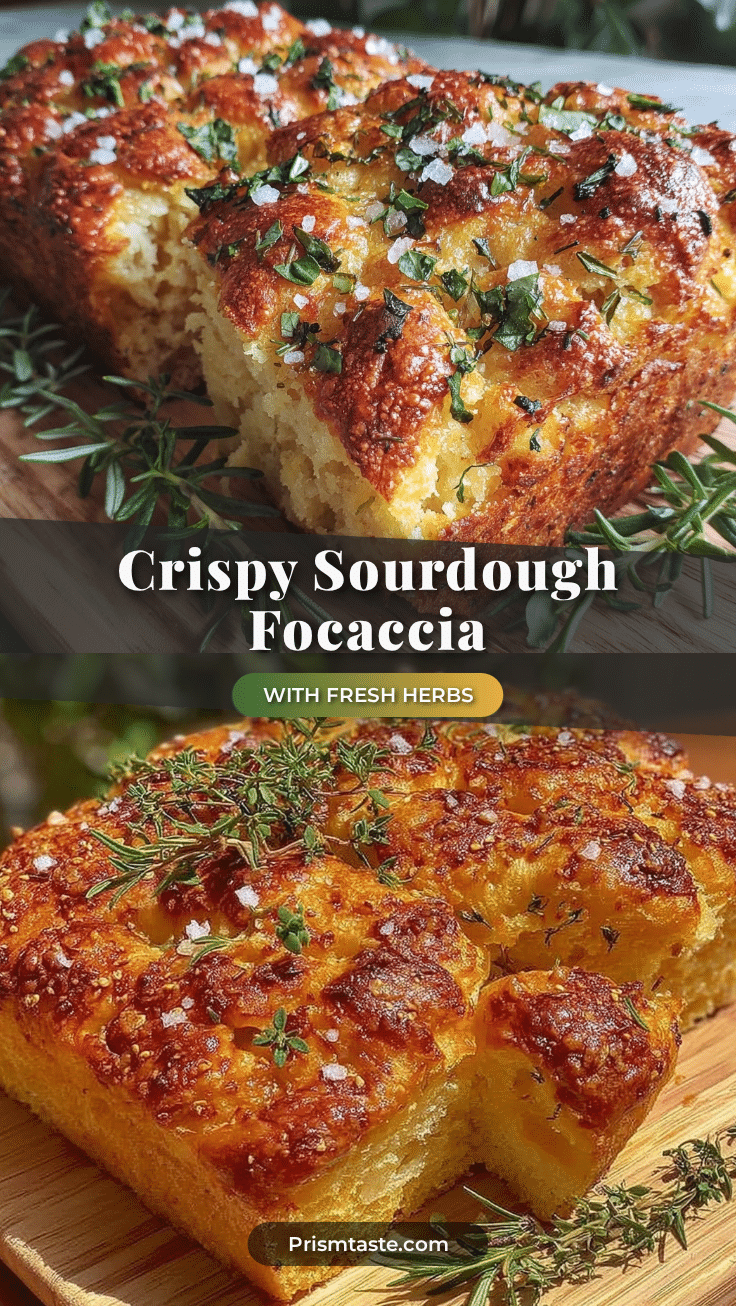
Crispy Sourdough Focaccia Recipe with Garden Herb Art

A crispy sourdough focaccia with a crackling crust and airy crumb, decorated with fresh garden herbs pressed into the dough for a beautiful and flavorful bread.
- Prep Time: 20 minutes
- Cook Time: 25 minutes
- Total Time: 5 hours 45 minutes
- Yield: 8 servings 1x
- Category: Bread
- Cuisine: Italian
Ingredients
- 100g (3.5 oz) active sourdough starter
- 400g (3 1/4 cups) all-purpose flour
- 300ml (1 1/4 cups) lukewarm water
- 1 1/2 tsp sea salt
- 4 tbsp extra virgin olive oil, plus extra for drizzling and oiling pan
- About 1/2 cup fresh herbs (rosemary, thyme, sage, oregano, or basil), whole sprigs and leaves
- Coarse sea salt flakes for topping
Instructions
- Activate the starter: In a large bowl, combine 100g (3.5 oz) active sourdough starter with 300ml (1 1/4 cups) lukewarm water. Stir gently until mostly dissolved, about 2 minutes.
- Add the flour and salt: Add 400g (3 1/4 cups) all-purpose flour and 1 1/2 tsp sea salt. Mix with a spatula or hands until a rough, shaggy, sticky dough forms, about 3-4 minutes.
- First rise (bulk fermentation): Cover bowl with damp towel or plastic wrap and let sit at room temperature for 4 to 6 hours until bubbly and roughly doubled in size.
- Shape the dough: Generously oil a 9×13-inch baking sheet with 1-2 tbsp olive oil. Transfer dough and gently stretch to fit. Dimple surface with fingers, pressing down but not flattening, about 5 minutes.
- Second rise: Cover dough loosely and let rest for 1 to 2 hours until puffy but not doubled.
- Add garden herb art: Preheat oven to 450°F (230°C). Press whole herb sprigs and leaves lightly into dough surface. Drizzle with 2-3 tbsp olive oil and sprinkle with coarse sea salt flakes, about 5-7 minutes.
- Bake the focaccia: Bake on middle rack for 20 to 25 minutes until edges are golden brown and crispy.
- Cool before slicing: Let cool on wire rack for at least 10 minutes to keep crust crispy.
Notes
Use room temperature ingredients and keep kitchen around 70°F (21°C) for best fermentation. Lightly oil fingers to handle sticky dough instead of adding flour. Press herbs lightly to avoid burning. Let focaccia cool before slicing to maintain crisp crust. Dough can be refrigerated after first rise for up to 12 hours.
Nutrition
- Serving Size: 1/8 of the pan
- Calories: 200
- Sugar: 0.5
- Sodium: 350
- Fat: 9
- Saturated Fat: 1.3
- Carbohydrates: 26
- Fiber: 1.5
- Protein: 5
Keywords: sourdough focaccia, crispy focaccia, garden herb bread, homemade focaccia, sourdough bread, herb art focaccia, easy focaccia recipe