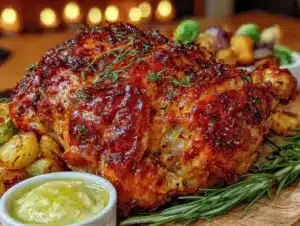
I was standing in the frozen foods aisle at the grocery store last November, trying to decide between two brands of stock, when a woman walked past me holding a bag of clementines. And just like that—I was eight years old, sitting on a counter stool in my aunt Maggie’s tiny kitchen, watching her rub butter into the skin of a turkey while the whole room smelled like orange zest and thyme. She wasn’t even a particularly good cook, honestly. She burned the rolls every single year. But that smell—that sharp, sweet, herby brightness—stayed with me in a way the perfectly cooked turkeys never did. I hadn’t thought about her kitchen in years. She passed when I was in college, and nobody in the family stepped up to host after that. For a long time, Thanksgiving became a restaurant reservation and a quiet shrug. But that moment in the frozen foods aisle? It hit me hard. I grabbed a bag of clementines and a stick of unsalted butter, and I went home to try and chase that feeling. Maybe you’ve had that moment—where a random scent just yanks you backward in time. This herb-roasted turkey with citrus butter is my attempt to bottle that memory. It’s not just a recipe. It’s a way of bringing back a person, a kitchen, a whole season of life, one golden, fragrant bite at a time. And let me tell you, the first time I pulled it out of the oven, I actually teared up a little. The skin was crackling, the butter was bubbling, and the smell—it was her. It was exactly her.
Why You’ll Love This Recipe
This isn’t just another turkey recipe you’ll find on the internet. This is the one that will make your guests close their eyes after the first bite. I’ve tested this method for three Thanksgivings straight, tweaked the butter ratios, argued with myself over herb combinations, and finally landed on something that works every single time. No dry meat. No bland skin. No last-minute panic.
- Juicy, Not Dry: The citrus butter gets rubbed under the skin, so the breast meat stays moist even if you get distracted by the football game. I’ve left this in the oven an extra twenty minutes by accident—still tender.
- Simple Ingredients: You don’t need a specialty grocery store. Butter, oranges, lemons, garlic, and fresh herbs. That’s it. Your pantry probably already has most of it.
- Perfect for Hosting: This turkey is made for a crowd. It scales beautifully, presents like a magazine cover, and gives you that “I totally know what I’m doing” energy without the stress.
- Crowd-Pleaser: I’ve served this to picky eaters, herb skeptics, and people who “don’t really like turkey.” They all came back for seconds. The citrus cuts through the richness in a way that feels bright, not heavy.
- Unbelievably Delicious: The combination of browned butter, roasted garlic, and caramelized citrus creates a flavor that’s sweet, savory, and slightly tangy all at once. It’s comfort food that feels special.
What makes this recipe different from the rest? It’s the technique of making a compound butter with fresh citrus zest and letting it sit under the skin overnight. Most recipes just brush butter on top. That’s fine, but it doesn’t penetrate. This method infuses the meat itself. Plus, the citrus peels inside the cavity steam the bird from the inside out, adding moisture and fragrance without making it taste like dessert. This isn’t just another version—it’s the version I’d serve to my aunt Maggie if I could. And honestly? It’s the kind of recipe that makes you feel like a hero in your own kitchen.
What Ingredients You Will Need
This recipe uses simple, wholesome ingredients that come together to create something far greater than the sum of their parts. Most of these are pantry staples, but a few fresh items make all the difference. Here’s what you’ll need:
For the Citrus Herb Butter
- 1 cup (2 sticks) unsalted butter, softened (I prefer Kerrygold for its richness, but any good-quality butter works)
- Zest of 2 large oranges (about 2 tablespoons—make sure to only get the orange part, not the white pith)
- Zest of 1 large lemon (about 1 tablespoon)
- 4 cloves garlic, minced (fresh is non-negotiable here; jarred garlic just doesn’t have the same punch)
- 2 tablespoons fresh rosemary, finely chopped
- 2 tablespoons fresh thyme leaves (strip them off the stems—it’s a little tedious but worth it)
- 1 tablespoon fresh sage, finely chopped
- 1 teaspoon salt
- ½ teaspoon black pepper
For the Turkey
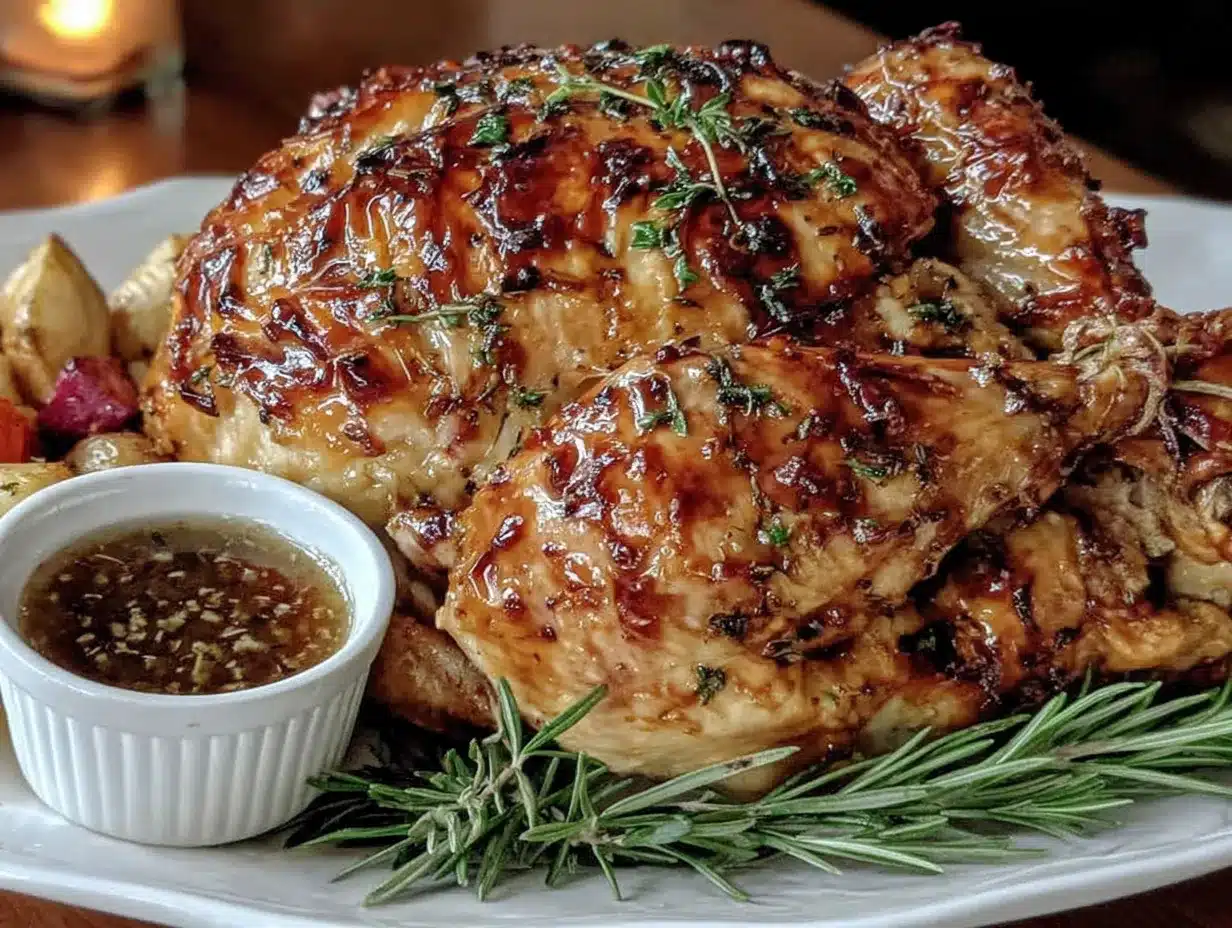
- 1 whole turkey (12–14 pounds), thawed if frozen (I always buy fresh from the butcher when I can—the texture is noticeably better)
- 1 orange, quartered (for stuffing the cavity)
- 1 lemon, quartered (for stuffing the cavity)
- 1 onion, quartered (adds sweetness to the drippings)
- 4 sprigs fresh rosemary (for the cavity)
- 4 sprigs fresh thyme (for the cavity)
- 2 tablespoons olive oil (for rubbing the outside)
- Salt and pepper, for seasoning the outside
- 2 cups low-sodium chicken or turkey broth (for the roasting pan—this keeps the drippings from burning)
Ingredient Tips & Substitutions
If you can’t find fresh sage, double up on the rosemary instead. Dried herbs won’t give you the same bright flavor, so stick with fresh if possible. For a dairy-free version, use a high-quality vegan butter—just make sure it’s unsalted so you can control the salt level. If you’re feeding a smaller crowd, this recipe scales down beautifully for a bone-in turkey breast (about 5–7 pounds). Just reduce the roasting time by about half. And here’s a little secret: the citrus butter can be made up to three days in advance. Just wrap it in parchment paper and keep it in the fridge. Let it come to room temperature before using.
Equipment Needed
You don’t need a professional kitchen to pull this off, but having the right tools makes the process smoother. Here’s what you’ll need:
- Roasting Pan: A sturdy metal pan with a rack is ideal. If you don’t have a rack, you can use celery stalks or onion rings as a makeshift rack—I’ve done it in a pinch and it works fine.
- Instant-Read Thermometer: This is non-negotiable. A digital one gives you the most accurate reading. I’ve ruined turkeys by guessing, and I’ll never go back.
- Kitchen Twine: For trussing the legs. You can skip this if you’re in a hurry, but it helps the bird cook more evenly.
- Mixing Bowl: For making the compound butter.
- Microplane or Zester: For getting the citrus zest without the bitter pith.
- Basting Brush (Optional): I actually prefer using a spoon for basting, but a brush works too.
- Aluminum Foil: For tenting the turkey if the skin browns too quickly.
If you’re on a budget, skip the fancy roasting rack and use vegetables instead. They add flavor to the drippings anyway. And don’t stress about having a high-end thermometer—a basic $10 digital one from the grocery store will save your turkey.
Preparation Method
Step 1: Make the Citrus Herb Butter
In a medium mixing bowl, combine the softened butter, orange zest, lemon zest, minced garlic, chopped rosemary, thyme, sage, salt, and pepper. Mash everything together with a fork until it’s evenly mixed. The butter should be soft and spreadable—if it’s too firm, let it sit at room temperature for another 10 minutes. Taste a tiny bit (yes, raw butter—it’s safe) to check the seasoning. It should taste bright and herby, not just salty. Set aside.
Step 2: Prep the Turkey
Take your turkey out of the refrigerator about 45 minutes before you start. Pat it completely dry with paper towels—inside and out. This is the most important step for crispy skin. I cannot stress this enough. Wet skin steams instead of roasts. Remove the neck and giblets from the cavity (save them for stock if you’re ambitious). Place the turkey breast-side up on the rack in your roasting pan.
Step 3: Apply the Butter
Using your fingers, gently loosen the skin from the breast meat. Start at the neck end and work your way down, being careful not to tear the skin. It feels weird the first time, but you’ll get the hang of it. Slide about two-thirds of the citrus herb butter under the skin, spreading it evenly over both breasts and down the thighs. Rub the remaining butter all over the outside of the turkey. Don’t forget the wings and legs. Season the outside generously with salt and pepper.
Step 4: Stuff the Cavity
Stuff the cavity with the quartered orange, lemon, onion, and the remaining herb sprigs. Don’t pack it too tightly—you want air to circulate. Tie the legs together with kitchen twine. Tuck the wing tips under the body so they don’t burn.
Step 5: Roast
Preheat your oven to 425°F (220°C). Pour the 2 cups of broth into the bottom of the roasting pan—this prevents the drippings from burning and makes gravy later. Place the turkey in the oven and roast at 425°F for 30 minutes. Then, without opening the oven, reduce the temperature to 350°F (175°C). Continue roasting for about 2 to 2½ hours for a 12–14 pound bird. The total time is roughly 13 minutes per pound, but always trust your thermometer over the clock.
Step 6: Baste (Optional but Recommended)
About every 45 minutes, open the oven and baste the turkey with the pan juices. Use a spoon or a basting brush. This keeps the skin moist and adds layers of flavor. If the skin is browning too quickly, tent the turkey loosely with aluminum foil.
Step 7: Check for Doneness
Insert your instant-read thermometer into the thickest part of the thigh, avoiding the bone. You’re looking for 165°F (74°C). Also check the breast—it should be at least 160°F (71°C), and it will carry over to 165°F while resting. If the thigh isn’t done but the breast is getting too hot, remove the turkey and carve off the breast, then return the legs to the oven for another 15 minutes. I’ve had to do this before, and it saved the meal.
Step 8: Rest and Carve
Once done, transfer the turkey to a cutting board. Let it rest for at least 20–30 minutes, loosely tented with foil. This is not optional—resting redistributes the juices. If you cut into it immediately, all that moisture ends up on the cutting board instead of on your plate. While it rests, make your gravy from the pan drippings.
Cooking Tips & Techniques
Let me save you from some mistakes I’ve made. First: don’t skip the drying step. I once rushed through it and ended up with soggy skin that looked sad and gray. Pat that bird dry like your reputation depends on it. Second: room temperature butter is crucial. Cold butter won’t spread under the skin, and you’ll end up tearing it. Leave your butter out for at least an hour before you start.
Here’s a pro trick I learned from a chef friend: after you apply the butter, let the turkey sit in the fridge uncovered overnight. This dries out the skin even more, which means it gets incredibly crispy. If you don’t have time, even an hour helps. Another thing—don’t open the oven too often. Every time you open it, the temperature drops and your cooking time increases. I set a timer for basting and stick to it.
If your turkey is cooking unevenly (the breast is done but the thighs aren’t), don’t panic. Just cover the breast with foil and let the thighs catch up. I had a lopsided bird one year that almost gave me a heart attack, but this trick saved it. And finally: always, always let it rest. I know you’re hungry. I know people are waiting. But a rested turkey is a juicy turkey. Period.
Variations & Adaptations
This recipe is flexible, and I’ve tried several variations over the years. Here are a few you might love:
- Herb Swap: If you’re not a rosemary fan, use tarragon and parsley instead. Tarragon has a subtle licorice note that pairs beautifully with citrus. I tried this last year and it was a hit.
- Spicy Citrus: Add 1 teaspoon of red pepper flakes to the butter for a subtle heat. It doesn’t make the turkey spicy—it just adds a warmth that lingers. My brother-in-law, who loves heat, requested this version for Christmas.
- Garlic Lovers: Double the garlic in the butter and add 6 whole cloves to the cavity. The roasted garlic infuses the meat and makes the drippings incredible for gravy.
- Gluten-Free Gravy: Use cornstarch or arrowroot powder to thicken the pan drippings instead of flour. It works perfectly and nobody will notice the difference.
- Smoked Turkey: If you have a smoker, this citrus butter works beautifully. Smoke the turkey at 225°F for about 30 minutes per pound, basting every hour. The citrus cuts through the smokiness in a way that’s unforgettable.
For a smaller gathering, try this same butter on a bone-in turkey breast. Roast at 375°F for about 1½ hours, or until the internal temperature hits 160°F. It’s quicker, less intimidating, and still gives you that herb-citrus magic.
Serving & Storage Suggestions
Serve this turkey on a large platter, surrounded by fresh herbs and citrus slices for a gorgeous presentation. The skin should be golden and crackling. Let guests see the whole bird before you carve—it’s a showstopper. I like to serve it with classic sides like mashed potatoes, green bean casserole, and a tangy cranberry sauce that cuts through the richness.
For leftovers, store the carved meat in an airtight container in the refrigerator for up to 4 days. The citrus flavor actually deepens overnight, so day-two turkey sandwiches are a real treat. To reheat, place slices in a baking dish with a splash of broth, cover with foil, and warm in a 300°F oven for about 15 minutes. This prevents the meat from drying out.
You can also freeze leftover turkey for up to 3 months. Slice it first, wrap it tightly in plastic wrap, then foil, and place it in a freezer bag. Thaw in the refrigerator overnight before reheating. The texture won’t be quite as perfect as fresh, but it’s still delicious in soups, casseroles, or on salads.
One more thing—the pan drippings make the best gravy you’ll ever have. Don’t throw them away! Strain them into a jar and refrigerate for up to a week. Use them to make gravy, or add a spoonful to soups for instant depth.
Nutritional Information & Benefits
Here’s an approximate nutritional breakdown per serving (based on a 6-ounce portion of white meat with skin):
- Calories: 350
- Protein: 46g
- Fat: 17g
- Carbohydrates: 2g
- Fiber: 0g
- Sugar: 1g
Turkey is an excellent source of lean protein, which supports muscle health and keeps you feeling full. The citrus adds a boost of vitamin C, and the garlic provides anti-inflammatory benefits. If you’re watching your sodium, reduce the salt in the butter and skip the extra salt on the outside—the herbs and citrus will still deliver plenty of flavor.
This recipe is naturally gluten-free and low-carb. For a dairy-free option, use vegan butter. Just be aware that the texture of the skin might be slightly less crispy. I’ve tested it, and it’s still delicious—just not quite as crackling.
Conclusion
This herb-roasted turkey with citrus butter is more than a recipe—it’s a way to bring people together around a table, to create a memory that smells like orange zest and rosemary. Every time I make it, I think of my aunt Maggie and her tiny, chaotic kitchen. I think of the way she’d wink at me while sneaking a piece of crispy skin before anyone else saw. And I think of how food can carry us back to the people we’ve loved, even when they’re gone.
I hope you make this turkey for your own gathering. I hope you tweak it, make it yours, and serve it with pride. And if you do, I’d love to hear about it. Leave a comment below and tell me how it turned out—what did your guests say? Did anyone ask for the recipe? Did you add your own twist? Share your story, because that’s what makes cooking worth doing. Now go preheat that oven. You’ve got a show to put on.
Frequently Asked Questions
Can I prepare the citrus butter ahead of time?
Absolutely. You can make the butter up to three days in advance. Wrap it tightly in parchment paper or plastic wrap and store it in the refrigerator. Let it come to room temperature for about 30 minutes before using so it spreads easily.
How do I know when the turkey is fully cooked?
Use an instant-read thermometer. Insert it into the thickest part of the thigh without touching bone. The safe internal temperature is 165°F (74°C). The breast should be at least 160°F (71°C)—it will rise to 165°F while resting.
Can I use dried herbs instead of fresh?
Fresh herbs are strongly recommended for this recipe. Dried herbs are more concentrated and can taste dusty when used in a compound butter. If you’re in a pinch, use half the amount of dried herbs, but the flavor won’t be as bright.
What if my turkey skin is browning too fast?
Loosely tent the turkey with aluminum foil. This will slow down the browning while allowing the bird to continue cooking. Check it every 20 minutes and remove the foil for the last 15 minutes if you want extra crispiness.
Can I use this recipe for a smaller turkey or just a breast?
Yes. For a bone-in turkey breast (5–7 pounds), roast at 375°F (190°C) for about 1½ hours, or until the internal temperature reaches 160°F. The citrus butter technique works the same way—just apply it under the skin of the breast.
Pin This Recipe!
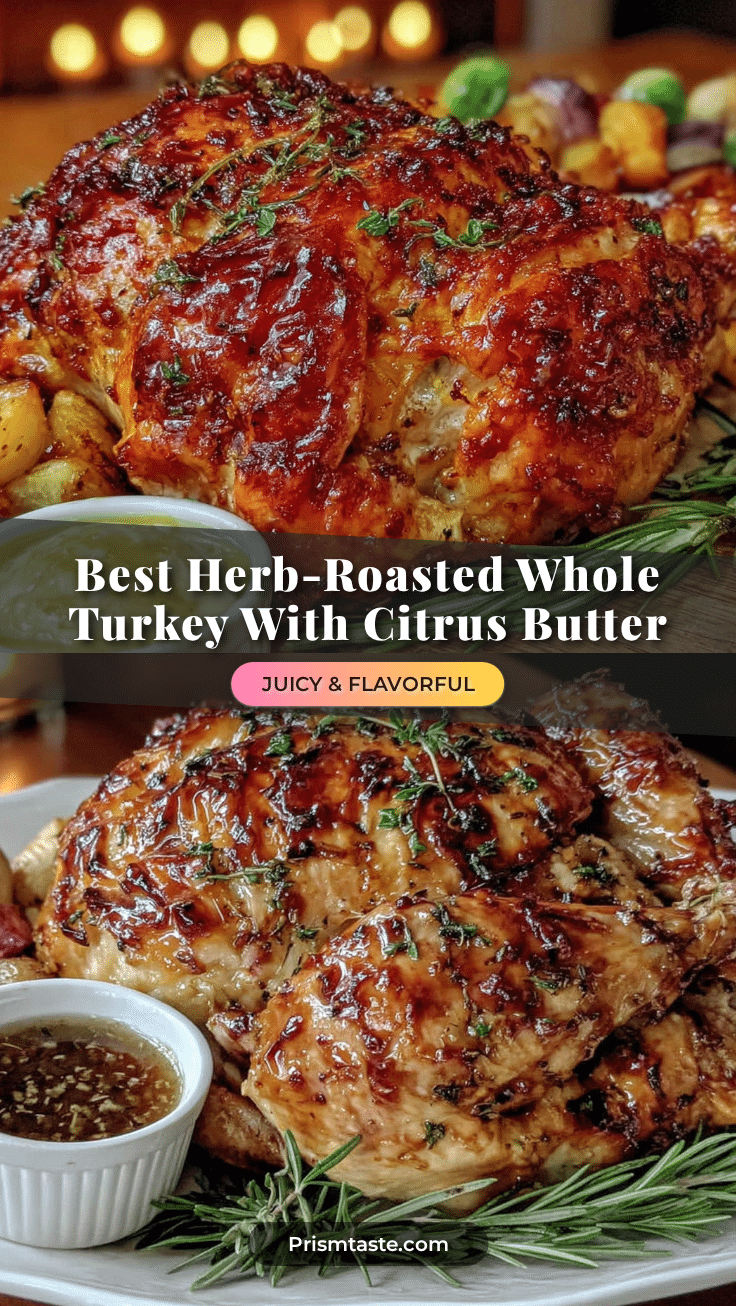
Best Herb-Roasted Whole Turkey with Citrus Butter – Easy Thanksgiving Recipe
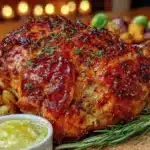
This herb-roasted turkey with citrus butter is a memory-infused recipe that brings together browned butter, roasted garlic, and caramelized citrus for a flavor that’s sweet, savory, and slightly tangy. The citrus butter gets rubbed under the skin, ensuring juicy, tender meat every time.
- Prep Time: 45 minutes
- Cook Time: 2 hours 30 minutes
- Total Time: 3 hours 15 minutes
- Yield: 12 servings 1x
- Category: Main Course
- Cuisine: American
Ingredients
- 1 cup (2 sticks) unsalted butter, softened
- Zest of 2 large oranges (about 2 tablespoons)
- Zest of 1 large lemon (about 1 tablespoon)
- 4 cloves garlic, minced
- 2 tablespoons fresh rosemary, finely chopped
- 2 tablespoons fresh thyme leaves
- 1 tablespoon fresh sage, finely chopped
- 1 teaspoon salt
- ½ teaspoon black pepper
- 1 whole turkey (12–14 pounds), thawed if frozen
- 1 orange, quartered
- 1 lemon, quartered
- 1 onion, quartered
- 4 sprigs fresh rosemary
- 4 sprigs fresh thyme
- 2 tablespoons olive oil
- Salt and pepper, for seasoning the outside
- 2 cups low-sodium chicken or turkey broth
Instructions
- Make the Citrus Herb Butter: In a medium mixing bowl, combine the softened butter, orange zest, lemon zest, minced garlic, chopped rosemary, thyme, sage, salt, and pepper. Mash everything together with a fork until evenly mixed. Set aside.
- Prep the Turkey: Take the turkey out of the refrigerator about 45 minutes before starting. Pat it completely dry with paper towels—inside and out. Remove the neck and giblets from the cavity. Place the turkey breast-side up on the rack in your roasting pan.
- Apply the Butter: Using your fingers, gently loosen the skin from the breast meat. Slide about two-thirds of the citrus herb butter under the skin, spreading it evenly over both breasts and down the thighs. Rub the remaining butter all over the outside of the turkey. Season the outside generously with salt and pepper.
- Stuff the Cavity: Stuff the cavity with the quartered orange, lemon, onion, and the remaining herb sprigs. Tie the legs together with kitchen twine. Tuck the wing tips under the body.
- Roast: Preheat your oven to 425°F (220°C). Pour the 2 cups of broth into the bottom of the roasting pan. Place the turkey in the oven and roast at 425°F for 30 minutes. Then, without opening the oven, reduce the temperature to 350°F (175°C). Continue roasting for about 2 to 2½ hours for a 12–14 pound bird.
- Baste (Optional but Recommended): About every 45 minutes, open the oven and baste the turkey with the pan juices. If the skin is browning too quickly, tent the turkey loosely with aluminum foil.
- Check for Doneness: Insert an instant-read thermometer into the thickest part of the thigh, avoiding the bone. You’re looking for 165°F (74°C). Also check the breast—it should be at least 160°F (71°C).
- Rest and Carve: Once done, transfer the turkey to a cutting board. Let it rest for at least 20–30 minutes, loosely tented with foil. While it rests, make your gravy from the pan drippings.
Notes
For extra crispy skin, after applying the butter, let the turkey sit in the fridge uncovered overnight. Always let the turkey rest for at least 20-30 minutes before carving to redistribute juices. The citrus butter can be made up to three days in advance.
Nutrition
- Serving Size: 6 ounces white meat
- Calories: 350
- Sugar: 1
- Sodium: 450
- Fat: 17
- Saturated Fat: 10
- Carbohydrates: 2
- Protein: 46
Keywords: herb roasted turkey, citrus butter turkey, Thanksgiving turkey, whole turkey recipe, easy turkey recipe