There used to be a little farm-to-table café tucked behind the old train depot in my town that made the most incredible vegetable platter. When they closed their doors two summers ago—just a handwritten sign on the door one Tuesday morning—I honestly felt a little lost. That platter wasn’t just vegetables; it was an experience. The way they arranged everything, the dip that had this secret tangy kick, the way the veggies were cut so precisely they almost looked like art. After twelve attempts—and one particularly sad attempt where my carrots looked like they’d been through a woodchipper—I finally cracked the code. This Fresh Spiderweb Veggie Tray with Ranch Dip is my love letter to that café, and let me tell you, it’s even better than the original.
You know that feeling when you walk into a party and see a veggie tray that’s clearly been thrown together in five minutes? The celery’s all limp, the dip is from a packet, and everyone’s pretending to be excited about it. That’s not what we’re doing here. This spiderweb veggie tray is the thing that makes people stop mid-conversation and say, “Wait, who made this?” It’s got that wow factor without being fussy, which honestly is my favorite kind of recipe. The homemade ranch dip is the real star here—creamy, herby, with just enough garlic to keep you coming back for more.
I’ll be honest, the first time I tried to recreate that café platter, I forgot the buttermilk for the ranch. I used plain yogurt instead, and honestly, it was a happy accident. The tang was even better. So if you’re the type of person who forgets things at the grocery store (welcome to the club), this recipe has room for that. It’s forgiving, it’s flexible, and it’s the kind of dish that makes you look like you spent way more time on it than you actually did. And isn’t that the dream?
Why You’ll Love This Recipe
I’ve tested this Fresh Spiderweb Veggie Tray with Ranch Dip at four different gatherings now—a kid’s birthday party, a Halloween potluck, a casual Sunday football thing, and honestly just a Tuesday night when I needed something crunchy to snack on. Every single time, the tray came back empty. Not a single cucumber slice left behind. That’s the kind of track record that makes a recipe stick in your rotation.
- Quick & Easy: This comes together in about 20 minutes of active prep. The hardest part is cutting the veggies, and I promise you can handle that.
- Simple Ingredients: Nothing fancy here. You probably have most of the ranch ingredients in your fridge right now. No obscure spice blends required.
- Perfect for Parties: Halloween, game day, backyard barbecues, holiday gatherings—this spiderweb design works for literally any occasion where people stand around and talk.
- Crowd-Pleaser: Kids actually eat the vegetables when they’re arranged in a fun pattern. Adults appreciate the homemade dip. Everyone wins.
- Unbelievably Delicious: That homemade ranch dip is next-level. Once you make it from scratch, you’ll never go back to the packet stuff. I mean it.
What makes this different from every other veggie tray out there? It’s the presentation, sure, but it’s also the dip. Most store-bought ranch dips are heavy on the mayo and light on the herbs. This one uses a perfect balance of fresh dill, parsley, and chives with just a hint of garlic powder and onion powder. It’s creamy without being heavy, tangy without being sour. And the spiderweb design? That’s just pure fun. It turns a simple vegetable platter into a conversation starter.
This is the recipe that makes you feel good about eating your vegetables—not because you have to, but because you actually want to. It’s comfort food in the sense that it’s familiar and satisfying, but it’s also light enough that you don’t feel weighed down afterward. That’s the sweet spot, right there.
What Ingredients You Will Need
This recipe uses fresh, wholesome ingredients to create a veggie tray that’s as beautiful as it is delicious. The homemade ranch dip is where all the magic happens, so don’t skimp on the herbs.
For the Ranch Dip
- 1 cup sour cream (full-fat gives the best texture, but Greek yogurt works too)
- 1/2 cup mayonnaise (I prefer Hellmann’s or Duke’s for that classic tang)
- 1/4 cup buttermilk (adds that signature tang—shake the carton before measuring)
- 2 tablespoons fresh dill, finely chopped (dried works in a pinch, use 2 teaspoons)
- 2 tablespoons fresh parsley, finely chopped
- 1 tablespoon fresh chives, finely chopped
- 1 teaspoon garlic powder (not garlic salt—we’ll control the salt separately)
- 1 teaspoon onion powder
- 1/2 teaspoon salt (add more to taste)
- 1/4 teaspoon black pepper, freshly ground
- 1 teaspoon lemon juice (fresh squeezed is best, bottled works in a pinch)
For the Spiderweb Veggie Tray
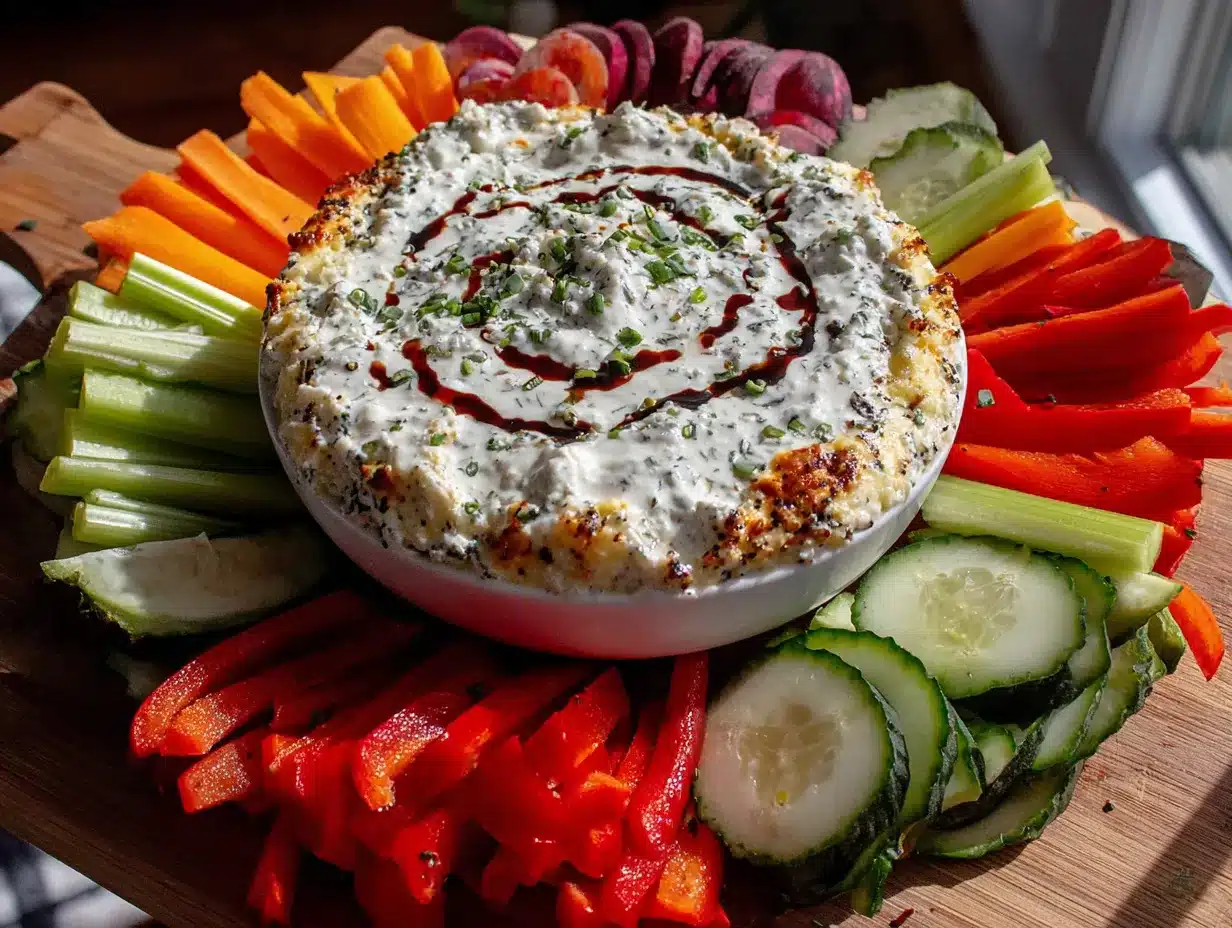
- 1 large bell pepper, any color (red makes a nice contrast against green veggies)
- 2 cups cherry tomatoes (mixed colors look gorgeous)
- 2 large carrots, peeled and cut into sticks
- 2 celery stalks, cut into sticks
- 1 English cucumber, sliced into rounds or half-moons
- 1 cup broccoli florets (small, bite-sized pieces)
- 1 cup cauliflower florets
- 1/2 cup black olives (for the spider body and legs)
- 1 large serving platter (round or oval works best for the spiderweb effect)
Ingredient Selection Tips: For the freshest herbs, look for bunches that are bright green and perky, not wilted. If you’re using dried herbs instead of fresh, remember that dried herbs are more concentrated—use about one-third of the amount. For the vegetables, try to get everything from the same store trip so they’re all equally fresh. I’ve found that organic carrots tend to be sweeter, but regular ones work just fine.
Substitution Guidance: Need this dairy-free? Use dairy-free sour cream and mayonnaise, and swap the buttermilk for a tablespoon of lemon juice mixed with enough dairy-free milk to make 1/4 cup. For a lower-fat option, use Greek yogurt in place of sour cream. If you don’t have fresh herbs, dried herbs work—just reduce the amount by two-thirds. The flavor won’t be quite as bright, but it’ll still be delicious.
Equipment Needed
You don’t need anything fancy for this Fresh Spiderweb Veggie Tray with Ranch Dip, which is part of why I love it. Here’s what you’ll want to have on hand:
- Large round or oval serving platter (at least 12 inches across—the bigger the better for that spiderweb design)
- Chef’s knife (a sharp one makes all the difference for clean vegetable cuts)
- Cutting board (preferably large enough to hold multiple veggies at once)
- Small mixing bowl (for the ranch dip)
- Whisk (for blending the dip ingredients smoothly)
- Measuring cups and spoons
- Vegetable peeler (for the carrots)
- Small ramekin or bowl (to hold the dip in the center of the spiderweb)
Budget-Friendly Options: If you don’t have a large platter, a baking sheet lined with parchment paper works perfectly. No whisk? A fork will do the job—just be patient and whisk thoroughly. I’ve made this recipe in my tiny apartment kitchen with a dull knife and a cutting board that was way too small, and it still turned out great. Don’t let equipment limitations stop you.
Personal Note: I bought my favorite round platter at a thrift store for three dollars. It’s got a slight chip on the edge, but honestly, that just adds character. Keep an eye out at secondhand shops—you’d be surprised what you can find.
Preparation Method
- Make the ranch dip first. In a small mixing bowl, combine 1 cup sour cream, 1/2 cup mayonnaise, and 1/4 cup buttermilk. Whisk until smooth and creamy. This should take about 30 seconds. The mixture should be thick but pourable—if it’s too thick, add another tablespoon of buttermilk.
- Add the herbs and seasonings. Stir in 2 tablespoons fresh dill, 2 tablespoons fresh parsley, 1 tablespoon fresh chives, 1 teaspoon garlic powder, 1 teaspoon onion powder, 1/2 teaspoon salt, 1/4 teaspoon black pepper, and 1 teaspoon lemon juice. Whisk everything together until well combined. Taste it. Does it need more salt? More garlic? Adjust to your preference. Cover the bowl and refrigerate for at least 30 minutes—this lets the flavors meld together. The dip will be even better if you make it a day ahead.
- Prepare all the vegetables. Wash everything thoroughly. Peel the carrots, then cut them into sticks about 3 inches long and 1/2 inch thick. Cut the celery into similar-sized sticks. Slice the cucumber into rounds about 1/4 inch thick, then cut each round in half if you want half-moons. Cut the bell pepper into strips about 1/2 inch wide. Break the broccoli and cauliflower into small florets—you want them bite-sized, not huge chunks. Leave the cherry tomatoes whole.
- Assemble the spiderweb design. Place the small ramekin of ranch dip in the center of your large platter. This is the center of your web. Starting from the dip bowl, arrange the vegetables in concentric circles radiating outward. I like to start with the carrot sticks pointing outward like spokes, then fill in the circles with alternating vegetables. Think of it like a target—each ring is a different veggie.
- Create the spiderweb lines. Here’s where it gets fun. Use thin strips of bell pepper or cucumber to create the “web” lines connecting the center to the outer edge. Place these strips like spokes on a wheel, evenly spaced around the dip bowl. Then, using smaller pieces of the same vegetable, create curved lines connecting the spokes—like the actual threads of a web. This takes a little patience, but it’s so worth it.
- Make the spider. Take a few black olives and arrange them on top of the dip in the center bowl to look like a spider. Use one olive for the body and slice another olive lengthwise to create legs. Arrange the legs coming off the body. It doesn’t have to be perfect—spiders are naturally a little creepy, so imperfection works in your favor here.
- Fill in the gaps. Look at your tray and see where there are empty spaces. Fill them in with cherry tomatoes, extra broccoli florets, or any remaining vegetables. The goal is to make it look full and abundant—no bare spots allowed.
- Chill before serving. Pop the whole tray in the refrigerator for about 15 minutes before serving. This firms up the dip and makes the vegetables extra crisp and refreshing.
Sensory Cues: When you’re cutting the carrots, you should hear a clean snap—if they’re bending instead of breaking, your knife needs sharpening. The ranch dip should smell distinctly herby and garlicky, with that unmistakable buttermilk tang. When you arrange the vegetables, the colors should pop against each other—the orange carrots, green cucumber, red tomatoes, and white cauliflower create a beautiful mosaic.
Troubleshooting Tip: If your dip is too thin, add another tablespoon of sour cream. If it’s too thick, add a splash more buttermilk. If the vegetables start to look a little sad after sitting out for a while, give them a quick spritz of cold water and pat them dry—it perks them right back up.
Cooking Tips & Techniques
After making this Fresh Spiderweb Veggie Tray with Ranch Dip about fifteen times (no exaggeration), I’ve picked up a few tricks that make the process smoother and the results better.
Keep your vegetables cold and crisp. The secret to a great veggie tray is crunch. After you wash your vegetables, soak them in ice water for about 10 minutes. This crisps them up like magic. Drain them well and pat them completely dry before arranging—wet veggies make the dip watery and slide around on the platter. I learned this the hard way when my first attempt looked like a vegetable slip-and-slide.
Cut vegetables uniformly. This is the number one thing that makes your tray look professional. Take the extra 30 seconds to make sure your carrot sticks are all roughly the same size. Your cucumber slices should be even thickness. It sounds picky, but it makes a huge difference in the final presentation. I use a mandoline for the cucumbers when I’m feeling fancy, but a sharp knife works just fine.
Let the dip rest overnight. I know I mentioned this already, but it bears repeating. The ranch dip is good right away, but it’s transcendent after 24 hours in the fridge. The herbs have time to infuse the cream base, and the garlic and onion powders mellow out and blend together. Make the dip the day before your event, and thank me later.
Don’t overcrowd the platter. It’s tempting to pile on as many vegetables as possible, but a spiderweb design needs some negative space to be visible. Leave small gaps between the rings of vegetables so the pattern is clear. You want people to see the web, not just a jumble of veggies.
One mistake I still make: I always underestimate how many cherry tomatoes I need. They’re small, they disappear fast, and they’re usually the first thing to go. Buy an extra pint. Trust me on this.
Variations & Adaptations
One of the best things about this Fresh Spiderweb Veggie Tray with Ranch Dip is how adaptable it is. Here are some variations I’ve tried and loved:
Seasonal Vegetable Swap
In the summer, I add grilled zucchini slices and roasted red pepper strips. In the fall, I swap in blanched green beans and radishes. Winter calls for roasted sweet potato cubes and steamed asparagus spears. The spiderweb design works with any vegetables you have on hand—just keep the colors varied for visual appeal.
Dietary Adaptations
For a dairy-free version, use dairy-free sour cream and mayonnaise, and make your own buttermilk substitute with lemon juice and dairy-free milk. For a vegan option, the same swaps work perfectly. For a low-carb version, load up on cucumber, celery, bell peppers, and broccoli—skip the carrots if you’re watching your carbs closely.
Dip Variations
Not a ranch fan? Swap in a creamy garlic herb dip by adding extra garlic and skipping the dill. Try a spicy version by adding a teaspoon of sriracha or a pinch of cayenne pepper to the ranch base. For a Greek twist, add a tablespoon of crumbled feta and a teaspoon of dried oregano. I once made a version with roasted red pepper blended into the sour cream, and it was absolutely incredible.
Halloween-Themed Spiderweb
If you’re making this for Halloween, add some spooky touches. Use a small plastic spider on top of the dip instead of olive legs. Arrange the vegetables in the shape of a spiderweb with the dip in the center—the lines of the web can be made with thin strips of red bell pepper for a bloody effect. Add some “eyeballs” by putting a small dollop of cream cheese on each cherry tomato with a tiny olive slice in the center.
Serving & Storage Suggestions
This Fresh Spiderweb Veggie Tray with Ranch Dip is best served cold, right out of the refrigerator. The contrast between the cold, crisp vegetables and the creamy, herby dip is what makes it so satisfying. I like to set it out about 15 minutes before guests arrive so it takes the chill off slightly—vegetables have more flavor when they’re not ice-cold.
Presentation tip: Place the tray on a bed of fresh lettuce leaves or kale for an extra pop of green. It also helps keep the vegetables from sliding around. If you’re serving this at a buffet, put it at eye level—people eat with their eyes first, and this tray deserves to be seen.
What to serve alongside: This veggie tray pairs beautifully with other finger foods. I love serving it next to a bowl of seasoned pretzels, some stuffed mushrooms, or a cheese board with crackers. For a heartier spread, add some mini quiches or sausage rolls. The freshness of the vegetables balances out richer appetizers perfectly.
Storage: Leftover vegetables can be stored in an airtight container in the refrigerator for up to 3 days. The ranch dip keeps for up to a week in a sealed container. I actually think the dip gets better after a few days—the herbs really have time to meld. If the dip separates slightly after sitting, just give it a good stir before serving.
Reheating? You don’t need to reheat anything here—this is a cold dish. But if your vegetables start to look a little wilted after a day in the fridge, revive them by soaking in ice water for 10 minutes. Pat dry and they’ll be crisp again.
Flavor development: The dip absolutely improves over time. Day one is good, day two is better, day three is where it peaks. The herbs infuse the cream base, the garlic mellows out, and everything comes into balance. If you can make the dip two days ahead, you’ll be rewarded with the best possible flavor.
Nutritional Information & Benefits
This Fresh Spiderweb Veggie Tray with Ranch Dip is packed with nutrients that make it a smart choice for health-minded eaters. Here’s what you’re getting with each serving (approximate values based on one cup of vegetables with two tablespoons of dip):
- Calories: Approximately 120-150 per serving
- Protein: 3-4 grams
- Fiber: 3-5 grams
- Vitamin A: 120% of daily value (thanks to the carrots)
- Vitamin C: 80% of daily value (bell peppers and broccoli are superstars)
- Calcium: 6% of daily value (from the dairy in the dip)
Health Benefits: The variety of colorful vegetables provides a wide range of antioxidants and phytonutrients. Carrots are excellent for eye health, broccoli supports immune function, and cucumbers are hydrating and low in calories. The homemade ranch dip uses real ingredients without the preservatives and artificial flavors found in store-bought versions. If you use Greek yogurt in place of sour cream, you’ll boost the protein content significantly.
Dietary Considerations: This recipe is naturally vegetarian. It can be made gluten-free (just check your mayonnaise label) and dairy-free with simple substitutions. It’s low in added sugar and contains no artificial ingredients. The main allergens are dairy (in the sour cream, mayonnaise, and buttermilk) and possibly eggs (in the mayonnaise).
My perspective: I love that this recipe makes vegetables feel like a treat, not a chore. It’s the kind of dish that helps you eat more plants without feeling like you’re depriving yourself. And honestly, that’s a win in my book.
Frequently Asked Questions
Can I make the ranch dip ahead of time?
Absolutely! In fact, I recommend it. The dip tastes better after it’s had time to rest in the refrigerator for at least a few hours, and it’s even better the next day. Make it up to three days in advance and store it in a sealed container in the fridge.
What if I don’t have fresh herbs?
No problem at all. Dried herbs work perfectly in this recipe. Use about one teaspoon each of dried dill, dried parsley, and dried chives instead of the fresh amounts listed. The flavor will be slightly different—more subtle and earthy—but still delicious. Just let the dip rest for at least an hour to give the dried herbs time to rehydrate and release their flavor.
How do I keep the vegetables from sliding around on the platter?
This is a common issue! The trick is to make sure your vegetables are completely dry after washing. Any moisture on the surface will make them slippery. You can also place a few lettuce leaves on the platter first—they create a grippy surface that helps hold everything in place. Another option is to arrange the vegetables in slightly overlapping rows so they support each other.
Can I use store-bought ranch dressing instead of homemade?
You can, but I really hope you try the homemade version first. It’s genuinely so much better—fresher, creamier, and more flavorful. That said, if you’re short on time, go ahead and use your favorite store-bought ranch. Just look for one that’s thick enough to hold its shape in the center of the platter. Some bottled dressings are too thin and will run into your vegetables.
How long will the veggie tray last at room temperature?
For food safety reasons, you shouldn’t leave this out for more than two hours. If you’re serving it at a party that goes longer, I recommend setting out a smaller platter and keeping the rest refrigerated. You can refresh the tray with fresh vegetables as needed. The dip should be discarded if it’s been at room temperature for more than two hours.
Conclusion
This Fresh Spiderweb Veggie Tray with Ranch Dip is more than just a pretty platter—it’s the kind of recipe that makes people genuinely excited about eating their vegetables. The homemade ranch dip is creamy and herbaceous, the spiderweb design is fun without being fussy, and the whole thing comes together in about 20 minutes of active work. Whether you’re making it for Halloween, a game day party, or just a Tuesday night when you need something crunchy to snack on, this recipe delivers.
I love that this dish brings people together around a table, reaching for the same vegetables, dipping and crunching and talking. Food does that—it connects us. And when that food is both beautiful and delicious, it’s even better. So go ahead and make this your own. Swap in your favorite vegetables, adjust the dip to your taste, and have fun with the spiderweb design. It doesn’t have to be perfect—it just has to be yours.
I’d love to hear how yours turns out! Drop a comment below and let me know what vegetables you used, how the spiderweb design went, or if you came up with a fun variation I haven’t tried yet. And if you loved this recipe, share it with someone who needs a little vegetable inspiration in their life. Happy snacking!
Pin This Recipe!
Fresh Spiderweb Veggie Tray with Easy Homemade Ranch Dip

A stunning vegetable platter arranged in a spiderweb pattern, served with a creamy homemade ranch dip. Perfect for parties, this dish turns simple vegetables into a conversation starter.
- Prep Time: 20 minutes
- Cook Time: 0 minutes
- Total Time: 20 minutes
- Yield: 8 servings 1x
- Category: Appetizer
- Cuisine: American
Ingredients
- 1 cup sour cream (full-fat gives the best texture, but Greek yogurt works too)
- 1/2 cup mayonnaise (I prefer Hellmann’s or Duke’s for that classic tang)
- 1/4 cup buttermilk (adds that signature tang—shake the carton before measuring)
- 2 tablespoons fresh dill, finely chopped (dried works in a pinch, use 2 teaspoons)
- 2 tablespoons fresh parsley, finely chopped
- 1 tablespoon fresh chives, finely chopped
- 1 teaspoon garlic powder (not garlic salt—we’ll control the salt separately)
- 1 teaspoon onion powder
- 1/2 teaspoon salt (add more to taste)
- 1/4 teaspoon black pepper, freshly ground
- 1 teaspoon lemon juice (fresh squeezed is best, bottled works in a pinch)
- 1 large bell pepper, any color (red makes a nice contrast against green veggies)
- 2 cups cherry tomatoes (mixed colors look gorgeous)
- 2 large carrots, peeled and cut into sticks
- 2 celery stalks, cut into sticks
- 1 English cucumber, sliced into rounds or half-moons
- 1 cup broccoli florets (small, bite-sized pieces)
- 1 cup cauliflower florets
- 1/2 cup black olives (for the spider body and legs)
- 1 large serving platter (round or oval works best for the spiderweb effect)
Instructions
- Make the ranch dip first. In a small mixing bowl, combine 1 cup sour cream, 1/2 cup mayonnaise, and 1/4 cup buttermilk. Whisk until smooth and creamy. This should take about 30 seconds. The mixture should be thick but pourable—if it’s too thick, add another tablespoon of buttermilk.
- Add the herbs and seasonings. Stir in 2 tablespoons fresh dill, 2 tablespoons fresh parsley, 1 tablespoon fresh chives, 1 teaspoon garlic powder, 1 teaspoon onion powder, 1/2 teaspoon salt, 1/4 teaspoon black pepper, and 1 teaspoon lemon juice. Whisk everything together until well combined. Taste it. Does it need more salt? More garlic? Adjust to your preference. Cover the bowl and refrigerate for at least 30 minutes—this lets the flavors meld together. The dip will be even better if you make it…
- Prepare all the vegetables. Wash everything thoroughly. Peel the carrots, then cut them into sticks about 3 inches long and 1/2 inch thick. Cut the celery into similar-sized sticks. Slice the cucumber into rounds about 1/4 inch thick, then cut each round in half if you want half-moons. Cut the bell pepper into strips about 1/2 inch wide. Break the broccoli and cauliflower into small florets—you want them bite-sized, not huge chunks. Leave the cherry tomatoes whole.
- Assemble the spiderweb design. Place the small ramekin of ranch dip in the center of your large platter. This is the center of your web. Starting from the dip bowl, arrange the vegetables in concentric circles radiating outward. I like to start with the carrot sticks pointing outward like spokes, then fill in the circles with alternating vegetables. Think of it like a target—each ring is a different veggie.
- Create the spiderweb lines. Here’s where it gets fun. Use thin strips of bell pepper or cucumber to create the ‘web’ lines connecting the center to the outer edge. Place these strips like spokes on a wheel, evenly spaced around the dip bowl. Then, using smaller pieces of the same vegetable, create curved lines connecting the spokes—like the actual threads of a web. This takes a little patience, but it’s so worth it.
- Make the spider. Take a few black olives and arrange them on top of the dip in the center bowl to look like a spider. Use one olive for the body and slice another olive lengthwise to create legs. Arrange the legs coming off the body. It doesn’t have to be perfect—spiders are naturally a little creepy, so imperfection works in your favor here.
- Fill in the gaps. Look at your tray and see where there are empty spaces. Fill them in with cherry tomatoes, extra broccoli florets, or any remaining vegetables. The goal is to make it look full and abundant—no bare spots allowed.
- Chill before serving. Pop the whole tray in the refrigerator for about 15 minutes before serving. This firms up the dip and makes the vegetables extra crisp and refreshing.
Notes
For the freshest herbs, look for bunches that are bright green and perky. If using dried herbs, use about one-third of the amount. For a dairy-free version, use dairy-free sour cream and mayonnaise, and swap the buttermilk for a tablespoon of lemon juice mixed with enough dairy-free milk to make 1/4 cup. The dip tastes better after resting overnight. Keep vegetables cold and crisp by soaking in ice water for 10 minutes after washing, then pat dry completely.
Nutrition
- Serving Size: 1 cup vegetables wit
- Calories: 135
- Sugar: 4
- Sodium: 280
- Fat: 10
- Saturated Fat: 3
- Carbohydrates: 10
- Fiber: 3
- Protein: 3
Keywords: veggie tray, spiderweb, ranch dip, homemade ranch, vegetable platter, party appetizer, Halloween appetizer