It was 11:47 PM on a random Wednesday last November, and I had a sudden, overwhelming need for cranberry sauce. Not the jiggly canned stuff—though I won’t judge you if that’s your thing—but the real deal. The kind that makes your kitchen smell like the holidays had already arrived. The problem? I didn’t have a single orange in the house. Not one. But I had a bag of fresh cranberries, a knob of ginger that was starting to look a little desperate, and a bottle of orange juice that was meant for breakfast. And then it hit me: why not use fresh ginger instead of waiting for the grocery store to open?
Honestly, I was tired. It had been one of those days where everything felt a little off, and I just needed to make something that felt right. So I stood there in my pajamas, chopping ginger like a woman possessed, and threw it all in a pot with some sugar and that sad-looking orange juice. The smell that filled my kitchen at midnight was honestly ridiculous. I mean, I almost woke up my roommate to make her smell it. I didn’t, because that would have been weird. But I thought about it.
That late-night experiment turned into something I now make for every single holiday gathering. It’s become my signature dish—the one people ask for by name. “Are you bringing that cranberry sauce with the ginger?” my cousin texted me last week. And the best part? It’s so simple that I almost feel guilty taking the credit. Almost. Maybe you’ve been there—staring at your pantry at an unreasonable hour, convinced you can make something magical out of what you’ve got. Trust me on this one. That weird, impulsive, slightly unhinged kitchen energy? It works.
Why You’ll Love This Recipe
This isn’t just another cranberry sauce recipe you’ll forget about by January. This is the one that gets asked for year after year, the one that makes people pause mid-bite and say, “Wait, what’s in this?” I’ve tested this version more times than I care to admit, tweaking the ginger-to-orange ratio until it was absolutely perfect. And let me tell you, it was worth every single sticky pot I had to scrub.
- Quick & Easy: Comes together in under 20 minutes, which means you can make it the morning of your dinner party without breaking a sweat. No standing over a hot stove for hours.
- Simple Ingredients: Fresh cranberries, orange juice, fresh ginger, and sugar. That’s it. No weird additives, no canned shortcuts. You probably have most of this already.
- Perfect for Hosting: This sauce is made for gatherings. It scales up beautifully for a crowd, sits happily on the counter while you finish the turkey, and makes your whole table look like you tried way harder than you actually did.
- Crowd-Pleaser: I’ve watched kids who swear they hate cranberry sauce go back for seconds. The fresh ginger gives it this subtle warmth that surprises people in the best way.
- Unbelievably Delicious: The texture is perfect—not too runny, not too thick. And that flavor combo? Bright, tangy, with a little kick from the ginger. It’s next-level comfort food that happens to look gorgeous on a platter.
What makes this recipe different from all the other cranberry sauces out there is the fresh ginger. Most recipes use ground ginger or skip it entirely, but grating a fresh knob of ginger changes everything. It adds this peppery, almost floral note that cuts through the sweetness and makes the whole thing taste alive. Plus, it’s practically foolproof. Even if you’ve never made cranberry sauce from scratch before, you can nail this one on your first try. I promise.
This is the kind of recipe that makes you look like a hero at a potluck. It’s the dish that gets scraped clean while the store-bought stuff sits untouched. And honestly? That feeling never gets old.
What Ingredients You Will Need
This recipe uses simple, pantry-friendly ingredients to deliver bold, memorable flavor. Most of these are things you probably already have in your kitchen, especially during the holiday season. The star of the show here is the fresh ginger—don’t even think about using the powdered stuff for this one.
- Fresh Cranberries (12 oz / 340 g): One standard bag. Look for firm, bright red berries with no soft spots. Frozen cranberries work too if fresh aren’t available—just don’t thaw them first. (Adds that perfect tart pop)
- Granulated Sugar (3/4 cup / 150 g): Regular white sugar works beautifully here. It balances the tartness of the cranberries without overpowering the ginger. You can reduce it slightly if you prefer a more tart sauce, but I wouldn’t go below 1/2 cup.
- Orange Juice (1/2 cup / 120 ml): Fresh-squeezed is ideal, but good-quality store-bought works in a pinch. I’ve used both, and honestly? The store-bought version is fine for a weeknight. For a dinner party, go fresh. (Brings bright citrus acidity)
- Orange Zest (1 tablespoon): From one large orange. This is where the real orange flavor lives. Don’t skip it—the juice alone won’t give you that concentrated citrus punch. Use a microplane if you have one.
- Fresh Ginger (2 tablespoons, grated / about a 2-inch piece): This is the secret weapon. Peel it with a spoon (trust me, it’s easier than a peeler), then grate it on a microplane or the fine side of a box grater. The fresher the ginger, the more punch it packs. (Adds warmth and complexity)
- Water (1/4 cup / 60 ml): Helps everything come together without burning. You might not need all of it depending on how juicy your oranges are.
- Pinch of Salt: Just a tiny one. Salt makes everything taste more like itself, even sweet things. Don’t skip it.
I recommend using a good-quality orange juice if you’re not squeezing your own—Simply Orange or Tropicana work well. For the ginger, look for pieces that feel heavy for their size and have smooth, taut skin. If it’s wrinkled or soft, it’s past its prime. And if you’re feeling fancy, you can add a cinnamon stick or a star anise while it simmers. I do that sometimes when I want to impress my mother-in-law.
Equipment Needed
You don’t need a fancy kitchen to make this sauce. In fact, you probably already own everything required. Here’s what you’ll need:
- Medium Saucepan (2-3 quart): Heavy-bottomed is best to prevent scorching. I use my old Calphalon, but any decent saucepan will do. Avoid nonstick for this—you want a little browning on the bottom for depth of flavor.
- Microplane or Fine Grater: For grating the ginger and zesting the orange. A box grater works too, but a microplane gives you that fine, almost paste-like texture that melts right into the sauce. Best $15 I ever spent on a kitchen tool.
- Wooden Spoon or Silicone Spatula: Something heat-safe for stirring. I prefer a wooden spoon because I like the way it feels, but a good silicone spatula works just as well.
- Measuring Cups and Spoons: For accuracy. I know some people eyeball it, but for this recipe, the ratios matter.
- Fine-Mesh Strainer (Optional): If you want a smoother sauce without ginger fibers. I usually skip this because I like the texture, but it’s there if you want it.
- Glass Jar or Airtight Container: For storing leftovers. This sauce keeps beautifully for over a week.
If you don’t have a microplane, you can finely mince the ginger with a sharp knife. It takes a little longer and the texture won’t be as smooth, but it still tastes amazing. And if you’re making this for a crowd, consider doubling the recipe in a larger pot—it disappears fast.
Preparation Method
- Prep your ingredients (5 minutes): Rinse the cranberries and pick out any soft or shriveled ones. Grate your ginger using a microplane—you want about 2 tablespoons. Zest your orange before juicing it; trust me, trying to zest a juiced orange is a frustrating mess. Measure out your sugar, juice, and water so everything is ready to go. This recipe moves fast once it starts.
- Combine everything in the saucepan (2 minutes): Add the cranberries, sugar, orange juice, orange zest, grated ginger, water, and a pinch of salt to your medium saucepan. Give it a quick stir to distribute the sugar. Don’t worry if it looks dry at first—the cranberries will release liquid as they heat up.
- Bring to a boil (3-4 minutes): Set the heat to medium-high and bring the mixture to a boil. You’ll hear the cranberries start to pop—that’s the sound of magic happening. Stir occasionally to make sure the sugar dissolves completely. Watch it carefully; once it boils, it can bubble over fast if you’re not paying attention. I learned this the hard way. Twice.
- Reduce to a simmer (10-12 minutes): Once boiling, reduce the heat to medium-low so the sauce is at a gentle simmer. You want small, lazy bubbles, not a rolling boil. Stir occasionally. The cranberries will continue to burst and the sauce will thicken. After about 8 minutes, start checking the consistency. You’re looking for a texture that coats the back of a spoon but still runs slightly. Remember: it will thicken more as it cools.
- Test for doneness (1 minute): Dip a spoon into the sauce and run your finger down the back. If the line holds its shape without the sauce running back together immediately, it’s done. If it’s still too runny, let it simmer another 2-3 minutes. If it’s too thick, add a splash of water or orange juice to thin it out.
- Cool and serve (30 minutes to cool): Remove the saucepan from heat and let the sauce cool for about 30 minutes at room temperature. It will continue to thicken as it cools. Transfer to a serving bowl or storage container. You can serve it warm, at room temperature, or cold—all three are delicious. I personally love it warm, straight off the stove, maybe with a spoon. No judgment.
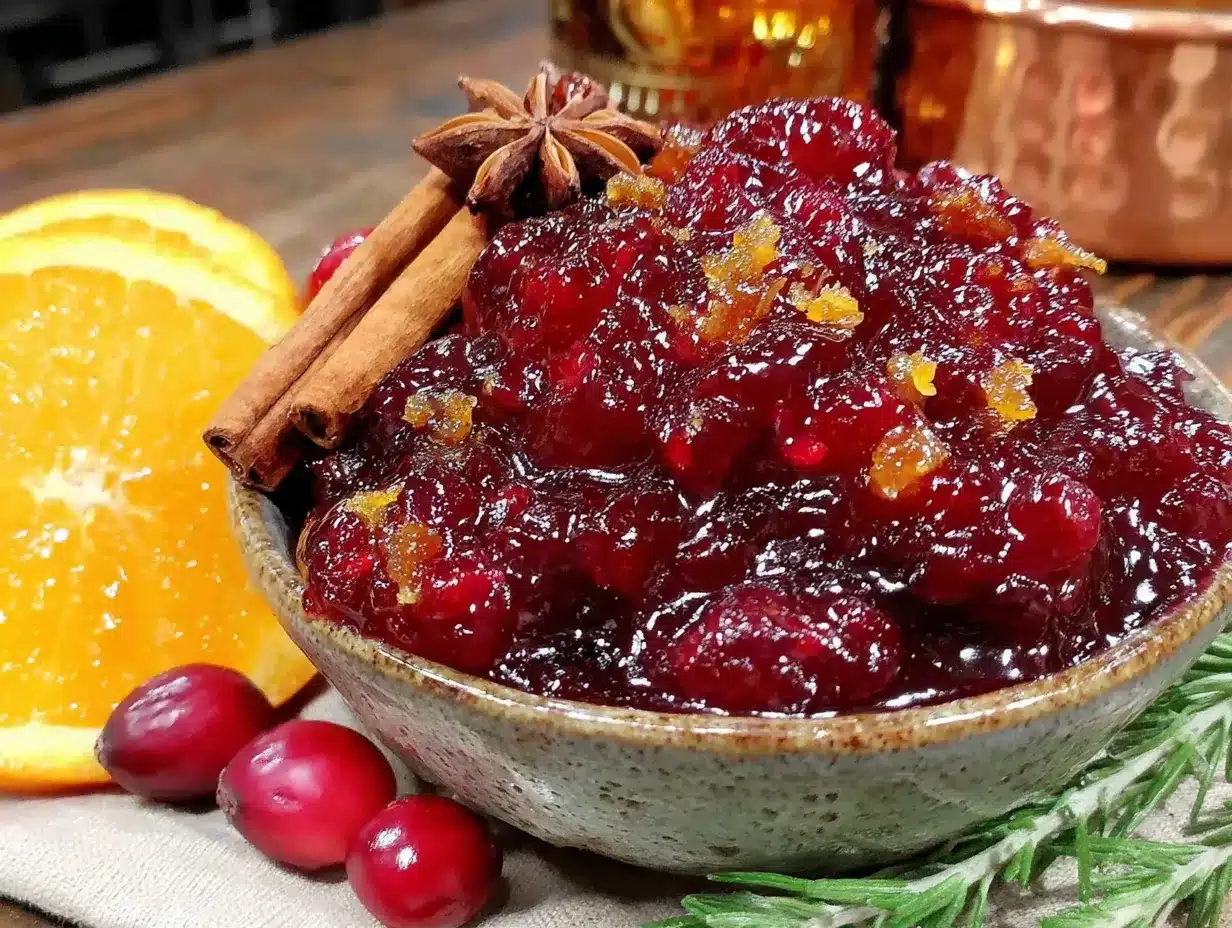
Sensory cues to watch for: The cranberries should make a soft popping sound as they burst. The kitchen should smell like Christmas—bright orange, warm ginger, and sweet berries. The sauce should look deep ruby red, almost garnet, with visible flecks of orange zest and tiny bits of ginger throughout. When you stir it, you should see the bottom of the pot for just a second before the sauce swirls back.
Troubleshooting: If your sauce tastes too tart, add another tablespoon of sugar and stir until dissolved. If it’s too sweet, add a squeeze of fresh lemon juice to brighten it up. If it seems thin even after cooling, don’t panic—just return it to the stove and simmer for another 5 minutes. And if you accidentally let it boil over like I did the first three times? Just wipe it up and pretend it never happened. Nobody needs to know.
Cooking Tips & Techniques
After making this sauce roughly seventeen times in the last two years (I’m not exaggerating, I counted), I’ve picked up a few tricks that make the process smoother and the results more consistent. Here’s what I wish someone had told me from the start:
Don’t walk away from the pot. I know it seems like a “set it and forget it” situation, but cranberry sauce can go from perfect to burnt in about thirty seconds. The sugar content makes it prone to scorching, especially toward the end. Stay close, stir often, and trust your nose. If you smell something toasty, you’ve waited too long.
Grate your ginger on a microplane, not a box grater. I made this mistake exactly once. The box grater leaves these long, stringy fibers that get stuck in your teeth and look weird in the sauce. A microplane gives you a fine paste that dissolves right in. If you don’t have one, mince the ginger as finely as humanly possible with a sharp knife.
Under-cook rather than over-cook. The sauce will continue to thicken as it cools, so pull it off the heat when it’s still slightly looser than you want. If you wait until it’s perfect on the stove, it’ll be jam-like by the time it reaches the table. I learned this the hard way when I served cranberry paste to my entire extended family.
Let it rest overnight if you can. The flavors meld and deepen after a day in the fridge. The ginger becomes less sharp, the orange becomes more pronounced, and everything settles into this beautiful harmony. Make it the day before your gathering and thank me later.
Double the recipe for a crowd. One batch serves about 8 people modestly, but if you’re hosting a big dinner party or potluck, make two batches. This sauce disappears faster than you’d expect, and running out mid-meal is a tragedy I don’t want you to experience.
Use the leftover syrup. After you’ve eaten all the cranberries, there’s usually a little ginger-orange syrup left in the bottom of the jar. Don’t throw it away. Drizzle it over yogurt, pancakes, or even cocktails. It’s basically liquid gold.
Variations & Adaptations
One of the best things about this recipe is how flexible it is. Once you’ve got the basic technique down, you can play around with different flavors and make it your own. Here are some variations I’ve tried and loved:
Spiced Cranberry Orange Sauce: Add a cinnamon stick, two star anise, and three whole cloves to the pot while the sauce simmers. Fish them out before serving. This version is incredibly aromatic and pairs beautifully with roasted meats. I made this for Thanksgiving last year and my uncle asked for the recipe three times.
Maple-Ginger Cranberry Sauce: Replace half the granulated sugar with maple syrup. Use a good-quality dark maple syrup for the richest flavor. The maple adds this earthy sweetness that plays beautifully with the ginger. This version is slightly thinner, so simmer it an extra 2-3 minutes to compensate.
Low-Sugar Version: Reduce the sugar to 1/2 cup and add 1/4 cup of unsweetened applesauce. The applesauce adds natural sweetness and body without the extra sugar. You’ll lose some of the glossy texture, but the flavor is still fantastic. My diabetic aunt approves of this version.
Bourbon-Infused Cranberry Sauce: Add 2 tablespoons of good bourbon (I use Maker’s Mark) during the last 5 minutes of simmering. The alcohol cooks off, leaving behind a warm, vanilla-tinged complexity. This one is dangerously good on leftover turkey sandwiches.
Extra Zesty Version: Double the orange zest and add a tablespoon of lemon zest. The extra citrus brightens everything up and makes the sauce taste incredibly fresh. This is my go-to for summer gatherings when I want something that feels less heavy.
Dietary Adaptations: This recipe is naturally gluten-free, dairy-free, and vegan. For a lower-carb option, use a monk fruit sweetener blend in place of the sugar. For nut-free eaters, this recipe is already safe. Just double-check your orange juice if you’re buying store-bought—some brands add weird ingredients.
Serving & Storage Suggestions
This cranberry sauce is incredibly versatile when it comes to serving. Here’s how to make the most of it:
Serving Temperature: Serve it warm, at room temperature, or straight from the fridge. Each temperature offers a different experience. Warm, it’s luscious and aromatic. Cold, it’s firmer and more tart. I personally prefer room temperature because the flavors are most balanced. Let it sit out for about 20 minutes before serving if it’s been in the fridge.
Presentation Tips: Transfer the sauce to a pretty serving bowl and garnish with a few fresh cranberries, a strip of orange zest, or a thin slice of candied ginger. It adds visual interest and tells your guests, “Yes, I made this from scratch.” For a dinner party, I like to serve it in a clear glass bowl so the beautiful ruby color shows through.
What to Serve Alongside: This sauce is a natural pairing with roasted turkey, chicken, or pork. It’s also fantastic on brie cheese, spread on a turkey sandwich, or spooned over vanilla ice cream (don’t knock it til you try it). For a holiday table, it sits beautifully next to mashed potatoes, green bean casserole, and stuffing. I’ve also used it as a glaze for roasted carrots—just brush it on during the last 10 minutes of roasting.
Storage Instructions: Store in an airtight container in the refrigerator for up to 2 weeks. The flavors actually improve after a day or two in the fridge. Do not leave it at room temperature for more than 2 hours—the sugar content can attract unwanted bacteria.
Freezer Instructions: This sauce freezes beautifully for up to 3 months. Let it cool completely, then transfer to a freezer-safe container or zip-top bag. Leave a little headroom for expansion. Thaw overnight in the refrigerator and stir well before serving. The texture might be slightly softer after freezing, but the flavor remains perfect.
Reheating: Reheat gently on the stovetop over low heat, stirring occasionally. Add a splash of water or orange juice if it’s too thick. You can also microwave it in 30-second bursts, stirring between each. Just don’t overheat it or the ginger flavor will become harsh.
Nutritional Information & Benefits
This cranberry sauce isn’t exactly health food, but it’s made with real ingredients and no artificial anything. Here’s the breakdown per serving (approximately 1/4 cup):
- Calories: 110-130
- Total Fat: 0g
- Sodium: 5mg
- Total Carbohydrates: 28-32g
- Sugars: 24-28g
- Fiber: 2g
- Protein: 0g
- Vitamin C: 15% of Daily Value
Health Benefits: Cranberries are packed with antioxidants and vitamin C, which support immune health. Fresh ginger is known for its anti-inflammatory properties and can help with digestion. Oranges provide additional vitamin C and flavonoids. So while this is definitely a treat, it’s not entirely without nutritional merit. I tell myself that when I eat it straight from the jar at 11 PM.
Dietary Considerations: This recipe is naturally gluten-free, dairy-free, egg-free, nut-free, and vegan. It contains no common allergens beyond the natural sugars. For a low-sugar diet, use the low-sugar variation mentioned above. For keto, this isn’t ideal due to the sugar content, but a monk fruit sweetener substitution can reduce the carbs significantly.
Conclusion
This cranberry orange sauce with fresh ginger has become a non-negotiable part of my holiday table, and I honestly can’t imagine celebrating without it. It’s the recipe that started as a late-night whim and turned into a family tradition—the one my cousin texts me about in October, asking if I’m “making that ginger stuff again.” And I am. Every single time.
What I love most about this recipe is how forgiving it is. You don’t need to be a professional chef to nail it. You don’t need special equipment or hard-to-find ingredients. You just need fresh cranberries, a knob of ginger, and about 20 minutes of your time. It’s proof that the best recipes often come from the most unexpected moments—standing in your kitchen at midnight, trusting your gut, and making something delicious out of whatever you have on hand.
So go ahead and make this for your next gathering. Watch your guests’ faces light up when they taste that first bite. Bask in the compliments. And when someone asks for the recipe, tell them the truth: it came to you in a moment of late-night inspiration, and it’s been a hit ever since. I’d love to hear how it turns out for you—drop a comment below and let me know what variations you tried. Did you add bourbon? Extra ginger? A cinnamon stick? Tell me everything. And if you loved it, share this recipe with a friend who needs a little holiday magic in their life. Happy cooking!
Frequently Asked Questions
Can I use frozen cranberries instead of fresh?
Absolutely. Frozen cranberries work perfectly in this recipe. Don’t thaw them first—just add them frozen and increase the simmering time by 2-3 minutes. The texture will be slightly softer, but the flavor is identical. I actually keep a bag in my freezer year-round for spontaneous cranberry sauce cravings.
How far in advance can I make this sauce?
You can make this up to 2 weeks ahead and store it in the refrigerator. The flavors actually improve after a day or two as the ginger and orange meld together. You can also freeze it for up to 3 months. Just thaw overnight in the fridge and stir well before serving.
Can I reduce the sugar in this recipe?
Yes, but don’t go below 1/2 cup of sugar. Cranberries are intensely tart, and they need some sweetness to balance them. If you want a lower-sugar version, try the applesauce variation I mentioned above, or use a monk fruit sweetener blend. Just know that the texture will be slightly different.
Why did my cranberry sauce turn out too runny?
This usually happens when the sauce hasn’t simmered long enough, or if you took it off the heat too early. Remember that it thickens as it cools, so it should still look slightly loose when you pull it off the stove. If it’s still runny after cooling, return it to the pot and simmer for another 5-10 minutes.
Can I use ground ginger instead of fresh?
You can, but I really don’t recommend it. Fresh ginger gives this sauce its signature warmth and complexity. Ground ginger has a completely different flavor profile—more dusty and less bright. If you’re in a pinch, use 1 teaspoon of ground ginger, but honestly, fresh ginger is worth the extra minute of grating.
Pin This Recipe!
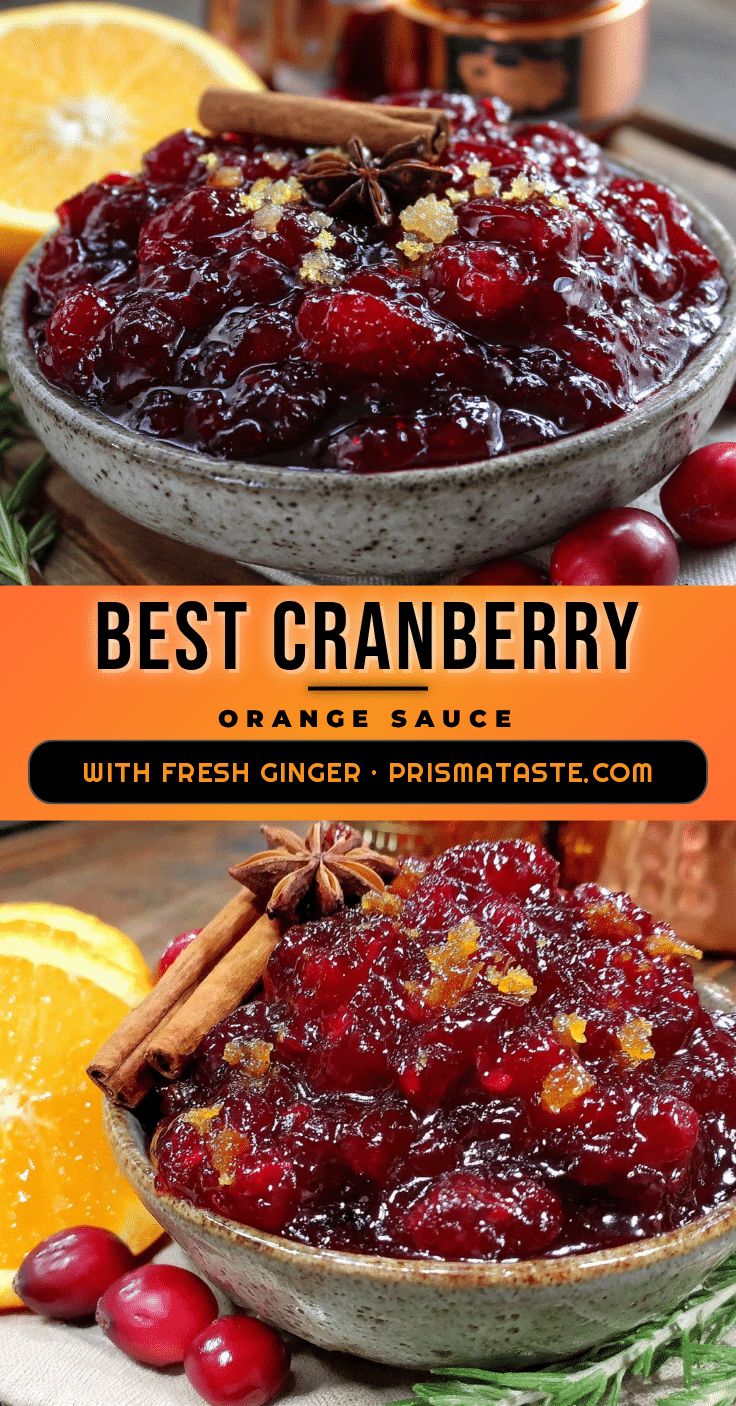
Easy Homemade Cranberry Orange Sauce with Ginger
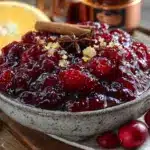
This quick and easy cranberry sauce features fresh ginger and orange for a bright, tangy flavor that’s perfect for holiday gatherings. Made with simple ingredients in under 20 minutes, it’s a crowd-pleaser that can be made ahead.
- Prep Time: 5 minutes
- Cook Time: 15 minutes
- Total Time: 20 minutes
- Yield: 8 servings 1x
- Category: Side Dish
- Cuisine: American
Ingredients
- 12 oz (340 g) fresh cranberries (1 standard bag)
- 3/4 cup (150 g) granulated sugar
- 1/2 cup (120 ml) orange juice (fresh-squeezed or good-quality store-bought)
- 1 tablespoon orange zest (from 1 large orange)
- 2 tablespoons fresh ginger, grated (about a 2-inch piece)
- 1/4 cup (60 ml) water
- Pinch of salt
Instructions
- Prep your ingredients (5 minutes): Rinse the cranberries and pick out any soft or shriveled ones. Grate your ginger using a microplane—you want about 2 tablespoons. Zest your orange before juicing it. Measure out your sugar, juice, and water so everything is ready to go.
- Combine everything in the saucepan (2 minutes): Add the cranberries, sugar, orange juice, orange zest, grated ginger, water, and a pinch of salt to your medium saucepan. Give it a quick stir to distribute the sugar.
- Bring to a boil (3-4 minutes): Set the heat to medium-high and bring the mixture to a boil. Stir occasionally to make sure the sugar dissolves completely. Watch it carefully; once it boils, it can bubble over fast.
- Reduce to a simmer (10-12 minutes): Once boiling, reduce the heat to medium-low so the sauce is at a gentle simmer. Stir occasionally. The cranberries will continue to burst and the sauce will thicken. After about 8 minutes, start checking the consistency. You’re looking for a texture that coats the back of a spoon but still runs slightly. Remember: it will thicken more as it cools.
- Test for doneness (1 minute): Dip a spoon into the sauce and run your finger down the back. If the line holds its shape without the sauce running back together immediately, it’s done. If it’s still too runny, let it simmer another 2-3 minutes. If it’s too thick, add a splash of water or orange juice to thin it out.
- Cool and serve (30 minutes to cool): Remove the saucepan from heat and let the sauce cool for about 30 minutes at room temperature. It will continue to thicken as it cools. Transfer to a serving bowl or storage container. You can serve it warm, at room temperature, or cold.
Notes
The sauce will continue to thicken as it cools, so pull it off the heat when it’s still slightly looser than you want. For best flavor, make it a day ahead and let it rest overnight in the refrigerator. If your sauce tastes too tart, add another tablespoon of sugar. If it’s too sweet, add a squeeze of fresh lemon juice. For a smoother sauce, strain through a fine-mesh strainer before serving.
Nutrition
- Serving Size: 1/4 cup
- Calories: 120
- Sugar: 26
- Sodium: 5
- Carbohydrates: 30
- Fiber: 2
Keywords: cranberry sauce, cranberry orange sauce, ginger cranberry sauce, homemade cranberry sauce, easy cranberry sauce, holiday side dish, Thanksgiving cranberry sauce