The last grocery run before a long holiday weekend, and the cart is already overflowing. A bag of shredded sharp cheddar is wedged between the milk and a carton of eggs. I grab a second bag, because honestly, you can never have enough cheese for a breakfast crowd. My mind is already fast-forwarding past the checkout line, past the chaos of unloading, to the quiet of Saturday night. That is the moment this easy cheesy sausage breakfast casserole starts to come together in my head. Not on Sunday morning, when everyone is hungry and the coffee is barely brewed, but the night before. That is the magic of a make-ahead recipe. It is a little gift you give to your future self.
I remember the first time I attempted a breakfast casserole for a family gathering. I was scrambling — literally and figuratively — trying to brown sausage, whisk eggs, and toast bread all at once while people milled around the kitchen asking when breakfast would be ready. It was a mess. The eggs were overdone, the sausage was in uneven chunks, and I was stressed. That experience taught me a lesson I have never forgotten: the best breakfasts are the ones you barely have to think about. This recipe was born from that chaotic morning. It is my way of reclaiming a peaceful start to the day. It is the dish I turn to when I want to actually sit down with a mug of coffee and enjoy the company around the table, not just the food I am serving. This is the casserole that finally got it right.
Why You’ll Love This Recipe
This isn’t just another breakfast casserole. It has been tested and tweaked over many sleepy Sunday mornings and holiday brunches. I have made it with different breads, different sausages, and different cheese blends. This version is the one that gets requested again and again. It is the one that disappears fastest from the serving dish. Here is why you will love it too:
- Totally Make-Ahead: Assemble it the night before, pop it in the fridge, and bake it the next morning. No early morning prep work required. It is the ultimate stress-free breakfast.
- Simple, Everyday Ingredients: You probably have most of these staples in your kitchen right now. No fancy artisanal bread or hard-to-find cheeses here. Just good, honest food.
- Perfect for a Crowd: This casserole feeds 8 to 10 people easily. It is ideal for holiday mornings, brunch parties, or a big family breakfast before a long day.
- Incredibly Satisfying: The combination of savory sausage, melted cheese, and soft, custard-like bread is pure comfort. It is the kind of breakfast that sticks to your ribs and makes everyone happy.
- Foolproof and Forgiving: This recipe is hard to mess up. Even if you overbake it slightly, it stays moist and delicious. It is a confidence-building dish for new cooks.
What makes this recipe different from the rest? It is the ratio. I spent a long time figuring out the perfect balance of eggs to milk so the casserole is custardy but not soggy. The bread soaks up just enough liquid to become tender, but it still holds its shape. The cheese melts into every crevice, creating little pockets of gooey goodness. This is the breakfast casserole that makes you close your eyes after the first bite. It is comfort food at its finest, and it is ready when you are.
What Ingredients You Will Need
This recipe uses simple, wholesome ingredients to deliver big flavor without any fuss. Most of these are pantry staples, which makes this dish perfect for a last-minute gathering or a planned holiday brunch. Here is everything you need:
- 1 pound breakfast sausage: I recommend a good quality pork breakfast sausage. Jimmy Dean or a local brand from the butcher counter both work great. You can use mild, sage, or hot sausage depending on your preference. (Hot sausage adds a nice little kick!)
- 1 tablespoon olive oil or butter: For browning the sausage. A little fat helps get that perfect golden brown crust.
- 8 large eggs: Room temperature eggs whisk together more smoothly, but cold eggs work fine too. They are the backbone of the custard.
- 2 cups whole milk: Whole milk gives the richest, creamiest texture. You can use 2% milk in a pinch, but avoid skim milk as it will make the casserole watery. Half-and-half works beautifully for an extra decadent version.
- 1 teaspoon Dijon mustard: This is my secret ingredient. It does not make the casserole taste like mustard. It just adds a subtle tang that brightens all the other flavors.
- 1/2 teaspoon garlic powder: For savory depth. Do not use fresh garlic here, as it can become bitter during the long bake time.
- 1/2 teaspoon onion powder: Adds a mellow, sweet onion flavor that complements the sausage perfectly.
- 1/2 teaspoon salt: Use kosher salt if you have it. It seasons the custard evenly.
- 1/4 teaspoon black pepper: Freshly cracked is best, but pre-ground works too.
- 8 cups cubed day-old bread: This is crucial. A crusty French bread, sourdough, or even a hearty white bread works best. The bread should be slightly stale so it absorbs the custard without turning to mush. If your bread is fresh, cube it and leave it out on a baking sheet for an hour or two to dry out.
- 2 cups shredded sharp cheddar cheese: Sharp cheddar has the most flavor. I recommend shredding it from a block yourself — it melts so much better than pre-shredded cheese, which has anti-caking agents that prevent smooth melting.
- 1 cup shredded Monterey Jack cheese: This adds a creamy, mild counterpoint to the sharp cheddar. You can substitute mozzarella or provolone if needed.
- 2 green onions, sliced: For a pop of color and a mild oniony freshness at the end. Optional, but highly recommended.
That is it. Simple, straightforward ingredients that come together to create something truly special. The key is using good quality sausage and shredding your own cheese. Those two small steps make a big difference in the final dish.
Equipment Needed
You do not need any fancy equipment for this recipe. It is designed to be as accessible as possible. Here is what you will need:
- 9×13-inch baking dish: This is the standard size for a breakfast casserole. A ceramic or glass dish works best for even heat distribution.
- Large skillet: For browning the sausage. A cast-iron skillet is my favorite for this job because it gets a nice sear on the meat.
- Large mixing bowl: For whisking the egg and milk mixture. Any big bowl will do.
- Whisk: For combining the custard ingredients smoothly.
- Measuring cups and spoons: For accuracy.
- Cutting board and knife: For cubing the bread and slicing the green onions.
- Aluminum foil: For covering the casserole while it bakes to prevent the top from burning.
- Spatula or wooden spoon: For breaking up the sausage as it cooks.
If you do not have a 9×13-inch dish, you can use a slightly smaller dish and adjust the baking time, or you can use two 8×8-inch dishes. Just keep an eye on the doneness. A glass dish is my go-to because I can see the bottom browning nicely. I have made this in a disposable aluminum pan for potlucks before, and it works perfectly fine too. Do not overthink the equipment. Use what you have.
Preparation Method
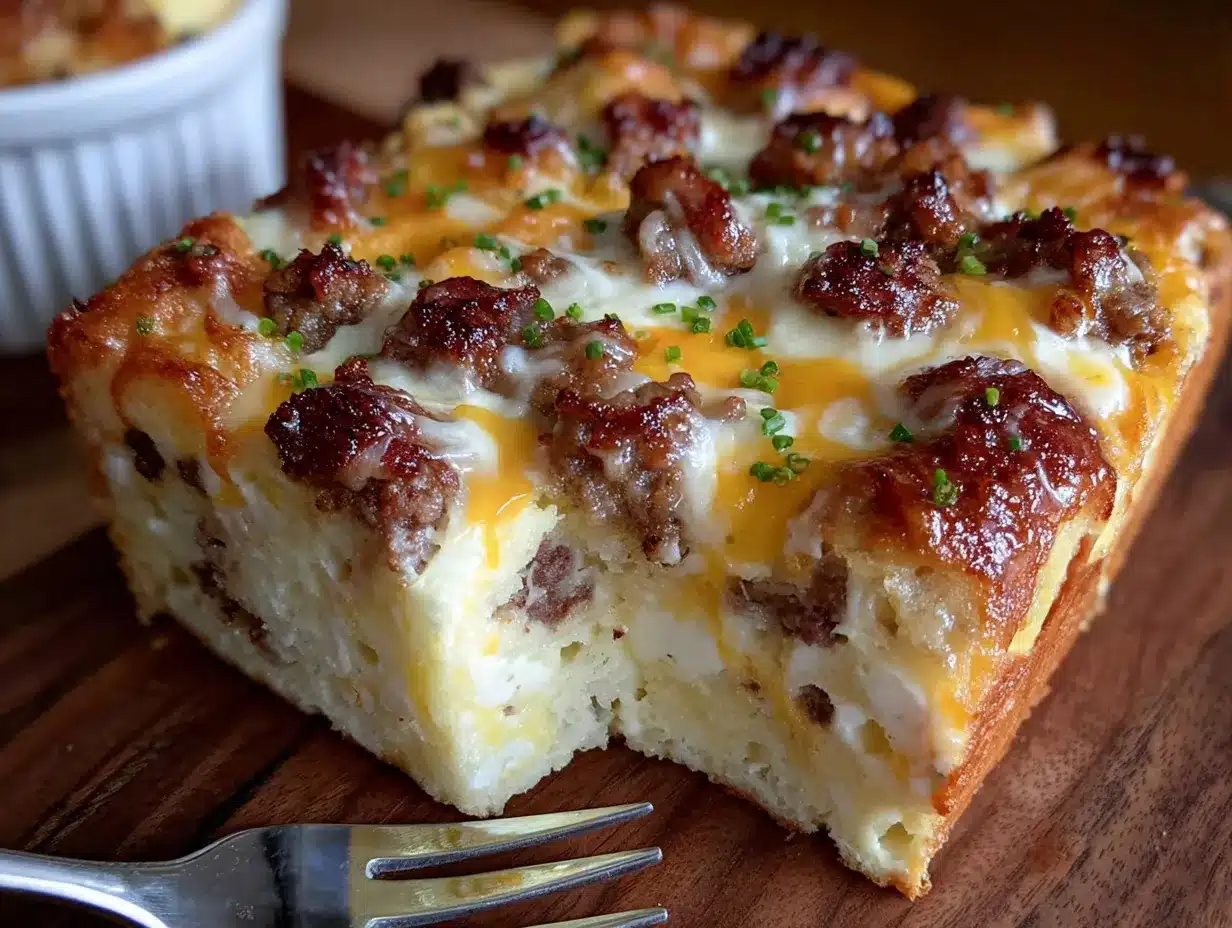
This is where the magic happens. Follow these steps, and you will have a perfect breakfast casserole every single time. The best part? Most of the work happens the night before.
- Brown the sausage: Heat the olive oil or butter in a large skillet over medium-high heat. Add the breakfast sausage, breaking it up with a spatula into small crumbles. Cook for 6-8 minutes, stirring occasionally, until the sausage is browned and cooked through. There should be no pink remaining. Use a slotted spoon to transfer the cooked sausage to a plate lined with paper towels to drain off any excess fat. Set it aside to cool slightly. (Do not skip the draining step, or your casserole will be greasy.)
- Prepare the baking dish: Lightly grease your 9×13-inch baking dish with butter or non-stick cooking spray. This ensures the casserole releases easily after baking.
- Layer the bread: Spread the cubed day-old bread evenly in the bottom of the prepared baking dish. Do not pack it down. Just let it sit in a nice, even layer.
- Layer the sausage and cheese: Sprinkle the cooked, drained sausage evenly over the bread cubes. Then, sprinkle both the shredded sharp cheddar and Monterey Jack cheeses over the sausage. Reserve about 1/2 cup of the cheese mixture to sprinkle on top right before baking.
- Make the custard: In the large mixing bowl, crack the 8 eggs. Add the 2 cups of whole milk, 1 teaspoon Dijon mustard, 1/2 teaspoon garlic powder, 1/2 teaspoon onion powder, 1/2 teaspoon salt, and 1/4 teaspoon black pepper. Whisk everything together vigorously for about 30 seconds, until the eggs are fully broken up and the mixture is smooth and uniform in color. The mustard should be completely incorporated.
- Pour the custard: Slowly and evenly pour the egg and milk mixture over the bread, sausage, and cheese in the baking dish. Try to distribute it as evenly as possible. Gently press down on the top of the casserole with a spatula to help the bread absorb the liquid.
- Refrigerate (The Make-Ahead Step): Cover the baking dish tightly with plastic wrap or aluminum foil. Place it in the refrigerator for at least 4 hours, or overnight. This is the most important step! The bread needs time to soak up all that delicious custard. An overnight rest yields the best texture. (If you are in a rush, you can let it sit for 30 minutes at room temperature, but the overnight soak is truly superior.)
- Bake: When you are ready to bake, preheat your oven to 350°F (175°C). Remove the casserole from the refrigerator and let it sit on the counter while the oven preheats, about 15-20 minutes. This takes the chill off the dish and helps it bake more evenly. Sprinkle the reserved 1/2 cup of cheese over the top. Cover the dish with aluminum foil.
- Bake covered: Bake the covered casserole for 35 minutes. The foil traps steam and helps the center cook through without the top burning.
- Bake uncovered: Remove the foil carefully (watch out for the steam!) and bake for another 15-20 minutes, or until the top is golden brown and the casserole is set. The center should be slightly jiggly but not liquid. A knife inserted into the center should come out clean.
- Rest and serve: Let the casserole rest on a wire rack for at least 10 minutes before slicing and serving. This allows the custard to finish setting up. Sprinkle the sliced green onions over the top for a fresh finish. Serve warm.
One note: if you are baking the casserole immediately without the overnight rest, you will need to let it sit at room temperature for 20 minutes after pouring the custard to allow some absorption. The texture will be slightly less custardy, but it will still be delicious.
Cooking Tips & Techniques
Over the years, I have made every mistake in the book with breakfast casseroles. I have had soggy bottoms, dry tops, and bland middles. Here is what I have learned so you can skip the trial and error.
Do not over-soak the bread. While the overnight rest is essential, leaving it to soak for more than 24 hours can make the bread too mushy. The sweet spot is 8 to 12 hours. Plan accordingly.
Use day-old bread. This is non-negotiable for the best texture. Fresh bread will turn into a gluey paste. If you only have fresh bread, cube it and spread it on a baking sheet in a 300°F oven for 10 minutes to dry it out. Let it cool completely before using.
Shred your own cheese. I know it is tempting to buy the pre-shredded bags. They are convenient. But they are coated in potato starch or cellulose to prevent clumping, which means they do not melt as smoothly. Shredding a block of cheddar takes two minutes and makes a huge difference in the creaminess of your casserole.
Let it rest after baking. I know you will be hungry. The smell will be incredible. But cutting into the casserole immediately will result in a runny, soupy mess. That 10-minute rest is crucial for the custard to set. Use that time to make the coffee or set the table.
Check for doneness. Ovens vary widely. If the top is getting too brown but the center is still jiggly, cover it loosely with foil and continue baking. The casserole is done when the edges are puffed and golden, and the center is just set. A thermometer inserted into the center should read 160°F.
I once forgot to drain the sausage fat before layering it into the casserole. The result was an oily, greasy mess. Learn from my mistake. Always drain the sausage well. Your future self will thank you.
Variations & Adaptations
One of the best things about this easy cheesy sausage breakfast casserole is how customizable it is. Here are some of my favorite variations:
- Vegetarian Version: Skip the sausage entirely. Sauté a cup of diced mushrooms, a bell pepper, and some spinach until softened. Use that as the savory layer instead. You might also enjoy a cozy crockpot fall harvest chicken stew for a different kind of comfort food.
- Spicy Southwest Twist: Use spicy chorizo or hot breakfast sausage. Add a can of drained and rinsed black beans and a cup of corn kernels to the layering. Swap the cheddar for pepper jack cheese. Serve with a dollop of sour cream and salsa.
- Loaded Veggie Casserole: Add a cup of sautéed mushrooms, a cup of chopped spinach, and half a cup of diced roasted red peppers to the sausage layer. It adds color, nutrients, and flavor.
- Gluten-Free Option: Use your favorite gluten-free bread. Gluten-free bread tends to be drier, which actually works well for this recipe. Just make sure it is day-old. The rest of the ingredients are naturally gluten-free.
- Dairy-Free Adaptation: Use a dairy-free milk alternative like unsweetened oat milk or almond milk. Use dairy-free shredded cheese. The texture will be slightly less rich, but it still works well.
- Add Some Heat: If you like a little spice, add a pinch of red pepper flakes to the egg mixture, or use hot breakfast sausage. A finely diced jalapeño in the sausage layer is also fantastic.
My personal favorite variation is the one with a handful of roasted red peppers and a sprinkle of smoked paprika on top. It adds a subtle smokiness that pairs beautifully with the sausage and cheese. I have made that version for Christmas morning brunch for the last three years, and it is always the first dish to be emptied.
Serving & Storage Suggestions
This casserole is incredibly versatile when it comes to serving. Here is how to make the most of it.
Serving: Serve this casserole warm, straight from the oven. It is a complete meal on its own, but it pairs beautifully with fresh fruit salad, a simple side of roasted potatoes, or a light green salad with a tangy vinaigrette to cut through the richness. A pitcher of fresh orange juice and a pot of strong coffee are all you need to round out the meal. For a fun brunch spread, serve it alongside cozy pumpkin bagels with maple cream cheese for a sweet and savory combo.
Storage: Leftovers can be stored in an airtight container in the refrigerator for up to 4 days. The flavors actually meld together even more overnight, making the leftovers taste just as good, if not better, than the fresh casserole.
Reheating: The best way to reheat individual portions is in the microwave for about 1-2 minutes, or until heated through. For larger portions, reheat in a 350°F oven covered with foil for about 15-20 minutes. You can also reheat slices in a non-stick skillet over medium-low heat for a few minutes per side to get a slightly crispy exterior.
Freezing: This casserole freezes beautifully. You can freeze it either before or after baking. To freeze before baking, assemble the casserole completely but do not bake it. Cover it tightly with plastic wrap and then a layer of aluminum foil. Freeze for up to 3 months. To bake from frozen, thaw it in the refrigerator overnight, then bake as directed. To freeze after baking, let the casserole cool completely, then wrap it tightly and freeze. Thaw in the refrigerator overnight and reheat in the oven.
Flavor Development: Like many casseroles, this one tastes even better the next day. The flavors have time to meld and deepen. Do not be surprised if you find yourself looking forward to the leftovers more than the original meal.
Nutritional Information & Benefits
While this is a comfort food dish, it does offer some nutritional benefits. Here is an estimated breakdown per serving (based on 8 servings):
| Nutrient | Amount per Serving |
|---|---|
| Calories | 480 |
| Protein | 28g |
| Fat | 32g |
| Saturated Fat | 14g |
| Carbohydrates | 22g |
| Fiber | 1g |
| Sugar | 4g |
| Sodium | 850mg |
Key Benefits: The eggs provide high-quality protein and essential vitamins like B12 and D. The sausage adds iron and B vitamins. The cheese contributes calcium for bone health. The bread provides carbohydrates for sustained energy. This is a balanced meal that will keep you full and satisfied for hours.
Dietary Considerations: This recipe contains gluten, dairy, and eggs. For a gluten-free version, use gluten-free bread. For a dairy-free version, use dairy-free milk and cheese alternatives. It is naturally nut-free. If you are watching your sodium intake, use low-sodium sausage and reduce the added salt.
I personally love that this casserole feels indulgent but is made with real, whole ingredients. It is the kind of breakfast that fuels a day of hiking, holiday decorating, or simply relaxing with family. It is nourishing in every sense of the word.
Conclusion
This easy cheesy sausage breakfast casserole is more than just a recipe. It is a solution. It is the answer to the question of how to host a brunch without spending the entire morning in the kitchen. It is the dish that lets you actually enjoy your own party. The make-ahead aspect is not just convenient — it is transformative. It turns a potentially stressful morning into a peaceful one.
I love this recipe because it feels like a hug on a plate. It is warm, cheesy, savory, and utterly satisfying. It is the breakfast that makes everyone at the table smile. And because it is so forgiving, it gives you the confidence to experiment. Add some roasted vegetables. Try a different cheese blend. Make it your own. That is the beauty of a good base recipe — it is a starting point for your own creativity.
I would love to hear how this casserole turns out for you. Did you try a variation? Did you serve it for a holiday brunch or a lazy Sunday? Drop a comment below and share your experience. Your adaptations might inspire someone else. And if you loved this recipe, please share it with a friend who needs a little more ease in their morning routine. Until next time, happy cooking, and may your breakfasts always be stress-free and delicious.
Frequently Asked Questions
Can I use a different type of bread?
Absolutely. Sourdough, French bread, challah, brioche, or even a hearty whole wheat bread all work well. The key is that the bread is day-old and slightly stale. Avoid very soft, flimsy sandwich bread, as it can turn into a gluey paste.
Can I make this casserole without meat?
Yes! Simply omit the sausage. To replace the savory flavor, sauté a cup of diced mushrooms, an onion, and a bell pepper in olive oil until softened. You can also add a can of drained and rinsed black beans for extra protein.
How do I know when the casserole is fully baked?
The casserole is done when the edges are puffed and golden brown, and the center is just set. It should jiggle slightly in the center but should not be liquid. A knife inserted into the center should come out clean. For accuracy, an instant-read thermometer should register 160°F in the center.
Can I freeze this breakfast casserole?
Yes, you can freeze it either before or after baking. To freeze before baking, assemble the casserole, cover it tightly, and freeze for up to 3 months. Thaw in the refrigerator overnight before baking. To freeze after baking, let it cool completely, wrap it tightly, and freeze. Thaw and reheat in the oven.
What can I serve with this casserole for a complete brunch?
This casserole is a complete meal on its own, but it pairs wonderfully with fresh fruit, a simple green salad, roasted potatoes, or a side of crispy bacon. For a sweet touch, serve it alongside muffins, bagels, or a coffee cake. A pitcher of mimosas or fresh orange juice is always a welcome addition.
Pin This Recipe!

Easy Cheesy Sausage Breakfast Casserole: Best Make-Ahead Recipe

This easy cheesy sausage breakfast casserole is the ultimate make-ahead dish for stress-free holiday mornings or lazy weekends. With savory sausage, melted cheese, and a custardy bread base, it feeds a crowd and tastes incredible.
- Prep Time: 20 minutes
- Cook Time: 50 minutes
- Total Time: 1 hour 10 minutes (plus overnight refrigeration)
- Yield: 8-10 servings 1x
- Category: Breakfast
- Cuisine: American
Ingredients
- 1 pound breakfast sausage
- 1 tablespoon olive oil or butter
- 8 large eggs
- 2 cups whole milk
- 1 teaspoon Dijon mustard
- 1/2 teaspoon garlic powder
- 1/2 teaspoon onion powder
- 1/2 teaspoon salt
- 1/4 teaspoon black pepper
- 8 cups cubed day-old bread (such as French bread, sourdough, or hearty white bread)
- 2 cups shredded sharp cheddar cheese
- 1 cup shredded Monterey Jack cheese
- 2 green onions, sliced (optional, for garnish)
Instructions
- Brown the sausage: Heat olive oil or butter in a large skillet over medium-high heat. Add the breakfast sausage, breaking it up into small crumbles. Cook for 6-8 minutes until browned and cooked through. Transfer to a plate lined with paper towels to drain excess fat. Set aside to cool slightly.
- Prepare the baking dish: Lightly grease a 9×13-inch baking dish with butter or non-stick cooking spray.
- Layer the bread: Spread the cubed day-old bread evenly in the bottom of the prepared baking dish. Do not pack it down.
- Layer the sausage and cheese: Sprinkle the cooked, drained sausage evenly over the bread cubes. Then sprinkle both the shredded sharp cheddar and Monterey Jack cheeses over the sausage. Reserve about 1/2 cup of the cheese mixture for the top.
- Make the custard: In a large mixing bowl, whisk together the eggs, milk, Dijon mustard, garlic powder, onion powder, salt, and black pepper until smooth and uniform in color.
- Pour the custard: Slowly and evenly pour the egg mixture over the bread, sausage, and cheese in the baking dish. Gently press down on the top with a spatula to help the bread absorb the liquid.
- Refrigerate (make-ahead step): Cover the dish tightly with plastic wrap or aluminum foil. Refrigerate for at least 4 hours or overnight (8-12 hours is ideal).
- Bake: Preheat oven to 350°F (175°C). Remove the casserole from the refrigerator and let it sit on the counter for 15-20 minutes. Sprinkle the reserved 1/2 cup of cheese over the top. Cover with aluminum foil.
- Bake covered: Bake for 35 minutes.
- Bake uncovered: Remove the foil carefully and bake for another 15-20 minutes, until the top is golden brown and the center is set (slightly jiggly but not liquid). A knife inserted into the center should come out clean.
- Rest and serve: Let the casserole rest on a wire rack for at least 10 minutes before slicing. Sprinkle sliced green onions on top. Serve warm.
Notes
Use day-old bread for best texture. Shred your own cheese for smoother melting. Let the casserole rest after baking to allow the custard to set. For a gluten-free version, use gluten-free bread. For a dairy-free version, use dairy-free milk and cheese alternatives.
Nutrition
- Serving Size: 1 serving (based on
- Calories: 480
- Sugar: 4
- Sodium: 850
- Fat: 32
- Saturated Fat: 14
- Carbohydrates: 22
- Fiber: 1
- Protein: 28
Keywords: breakfast casserole, sausage casserole, make-ahead breakfast, easy breakfast casserole, cheesy breakfast casserole, holiday brunch, overnight casserole