My grandmother did not believe in fire cider. She believed in Vicks VapoRub, a hot toddy with whiskey she’d never admit to, and suffering in silence because that’s what her generation did. So when a friend shoved a bottle of homemade fire cider into my hands during a particularly nasty January, I thanked her politely and shoved it into the back of my fridge. It sat there for three weeks, a murky jar of vinegar and roots that looked more like a science experiment than a remedy.
Then I got sick. The kind of sick where your sinuses feel packed with concrete and every cough sounds like you’re trying to expel a small animal. I was desperate, honestly. I fished out that jar, held my nose, and took a shot of the stuff. It burned going down—a sharp, spicy heat that cleared my head faster than any decongestant ever had. I coughed, I sputtered, and then I took another sip. By the next morning, I felt human again.
That jar of homemade fire cider tonic with ginger and turmeric converted me. I called my grandmother, told her to ditch the Vicks, and started making my own batches every fall. This isn’t just a recipe—it’s liquid armor for cold season, and once you taste how much better it is when you make it yourself, you won’t go back to store-bought either.
Why You’ll Love This Recipe
Let me tell you why this homemade fire cider tonic with ginger and turmeric has become a staple in my kitchen. I’ve tested this recipe through three cold seasons, adjusted the spice levels, and even convinced my skeptical grandmother to try it. Here’s what makes it stand out:
- Simple Ingredients : No exotic herbs or hard-to-find roots. You can find everything at a standard grocery store or farmers market.
- Quick & Easy : Active prep time is under 15 minutes. The hard part is just waiting for it to steep for a few weeks.
- Perfect for Cold Season : This tonic is my go-to at the first sign of a sniffle, sore throat, or seasonal sluggishness.
- Crowd-Pleaser : Even people who swear they hate vinegar-based drinks end up asking for a second shot.
- Unbelievably Effective : The combination of raw apple cider vinegar, fresh ginger, turmeric, and spicy peppers creates a powerful immune-supporting blend that actually works.
What makes this version different from the dozens of fire cider recipes out there? It’s the balance. I spent months tweaking the ratio of ginger to turmeric, figuring out exactly how much horseradish gives you that clearing sensation without making you cry, and learning that a touch of raw honey at the end transforms the whole experience. This isn’t just another recipe—it’s the version I trust enough to give to my family. It’s comfort in a jar, reimagined as something that actually fights back against whatever bug is going around.
What Ingredients You Will Need
This homemade fire cider tonic with ginger and turmeric uses a handful of powerful ingredients that work together to support your immune system. Most are pantry staples or easy to find at any grocery store. Here’s what you’ll need:
For the Base
- Raw apple cider vinegar – 4 cups (960 ml). Look for unfiltered vinegar with the “mother” for maximum benefits. I prefer Bragg’s or a local brand I find at the farmers market.
- Fresh ginger root – 1/2 cup, thinly sliced (about 4 ounces). No need to peel it—just scrub it well. The skin contains extra nutrients and flavor.
- Fresh turmeric root – 1/4 cup, thinly sliced (about 2 ounces). Wear gloves when handling this unless you want orange-stained fingers for a week.
- Horseradish root – 1/4 cup, grated or thinly sliced (about 2 ounces). This is what gives fire cider its signature sinus-clearing kick.
- Onion – 1 medium, roughly chopped. Yellow or red both work fine.
- Garlic cloves – 8-10 cloves, smashed. Don’t chop them too small—they’ll release plenty of flavor as they steep.
For the Heat
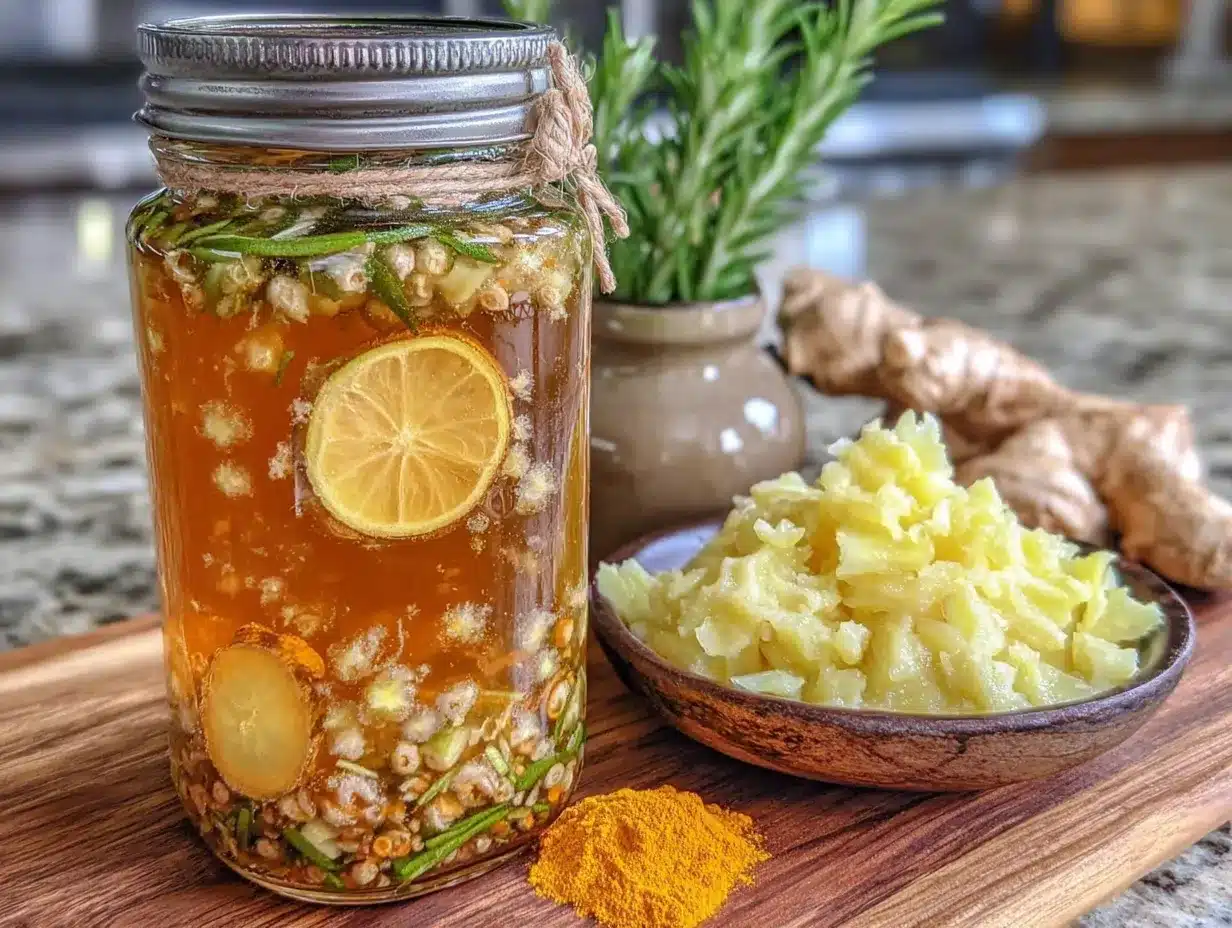
- Jalapeño pepper – 1 medium, sliced (seeds included for extra heat). You can use serrano or habanero if you want more fire.
- Black peppercorns – 1 teaspoon, whole. The piperine in black pepper helps your body absorb the curcumin in turmeric more effectively.
For the Aromatics
- Fresh rosemary sprig – 1 large sprig (about 4 inches). Use whatever fresh herbs you have on hand—thyme or oregano also work beautifully.
- Fresh thyme sprigs – 3-4 sprigs. They add a subtle earthy note that balances the sharpness.
- Lemon – 1 medium, sliced. Organic is best since you’re steeping the rind.
- Orange – 1 medium, sliced. Adds a gentle sweetness and extra vitamin C.
For Finishing
- Raw honey – 1/4 to 1/2 cup (60-120 ml), to taste. Add this after the steeping period is complete. Local raw honey is ideal for seasonal allergy support.
Substitution Tip: If you can’t find fresh turmeric, you can use 2 tablespoons of dried turmeric powder. Just be aware that it won’t infuse quite as deeply, and you’ll want to strain it through a fine-mesh sieve or cheesecloth at the end. For a milder version, skip the jalapeño and reduce the horseradish by half. Your fire cider will still be potent, just less aggressive.
Equipment Needed
You don’t need fancy equipment to make this homemade fire cider tonic with ginger and turmeric. Here’s what you’ll need:
- A 1-quart glass jar with a tight-fitting lid. A wide-mouth mason jar works perfectly. Avoid plastic—the vinegar can leach chemicals over time.
- A cutting board and a sharp chef’s knife. A dull knife makes slicing ginger and turmeric frustrating and dangerous.
- A vegetable peeler (optional but helpful). I usually just scrub the roots well and slice them unpeeled.
- A wooden spoon or chopstick for stirring and releasing air bubbles.
- Cheesecloth or a fine-mesh strainer for straining the finished tonic. A nut milk bag also works great.
- A funnel for transferring the strained liquid into storage bottles without spilling.
- Dark glass bottles for storing the finished fire cider. Amber or cobalt blue bottles protect the vinegar from light degradation.
Budget Tip: Don’t have a funnel? No problem. Roll a piece of parchment paper into a cone shape and tape it together. Works like a charm. And if you don’t have cheesecloth, a clean cotton dish towel or even a coffee filter will do the job.
Preparation Method
Making this homemade fire cider tonic with ginger and turmeric is more about patience than skill. The actual hands-on time is minimal—the magic happens while it sits on your counter. Here’s how to do it:
Step 1: Prep Your Ingredients (10 minutes)
Wash all your produce thoroughly. Slice the ginger and turmeric into thin rounds—about 1/8-inch thick. You don’t need to peel them, just scrub them clean. Smash the garlic cloves with the flat side of your knife to release their oils. Roughly chop the onion into chunks. Slice the jalapeño into rings, seeds and all. Grate the horseradish root if you’re using fresh—this is the only ingredient I recommend grating because it releases more of that sinus-clearing compound.
Step 2: Layer Everything in the Jar (5 minutes)
Start layering your ingredients into the clean quart jar. I like to put the harder roots on the bottom—ginger, turmeric, horseradish. Then add the onion and garlic. Tuck in the herb sprigs and citrus slices along the sides where they’ll be visible. Add the jalapeño and peppercorns last. Pack everything in fairly tightly—you want the jar to be about three-quarters full with solid ingredients.
Step 3: Add the Vinegar (2 minutes)
Pour the raw apple cider vinegar over the ingredients until they’re completely submerged. Leave about half an inch of headspace at the top. Use a wooden spoon or chopstick to poke around and release any trapped air bubbles. You’ll see bubbles rising as the vinegar seeps into every crevice. Wipe the rim of the jar clean, then screw on the lid tightly.
Step 4: Steep and Wait (2-4 weeks)
Place the jar in a cool, dark place like a cabinet or pantry. Shake it gently every day for the first week to keep the ingredients moving and ensure even infusion. After that, you can shake it every few days. The color will deepen from pale amber to a rich, dark golden-brown over the weeks. The smell will shift from sharp and vinegary to complex and herbaceous. Taste it after two weeks—if it’s strong enough for you, it’s ready to strain. I personally let mine go a full four weeks for maximum potency.
Step 5: Strain and Sweeten (10 minutes)
Line a fine-mesh strainer with cheesecloth and set it over a large bowl or measuring cup. Pour the entire contents of the jar through the strainer. Let it drip for a few minutes, then gather the cheesecloth and squeeze out every last drop of liquid—don’t be shy, you want all that goodness. Discard the solids or compost them.
Step 6: Add Honey and Store (5 minutes)
Stir in the raw honey, starting with 1/4 cup and adding more to taste. The honey mellows the sharp edges of the vinegar and makes the tonic much more drinkable. Use a funnel to transfer the finished fire cider into dark glass bottles. Label them with the date—it’ll keep for up to a year in the refrigerator.
Cooking Tips & Techniques
After making this homemade fire cider tonic with ginger and turmeric for years, I’ve learned a few things the hard way. Let me save you some trouble.
Don’t skip the daily shake. I forgot to shake my first batch for an entire week, and the ingredients settled into a dense, compact layer at the bottom. The top half of the vinegar barely infused while the bottom was intensely concentrated. Shaking redistributes everything and ensures a consistent flavor throughout.
Watch out for turmeric stains. Seriously, wear gloves when slicing fresh turmeric. I learned this lesson while rushing to make a batch before company arrived and ended up with orange palms for three days. It also stains cutting boards and dish towels, so use ones you don’t mind discoloring.
Taste as you go. The steeping time is flexible. Some people like a milder fire cider that’s ready in two weeks. Others want something that could strip paint. Start tasting after the second week and decide for yourself. I’ve found that three weeks is the sweet spot for most people—strong enough to feel effective but not so aggressive that you dread taking it.
Don’t use metal lids with metal rings. The acidity of the vinegar can corrode metal over time. Use plastic lids if you have them, or place a piece of parchment paper between the jar and the metal lid before screwing it on. This prevents any metallic taste from leaching into your tonic.
Save the pulp. After straining, the leftover solids are still packed with flavor and beneficial compounds. I spread them on a baking sheet, dry them in a low oven, and grind them into a spicy seasoning powder. It’s amazing on roasted vegetables, soups, and even popcorn.
Variations & Adaptations
This homemade fire cider tonic with ginger and turmeric is endlessly adaptable. Here are some variations I’ve tried and loved:
Milder Version for Sensitive Stomachs
If the heat is too intense, skip the jalapeño entirely and reduce the horseradish to just one tablespoon. Add an extra slice of lemon and a cinnamon stick for warmth without the burn. This version is gentler on the stomach while still offering immune support.
Extra Spicy “Firefighter” Version
For those who want maximum heat, add a whole habanero pepper (seeds included) and double the horseradish. Throw in a teaspoon of cayenne pepper flakes for good measure. This version will clear your sinuses from across the room. I make this batch specifically for my brother who swears nothing else works during allergy season.
Sweet and Smoky Version
Replace half the apple cider vinegar with raw honey vinegar or a mild apple cider. Add a smoked paprika teaspoon and a slice of chipotle pepper in adobo. The smokiness pairs beautifully with the earthy turmeric and gives the tonic a completely different character. This is my favorite version for using in salad dressings.
Seasonal Adjustments
In spring, I add fresh dandelion leaves and nettles for a detoxifying boost. In summer, I use lemon balm and mint for a cooling effect. Fall batches get extra cinnamon and cloves for that cozy, warming feeling. Winter is when I go all out with the heat—my immune system needs all the help it can get during cold and flu season.
Serving & Storage Suggestions
This homemade fire cider tonic with ginger and turmeric is incredibly versatile in how you use it. Here’s how I recommend serving and storing it:
Daily Maintenance Dose: Take 1 tablespoon (15 ml) straight as a shot each morning during cold season. I chase it with a glass of water. If the taste is too intense, mix it into a small glass of warm water with an extra drizzle of honey.
At the First Sign of Illness: Increase to 1 tablespoon three times daily. I also add an extra tablespoon to a mug of hot water with fresh lemon and honey—it makes a soothing tea that really helps with sore throats and congestion.
As a Salad Dressing Base: Whisk 2 tablespoons of fire cider with 1/4 cup olive oil, a teaspoon of Dijon mustard, and a pinch of salt. It makes a bright, tangy dressing that pairs perfectly with hearty greens and roasted vegetables. This works especially well with my flavorful grilled corn street corn pasta salad for a fresh, zesty twist.
In Marinades and Sauces: Use it in place of vinegar in any marinade or sauce recipe. It adds incredible depth to braised meats and roasted vegetables. I love using it in my sticky honey garlic chicken wings for an extra layer of complexity.
Storage: Store the finished fire cider in dark glass bottles in the refrigerator. It will keep for up to a year, though the flavor is best within the first six months. The honey may settle at the bottom over time—just give the bottle a gentle shake before each use. I’ve never had a batch go bad, but if you see mold or an off smell, toss it and start fresh.
Freezing Option: Pour the strained fire cider into ice cube trays and freeze. Pop out the cubes and store them in a freezer bag. Each cube is roughly 1 tablespoon—perfect for grabbing one when you need a quick dose. The flavor remains vibrant for several months this way.
Nutritional Information & Benefits
This homemade fire cider tonic with ginger and turmeric isn’t just about flavor—it’s packed with ingredients that have been used for centuries in traditional medicine. Here’s what makes each ingredient special:
- Raw apple cider vinegar contains acetic acid and beneficial bacteria that support digestion and gut health. It’s also rich in potassium and other minerals.
- Fresh ginger is a powerful anti-inflammatory compound called gingerol. It helps with nausea, circulation, and immune function.
- Fresh turmeric contains curcumin, one of the most studied anti-inflammatory compounds in natural medicine. The black pepper in this recipe helps your body absorb it up to 2,000% more effectively.
- Garlic is loaded with allicin, a compound with antimicrobial and immune-boosting properties.
- Horseradish and jalapeño contain compounds that help clear sinuses and support respiratory health.
- Raw honey provides natural sweetness along with antimicrobial enzymes and antioxidants.
Estimated Nutritional Values (per 1 tablespoon serving): Calories: 15-20, Carbohydrates: 4g, Sugar: 3g (from honey), Sodium: 2mg. This tonic is naturally gluten-free, dairy-free, and vegan if you substitute the honey with maple syrup or agave. It’s also low in calories and sugar compared to commercial immune support products.
Allergen Note: This recipe is free from the top eight allergens. However, if you have a sensitivity to any of the ingredients, particularly horseradish or hot peppers, start with a smaller dose and see how you feel.
Conclusion
This homemade fire cider tonic with ginger and turmeric has become a non-negotiable part of my cold season routine. It’s one of those rare recipes that actually delivers on its promises—it tastes good (once you acquire the taste), it’s easy to make, and it genuinely helps me feel better when I’m under the weather. Every time I take a morning shot, I think about that jar sitting untouched in my fridge and how wrong I was to doubt it.
I’d love to hear how this recipe works for you. Do you add any secret ingredients to your fire cider? Have you tried a variation I haven’t thought of? Drop a comment below and share your experience. Your tweak might become someone else’s new favorite version. And if you’re looking for more immune-supporting recipes to get you through the season, check out my creamy roasted butternut squash soup or this cozy crockpot beef stew for warming, nourishing meals that pair beautifully with a daily dose of fire cider.
Stay healthy, stay spicy, and keep that immune system strong.
Frequently Asked Questions
How long does homemade fire cider last?
Stored properly in a dark glass bottle in the refrigerator, your fire cider will stay fresh for up to one year. The flavor may mellow slightly after six months, but it remains effective. If you notice any mold, cloudiness that doesn’t settle, or an off smell, discard it and make a fresh batch.
Can I use dried herbs instead of fresh?
Yes, you can substitute dried herbs for fresh ones. Use about one-third of the amount called for in the recipe since dried herbs are more concentrated. Dried turmeric and ginger work well, though the flavor won’t be quite as vibrant. Just be sure to strain the final product through a fine-mesh sieve or cheesecloth to catch any powdery residue.
Do I have to use raw apple cider vinegar?
Raw apple cider vinegar with the “mother” is preferred because it contains beneficial probiotics and enzymes. However, you can use any apple cider vinegar in a pinch. The flavor will still be good, and the immune-supporting benefits from the other ingredients will still be present. I just find the raw version gives a more complex, less harsh flavor.
Can I make this without honey?
Absolutely. The honey is added at the end purely for flavor and to mellow the vinegar’s sharpness. You can skip it entirely or substitute with maple syrup, agave nectar, or a stevia drop to taste. If you’re making this for someone with blood sugar concerns, omitting the sweetener is perfectly fine.
How much fire cider should I take daily?
For general immune maintenance, 1 tablespoon (15 ml) per day is sufficient. At the first sign of illness, you can increase to 1 tablespoon three times daily. Start with a smaller amount if you’re new to fire cider—your body may need time to adjust to the intensity. Always dilute it in water or juice if the straight shot is too strong for you.
Pin This Recipe!
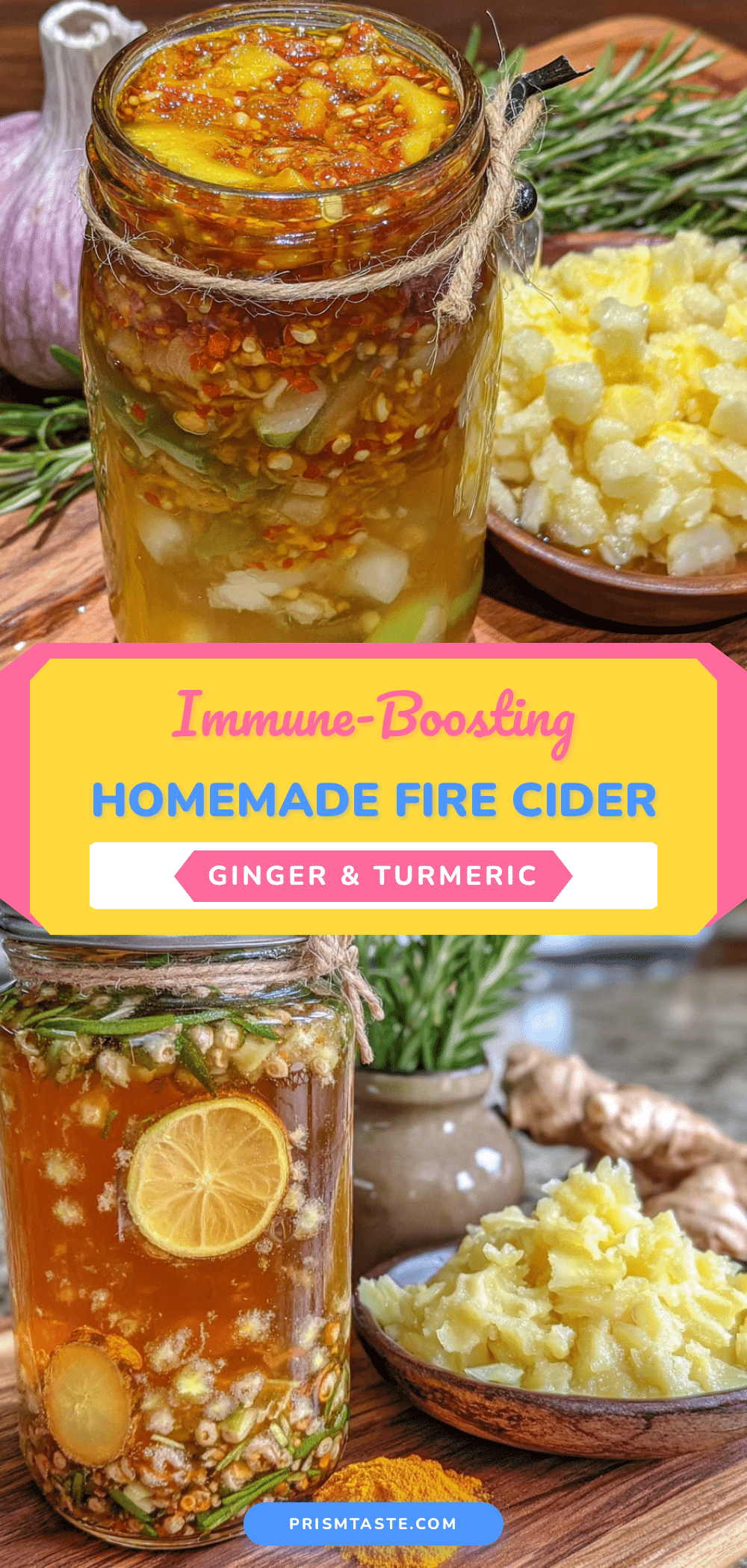
Homemade Fire Cider Tonic with Ginger & Turmeric
This homemade fire cider tonic with ginger and turmeric is a powerful immune-supporting blend that combines raw apple cider vinegar, fresh ginger, turmeric, horseradish, and spicy peppers. It’s easy to make, uses simple ingredients, and is perfect for cold season.
- Prep Time: 15 minutes
- Cook Time: 0 minutes
- Total Time: 2-4 weeks (steeping time) + 15 minutes active prep
- Yield: About 4 cups (32 servings of 1 tablespoon each) 1x
- Category: Condiment / Remedy
- Cuisine: American
Ingredients
- 4 cups (960 ml) raw apple cider vinegar (unfiltered, with the mother)
- 1/2 cup (about 4 ounces) fresh ginger root, thinly sliced (unpeeled)
- 1/4 cup (about 2 ounces) fresh turmeric root, thinly sliced (unpeeled)
- 1/4 cup (about 2 ounces) horseradish root, grated or thinly sliced
- 1 medium onion, roughly chopped (yellow or red)
- 8–10 garlic cloves, smashed
- 1 medium jalapeño pepper, sliced (seeds included)
- 1 teaspoon whole black peppercorns
- 1 large sprig fresh rosemary (about 4 inches)
- 3–4 sprigs fresh thyme
- 1 medium lemon, sliced (organic preferred)
- 1 medium orange, sliced
- 1/4 to 1/2 cup (60–120 ml) raw honey, to taste (added after steeping)
Instructions
- Wash all produce thoroughly. Slice ginger and turmeric into thin rounds (about 1/8-inch thick). Smash garlic cloves with the flat side of a knife. Roughly chop onion into chunks. Slice jalapeño into rings. Grate horseradish root.
- Layer ingredients into a clean 1-quart glass jar: start with ginger, turmeric, and horseradish on the bottom, then add onion and garlic. Tuck herb sprigs and citrus slices along the sides. Add jalapeño and peppercorns last. Pack tightly until jar is about three-quarters full.
- Pour raw apple cider vinegar over the ingredients until completely submerged, leaving about 1/2 inch of headspace. Use a wooden spoon or chopstick to release air bubbles. Wipe rim clean and screw on lid tightly.
- Place jar in a cool, dark place (like a cabinet or pantry). Shake gently daily for the first week, then every few days. Steep for 2-4 weeks. Taste after 2 weeks to check strength.
- After steeping, line a fine-mesh strainer with cheesecloth and set over a large bowl. Pour contents through strainer. Let drip, then gather cheesecloth and squeeze out all liquid. Discard solids.
- Stir in raw honey, starting with 1/4 cup and adding more to taste. Use a funnel to transfer to dark glass bottles. Label with date. Store in refrigerator for up to 1 year.
Notes
Wear gloves when handling fresh turmeric to avoid staining. Use plastic lids or place parchment paper between jar and metal lid to prevent corrosion. Save the strained pulp to dry and grind into a spicy seasoning powder. For a milder version, skip the jalapeño and reduce horseradish by half. For extra heat, add a habanero pepper and double the horseradish.
Nutrition
- Serving Size: 1 tablespoon (15 ml)
- Calories: 1520
- Sugar: 3
- Sodium: 2
- Carbohydrates: 4
Keywords: fire cider, immune tonic, ginger, turmeric, apple cider vinegar, homemade remedy, cold season, wellness shot