The spider showed up on my cutting board before I even had a chance to plan the party platter. Not a real one, thank goodness—I would have screamed and abandoned the whole idea. But I was staring at a block of Brie, some salami roses I’d been practicing for weeks, and a bag of black olives, trying to figure out how to make this look Halloween-y without spending three hours on it. My friend was coming over in twenty minutes for our annual scary movie marathon, and I had promised something “spooktacular.” The pressure was real.
I had this vision of a beautiful board, but the theme needed to land. I wanted something that looked impressive but didn’t require a pastry degree or a trip to a specialty store. Then I grabbed a bottle of balsamic glaze, drizzled it in a circle, and started pulling a toothpick through it. The web formed instantly. Honestly, it felt like a magic trick. That first spiderweb Halloween charcuterie board was born out of pure desperation, and it ended up being the star of the night. We barely watched the movie because we were too busy rearranging the olives into a better spider shape.
This is that board. It’s the one you make when you want to impress without the stress. It works for a party, a family movie night, or just a Tuesday that feels like it needs a little bit of chaos and cheese. I’ve made it so many times since that first panicked attempt, and it never gets old. There’s something deeply satisfying about watching people’s faces light up when they realize the “spider” is just a cleverly placed olive. Let me show you how easy it is.
Why You’ll Love This Recipe
This isn’t just another cheese board. It’s a conversation starter, a crowd-pleaser, and a 20-minute project that looks like you spent all day on it. I’ve tested this setup for everything from casual family dinners to full-blown Halloween parties, and it always delivers. Here’s why this spiderweb Halloween charcuterie board earns a permanent spot in my fall rotation.
- Ready in 20 Minutes: No cooking, no baking, no fuss. You can throw this together while the kids are getting their costumes on or right before guests arrive. It’s the ultimate last-minute party trick.
- Completely Customizable: Use whatever cheese, meat, and snacks you have on hand. The web pattern works with any ingredients. It’s a template for creativity, not a rigid list of rules.
- Perfect for All Ages: Kids love the spider theme, and adults appreciate the thoughtful flavor pairings. It’s a safe, fun way to get everyone grazing together before the main event.
- Minimal Cleanup: One board, a few small bowls, and you’re done. No pots, no pans, no mess. Just a beautiful spread and happy people.
- Visually Stunning: The web effect is genuinely impressive. It tricks the eye and makes people think you have serious culinary skills. I won’t tell if you don’t.
What makes this board different from a regular charcuterie platter is the intentional spooky design. It’s not just food thrown on a board—it’s a themed experience. The web acts as a visual anchor, and the spider (made from an olive) becomes a playful focal point. It’s the kind of thing that makes people pull out their phones before they even take a bite. And honestly, that’s the best kind of compliment.
What Ingredients You Will Need
This recipe uses simple, accessible ingredients that you can find at any grocery store. The magic is in the arrangement, not the rarity of the components. Here’s what you’ll need to build your own spiderweb Halloween charcuterie board.
For the Cheese Selection
- Brie or Camembert: A soft, creamy cheese that acts as a great anchor for the web. I prefer a double-cream Brie for its buttery texture.
- Aged Cheddar: Sharp and crumbly, it adds a nice contrast to the soft cheese. Cut it into cubes or thin slices.
- Smoked Gouda: The smoky flavor feels very autumnal and pairs beautifully with cured meats. Slice it into thin wedges.
- Goat Cheese Log: Tangy and soft, it’s perfect for spreading on crackers. You can even roll it in black sesame seeds for a spooky look.
For the Cured Meats
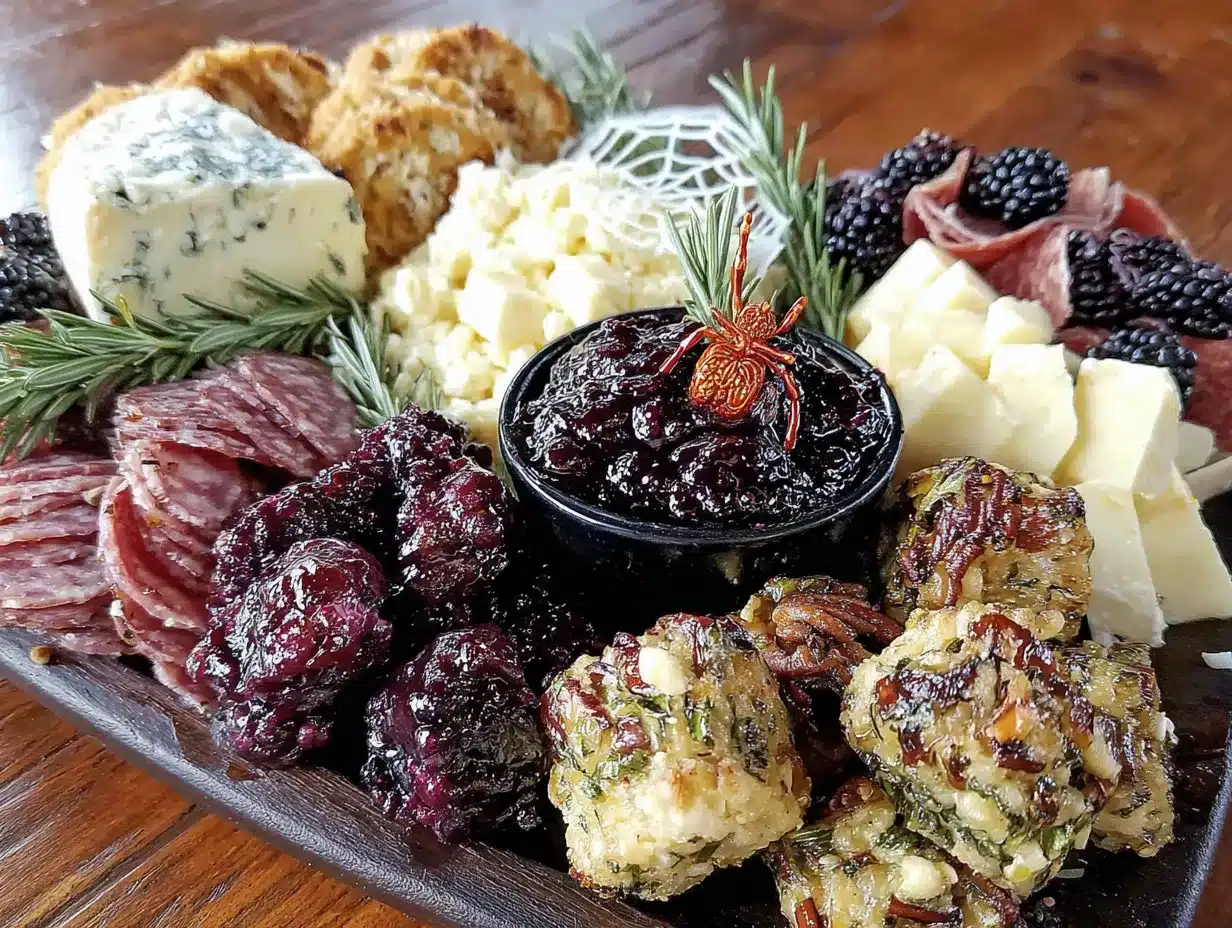
- Prosciutto: Thin, salty ribbons that drape beautifully over the board. Tear them into pieces for a rustic feel.
- Salami: I use a mix of regular and peppered salami. Slice it into rounds or fold it into roses for a fancy touch.
- Soppressata: A slightly spicy, dry-cured Italian sausage that adds a kick. Slice it thinly.
For the Spiderweb and Spider
- Balsamic Glaze: This is the key ingredient for the web. It’s thick, dark, and drizzles perfectly. You can buy it pre-made or reduce balsamic vinegar on the stove.
- Large Black Olives: Use pitted olives to form the spider body. One whole olive for the body and sliced olive pieces for the legs.
- Kalamata Olives: Their dark purple-black color works perfectly for the spider theme. You can also use them as accents around the board.
For the Accompaniments
- Crackers and Bread: A mix of plain water crackers, rosemary crackers, and sliced baguette. The variety gives guests options.
- Fresh Fruit: Red grapes, blackberries, and sliced apples. The deep reds and purples fit the Halloween color palette perfectly.
- Dried Fruit: Dried apricots and figs add a chewy sweetness that balances the salty meats.
- Nuts: Marcona almonds and candied pecans. The crunch is essential for texture contrast.
- Vegetables: Cucumber rounds and cherry tomatoes. They add freshness and a pop of color.
- Dips and Spreads: Fig jam, honey, or a dollop of whole-grain mustard. Small bowls of these add flavor depth.
Ingredient Selection Tips
For the best results, take your cheeses out of the fridge 30 minutes before serving. Room temperature cheese has way more flavor. I always buy a whole wheel of Brie for the center—it makes the web look more dramatic. If you can’t find balsamic glaze, just simmer 1/2 cup of balsamic vinegar with a tablespoon of brown sugar until it thickens. Let it cool before drizzling. For the olives, make sure they are pitted so you can easily arrange the spider legs.
Equipment Needed
You don’t need any fancy tools for this board. Here’s what I use every time I make a spiderweb Halloween charcuterie board.
- Large Wooden or Slate Board: A 16×12 inch board is ideal. A wooden cutting board, a marble slab, or even a large baking sheet will work. The darker the board, the more the web pops.
- Small Ramekins or Bowls: For dips, jams, and the balsamic glaze. I use 2-ounce ceramic bowls that fit neatly into the board design.
- Cheese Knives: At least two—one for soft cheese and one for hard cheese. Small spreaders work well too.
- Toothpick or Skewer: This is your web-drawing tool. A plain wooden toothpick is perfect for pulling the glaze into web lines.
- Small Offset Spatula: Useful for moving delicate items like prosciutto without tearing them. A butter knife works in a pinch.
- Paring Knife: For slicing olives and cutting cheese into neat shapes.
I found my favorite board at a thrift store for five dollars. It’s a large, round acacia wood board that has developed a beautiful patina over the years. Don’t feel pressured to buy expensive equipment. A clean baking sheet lined with parchment paper works just fine for a casual gathering. The only non-negotiable tool is the toothpick for the web. Everything else is flexible.
Preparation Method
Follow these steps to build your spiderweb Halloween charcuterie board. The process is simple, but the order matters for the best visual result.
- Prepare Your Board (2 minutes): Start with a clean, dry board. If using a wooden board, give it a quick wipe with a damp cloth. Place your small ramekins where you want them. I usually put one in the center for the balsamic glaze and two off to the sides for fig jam and honey. This anchors your layout.
- Place the Soft Cheese (2 minutes): Put the wheel of Brie or Camembert in the center of the board. This will be the focal point where the spiderweb originates. If you don’t have a wheel, place a small bowl of soft cheese there instead. Make sure it’s centered.
- Add the Hard Cheeses (3 minutes): Arrange the cheddar and smoked Gouda around the Brie, but leave space for the web to radiate outward. Cut some into cubes and leave others in wedge form. Vary the shapes for visual interest. Place them at the 12, 3, 6, and 9 o’clock positions relative to the center.
- Layer the Cured Meats (3 minutes): Fold prosciutto into loose ribbons and place them in clusters. Roll salami slices into roses by folding one slice in half, then rolling it tightly. Fan out the soppressata slices. Distribute these meat clusters evenly around the board, filling in the gaps between the cheeses.
- Add the Accompaniments (5 minutes): Fill your ramekins with fig jam, honey, and whole-grain mustard. Place them in the gaps. Scatter clusters of grapes, blackberries, and dried apricots around the board. Add piles of almonds and candied pecans. Place cucumber rounds and cherry tomatoes in small groups. The goal is to create a balanced, abundant look with no empty spots.
- Arrange Crackers and Bread (2 minutes): Fan out crackers and baguette slices around the edges of the board. Place them in small, overlapping groups. This gives guests easy access without cluttering the center of the board.
- Create the Spiderweb (3 minutes): This is the moment. Take your balsamic glaze and drizzle a thick, continuous circle around the Brie wheel, about 2 inches out from the cheese. Then, drizzle a second, larger circle around the first one. You should have two concentric circles. Now, using a toothpick, start at the center (the edge of the Brie) and drag the glaze outward through both circles to the edge of the outer circle. Do this in four directions (north, south, east, west). Then, drag the toothpick from the outer circle inward to the center, creating a continuous web pattern. Repeat until you have 8 to 12 web strands radiating from the center. The glaze will pull into a perfect web pattern as you drag the toothpick through it.
- Build the Spider (1 minute): Take one large pitted black olive and place it on the web, slightly off-center. This is the spider’s body. Cut another olive in half lengthwise. Then, slice each half into thin strips to create 8 legs. Arrange the legs around the body, placing them on the web lines. Use a tiny dab of balsamic glaze to “glue” the legs in place if needed. For eyes, use two tiny dots of cream cheese or goat cheese on the olive body.
- Final Touches (2 minutes): Step back and look at your board. Fill any obvious gaps with a few extra crackers, a handful of nuts, or a couple of blackberries. Make sure the spider is visible and the web is intact. Add a few fresh rosemary sprigs around the edges for a haunting, autumnal feel.
- Serve Immediately: Your spiderweb Halloween charcuterie board is ready. Place it at room temperature and let guests dig in. If you need to make it ahead, prepare everything except the web and spider. Add those right before serving so the glaze stays glossy and the web remains sharp.
Cooking Tips & Techniques
I’ve made this board more times than I can count, and I’ve learned a few tricks along the way. Here are my best tips for a flawless spiderweb Halloween charcuterie board.
Master the Web: The consistency of your balsamic glaze is everything. If it’s too thin, it will run and make a mess. If it’s too thick, it won’t pull into clean lines. A good glaze should be the consistency of warm honey. If your store-bought glaze is too thick, microwave it for 5 seconds to loosen it up. When dragging the toothpick, use a steady, confident motion. Don’t overwork the lines—one smooth drag in each direction is perfect.
Don’t Overcrowd the Center: The web needs space to shine. Keep the area around the Brie relatively clear of other ingredients. All the meats, cheeses, and crackers should fill the outer edges of the board. This creates a beautiful frame for the web and makes the design the star of the show.
Use Room Temperature Ingredients: This is true for any charcuterie board, but especially this one. Cold cheese doesn’t taste as good, and cold meats are harder to fold and arrange. Take everything out of the fridge 30 minutes before you start building. The Brie will be soft and spreadable, and the prosciutto will drape like silk.
Practice the Olive Spider: The spider is the fun part, but it can be fiddly. Slice the olive legs as thin as you can manage. If they’re too thick, they won’t look like legs. I’ve had spiders that looked more like mutant blobs than arachnids. It’s okay if it’s not perfect—it adds to the charm. You can also use pretzel sticks for legs if olives are too tricky.
Make It Ahead: If you’re hosting a party, assemble everything except the web and spider up to 4 hours in advance. Cover the board loosely with plastic wrap and refrigerate. Take it out 30 minutes before serving, then add the balsamic web and olive spider right before guests arrive. The glaze will stay glossy, and the web will look freshly drawn.
One Mistake I Made: The first time I made this, I used a cheap balsamic glaze that was way too watery. The web turned into a brown puddle, and the spider looked like it was drowning. Learn from my failure—invest in a good, thick balsamic glaze. It makes all the difference.
Variations & Adaptations
This board is endlessly adaptable. Here are some of my favorite variations on the spiderweb Halloween charcuterie board.
Dietary Adaptations
- Vegan Version: Use vegan cheeses like cashew-based Brie and almond-based cheddar. Replace meats with marinated artichoke hearts, roasted red peppers, and smoked tofu slices. Use a vegan balsamic glaze and agave nectar for sweetness.
- Gluten-Free Version: Swap regular crackers for gluten-free crackers or rice cakes. Use cornichons and pickled vegetables for crunch. Make sure the balsamic glaze is certified gluten-free.
- Low-Carb/Keto Version: Focus on cheese, meats, and vegetables. Use cucumber rounds and bell pepper strips instead of crackers. Add extra nuts and olives for fat and flavor.
Seasonal Variations
- Fall Harvest Board: Add roasted pumpkin seeds, sliced pears, and dried cranberries. Use a wedge of blue cheese for a funky, seasonal flavor. Drizzle the web with a maple-balsamic glaze.
- Winter Holiday Board: Use a wheel of baked Brie topped with cranberry sauce. Add pomegranate seeds and fresh rosemary. The web can be made with a dark cherry glaze for a festive twist.
- Summer Spooky Board: Keep it light with fresh mozzarella balls, prosciutto, and melon slices. Use a balsamic glaze web and add edible flowers for a whimsical, less scary vibe.
Flavor Twists
- Spicy Board: Add pepper jack cheese, spicy chorizo, and jalapeño-stuffed olives. Use a chipotle-infused honey for the web. The heat adds a fun kick.
- Sweet and Savory Board: Include dark chocolate squares, honeycomb, and dried figs. Pair with sharp cheddar and prosciutto. The balsamic web ties the sweet and savory elements together beautifully.
- Mediterranean Board: Use feta cheese, hummus, roasted red peppers, and kalamata olives. The web can be made with a pomegranate molasses for a tangy, sweet twist.
I once made a breakfast version of this board for a Halloween brunch. I used a wheel of baked Brie, bacon strips, hard-boiled eggs, and mini pancakes. The web was made with maple syrup. It was a hit. Don’t be afraid to get creative with the theme.
Serving & Storage Suggestions
This spiderweb Halloween charcuterie board is best served at room temperature. The flavors are more pronounced, and the cheese has the perfect creamy texture. Place the board on a large table where guests can gather around it. Provide small plates and napkins for easy serving.
Serving Temperature: Let the board sit out for 20-30 minutes before serving. If it’s been refrigerated, give it a bit more time. The balsamic web will stay intact at room temperature for several hours.
Complementary Dishes: This board pairs wonderfully with a warm bowl of creamy slow cooker white chicken chili or a batch of cozy pumpkin cinnamon roll casserole for a full Halloween spread. For drinks, serve a creamy witch’s brew pumpkin spice cold brew float for a festive, non-alcoholic option.
Storage: Leftovers should be stored separately. Wrap cheeses in wax paper and store them in the fridge. Place meats in an airtight container. Crackers and nuts should be kept in a sealed bag at room temperature. The balsamic web will not survive refrigeration, so enjoy it the day you make it.
Reheating: This board is served cold or at room temperature, so no reheating is needed. If you have leftover baked Brie, you can reheat it in the microwave for 15-20 seconds or in a 300°F oven for 5 minutes.
Flavor Development: The board is best enjoyed fresh, but some flavors improve over time. The balsamic glaze will deepen and become more intense as it sits. The cheeses will continue to soften at room temperature. If you have leftovers, the flavors meld together nicely in the fridge overnight, making for a great next-day snack platter.
Nutritional Information & Benefits
This spiderweb Halloween charcuterie board is a treat, but it also offers some nutritional benefits. Here’s a rough estimate for a standard serving (about 4 ounces of cheese, 2 ounces of meat, and a handful of accompaniments).
| Nutrient | Amount Per Serving |
|---|---|
| Calories | 450-550 |
| Protein | 20-25g |
| Fat | 35-40g |
| Carbohydrates | 15-20g |
| Fiber | 3-5g |
| Sugar | 8-12g |
| Sodium | 800-1000mg |
Health Benefits: Cheese is a good source of calcium and protein. Cured meats provide iron and B vitamins. Nuts offer healthy fats and fiber. Fresh fruits add antioxidants and vitamins. The balsamic glaze contains polyphenols, which are beneficial plant compounds.
Dietary Considerations: This board is naturally gluten-free if you use gluten-free crackers. It is not suitable for vegans or those with dairy allergies (unless adapted). The cured meats are high in sodium, so those watching their salt intake should enjoy in moderation.
Allergens: This recipe contains dairy (cheese) and gluten (crackers). It may contain tree nuts (almonds, pecans). Always check labels on packaged items for specific allergen information.
Personal Wellness Perspective: I believe in balance. A charcuterie board is a celebration, not an everyday meal. It’s perfect for a party or a special occasion. Pair it with plenty of fresh vegetables and water to balance the richness. Enjoy the experience without guilt—food is meant to bring joy.
Conclusion
This spiderweb Halloween charcuterie board is the easiest way to bring a little spooky magic to your table without spending hours in the kitchen. It’s fun, flexible, and guaranteed to impress. Whether you’re hosting a costume party, having a family movie night, or just want to surprise your kids with a themed snack, this board delivers.
I love this recipe because it proves that you don’t need to be a professional chef to create something memorable. A little bit of balsamic glaze, a toothpick, and a black olive are all it takes to turn a simple snack into a centerpiece. It’s the kind of thing that makes people smile, and that’s the whole point of cooking, isn’t it?
I’d love to see your version of this board. Tag me in your photos, leave a comment below with your favorite cheese combinations, or share your own spooky twists. Did you use a different spider design? What’s the most unusual ingredient you’ve added? Let’s make this Halloween the cheesiest one yet. Now go make that web.
Frequently Asked Questions
Can I make this spiderweb Halloween charcuterie board ahead of time?
Yes, you can assemble everything except the balsamic web and olive spider up to 4 hours in advance. Cover the board loosely with plastic wrap and refrigerate. Add the web and spider right before serving for the best visual effect.
What can I use instead of balsamic glaze for the web?
You can use pomegranate molasses, a thick balsamic reduction, or even dark chocolate sauce for a sweet twist. Maple syrup works too, but it will be thinner and may not hold the web shape as well.
How do I make the olive spider look realistic?
Use a large, pitted black olive for the body. Cut another olive in half lengthwise, then slice each half into 4 thin strips for the legs. Use a tiny dab of balsamic glaze or cream cheese to attach the legs to the body. Add two tiny dots of goat cheese for eyes.
What are the best cheeses for a Halloween charcuterie board?
Brie or Camembert is perfect for the center web. Aged cheddar, smoked Gouda, and goat cheese are great choices. Blue cheese adds a funky, spooky flavor. Stick to a mix of soft and hard cheeses for variety.
How do I keep the balsamic web from running?
Use a thick balsamic glaze, not thin balsamic vinegar. If your glaze is too runny, simmer it on the stove until it reduces and thickens. Let it cool completely before drizzling. A thick glaze will hold its shape and create clean web lines.
Pin This Recipe!
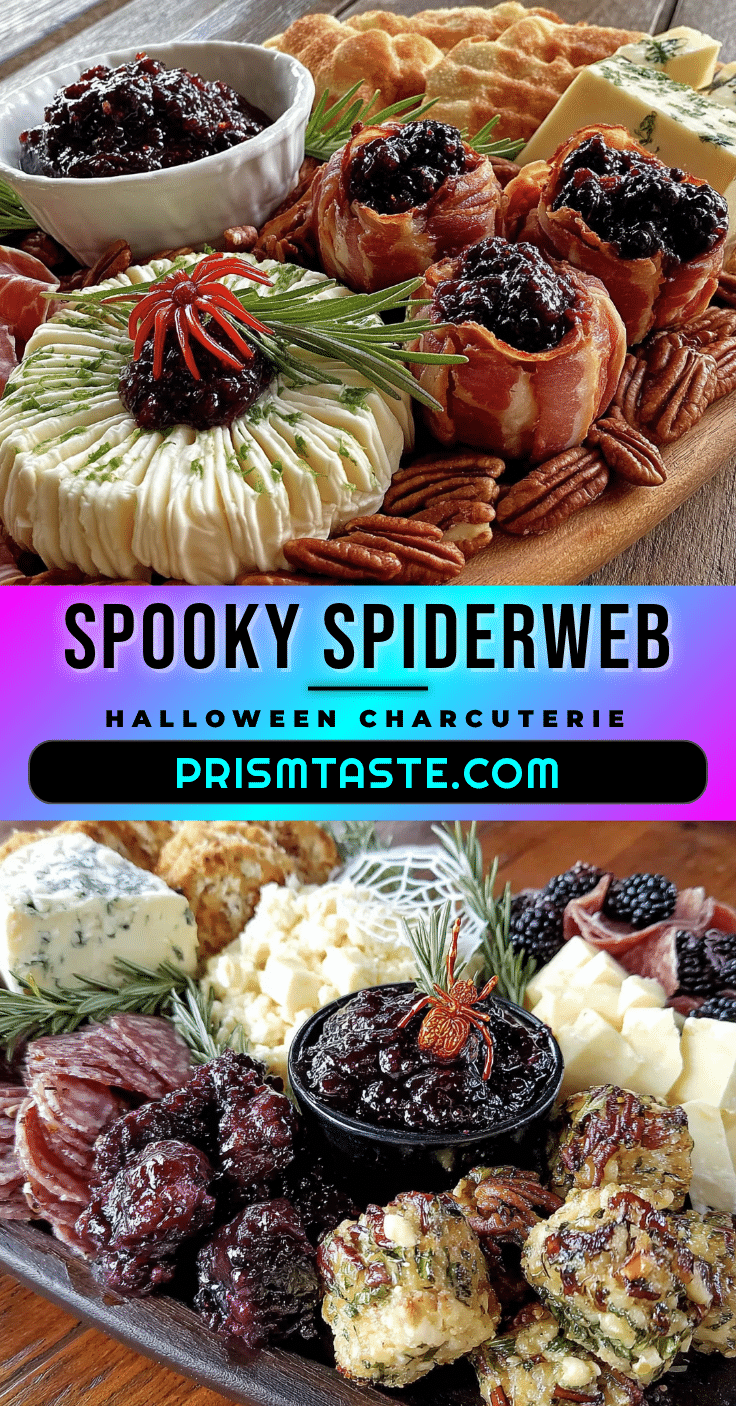
Easy Spiderweb Halloween Charcuterie Board in 20 Minutes
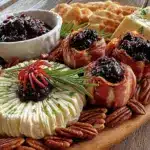
A spooky yet simple charcuterie board featuring a balsamic glaze spiderweb and an olive spider, perfect for Halloween parties or movie nights. Ready in just 20 minutes with no cooking required.
- Prep Time: 20 minutes
- Cook Time: 0 minutes
- Total Time: 20 minutes
- Yield: 8 servings 1x
- Category: Appetizer
- Cuisine: American
Ingredients
- 1 wheel Brie or Camembert (8 oz)
- 4 oz aged Cheddar, cubed or sliced
- 4 oz smoked Gouda, sliced into wedges
- 4 oz goat cheese log
- 4 oz prosciutto, torn into ribbons
- 4 oz salami, sliced into rounds or roses
- 4 oz soppressata, thinly sliced
- 1/4 cup balsamic glaze
- 2 large pitted black olives (for spider)
- 1/4 cup Kalamata olives
- 1 cup assorted crackers (water, rosemary, baguette slices)
- 1 cup red grapes
- 1/2 cup blackberries
- 1 apple, sliced
- 1/4 cup dried apricots
- 1/4 cup dried figs
- 1/4 cup Marcona almonds
- 1/4 cup candied pecans
- 1/2 cup cucumber rounds
- 1/2 cup cherry tomatoes
- 2 tbsp fig jam
- 2 tbsp honey
- 1 tbsp whole-grain mustard
- Fresh rosemary sprigs for garnish
Instructions
- Prepare your board: Clean and dry a large wooden or slate board. Place small ramekins for balsamic glaze, fig jam, and honey.
- Place the soft cheese: Put the wheel of Brie or Camembert in the center of the board.
- Add the hard cheeses: Arrange cheddar and smoked Gouda around the Brie at 12, 3, 6, and 9 o’clock positions.
- Layer the cured meats: Fold prosciutto into ribbons, roll salami into roses, and fan soppressata slices. Distribute evenly around the board.
- Add accompaniments: Fill ramekins with fig jam, honey, and mustard. Scatter grapes, blackberries, dried apricots, almonds, pecans, cucumber rounds, and cherry tomatoes in small groups.
- Arrange crackers and bread: Fan out crackers and baguette slices around the edges of the board.
- Create the spiderweb: Drizzle balsamic glaze in two concentric circles around the Brie (about 2 inches apart). Using a toothpick, drag the glaze outward from the center through both circles in four directions, then repeat to create 8-12 web strands.
- Build the spider: Place one whole pitted black olive slightly off-center on the web for the body. Cut another olive in half lengthwise, then slice each half into 4 thin strips for legs. Arrange legs around the body on the web lines. Add two tiny dots of cream cheese or goat cheese for eyes.
- Final touches: Fill any gaps with extra crackers, nuts, or blackberries. Add fresh rosemary sprigs around the edges.
- Serve immediately at room temperature.
Notes
For best results, take cheeses out of fridge 30 minutes before serving. If balsamic glaze is too thick, microwave for 5 seconds. To make ahead, assemble everything except the web and spider up to 4 hours in advance; add them just before serving. The spider legs can be made with pretzel sticks if olives are too tricky.
Nutrition
- Serving Size: 1 serving (about 4 o
- Calories: 500
- Sugar: 10
- Sodium: 900
- Fat: 38
- Saturated Fat: 15
- Carbohydrates: 18
- Fiber: 4
- Protein: 22
Keywords: Halloween charcuterie board, spiderweb cheese board, easy Halloween appetizer, spooky snack board, 20-minute recipe