It was October, and I had just accepted that most tomato soups were either too thin or tasted like they came from a can. Not the fancy kind either—the kind that leaves that metallic aftertaste you try to mask with a grilled cheese. I had been looking for a tomato soup that actually felt like a meal, something that had weight to it without being heavy. Something that understood what fall was supposed to taste like.
So I started roasting. Tomatoes, garlic, onions—everything went into a hot oven until the kitchen smelled like the kind of place you want to curl up in. The roasting changed everything. It brought out a sweetness you can’t get from simmering, and it deepened the flavor in a way that felt almost unfair for how simple it was. I blended it all up with a little cream (okay, maybe more than a little) and some fresh basil, and honestly, I couldn’t believe it came from my own stove.
This soup isn’t trying to be fancy. It’s just trying to be good. And it stuck with me because it solved a problem I didn’t realize I had—how to make a weeknight dinner feel like a slow Sunday without spending all day in the kitchen. Sometimes the best recipes come from just being tired of settling.
Why You’ll Love This Recipe
I’ve tested this soup more times than I care to admit. Burned my tongue on the first batch, added too much cream to the second, and finally nailed it on the third. This is that version—the one that works every time.
- Rich & Creamy Without Being Heavy : The roasted vegetables do the heavy lifting, so you get a velvety texture without needing a quart of cream.
- Simple Pantry Ingredients : Nothing weird here. Tomatoes, garlic, onion, basil, cream, and a few staples you already have.
- Perfect for Meal Prep : It actually tastes better the next day, which makes it ideal for Sunday meal prep or freezing for later.
- Naturally Gluten-Free & Vegetarian : No flour, no roux, no fuss. Just pure roasted goodness.
- Family-Approved : I’ve served this to picky eaters and food snobs alike. Both groups went back for seconds.
What makes this soup different from the dozens of tomato soup recipes out there is the roasting. It’s not a shortcut—it’s a technique that unlocks flavor you can’t fake. The caramelization adds a natural sweetness that balances the acidity of the tomatoes, and the roasted garlic becomes almost nutty. It’s the kind of soup that makes you close your eyes after the first spoonful, not because it’s fancy, but because it just tastes right.
What Ingredients You Will Need
This recipe uses simple, wholesome ingredients that come together to create something truly special. The roasting process transforms everyday produce into liquid gold, so quality matters here more than quantity.
- Roma tomatoes (2 pounds, halved lengthwise) – Roma tomatoes are ideal for roasting because they have less water content and more flesh than other varieties. If you can’t find Romas, use vine-ripened tomatoes instead. I’ve tried beefsteak tomatoes, and they work, but you’ll need to drain some of the liquid after roasting.
- Garlic (1 whole head, top sliced off) – Roasting a whole head of garlic transforms it from sharp and pungent to sweet and buttery. Don’t skip this—it’s what gives the soup its mellow depth. I like using fresh garlic from the farmer’s market when it’s in season.
- Yellow onion (1 large, quartered) – Onions add a savory backbone to the soup. Yellow onions are my go-to for roasting because they strike the perfect balance between sweet and sharp. Red onions work too, but they’ll change the color slightly.
- Fresh basil leaves (1/2 cup, packed, plus more for garnish) – Fresh basil is non-negotiable here. Dried basil won’t give you the same bright, peppery notes. I grow basil on my windowsill just for this soup.
- Heavy cream (1/2 cup) – This adds richness without overwhelming the roasted flavors. For a lighter version, you can use half-and-half or full-fat coconut milk. I’ve tried all three, and heavy cream gives the best texture.
- Vegetable broth (2 cups, low-sodium) – Low-sodium broth lets you control the salt level. I prefer using a good quality store-bought broth or homemade if I have it on hand.
- Olive oil (3 tablespoons) – Use a good extra virgin olive oil for roasting. It adds flavor and helps the vegetables caramelize evenly.
- Salt and black pepper (to taste) – I use kosher salt for roasting and flaky sea salt for finishing. Freshly cracked black pepper makes a difference here.
- Red pepper flakes (1/4 teaspoon, optional) – This is my secret ingredient. It doesn’t make the soup spicy—it just adds a subtle warmth that wakes up the other flavors.
- Balsamic vinegar (1 tablespoon) – A splash of balsamic at the end brightens everything up. It’s optional, but I highly recommend it.
For a dairy-free version, swap the heavy cream with full-fat canned coconut milk. The flavor will be slightly different, but still delicious. I’ve made it both ways, and my dairy-free friends couldn’t stop eating it.
Equipment Needed
You don’t need a fancy kitchen to make this soup, but a few key tools will make the process smoother.
- Baking sheet (large, rimmed) – A rimmed sheet prevents juices from spilling into your oven. I use a half-sheet pan, which fits all the vegetables in a single layer.
- Parchment paper or silicone baking mat – This makes cleanup a breeze and prevents sticking. I’ve forgotten to use it before, and scrubbing caramelized tomato juice off a pan is not fun.
- High-speed blender or immersion blender – An immersion blender works great and saves you from transferring hot liquid. If using a countertop blender, let the soup cool slightly and blend in batches to avoid explosions. Trust me on this one.
- Large pot or Dutch oven – You’ll need something big enough to hold all the soup after blending. A Dutch oven works perfectly because it retains heat well.
- Chef’s knife and cutting board – A sharp knife makes prepping the vegetables much easier. Dull knives are dangerous and frustrating.
- Measuring cups and spoons – Precision matters for the cream and broth, but feel free to eyeball the vegetables.
If you don’t have a blender, you can use a potato masher or food mill. The texture won’t be as smooth, but it’ll still taste amazing. I’ve made this soup in a tiny apartment kitchen with minimal equipment, and it turned out just fine.
Preparation Method

This soup comes together in about an hour, but most of that time is hands-off roasting. Here’s how to make it.
- Preheat your oven to 400°F (200°C). Line a large baking sheet with parchment paper or a silicone mat. This is one of those steps that seems optional until you forget to do it.
- Prepare the vegetables. Halve the Roma tomatoes lengthwise and place them cut-side up on the baking sheet. Quarter the yellow onion and add it to the sheet. Slice the top off the whole head of garlic to expose the cloves, drizzle with a little olive oil, wrap it in foil, and place it on the sheet as well.
- Season and roast. Drizzle the tomatoes and onions with 2 tablespoons of olive oil, then sprinkle with salt, pepper, and red pepper flakes if using. Toss gently to coat. Roast for 35-40 minutes, until the tomatoes are shriveled and caramelized, and the onions are soft and golden. The garlic should be soft and squeezable when done.
- Cool slightly. Let the roasted vegetables cool for about 5 minutes. This is important if you’re using a countertop blender—hot liquid expands and can blow the lid off. I learned this the hard way, and my kitchen ceiling still has a tomato stain.
- Squeeze the garlic. Once the garlic is cool enough to handle, squeeze the softened cloves out of their skins. They should slide right out. Discard the skins.
- Blend the base. Transfer the roasted tomatoes, onions, and garlic to a blender. Add the fresh basil and 1 cup of vegetable broth. Blend until completely smooth. Start on low speed and gradually increase to high. If the mixture is too thick, add more broth a little at a time.
- Heat the soup. Pour the blended mixture into a large pot or Dutch oven over medium heat. Add the remaining 1 cup of vegetable broth and stir to combine. Bring to a gentle simmer, then reduce the heat to low.
- Add the cream and finish. Stir in the heavy cream and balsamic vinegar. Taste and adjust seasoning with salt and pepper. Simmer for another 5 minutes, stirring occasionally, until heated through. Don’t let it boil after adding the cream, or it might curdle.
- Serve immediately. Ladle into bowls and garnish with fresh basil leaves and a drizzle of olive oil or cream. A sprinkle of flaky sea salt on top adds a nice finishing touch.
The soup should be velvety smooth and a deep orange-red color. If it seems too thick, add more broth or a splash of water until it reaches your desired consistency. If it’s too thin, let it simmer uncovered for a few minutes to reduce.
Cooking Tips & Techniques
I’ve made this soup more times than I can count, and I’ve learned a few things along the way. Here are my best tips for getting it right every time.
Don’t overcrowd the baking sheet. The vegetables need space to caramelize, not steam. If they’re piled on top of each other, they’ll release water and boil instead of roast. Use two sheets if necessary. I’ve made this mistake before, and the difference is noticeable.
Roast the garlic whole. I know it’s tempting to just toss in some minced garlic, but roasting a whole head is worth the extra few minutes. The flavor becomes sweet and mellow, almost like a spread. It’s completely different from raw or sautéed garlic.
Blend in batches if using a countertop blender. Hot liquid expands, so fill the blender no more than halfway. Hold the lid down with a folded kitchen towel while blending to prevent accidents. An immersion blender is safer and easier, but either works.
Taste as you go. The amount of salt you need depends on your broth and your tomatoes. Start with less and add more at the end. I’ve oversalted soup before, and there’s no fixing it.
Let it rest. Like many soups, this one tastes even better the next day. The flavors meld together overnight, and the texture becomes even creamier. If you have time, make it a day ahead.
One time, I forgot to add the basil before blending and had to stir it in afterward. It still tasted good, but the color wasn’t as vibrant. Moral of the story: blend the basil with the hot liquid for the best color and flavor.
Variations & Adaptations
This soup is forgiving, and you can adapt it to suit your preferences or what you have on hand. Here are a few variations I’ve tried and loved.
- Dairy-Free Version : Swap the heavy cream with full-fat canned coconut milk. The soup will have a slight coconut flavor, which pairs surprisingly well with the roasted tomatoes and basil. I’ve made this for friends with dairy allergies, and they didn’t miss the cream at all.
- Spicy Roasted Tomato Soup : Add a chopped jalapeño or serrano pepper to the baking sheet with the vegetables. Remove the seeds if you want less heat. The roasted pepper adds a smoky, spicy kick that’s perfect for cold nights.
- Herb Variation : Swap the basil for fresh thyme or rosemary. Roasted tomatoes and thyme are a classic combination. Use about 2 teaspoons of fresh thyme leaves or 1 teaspoon of dried.
- Roasted Red Pepper Addition : Add 1 large red bell pepper, seeded and quartered, to the baking sheet. Roast it with the other vegetables. The pepper adds sweetness and a slightly different color. This is my go-to variation when I want something a little different.
- Protein Boost : Stir in some cooked white beans or shredded chicken after blending. The beans blend in seamlessly and add protein without changing the flavor much.
I once made a version with roasted carrots added to the mix. It was sweeter than the original but still delicious. Don’t be afraid to experiment—the roasting technique is the star here, and it works with a variety of vegetables.
Serving & Storage Suggestions
This soup is cozy enough to stand on its own, but it pairs beautifully with a few simple sides. Here’s how I like to serve and store it.
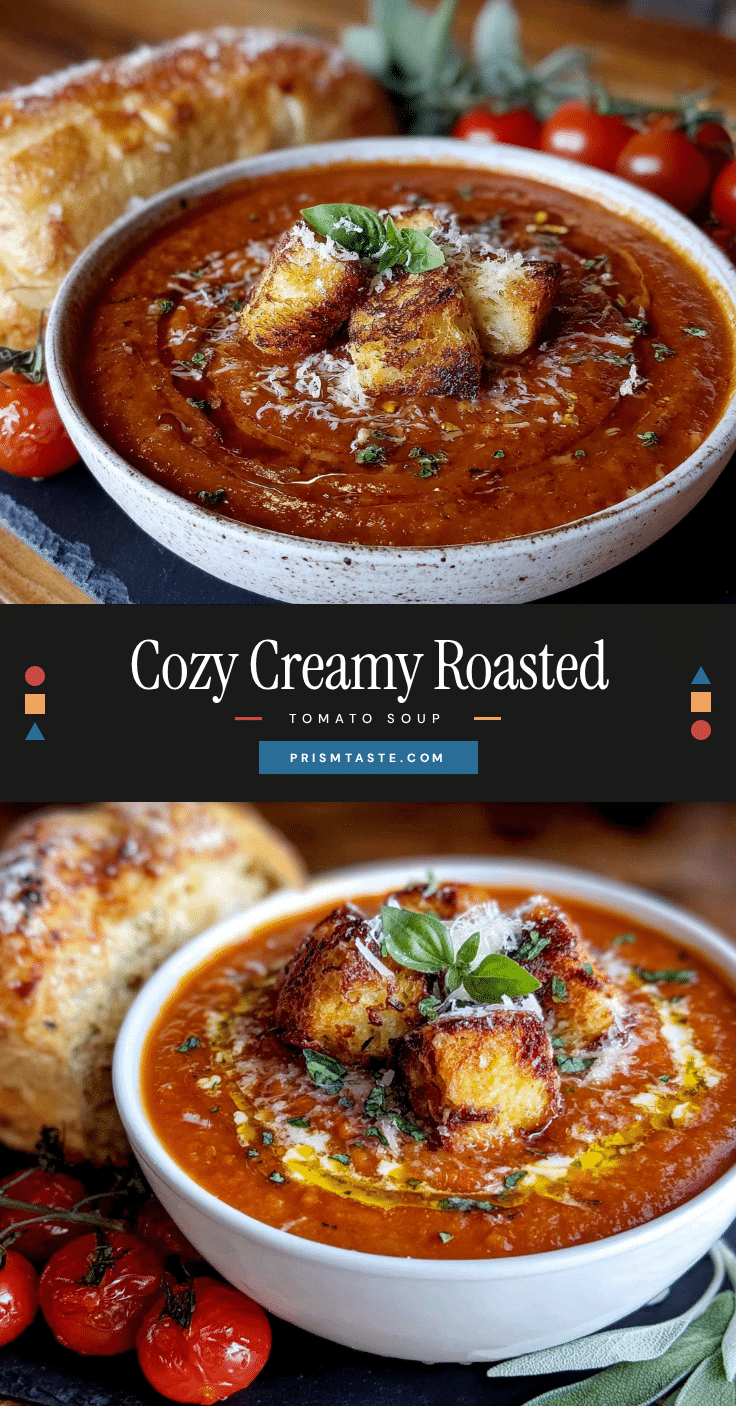
Serving temperature and presentation: Serve the soup hot, but not boiling. Ladle it into warm bowls and top with a swirl of cream, a few fresh basil leaves, and a drizzle of good olive oil. A sprinkle of flaky sea salt and cracked black pepper finishes it off. For a heartier meal, serve with crusty bread, a simple side salad, or a grilled cheese sandwich. The classic combo never gets old.
Storage instructions: Let the soup cool completely before storing. Transfer to an airtight container and refrigerate for up to 5 days. The flavors will deepen and meld together, making it even better on day two. I often make a double batch just for this reason.
Freezing instructions: This soup freezes beautifully. Pour cooled soup into freezer-safe containers or zip-top bags, leaving some room for expansion. Freeze for up to 3 months. Thaw overnight in the refrigerator before reheating.
Reheating methods: Reheat the soup gently on the stovetop over medium-low heat, stirring occasionally. Add a splash of broth or water if it’s too thick. You can also reheat individual portions in the microwave, but stir every 30 seconds to prevent hot spots. Don’t let it boil, especially if it contains cream.
How flavors develop over time: The roasted flavors become more pronounced after a day or two in the fridge. The garlic mellows further, and the basil infuses the entire soup. If you’re planning to freeze the soup, consider adding the fresh basil after thawing and reheating for the brightest flavor.
Nutritional Information & Benefits
This soup is as nourishing as it is delicious. Here’s a rough estimate of the nutritional content per serving (based on 4 servings).
- Calories: Approximately 280 per serving
- Protein: 5g
- Fat: 18g (mostly from olive oil and cream)
- Carbohydrates: 22g
- Fiber: 5g
- Sugar: 12g (natural from tomatoes)
- Sodium: 450mg (varies based on broth)
Health benefits of key ingredients: Tomatoes are rich in lycopene, a powerful antioxidant that becomes more bioavailable when cooked. Roasting actually increases the lycopene content. Garlic is known for its immune-boosting properties, and basil provides vitamin K and anti-inflammatory compounds. Olive oil adds healthy monounsaturated fats.
Dietary considerations: This soup is naturally gluten-free and vegetarian. For a vegan version, use coconut milk instead of heavy cream. It’s also relatively low in calories for a creamy soup, making it a satisfying but not heavy meal option.
Potential allergens: This recipe contains dairy (heavy cream). For a dairy-free version, see the variations section above.
I try to eat seasonally, and this soup is my way of celebrating fall produce without overcomplicating things. It’s comfort food that actually makes me feel good, not sluggish.
Conclusion
This cozy creamy roasted tomato fall soup is proof that simple ingredients, treated with a little care, can become something truly special. The roasting transforms everyday vegetables into a rich, velvety soup that tastes like you spent hours in the kitchen—even though most of the work happens in the oven while you go about your day.
I love this recipe because it’s forgiving. You can tweak the herbs, swap the cream, add a kick of heat, or keep it classic. It adapts to what you have and what you’re craving. And honestly, it’s the kind of soup that makes a gray November afternoon feel a little brighter.
If you make this soup, I’d love to hear about it. Leave a comment below and let me know how it turned out, or share your own twist on the recipe. Tag me in your photos—I always love seeing your creations. And if you’re looking for more cozy fall recipes, check out this pumpkin cinnamon roll casserole for a sweet companion to this savory soup. Happy cooking, friends!
Frequently Asked Questions
Can I use canned tomatoes instead of fresh?
Yes, you can use canned whole peeled tomatoes in a pinch. Drain them well and roast them on the baking sheet with the other vegetables. The flavor won’t be quite as deep as fresh Roma tomatoes, but it’s still good. I recommend San Marzano tomatoes for the best results.
How do I make this soup thicker or thinner?
For a thicker soup, use less broth or let it simmer uncovered for a few minutes after blending. For a thinner soup, add more broth or a splash of water until it reaches your desired consistency. The soup will also thicken slightly as it cools.
Can I make this soup ahead of time?
Absolutely. This soup tastes even better the next day. Make it up to 3 days ahead and store it in the refrigerator. Reheat gently on the stovetop, adding a splash of broth if needed. It also freezes well for up to 3 months.
What can I serve with this soup?
A classic grilled cheese sandwich is the perfect companion. Crusty bread with butter, a simple green salad, or roasted vegetables also work well. For a heartier meal, serve it alongside a pasta salad or a crusty baguette.
Can I use an immersion blender instead of a countertop blender?
Yes, an immersion blender works great for this recipe. Transfer the roasted vegetables and broth to a pot, then blend directly in the pot until smooth. It’s easier and safer than transferring hot liquid to a countertop blender. Just be careful not to splash.
Pin This Recipe!
Cozy Creamy Roasted Tomato Fall Soup with Garlic & Basil

A rich and creamy roasted tomato soup that feels like a meal without being heavy. The roasting process brings out natural sweetness and depth, making it perfect for fall.
- Prep Time: 15 minutes
- Cook Time: 40 minutes
- Total Time: 55 minutes
- Yield: 4 servings 1x
- Category: Soup
- Cuisine: American
Ingredients
- 2 pounds Roma tomatoes, halved lengthwise
- 1 whole head garlic, top sliced off
- 1 large yellow onion, quartered
- 1/2 cup packed fresh basil leaves, plus more for garnish
- 1/2 cup heavy cream
- 2 cups low-sodium vegetable broth
- 3 tablespoons extra virgin olive oil
- Salt and black pepper to taste
- 1/4 teaspoon red pepper flakes (optional)
- 1 tablespoon balsamic vinegar
Instructions
- Preheat your oven to 400°F (200°C). Line a large baking sheet with parchment paper or a silicone mat.
- Halve the Roma tomatoes lengthwise and place them cut-side up on the baking sheet. Quarter the yellow onion and add it to the sheet. Slice the top off the whole head of garlic to expose the cloves, drizzle with a little olive oil, wrap it in foil, and place it on the sheet as well.
- Drizzle the tomatoes and onions with 2 tablespoons of olive oil, then sprinkle with salt, pepper, and red pepper flakes if using. Toss gently to coat. Roast for 35-40 minutes, until the tomatoes are shriveled and caramelized, and the onions are soft and golden. The garlic should be soft and squeezable when done.
- Let the roasted vegetables cool for about 5 minutes.
- Once the garlic is cool enough to handle, squeeze the softened cloves out of their skins. Discard the skins.
- Transfer the roasted tomatoes, onions, and garlic to a blender. Add the fresh basil and 1 cup of vegetable broth. Blend until completely smooth. Start on low speed and gradually increase to high. If the mixture is too thick, add more broth a little at a time.
- Pour the blended mixture into a large pot or Dutch oven over medium heat. Add the remaining 1 cup of vegetable broth and stir to combine. Bring to a gentle simmer, then reduce the heat to low.
- Stir in the heavy cream and balsamic vinegar. Taste and adjust seasoning with salt and pepper. Simmer for another 5 minutes, stirring occasionally, until heated through. Don’t let it boil after adding the cream.
- Serve immediately. Ladle into bowls and garnish with fresh basil leaves and a drizzle of olive oil or cream.
Notes
For a dairy-free version, swap heavy cream with full-fat canned coconut milk. The soup tastes even better the next day. If using a countertop blender, let the soup cool slightly and blend in batches to avoid accidents. Don’t overcrowd the baking sheet to ensure proper caramelization.
Nutrition
- Serving Size: 1 serving
- Calories: 280
- Sugar: 12
- Sodium: 450
- Fat: 18
- Saturated Fat: 8
- Carbohydrates: 22
- Fiber: 5
- Protein: 5
Keywords: roasted tomato soup, creamy tomato soup, fall soup, vegetarian soup, gluten-free soup, easy soup recipe